You don’t buy an Audi e-tron GT because you’re patient. This is a 5,000‑plus‑pound electric grand tourer that treats on‑ramps like launch pads. The obvious question for road‑trip reality: in an Audi e-tron GT charging speed test, does the battery refill as quickly as the car empties it?
Headline numbers at a glance
Why an Audi e-tron GT charging speed test matters
For a car like the e-tron GT, charging speed is not a trivia question, it’s the whole ownership vibe. With about 93–105 kWh of battery on board depending on model year, this is not a petite city runabout. It’s a high-speed interstate device. Your experience on a 500‑mile Saturday, from kids’ soccer to that mountain Airbnb, comes down to how often you stop and how long you’re tethered to a charger.
- You’re likely road‑tripping it: GT buyers tend to drive farther and faster than compact EV owners.
- The battery is big, so slow charging feels especially painful.
- Charging performance degrades if the battery or charger isn’t in the right temperature or power window.
- If you’re shopping used, you need a quick way to tell if the car still hits the numbers Audi promises.
Think in time, not just kW
Audi e-tron GT battery and charging basics
Battery, power, and charge hardware
What’s under the floor and how it drinks electrons
Battery pack
Earlier e-tron GT and RS models use a pack around 93–94 kWh gross (about 83–84 kWh usable). Newer updates increase capacity to roughly 105 kWh while trimming weight, improving range without slowing charging.
Max DC fast charge
Most U.S. e-tron GTs support up to 270 kW DC fast charging on an 800‑V capable station. Updated models can push around 320 kW DC, putting them among the quickest‑charging EVs sold today.
AC / home charging
Standard onboard AC charger is about 11 kW (48 A on a 240‑V circuit). In practice that’s an overnight 0–100% fill if you ever actually need it, which most owners don’t.
Audi e-tron GT fast-charging by the numbers
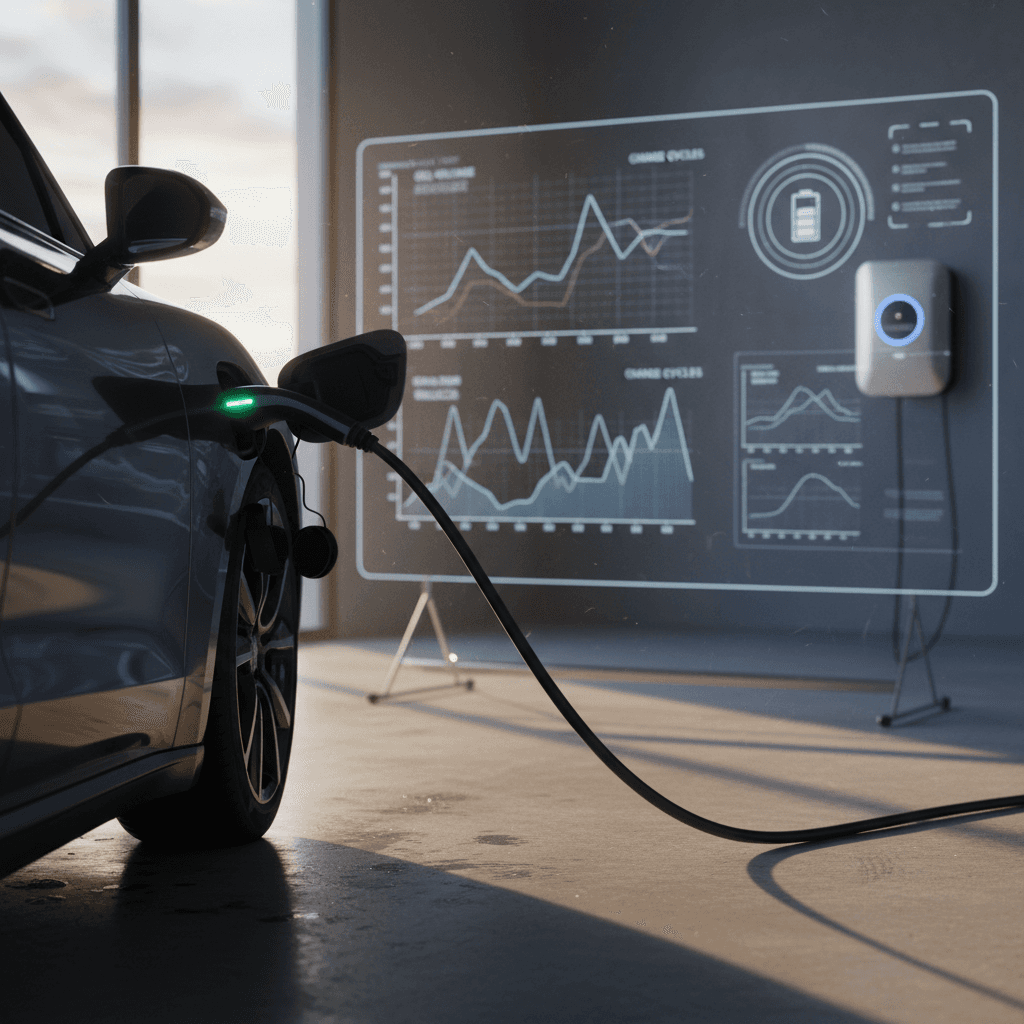
DC fast charging results: 10–80% and 0–100%
Let’s get into what actually happens when you roll up to a modern 350 kW station with the e-tron GT nearly empty and a coffee in your hand.
Audi e-tron GT DC fast charging test snapshots
Approximate times and averages you can expect on a healthy car and strong charger.
| Charge window | Time (min) | Average power | Energy added | What it feels like |
|---|---|---|---|---|
| 10–80% | 18–23 | ~200–210 kW | ~63 kWh | Classic highway stop, restroom, snack, back on the road. |
| 5–80% | 19–22 | ~205–210 kW | ~67 kWh | Arrive basically empty; still under 25 minutes if all goes well. |
| 0–80% | 21–24 | ~200 kW | ~72 kWh | If you push truly to 0%, add a couple of minutes. |
| 10–90% | 29–32 | ~145–150 kW | ~72–81 kWh | Useful if the next leg is long; last 10% is noticeably slower. |
| 0–100% | 48–51 | ~105 kW | ~90 kWh | You’ll rarely do this on DC, and you’ll feel every minute. |
Numbers are rounded; real-world results vary with temperature, charger brand, and starting state of charge.
Ideal vs. real world
Charging curve: how the e-tron GT holds speed
Where the Audi e-tron GT really impresses is not just the height of its peak, but the shape of its charging curve, how long it can hang onto big power before tapering.
10–40%: The rocket phase
- The car can ramp to roughly 260+ kW quickly once it handshakes with the charger.
- Peak power is typically seen somewhere around the 20–40% state of charge window.
- This is where you pile in a massive chunk of energy in a very short time, exactly what you want during road trips.
40–80%: Still seriously quick
- Instead of falling off a cliff, the e-tron GT tends to sit in the 150–220 kW band through much of this region.
- That’s why an 18–23 minute 10–80% session is realistic when conditions cooperate.
- Above ~80%, the car behaves like most EVs: the rate drops sharply to protect the pack.
Why the curve matters more than the peak
Home and Level 2 charging: realistic times
Most of your e-tron GT life won’t be spent inhaling electrons at a highway charger. It’ll be sipping in your driveway or parking garage while you sleep. Here, the numbers are less dramatic, but just as important.
Audi e-tron GT AC (home) charging scenarios
Approximate times from low state of charge to full on different Level 1 and Level 2 setups.
| Charger type | Power (approx.) | 0–100% time | Best use case |
|---|---|---|---|
| Level 1 120 V outlet | 1.3–1.8 kW | 40–60 hours | Emergency top‑ups only; not realistic for daily use. |
| Level 2 32 A (7.7 kW) | ~7 kW | 14–16 hours | Townhouse / older wiring; fine if you plug in nightly. |
| Level 2 40 A (9.6 kW) | ~9.6 kW | 11–13 hours | Common home wallbox setup; true overnight full charge. |
| Level 2 48 A (11 kW) | ~11 kW | 9–11 hours | Maxes out onboard charger; good for heavy daily drivers. |
Assumes roughly 83–85 kWh usable energy on earlier cars and slightly more on updated models.
Size home charging to your life, not the spec sheet
Road-trip usage: what the numbers feel like
On paper, “10–80% in 20 minutes” is tidy. On the interstate, you experience it as: pull off, hit restroom, grab a drink, glance at news, walk back, and the car is already suggesting you unplug.
What an Audi e-tron GT road trip really looks like
1. Start around 80–90%
Leave home on AC charging at 80–90% to preserve battery health while giving yourself a long first leg, often 200+ highway miles depending on speed, wheels, and weather.
2. Run down to ~10–20%
The e-tron GT charges quickest from low state of charge, so you’re rewarded for using the pack. Plan your stops near 10–20% if charger spacing allows.
3. Target high-power stations
To see those 250 kW‑plus spikes, pick 800‑V capable or 350 kW‑rated DC fast chargers from major networks. Lesser units will cap your speed no matter how capable the car is.
4. Stop for 15–25 minutes
Your typical stop length will mirror a normal rest break. The difference is psychological: you’re watching a kW number fall instead of a gas pump dollar figure rise.
5. Charge to ~70–80%
Above 80%, the charging curve dives. Unless the next leg is unusually long, it’s faster overall to unplug around 70–80% and add an extra quick stop later.
6. Repeat every 150–200 miles
At U.S. highway speeds and winter climates, assume 150–200 miles between fast charges. In ideal summer conditions, you’ll do better, but plan for the conservative case.
Good news for GT drivers
How the e-tron GT compares to other fast-charging EVs
The e-tron GT’s closest spiritual sibling is the Porsche Taycan, with which it shares an 800‑V architecture and broad hardware DNA. The Taycan’s latest updates have raised the ceiling again, but the Audi is still playing in the same rarefied air.
Charging speed context: where the e-tron GT sits
Against other long‑range, performance‑oriented EVs
Vs. Porsche Taycan
The newest Taycan variants can now peak around 320 kW and average extremely high power from 10–90%. The e-tron GT, especially updated models with similar peak capability, is just a step behind in the magazine-test arms race but firmly in the top tier.
Vs. premium sedans
Compared with cars like the Mercedes EQE SUV or older big‑battery SUVs, the e-tron GT’s ~18–23 minute 10–80% time is noticeably quicker. You spend less time loitering at stations, more time enjoying the car.
Vs. mainstream EVs
Most mainstream EVs peak under 150–200 kW and taper faster. The e-tron GT’s sustained high average power means it can add miles faster than many crossovers that, on paper, appear more efficient.
Average kW is your scoreboard
Used Audi e-tron GT: what to look for in charging performance
If you’re shopping a used Audi e-tron GT or RS e-tron GT, charging behavior is one of the most honest windows into the car’s health, and the previous owner’s habits.
Charging checks for a used e-tron GT
1. Verify DC fast charging behavior
On a test drive near a DC fast charger, arrive around 10–20% state of charge, plug into a reputable 150–350 kW unit, and watch the power climb. A healthy car should quickly jump above 200 kW on a strong station in mild temps.
2. Test Level 2 charging
At home or at a public Level 2, confirm the car pulls roughly the expected amperage (for example, ~40 A on a 9.6 kW setup). Oddly low power or repeated session drop‑outs can indicate onboard charger or communication issues.
3. Ask for charging history
Many owners track sessions in charging apps. Frequent DC fast use isn’t inherently bad, but you want to see a mix of home AC charging and DC, not a life spent entirely at 350 kW pumps.
4. Look for software updates
Audi has refined charging logic and thermal management with updates. Ensure the car’s software is current; it can improve consistency and protect the pack over time.
5. Get a battery health report
A diagnostic like the Recharged Score battery health report can quantify usable capacity and flag anomalies before you buy, something a simple eyeball test can’t do.
Red flags during a charging test
Charging tips to actually hit peak speeds
You can’t control everything, the charger’s mood, the weather, the line of Taycans ahead of you, but you can stack the deck in your favor. The same e-tron GT that lazily sips at 90 kW on a cold pack can hit 250+ kW when you treat it right.
Practical tips for faster real-world charging
Small habits that shave minutes off every stop
Precondition the battery
Use the navigation to route to a DC fast charger; many EVs will automatically warm or cool the battery on the way. Even if software support is limited, arriving after a stretch of highway driving usually yields better speeds than pulling in from a cold start.
Choose stations wisely
Favor newer, 800‑V compatible or 350 kW‑rated chargers from major networks along main corridors. Older 50–75 kW pedestals will cap you no matter how advanced your e-tron GT is.
Arrive low, leave mid
For time efficiency, aim to arrive around 10–20% state of charge and leave around 70–80%. This keeps you in the fat middle of the charging curve where the car is happiest.
Avoid back‑to‑back max sessions
Fast charging heats the pack. A single long 0–90% pull on a hot day may result in throttled speeds on the next stop. When possible, add one more short, mid‑range session instead of a single hero charge.
Protecting the pack over the long haul
FAQ: Audi e-tron GT charging speed and ownership
Frequently asked questions about Audi e-tron GT charging speed
Bottom line: should charging speed affect your buy?
The Audi e-tron GT is not a science experiment or an eco‑appliance. It’s a grand tourer that happens to run on electrons instead of fossils, and its charging performance is finally worthy of that mission. In a world where many big, heavy luxury EVs still loiter at chargers, the e-tron GT joins the short list of cars that can legitimately sprint from plug to plug.
If you’re shopping new or used, charging speed should be on your checklist, but more as a confirmation than a concern. A healthy e-tron GT on a strong network delivers fast, repeatable 10–80% sessions that make cross‑country driving entirely plausible. The real due diligence is making sure the individual car you’re eyeing still behaves that way.
That’s where buying from a specialist helps. Every EV sold through Recharged includes a Recharged Score battery health report, expert guidance on home charging setup, and support with financing, trade‑in, and even nationwide delivery. So you can focus on the important part: deciding which winding road deserves to meet your Audi e-tron GT first, instead of worrying about what happens the next time you plug in.