If you’re shopping for an Audi e-tron GT, you already know the appeal: Porsche Taycan bones, Audi luxury, and serious performance, often at surprisingly low used prices. This Audi e-tron GT buying checklist walks you through the exact steps to take before you sign, with a special focus on used and certified pre-owned (CPO) cars in the U.S.
Model years at a glance
Overview: Is the Audi e-tron GT a Smart Used Buy?
Why the e-tron GT is tempting
- Huge depreciation versus original MSRPs that were often well into six figures.
- Stunning design and a cabin that feels properly premium.
- Shared platform with Porsche Taycan, which means serious performance and handling.
- 800-volt architecture for very fast DC charging when everything is working properly.
Where to approach with caution
- Complex electronics and infotainment that can be glitchy in some cars.
- High repair costs if anything in the high-voltage or suspension system fails.
- Rapid tire wear thanks to weight and torque, budget for them.
- Mixed owner reports on reliability; some cars are flawless, a few have been shop-regulars.
If you buy smart, with a strong warranty and verified battery health, the e-tron GT can be a terrific value. If you buy blind, it can be an expensive lesson.
Audi e-tron GT key numbers (typical U.S. specs)
Quick specs to know before you start shopping
- All e-tron GTs are dual-motor, all-wheel drive (quattro).
- Most U.S. cars use a ~93 kWh battery pack with 800-volt architecture for high-speed DC fast charging.
- EPA range is generally in the mid-200-mile neighborhood; cold weather and high speeds can cut that noticeably.
- Trims typically include Premium Plus, Prestige, and the more powerful RS e-tron GT.
- Battery warranty from new: commonly 8 years / 100,000 miles on high-voltage components, important when buying used.
Step 1: Define the right e-tron GT for your needs
Before you dive into listings, get clear on what kind of Audi e-tron GT actually fits your life. A commuter in a dense city has different needs than someone who wants a weekend toy to replace a V8 coupe.
Match the e-tron GT to your use case
Three typical buyers, and how your checklist should shift
Daily commuter
- Prioritize range consistency and ride comfort over max power.
- Premium Plus or Prestige trims are usually enough.
- Check real-world energy use on your test drive, aim for efficiency, not launch control.
Performance enthusiast
- RS e-tron GT or high-spec Prestige will appeal most.
- Inspect brakes, tires, and suspension carefully, they work hard in spirited driving.
- Expect higher running costs; budget for premium tires every 15–20k miles or sooner.
Luxury road-tripper
- Comfort seats, adaptive suspension, and driver-assistance packages matter more than 0–60.
- Check rear-seat and cargo space in person, sleek styling does eat into practicality.
- Range and fast-charging consistency are critical for highway trips.
Tip: Start with a must-have list
Step 2: Check battery health and real-world range
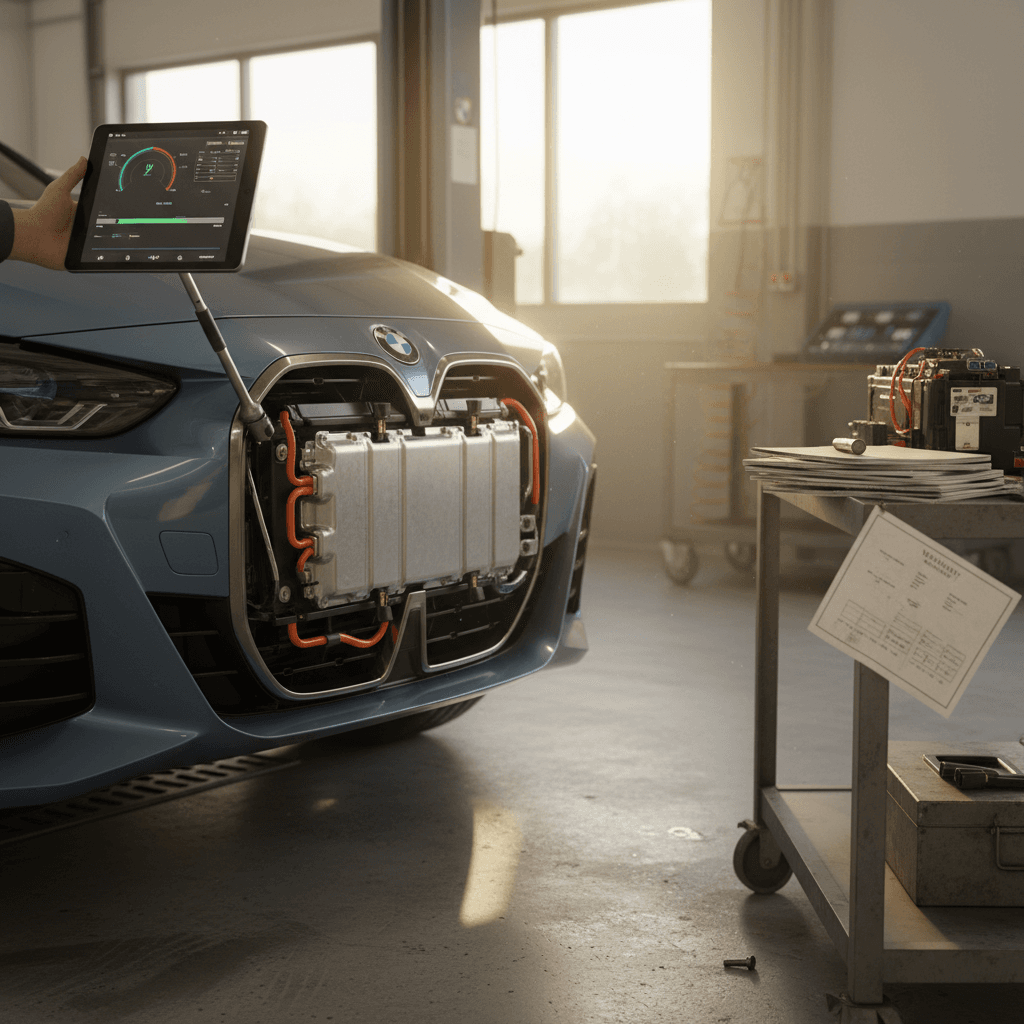
Battery health is the single most important factor when buying any used EV, and the e-tron GT is no exception. Fortunately, most cars on the market are only a few years old, so catastrophic degradation is uncommon, but you still want data, not guesses.
Battery & range checklist
1. Get a battery health report
Ask the seller for a recent <strong>state-of-health (SoH)</strong> report from a third party or dealer. At Recharged, every vehicle includes a Recharged Score Report with <strong>verified battery health</strong>, so you’re not relying on promises.
2. Compare SoH to age and miles
For a 3–4-year-old e-tron GT with normal use, modest degradation is expected. A car that’s significantly below typical SoH for its age or mileage may have been fast-charged heavily or stored improperly.
3. Check range estimate vs. EPA numbers
With the battery around 80–90% charged, compare the car’s indicated range to its original EPA rating. Some difference is normal, especially in cold weather, but a huge gap deserves more investigation.
4. Ask about DC fast-charging habits
Cars fast-charged daily on road trips will show more wear than those mostly charged at home on Level 2. Occasional fast charging is fine; a steady diet of 200 kW blasts is less ideal for longevity.
5. Scan for error messages
Have a technician scan the car for stored diagnostic trouble codes (DTCs), especially related to the high-voltage system, cooling, or charging. Intermittent issues sometimes leave a trail even when lights are off.
Watch for pack or module issues
Step 3: Charging, home setup, and daily usability
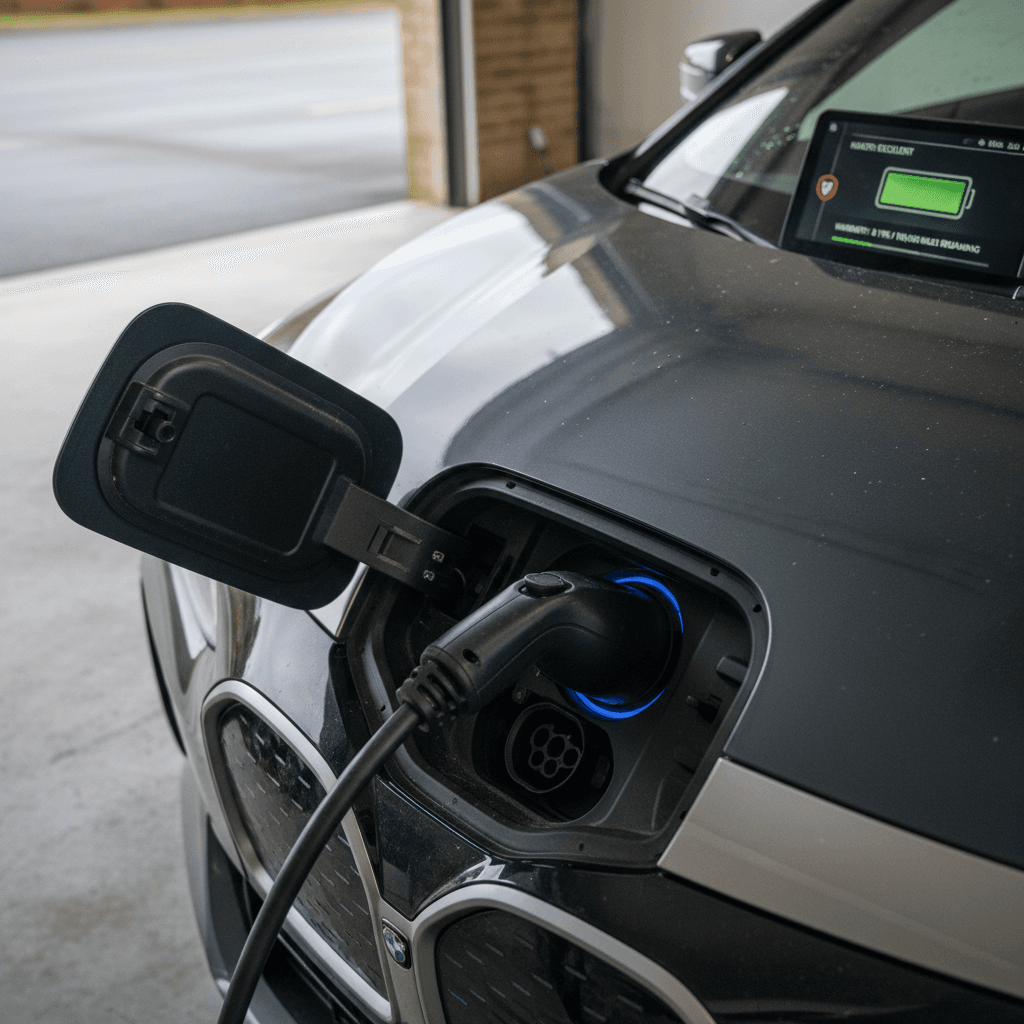
Next, make sure an e-tron GT actually fits your charging reality. This car is a joy when you can charge reliably; it’s a frustration machine if you can’t.
Home charging checklist
- Confirm you can install a 240V Level 2 charger (or already have one).
- Plan for at least a 40-amp circuit to comfortably support overnight charging.
- Check where the e-tron GT’s front charge port will sit in your garage or driveway, its location can be awkward with some wall-mounted chargers.
- Make sure the cable will reach the port without stretching across walkways.
If you’re unsure what you need, consider talking with an EV-focused retailer. At Recharged, specialists can walk you through charger selection and what to expect from installation.
Public and fast-charging fit
- Confirm your main routes have reliable DC fast chargers that support CCS (the e-tron GT uses CCS for DC, not Tesla’s NACS on most U.S. cars this generation).
- Verify that your preferred network offers peak speeds compatible with the car’s 800-volt system so you can take advantage of fast charging.
- Do a test fast-charge session during your evaluation if possible, watch for unexpected charge interruptions or very low charge rates.
- Consider an adapter strategy if you plan to use non-CCS infrastructure in the future.
Real-world charging expectations
Step 4: Inspect for common e-tron GT issues
Like any complex luxury EV, the Audi e-tron GT has some patterns in owner complaints. Not every car will experience these issues, but you want to screen for them before buying, especially once the basic warranty is nearing its end.
Common Audi e-tron GT issues to check
Use this table as a talking guide with the seller and your inspector.
| Area | What to look/listen for | Why it matters |
|---|---|---|
| High-voltage & cooling | Any history of battery or motor replacement, coolant leaks, or “electrical system fault” messages. | HV repairs can be extremely expensive once out of warranty. |
| Infotainment & electronics | Freezing screens, random restarts, navigation glitches, CarPlay/Android Auto drops. | Annoying but often fixable with software updates, still worth confirming. |
| Charging system | Prior charging-port repairs, charge interruptions at DC fast chargers, or temperamental charge-port door. | Charging problems can be a headache if they recur; verify smooth operation. |
| Suspension & steering | Clunks, creaks, or squeaks over bumps; uneven tire wear; steering noises at low speed. | The adaptive suspension is fantastic when healthy, but not cheap to rebuild. |
| Brakes | Spongy pedal feel, inconsistent regen, or any recall work not yet performed. | Some cars have had brake-related recalls; ensure they’re completed. |
| Body & trim | Squeaks/rattles, misaligned doors, trunk that doesn’t close cleanly, condensation in lights. | Build-quality niggles can be hard to chase and annoying to live with. |
| 12V battery | History of 12V battery replacement, unexplained no-starts or dead-car events. | A weak 12V can strand an otherwise healthy EV and trigger multiple warning lights. |
Not every car will show these problems, but ruling them out up front can save serious money later.
Do not skip a pre-purchase inspection
Step 5: Options, packages, and must-have features
The right options can make an Audi e-tron GT feel like the six-figure luxury car it was when new. The wrong spec can feel oddly bare for the money. Focus on features that you’ll notice every day, not just in the brochure.
High-impact options to look for
Features that improve daily life and long-term enjoyment
Comfort & seats
- Heated and ventilated front seats.
- Massage function (where available).
- Extended leather or premium upholstery.
You’ll feel these every mile, not just on spec sheets.
Audio & tech
- Upgraded audio (e.g., Bang & Olufsen).
- Head-up display and full digital cockpit.
- 360° camera system and parking assist.
Helpful in tight spaces and adds to the “wow” factor.
Driver assistance
- Adaptive cruise control with lane centering.
- Blind-spot monitoring and rear cross-traffic alert.
- Traffic-jam assist features, where available.
These systems are especially valuable on long freeway drives.
Decide what you’ll pay for
Step 6: Pricing, depreciation, and total cost
One reason the e-tron GT is so interesting used is simple: depreciation. Like many luxury EVs, these cars have dropped sharply from their original MSRPs, often landing in the same price neighborhood as new compact crossovers or well-equipped mainstream sedans.
How to sanity-check asking price
- Look up comparable listings by year, trim, mileage, and options. RS cars should command a clear premium.
- Check how the price lines up with remaining battery and bumper-to-bumper warranty. A car with years of coverage left is worth more.
- Factor in tires: if the car is due for a set of high-performance tires soon, that’s a meaningful expense you can use in negotiation.
Don’t forget operating costs
- Budget for premium tires more often than you might with a lighter, slower EV.
- Plan for higher labor rates at Audi dealers for complex issues.
- Offset some of this with lower routine maintenance versus a gas Audi (no oil changes, fewer wear items).
When you work with a marketplace like Recharged, fair market pricing is part of the package, each vehicle’s price is backed by data, not gut feel.
The sweet spot for value
Step 7: Warranty coverage, CPO vs. independent dealers
Because repair costs on high-end EVs can be substantial, warranty strategy is just as important as purchase price. A cheap car with no meaningful coverage can become an expensive one fast.
Warranty & protection checklist
1. Confirm original warranty dates
Use the VIN at an Audi dealer to verify the in-service date and remaining coverage. Pay special attention to high-voltage battery and drivetrain warranties.
2. Understand what CPO adds
Audi Certified Pre-Owned typically extends certain coverages beyond the original new-car warranty. Ask exactly what’s covered, at what deductibles, and for how long, then compare that to third-party options.
3. Evaluate extended coverage carefully
If you’re buying from an independent dealer or private party, a high-quality EV-focused service contract can make sense. Avoid bare-bones plans that exclude high-voltage components and infotainment.
4. Keep documentation organized
Request complete service records, recall documentation, and any prior warranty work orders. Consistent maintenance at reputable shops is a strong green flag.
5. Know what Recharged includes
On Recharged, every vehicle comes with a <strong>Recharged Score Report</strong> plus transparent history and support from EV specialists who can help you understand coverage options before you commit.
Step 8: Road test checklist for the e-tron GT
A proper test drive is where you confirm that the car you see on paper is the car you’ll be happy to live with. The e-tron GT is incredibly capable; your job is to find out whether this specific example is healthy.
What to do on your test drive
1. Start with a cold car
If possible, see the car after it has been sitting. Listen for <strong>unusual noises</strong> from suspension, steering, pumps, and HVAC as it wakes up.
2. Check all drive modes
Cycle through Comfort, Dynamic, and any efficiency modes. Note changes in ride quality, steering weight, and power delivery. Jerky transitions can hint at software or drivetrain quirks.
3. Test regen and brakes
In a safe area, lift off the accelerator and feel how smoothly regenerative braking blends with the friction brakes. A long or inconsistent pedal is a sign to dig deeper, and to ask about completed brake-related recalls.
4. Hit rough pavement
On a bumpy road, listen for clunks, squeaks, or rattles from the suspension and cabin. These can suggest worn components or build-quality issues that may be annoying to fix later.
5. Try highway speeds
At freeway speed, the e-tron GT should feel rock-solid and quiet. Check lane-keeping, adaptive cruise, and wind noise around mirrors and doors.
6. Stress-test the tech
Pair your phone, test CarPlay/Android Auto, run navigation, and use the climate controls. The goal is to reveal any <strong>infotainment freezes or glitches</strong> before you buy.
7. Simulate your routine
If you commute in traffic, include that in your drive. If you live on rough back roads, find similar surfaces. Make sure the car fits your real life, not just the spec sheet.
FAQ: Audi e-tron GT buying questions
Frequently asked questions about buying an Audi e-tron GT
Bottom line: Should you buy an Audi e-tron GT?
A well-chosen Audi e-tron GT can be one of the most rewarding used EVs on the market: gorgeous, brutally quick when you want it to be, and genuinely comfortable when you don’t. But it’s also a high-complexity luxury car that deserves a methodical buying process.
Use this Audi e-tron GT buying checklist to structure your search: define your needs, verify battery health, ensure your charging setup makes sense, check for known issues, confirm warranty coverage, and insist on a thorough inspection. If you’d rather not do all that legwork yourself, buying through a specialist used-EV marketplace like Recharged can give you verified battery diagnostics, fair market pricing, and expert guidance from the first search to delivery.
Do that, and you’re far more likely to end up with the right e-tron GT, the one you look forward to driving every single day, instead of the one that lives at the service bay.