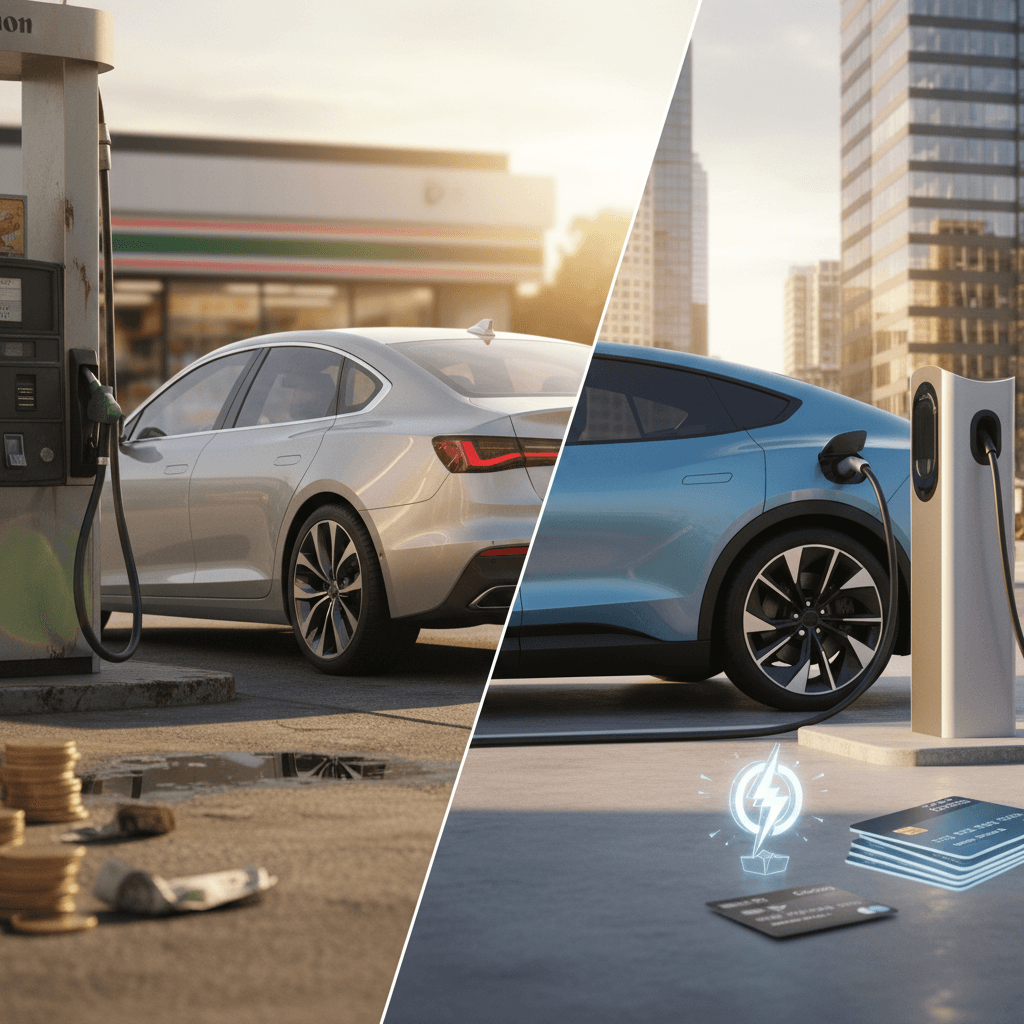
You’re not alone if you’re wondering, “Are electric cars really cheaper than gas?” With EV prices moving, gas still unpredictable, and headlines about batteries, it can be hard to get a straight answer. The truth in 2025 is: for many drivers, especially those buying used electric cars, an EV can be cheaper to own than a comparable gas car, but it depends on how and where you drive.
The short version
Electric vs Gas: Big-Picture Cost Signals in 2025
Quick answer: Are electric cars cheaper than gas?
If you’re looking for a one-line answer, here it is: Electric cars can be cheaper than gas cars over time, but not for everyone and not in every situation. Where EVs shine is in total cost of ownership, what you actually spend over several years, not just the day you sign the paperwork.
- They often cost more up front (especially new).
- They’re usually much cheaper to “fuel” if you can charge at home.
- They typically cost less to maintain and repair over time.
- Depreciation and battery confidence make used EVs especially compelling.
Think in years, not months
How to compare electric vs gas car costs the right way
To answer whether an electric car is cheaper than gas for you, you need to compare apples to apples. That means looking beyond MSRP and focusing on total cost of ownership (TCO). A good EV vs gas comparison should include:
The 5 pillars of EV vs gas cost
You don’t need a PhD, just a simple framework.
1. Purchase & incentives
Compare the out-the-door price after tax credits, rebates, and dealer discounts, not just MSRP.
2. Fuel vs charging
Estimate your yearly miles, gas price in your area, and your home electricity rate to see ongoing energy costs.
3. Maintenance & repairs
EVs skip oil changes, exhaust systems, and many wear items. Gas cars are simpler to fuel but often busier at the shop.
4. Battery health
Battery condition affects range, confidence, and resale value. Tools like the Recharged Score help you see real battery health on a used EV.
5. Depreciation & resale
Some EVs drop price quickly when new but can offer great value as used cars. Gas cars are more predictable but can be costlier to fuel long-term.
6. Your habits
Where you live, how far you drive, and whether you can charge at home are big levers. The same car won’t cost the same for everyone.
Beware of misleading comparisons
Purchase price, incentives, and why used EVs change the math
New-for-new, gas cars are often cheaper than EVs in 2025, especially at the entry level. But incentives and the rapidly growing used EV market are rewriting that story.
New vehicle pricing
- Many mainstream EVs still carry a higher MSRP than comparable gas models.
- Federal and state incentives can offset thousands of dollars, but eligibility varies by model, income, and how you buy (lease vs purchase).
- Dealer discounts on gas models can be more aggressive in some regions, especially on popular crossovers and compact SUVs.
Why used EVs are a sweet spot
- Some EVs depreciated quickly when new, making their used prices surprisingly attractive.
- A used EV lets you bypass the steepest early depreciation and still enjoy low fuel and maintenance costs.
- With Recharged, each car comes with a Recharged Score Report showing verified battery health, so you’re not guessing about the most expensive component.
Where Recharged fits
Ready to find your next EV?
Browse VehiclesFuel vs charging: What you’ll really pay to drive
Let’s talk about the cost you feel every week: fuel. For many households, this is where electric cars beat gas cars most clearly, especially if you can charge at home.
Typical Energy Cost: Gas vs Electric (Illustrative)
Example costs for a compact crossover driven 12,000 miles a year. Use your own local gas and electricity prices for a precise comparison.
| Scenario | Energy cost per mile | Annual energy cost (12k miles) | What it assumes |
|---|---|---|---|
| Gas car | $0.15–$0.20 | $1,800–$2,400 | 25–30 mpg with gas at $3.25–$3.75/gal |
| EV, home charging | ~$0.04–$0.08 | $480–$960 | 3–4 miles/kWh with electricity at $0.13–$0.20/kWh |
| EV, mostly fast charging | ~$0.12–$0.20 | $1,440–$2,400 | Public DC fast charging priced at roughly gas-equivalent levels |
These are ballpark figures to show the pattern, your actual costs will depend on your specific car, driving style, and local prices.
Home charging is the key lever
Maintenance: Where electric cars quietly win
Part of the appeal of electric cars is what they don’t have: no engine oil, no spark plugs, no timing belts, no exhaust system, and far fewer moving parts. Over time, this usually translates to lower maintenance bills and fewer trips to the shop.
Common Service Items: EV vs Gas
Why EVs often spend less time in the shop.
Typical gas car upkeep
- Oil and filter changes
- Transmission service
- Exhaust repairs
- Spark plugs and ignition components
- More complex cooling systems
Typical EV upkeep
- Tire rotations and replacements
- Brake fluid and coolant changes (long intervals)
- Cabin air filters
- Occasional software updates and recalls
- Brake pads last longer thanks to regenerative braking
Don’t overpay for “engine-style” service on an EV
Battery health, replacements, and the fear factor
Battery anxiety is real. Many shoppers wonder, “What happens when I need a new battery, isn’t that more than the car is worth?” The reality in 2025 is more nuanced. Most EV batteries are lasting longer than early skeptics predicted, but replacement costs are still high enough that you want to go in with eyes open.
- Most modern EVs carry battery warranties of 8 years and around 100,000 miles (sometimes more) against excessive capacity loss.
- Real-world data shows many packs retaining a high percentage of their original capacity well past 100,000 miles, especially in moderate climates.
- Full pack replacements can be expensive, but partial repairs, module replacements, and refurbished packs are becoming more common.
Why battery condition matters so much when you buy used
This is where Recharged’s Recharged Score Report changes the equation. Every vehicle on the platform gets verified battery diagnostics, so you can see how healthy the pack is, how it’s been used, and how that compares to similar vehicles. In other words, you can price a used EV based on the battery it actually has, not just the odometer reading.
Depreciation and resale value for EVs vs gas
Depreciation is the silent cost in car ownership, and it behaves differently for EVs and gas cars. Early on, many EVs lost value quickly as technology improved and new incentives arrived. That created some pain for first owners, but today it creates opportunity for used buyers.
New EV buyers
- May face steeper early depreciation, especially on models where new-car incentives are large.
- Benefit from the latest tech, longest range, and full warranty coverage.
- Best suited to drivers planning to keep the car long enough to let savings on fuel and maintenance catch up.
Used EV buyers
- Can often buy at a significant discount to original MSRP.
- Take advantage of early depreciation without paying for it.
- Still enjoy low running costs, if the battery is in good health.
EV vs gas: Different depreciation, similar goal
Which drivers save the most with an EV?
Not everyone will save money with an electric car, but some drivers are almost tailor‑made for EV ownership. If you see yourself in one of these groups, an EV, especially a used one, may be the cheaper long‑term choice.
Driver profiles that tend to win with EVs
The more of these that sound like you, the better the odds an EV is cheaper.
High‑mileage commuters
If you drive 12,000–20,000 miles a year and can charge at home, fuel savings add up quickly. The more you drive, the more an efficient EV makes sense.
Homeowners with overnight charging
Access to a driveway, garage, or dedicated parking with a plug lets you capture the lowest‑cost electricity and avoid public‑charging markups.
Suburban & urban drivers
Frequent short trips, lots of stop‑and‑go, and limited highway use play to an EV’s strengths, including regenerative braking and low-speed efficiency.
Second‑car households
When you have a second gas car for long trips, an EV can be the cheaper daily driver without replacing every use case in your life.
Drivers in high‑gas‑price areas
Regions with higher fuel prices tilt the math toward EVs, especially when local electricity rates are stable or when off‑peak pricing is available.
Used‑car shoppers
If you typically buy used, a well‑priced EV with documented battery health can deliver lower lifetime costs than a similarly priced gas car.
Who might not save with an EV
Checklist: How to run your own EV vs gas numbers
Instead of guessing, you can run a simple, back‑of‑the‑envelope comparison for your actual lifestyle. Grab your current fuel receipts and power bill, and walk through this checklist.
Step‑by‑step: Compare your EV vs gas costs
1. Estimate your yearly mileage
Look at last year’s odometer readings or your fuel receipts to estimate how many miles you drive annually. The higher your mileage, the more impact fuel savings will have.
2. Write down your local gas price
Use a realistic, recent price for regular or the grade you actually purchase. If prices have been volatile, note a low and high figure.
3. Find your electricity rate
Check your power bill for your price per kWh. If your utility has off‑peak EV rates, jot those down too, they can significantly improve EV economics.
4. Compare specific vehicles, not categories
Pick a realistic EV and gas alternative you’d actually own, say, a compact crossover EV vs a compact crossover gas model, rather than “an EV” vs “a car.”
5. Estimate energy cost per mile
For each vehicle, divide its miles per year by its mpg (gas) or miles per kWh (EV), then multiply by your fuel or electricity price. This shows yearly “fuel” cost.
6. Add maintenance and ownership horizon
Look at recommended maintenance intervals and estimate annual service spending. Then decide how many years you plan to keep the car and multiply out total costs.
Don’t forget financing and insurance
FAQs: Are electric cars cheaper than gas?
Frequently asked questions about EV vs gas costs
Bottom line: When an electric car is cheaper, especially used
In 2025, the honest answer to “Are electric cars cheaper than gas?” is: they often are, but only when they fit your life. If you drive a reasonable number of miles each year, can charge at home or at work, and choose the right vehicle at the right price, an EV can quietly save you thousands over a gas car in fuel and maintenance alone.
Where the math gets especially compelling is with used electric vehicles. Early depreciation, lower running costs, and modern battery diagnostics mean you can buy a car that’s already absorbed the biggest value drop, but still has years of efficient driving ahead.
At Recharged, that’s exactly the gap we’re trying to close. Every vehicle comes with a Recharged Score Report that verifies battery health and pricing, plus financing, trade‑in options, and nationwide delivery. If you’re ready to see whether an EV actually pencils out for you, browsing used electric cars on Recharged is a smart, and low‑risk, place to start.