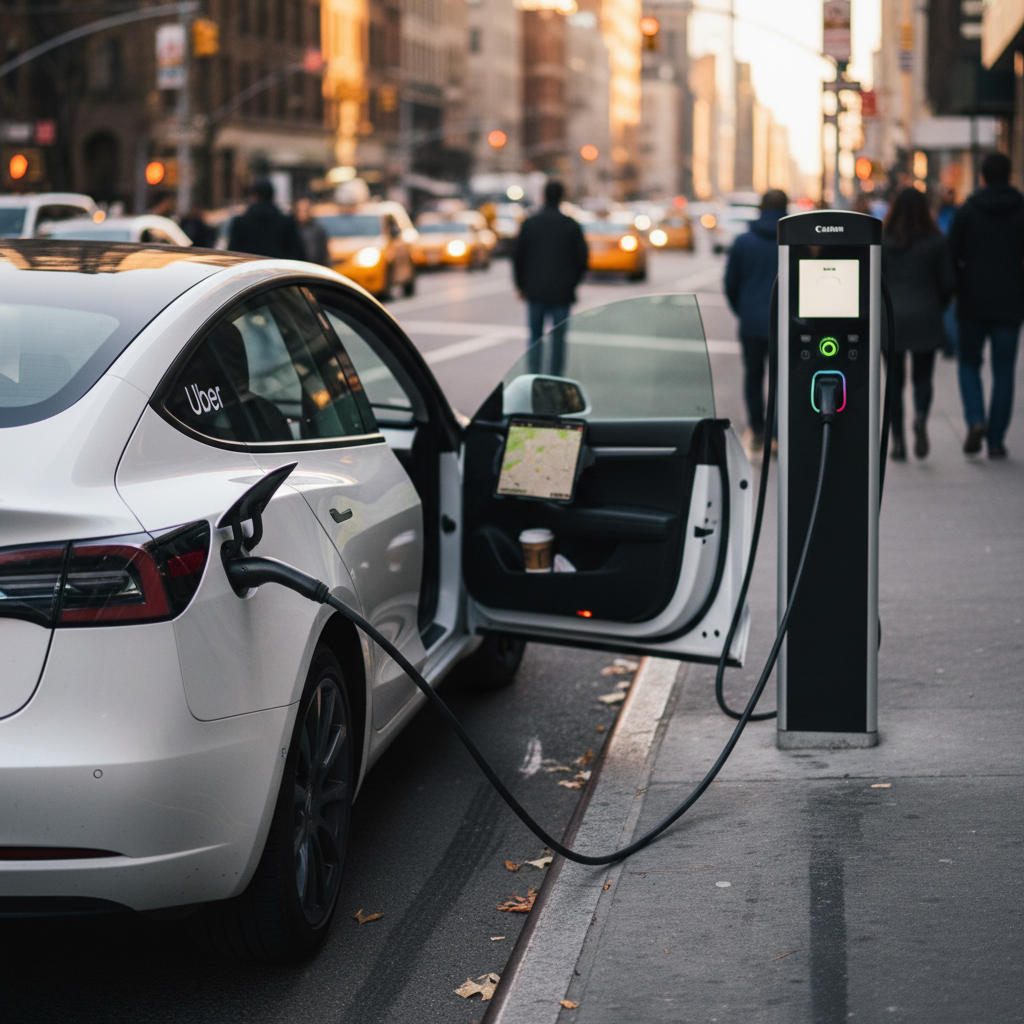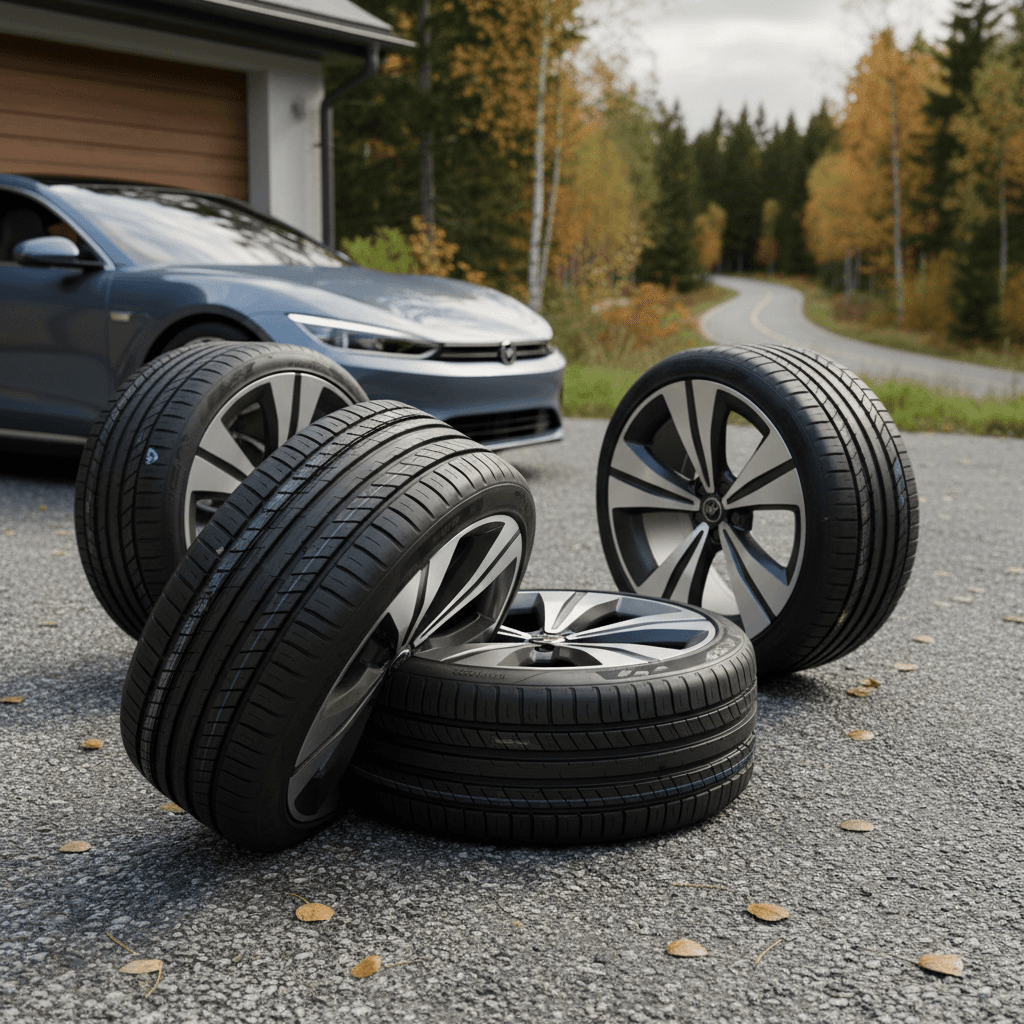
All season EV tires sit in the crosshairs of conflicting demands: instant torque, heavy battery packs, quiet cabins, and your very human desire not to swap tires three times a year. Done right, the best all season EV tires give you usable grip in bad weather, a quiet ride, and more range. Done wrong, they turn your sleek electric into a droning energy hog.
Quick takeaway
Why all-season EV tires matter more than you think
Electric vehicles put tires through a tougher exam than most gas cars. You’ve got battery weight, often hundreds of pounds more than a comparable ICE car, plus instant torque that can scrub off tread like a belt sander. At the same time, EVs are quiet, which means tire noise is no longer masked by an engine. All-season EV tires sit right in the middle of this tug of war: they have to last, grip in rain and light snow, roll efficiently, and stay quiet.
EV tire realities in 2025
If you’re shopping the used EV market, or already own a car from Recharged’s inventory of used EVs, tires are one of the fastest ways to change how the car feels and how far it goes.
How EV all-season tires differ from regular tires
1. Stronger construction for heavy cars
EV batteries add serious weight. All-season EV tires use reinforced casings and sidewalls to handle higher load indexes and lateral forces. That extra strength keeps the car stable in corners and helps the tire wear more evenly instead of scalloping the shoulders.
2. Compounds tuned for torque
Instant torque is fun until it chews through the front tires. EV-focused all-season tires use high-silica, temperature-stable compounds that resist rapid wear while still biting in wet weather. The trick is keeping grip without turning the tire into a rolling anchor for your battery.
3. Low rolling resistance without the drama
EV tires lean heavily on low rolling resistance designs, thinner tread blocks, optimized belt packages, and advanced polymers. You’ll often see labels like "Eco," "Elect," or "EV" attached to these tires. The goal: squeeze more miles from every kWh without making the tire skittish in rain.
4. Noise suppression for quiet cabins
The lack of engine noise turns tire roar into the main soundtrack. Many all-season EV tires add acoustic foam liners (Goodyear ElectricDrive 2, Pirelli Elect) or special tread patterns to cut harmonics. On a long highway run, this is the difference between relaxing and slowly losing your mind.
Tip: look for EV-specific labeling
Pros and cons of all-season EV tires
The trade-offs of all-season EV tires
One tire to do it all… within reason
Advantages
- Year-round convenience in moderate climates, no seasonal tire swap.
- Balanced performance in dry, wet, and light snow conditions.
- EV-optimized designs improve range and reduce noise versus generic all-seasons.
- Often come with 40–60k mile treadwear warranties when properly rotated.
Drawbacks
- Still compromise in deep snow and ice versus true winter tires.
- Some ultra-efficient EV tires sacrifice ultimate dry grip.
- EV-specific models can be more expensive and harder to find in odd sizes.
- High-torque driving will still eat them faster than on an ICE car.
Range, noise, and comfort: what really changes
Tires are one of the few bolt-on parts that can visibly move your EV’s range estimate. Low-rolling-resistance all-season EV tires typically free up a few percent of efficiency compared with soft, grippy performance rubber. That might not sound like much, but on a 280-mile rated car, a 5% swing is roughly 14 miles of cushion on a road trip.
- Range: More efficient tread patterns and compounds reduce the energy lost to heat as the tire deforms. EV-specific all-season tires from brands like Goodyear, Hankook, and Michelin routinely advertise efficiency gains versus their own non-EV siblings.
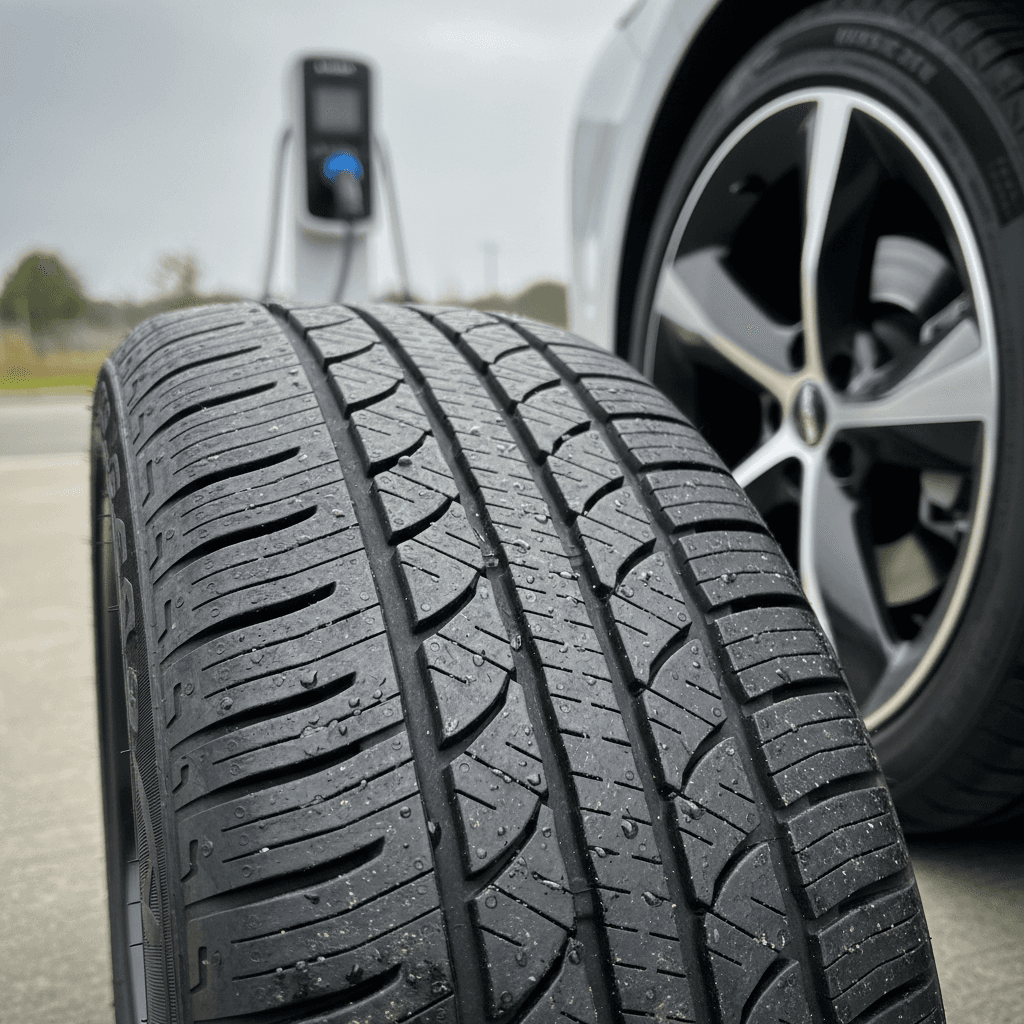
- Noise: Acoustic foam inserts and optimized block patterns lower the harsh mid-frequency roar you hear on concrete highways. If you’ve ever driven a Tesla or Ioniq 5 on cheap all-seasons, you know exactly what that roar sounds like.
- Ride comfort: EV tires often use softer sidewall tuning with stiff internal structures, so you get compliance over small bumps without feeling like the car is wallowing. Touring-focused all-season EV tires lean hardest into comfort.
Watch for noise surprises
Top all-season EV tire picks for 2025
There’s no single “best” tire for every EV, but a few all-season models have emerged as strong options for 2025. These aren’t ads, just commonly recommended tires that play nicely with EV torque, weight, and range.
Standout all-season EV tires to consider in 2025
Always confirm size, load index, and speed rating for your specific car.
| Tire model | Category | EV-friendly traits | Best for |
|---|---|---|---|
| Hankook iON Evo AS / AS SUV | EV-specific all-season | Reinforced for EV weight, low rolling resistance, quiet tread design | Balanced daily driving, sedans and SUVs |
| Goodyear ElectricDrive 2 | EV-specific all-season | Acoustic foam, 50% sustainable materials, wet-grip-focused tread | Eco-conscious drivers who value quiet and comfort |
| Pirelli P Zero All Season Plus Elect | Performance all-season EV | Sporty handling, PNCS noise-cancelling foam, 50k-mile warranty | Performance EVs like Model 3/Y, Polestar 2 |
| Continental PureContact EV | Touring all-season EV | EcoPlus tech for efficiency, long tread life, strong wet grip | Mainstream EVs used for commuting and family duty |
| Bridgestone Turanza EV / Turanza QuietTrack | Touring all-season (EV-tuned / EV-friendly) | Low noise, wet grip, reduced rolling resistance | Owners who prize quiet and comfort over max handling |
| Michelin CrossClimate 2 | All-weather grand touring | 3PMSF snow rating, strong wet grip, EV-friendly sizing | Drivers in mixed climates who see real winter but don’t want two sets of tires |
Examples only, not a complete list of suitable EV tires.
OEM tires vs aftermarket
Matching tires to your EV and driving style
Pick the personality that matches your EV life
Then choose a tire style to match it.
The commuter
Profile: 30–70 miles a day, mostly highway, occasional bad weather.
- Prioritize touring all-season EV tires with long tread life.
- Look for low rolling resistance and strong wet braking scores.
- Examples: Continental PureContact EV, Goodyear ElectricDrive 2, Bridgestone Turanza EV.
The enthusiast
Profile: You bought the dual-motor for a reason.
- Choose performance-oriented all-season EV tires.
- Accept a minor range penalty for sharper turn-in and braking.
- Examples: Pirelli P Zero All Season Plus Elect, Michelin Pilot Sport EV (paired with separate winters if needed).
The four-season realist
Profile: Live where it snows but don’t want two wheel sets.
- Consider all-weather or snow-capable all-seasons with 3PMSF ratings.
- Examples: Michelin CrossClimate 2, Nokian all-weather offerings with EV fitment.
- If you get real ice and deep snow, you still want proper winter tires.
All-season EV tires vs winter and all-weather options
“All-season” sounds generous, but it’s a marketing term, not a meteorological promise. The right choice depends heavily on your ZIP code.
All-season EV tires
- Good for: most of the US, mild winters, mainly rain.
- Strengths: efficiency, quiet, long life, easy ownership.
- Weaknesses: mediocre on ice and in deep snow.
All-weather / 3PMSF
- Good for: mixed climates with regular snow.
- Strengths: real winter capability with one set of tires.
- Weaknesses: slightly more rolling resistance; may wear faster in hot climates.
Dedicated winter tires
- Good for: northern states and mountains.
- Strengths: best grip on snow and ice, shorter stopping distances.
- Weaknesses: need a second set of wheels/tires and a spring/fall swap.
Never run winter tires year-round
How long all-season EV tires actually last
Most modern all-season EV tires carry treadwear warranties in the 40,000–60,000 mile range. In the real world, many EV drivers see something closer to the low end of that spectrum, especially on powerful dual-motor cars or crossovers that spend a lot of time on the highway.
- Expect 30,000–45,000 miles from a quality all-season EV tire with regular rotation and correct pressures.
- Front-drive or rear-drive EVs may wear a single axle noticeably faster; rotations every 5,000–7,500 miles matter more than the brochure suggests.
- Aggressive launches, high-speed driving, and constant heavy loads (roof boxes, full passengers) all cut into tire life.
Rotation is cheap range insurance
Buying checklist for all-season EV tires
Essential checks before you click “buy”
1. Confirm size and load index
Match the exact size, load index, and speed rating on your door jamb sticker or owner’s manual. EVs often require higher load ratings than gas equivalents.
2. Look for EV-ready design
Search for EV-specific lines (Elect, ElectricDrive, iON, etc.) or tires tested on EVs. They’ll cope better with weight, torque, and noise.
3. Prioritize wet and snow performance
Check independent tests and user reviews for wet braking and light snow traction. A tire that’s miserly on energy but poor in the rain is the wrong compromise.
4. Consider your climate honestly
If you see real winter, a 3PMSF all-weather tire or a dedicated winter set plus summer/all-season EV tires will serve you better than a generic all-season.
5. Think about cabin noise
If your current tires drone, make low-noise design a priority, look for acoustic foam or noise-focused marketing claims backed by reviews.
6. Plan for installation
Factor in mounting, balancing, and a fresh alignment check, especially if you’re putting new tires on a used EV you just bought.
FAQ: all-season EV tires
Frequently asked questions about all-season EV tires
How Recharged fits into the picture
Tires are where your EV meets the messy, unpredictable real world. The right all season EV tires can make a used electric car feel tighter, calmer, and more efficient, while the wrong set can sabotage range and confidence in bad weather. When you shop for a used EV with Recharged, every vehicle comes with a Recharged Score Report that includes verified battery health and a detailed condition overview, so you know whether you’re inheriting tired rubber or a fresh set of all-seasons.
If you’re trading into an EV or buying your first one, you can lean on Recharged’s EV specialists to talk through range expectations, seasonal driving, and total cost of ownership, including what a proper set of all-season EV tires will run you. Between transparent pricing, battery diagnostics, financing, trade-in options, and nationwide delivery, the goal is simple: get you into the right electric car, on the right tires, with no unpleasant surprises down the road.