Search for “all electric car brands” and you’ll get walls of logos and half-updated lists. Helpful? Not really. If you’re trying to decide which EV brand belongs in your driveway, or which badges are safe bets on the used market, you need a clear, organized view of who’s who, who’s winning, and who might not be around in a few years.
What this guide covers
Why electric car brands matter more than ever
With gas cars, the badge on the hood mostly signaled style and status. With EVs, the brand also says a lot about charging access, software quality, and battery longevity. Some brands have rock-solid charging networks and over-the-air updates that genuinely improve your car over time. Others are still figuring out basic things like phone apps and service coverage.
Three ways EV brand choice affects ownership
Beyond looks and price, the badge changes how your EV fits your life.
Charging access
Brands with strong networks or partnerships (Tesla, Hyundai/Kia, GM, Ford) make road trips and daily charging easier.
Battery health & tech
Battery chemistry, cooling design, and software management vary by brand, and directly impact range and resale value.
Service & support
A growing EV needs a knowledgeable service network. Legacy brands have dealer reach; EV specialists have deeper expertise.
Think beyond the logo
How many electric car brands exist today?
The electric car brand explosion
Why you won’t see a perfect logo wall
Major electric car brands in the US market
If you’re shopping in the US, especially for a used EV, these are the electric car brands you’re most likely to encounter on dealer lots and marketplaces like Recharged. We’ll start with the ones you’ll see everywhere, then work our way to the specialists.
Key EV brands in the US (2025 snapshot)
Mainstream and luxury brands with battery-electric models widely available in the United States.
| Brand | Type | Typical EV Focus | Examples of EV Models |
|---|---|---|---|
| Tesla | EV specialist | Mass-market and premium, strong software & charging | Model 3, Model Y, Model S, Model X, Cybertruck |
| Chevrolet (GM) | Legacy US | Affordable crossovers & trucks | Equinox EV, Blazer EV, Silverado EV |
| GMC (GM) | Legacy US | Trucks & big SUVs | Hummer EV, Sierra EV (announced) |
| Ford | Legacy US | Trucks, SUVs, sporty hatch | F‑150 Lightning, Mustang Mach‑E, Explorer EV (announced) |
| Cadillac | Legacy luxury | Premium SUVs & flagship SUV | Lyriq, Optiq, Escalade IQ |
| Hyundai | Global mainstream | Efficient, design-forward crossovers | Ioniq 5, Ioniq 6, Kona Electric |
| Kia | Global mainstream | Value-forward crossovers & 3‑row SUV | EV6, EV9, Niro EV |
| Nissan | Legacy pioneer | Compact and mid-size EVs | Leaf, Ariya |
| Volkswagen | Legacy global | Compact SUV, upcoming sedan | ID.4, ID.7 (coming to US) |
| Volvo | Premium global | Safe, minimalist crossovers | XC40 Recharge, C40, EX30, EX90 |
| Mercedes‑Benz | Premium legacy | High-end sedans & SUVs | EQE, EQS, EQB, EQE SUV |
| BMW | Premium legacy | Sporty sedans & SUVs | i4, i5, iX, iX2, i7 |
| Audi | Premium legacy | Design-led crossovers & sedans | Q4 e‑tron, Q8 e‑tron, e‑tron GT |
| Rivian | US startup | Adventure trucks & SUVs | R1T, R1S, R2 (coming) |
| Lucid | US startup | Long‑range luxury sedans & SUVs | Air, Gravity |
| Polestar | EV specialist | Scandinavian-style coupes & SUVs | Polestar 2, Polestar 3, Polestar 4 |
This table focuses on brands with multiple BEV models or significant US sales volume by late 2025.
Tesla: still the benchmark, but not the only game
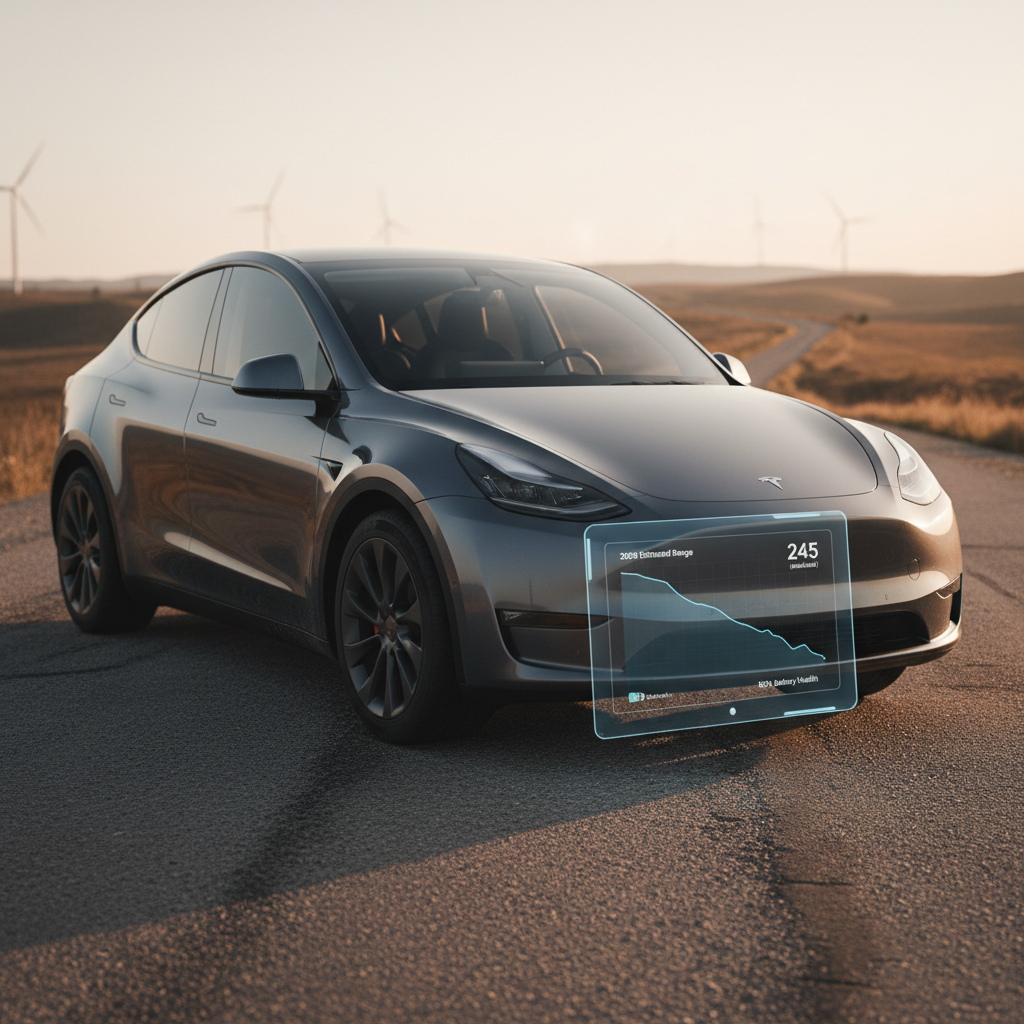
Tesla remains the most recognizable electric car brand, with strong range, smooth software, and the industry’s best fast‑charging network. In 2024 Tesla was the world’s best‑selling EV maker by volume, and its cars dominate US EV registrations.
The flip side: build quality can be inconsistent, cabin design is polarizing, and service experiences vary by region. On the used market, Teslas generally hold value well but battery health and warranty terms still matter, exactly what a Recharged Score is designed to surface.
Detroit’s comeback: GM and Ford
General Motors and Ford have gone from dabbling in EVs to building serious lineups. GM’s Ultium platform underpins everything from the Cadillac Lyriq and Optiq to the Chevrolet Equinox EV and Silverado EV, while Ford leans on familiar badges like F‑150 and Mustang.
For many buyers, these brands feel comfortable: local dealers, familiar controls, and traditional styling. If you’re cross‑shopping used EVs from Tesla versus GM/Ford, check charging options carefully, many new Detroit‑built EVs now support NACS (Tesla-style) ports or include adapters.
How Recharged can help
Ready to find your next EV?
Browse VehiclesChinese electric car brands going global
If you’ve heard that “Chinese EVs are coming,” that’s already old news. Chinese brands dominate global EV production and are rapidly expanding into Europe, Latin America, and other regions. US policy has slowed direct imports for now, but you’ll increasingly see these badges in EV headlines, comparison tests, and, eventually, used listings.
Major Chinese EV brands and sub‑brands
Not all of these sell cars in the US today, but they’re reshaping the global EV landscape.
| Brand or Sub‑brand | Parent Company | Positioning | Where you’re likely to see it first |
|---|---|---|---|
| BYD | BYD | From affordable to premium, very high volume | China, Europe, Latin America; expanding globally |
| Denza | BYD | Premium MPVs and SUVs | China, Hong Kong, entering Europe |
| SAIC MG | SAIC Motor | Value‑oriented hatchbacks & SUVs | UK, Europe, some global markets |
| Nio | Nio Inc. | Premium EVs with battery swap | China, select European markets |
| Firefly | Nio Inc. | Small, higher‑end city EVs | China, Europe (launching mid‑2020s) |
| Xpeng | Xpeng | Tech‑heavy sedans & SUVs | China, Europe |
| Leapmotor | Leapmotor | Affordable city cars & crossovers | China, expanding in Europe via Stellantis |
| Geely | Geely Auto | Parent of Volvo, Polestar, Zeekr, Smart | China, Europe, global via sub‑brands |
| Zeekr | Geely | Premium EVs, youth‑oriented design | China, Europe |
| Chery (Omoda, Jaecoo) | Chery Auto | Crossovers, some plug‑in hybrids, EVs | Europe, Middle East, Latin America |
China is home to both huge automakers and focused EV specialists, often with multiple sub‑brands targeting different price points.
Why Chinese brands matter to US shoppers
European and Korean electric car brands
Europe and South Korea have become EV powerhouses in their own right, especially in the compact and mid-size crossover space. Many of these brands are already familiar to US buyers, but their EV personalities can be very different from their gasoline past.
Standout European and Korean EV brands
From minimalist Scandinavian crossovers to tech-forward Korean SUVs.
Hyundai & Kia
Often the sweet spot for price, range, and features. Models like the Hyundai Ioniq 5/6 and Kia EV6/EV9 deliver strong real‑world efficiency, 800‑volt fast charging, and generous warranties.
Volvo & Polestar
Scandinavian design, strong safety tech, and a focus on sustainability. Volvo’s EX30 and EX90 join Polestar’s coupe‑like EVs for buyers who want clean lines more than flashy screens.
German premium: BMW, Mercedes, Audi
BMW leans sporty (i4, i5), Mercedes goes plush (EQS, EQE), Audi aims for quiet, confident crossovers (Q4 e‑tron, Q8 e‑tron). All bring dealer networks and familiar luxury cues.
Good used EV bets from Europe & Korea
Luxury and performance electric brands
Electric motors make luxury and performance feel almost effortless. That’s why so many high‑end brands have leaned into EVs: instant torque, quiet cabins, and the ability to tune power delivery with software instead of hardware alone.
- Lucid – American luxury with an emphasis on very long range and dramatic interiors. The Lucid Air remains one of the longest‑range EVs you can buy.
- Rivian – Adventure‑first trucks and SUVs, with clever storage and off‑road capability. Great if your idea of luxury involves trailheads more than valet stands.
- Mercedes‑Benz EQ – High‑tech comfort, big screens, and hushed cabins. Ideal if you like your EV to feel like a traditional luxury sedan or SUV, just quieter and faster.
- BMW i‑series – Sporty dynamics, strong driver‑assistance tech, and familiar BMW interiors. The i4 and i5, in particular, make easy transitions from gasoline sport sedans.
- Audi e‑tron family – Conservative styling, comfortable rides, and practical packaging. Less flashy, more “this could be my only car” usable.
“The best luxury EVs hide the complexity. The car just feels calm, fast, and predictable, everything else fades into the background.”
New and niche EV startups to watch
Beyond the big names, a number of smaller brands are trying to carve out specific niches, work trucks, ultra‑cheap city cars, or stylish lifestyle vehicles. Many will never make it to US showrooms, but a few are worth keeping an eye on, especially if you live in EV‑heavy regions or like to buy slightly left‑of‑center vehicles.
Notable newer or niche electric car brands
These brands are smaller or newer than the big global players but could shape future used‑EV choices.
| Brand | Home Country/Region | Focus | Buyer watch‑outs |
|---|---|---|---|
| Slate Auto | United States | Electric pickup that converts to SUV | New company, watch real‑world reliability, dealer/service reach, and long‑term support. |
| Fisker (status evolving) | United States | Lifestyle crossovers and SUVs | Corporate instability and service access; do heavy homework before buying used. |
| VinFast | Vietnam | Crossovers, some US presence | Rapid expansion, changing business model, resale and service continuity are the big questions. |
| Leapmotor | China | Affordable city cars & crossovers | Growing via partnerships; model names may change by market, and support infrastructure can be thin at first. |
| Firefly | China | Compact premium city EVs | Owned by Nio; still very new, so long‑term durability and brand stability need time to prove out. |
Always treat startup brands with extra caution if you’re thinking long‑term ownership or eventual resale value.
Startup risk is real
How to choose the right electric car brand
You don’t need to memorize every electric car brand on earth. You just need a short checklist that lines up your daily life with a brand’s strengths. Start with how you drive, then layer in budget, charging, and how long you plan to keep the car.
Brand‑picking checklist: match the badge to your life
1. Decide how long you’ll keep the car
If you tend to keep cars 8–10 years, brand stability and battery reputation matter a lot. Sticking with established EV players or strong legacy brands can reduce long‑term risk.
2. Map your charging reality
Live in an apartment and rely on public charging? Brands with fast‑charging support and good route planning (Tesla, Hyundai/Kia, many new GM/Ford products) will make daily life easier.
3. Look at software and apps
Some brands nail the basics, reliable apps, accurate range estimates, smooth over‑the‑air updates. Others feel like early smartphones: glitchy and slow. Read owner reviews for your short list of brands.
4. Consider service access
A brilliant EV can still be a headache if the nearest authorized service center is hundreds of miles away. Legacy brands have dealer networks; EV specialists may have fewer but more EV‑savvy locations.
5. Plan for resale or trade‑in
Brands with strong demand and solid reputations for reliability and battery life usually hold value better. That affects your total cost of ownership, especially if you plan to trade in after a few years.
6. Check incentives and eligibility
In the US, federal and state incentives sometimes depend on where a car is built and which brand it is. This can tilt the math between, say, a Korean brand and a US‑built GM or Tesla model.
Use model reputation, not just brand reputation
Buying a used EV: how brand changes the experience
On the used market, choosing between electric car brands is partly about personality, but it’s also about risk. Battery degradation, out‑of‑warranty repair costs, and feature support (like paid connectivity) all vary by brand and model year.
Brands with deeper used EV track records
Some brands simply have more years of EV data behind them: Tesla, Nissan, Chevrolet, BMW, and Hyundai/Kia have been selling plug‑ins long enough that patterns are emerging.
- Tesla, Nissan Leaf, early BMW i models: Lots of real‑world battery data, but earlier cars may lack fast‑charging speed or modern driver‑assistance features.
- Chevrolet Bolt EV/EUV and Hyundai/Kia EVs: Strong efficiency and value, but pay attention to recall history and how previous owners treated the pack.
Newer brands & luxury players
Rivian, Lucid, Polestar, and the latest German and Korean luxury EVs often show up as nearly‑new used cars.
- These can be bargains if first owners take the big depreciation hit.
- They can also be software‑heavy, which makes keeping up with updates and recalls especially important.
With newer brands in particular, a third‑party report that measures actual battery health is worth its weight in range.
Why Recharged focuses on battery health
Frequently asked questions about electric car brands
EV brand FAQ
Key takeaways on all electric car brands
The world of all electric car brands is expanding fast, but your decision doesn’t have to feel overwhelming. You don’t need to know every niche badge in China or Europe. You do need to understand which brands line up with your lifestyle, where and how you’ll charge, and how comfortable you are betting on newer players versus proven names.
If you’re shopping used, especially, think of the brand as the starting point, not the verdict. Let battery health, charging behavior, and real‑world reliability finish the story. That’s exactly what Recharged was built for: pairing transparent diagnostics with clear, brand‑by‑brand context so you can choose the EV that fits your life today and still makes sense years from now.