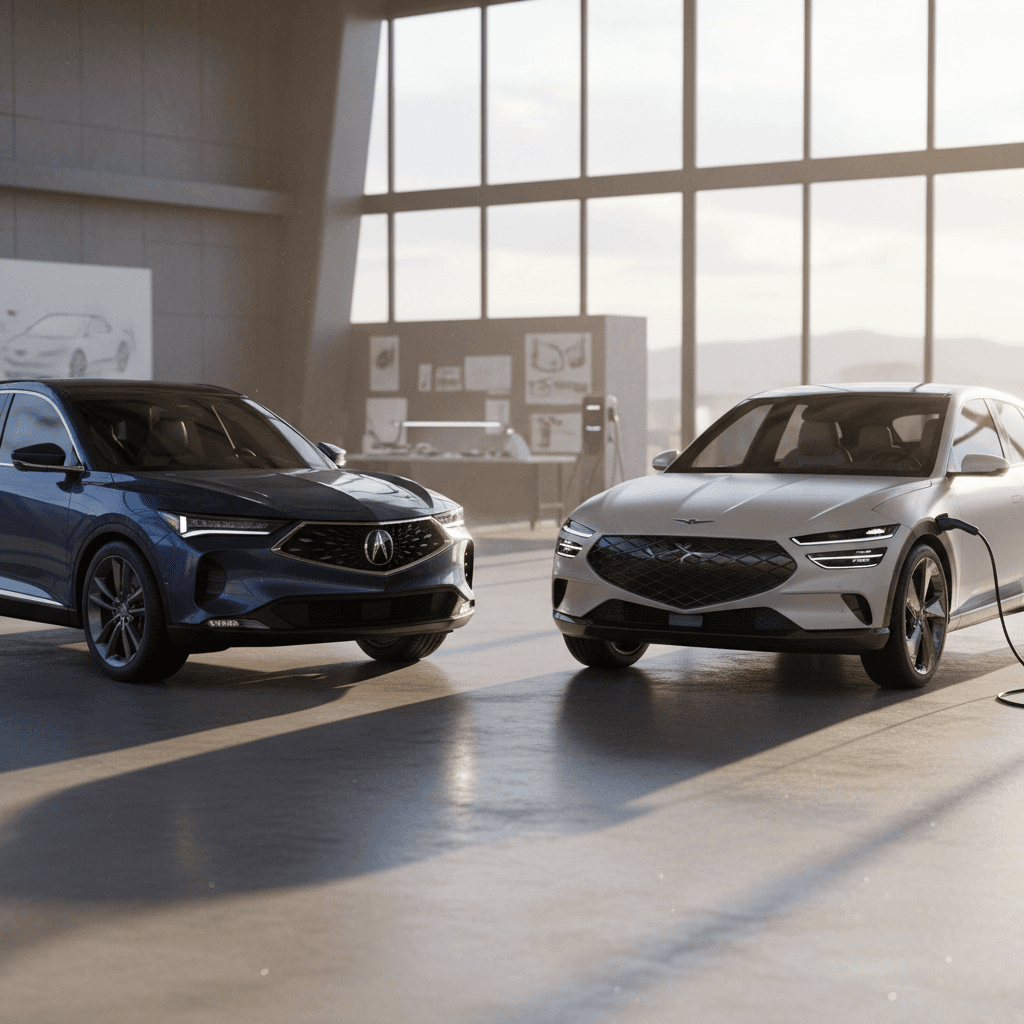
Comparing the Acura ZDX vs Genesis GV60 is a classic “head vs heart” choice in the luxury EV SUV world. The ZDX is a larger, Ultium‑based cruiser with big range and a familiar Acura feel, while the GV60 is a smaller, design‑forward rocket ship packed with tech and personality. The right answer depends on how you drive, how you charge, and how long you plan to keep the car.
At a glance
Acura ZDX vs Genesis GV60: who each SUV is for
Who the Acura ZDX fits best
- You want a larger, midsize SUV with more rear seat and cargo room.
- Range anxiety matters: the ZDX A‑Spec can deliver ~313–325 miles of EPA range depending on configuration.
- Highway comfort and a familiar Acura driving feel matter more than razor‑sharp handling.
- You like the idea of GM’s Ultium platform but prefer Acura styling, dealership experience, and warranty.
- You expect to do longer road trips where battery size is a safety net.
Who the Genesis GV60 fits best
- You want a compact, city‑friendly EV that’s still premium inside.
- Ultra‑fast charging and everyday usability are more important than maximum range.
- You care about design and tech touches (Crystal Sphere shifter, face recognition, V2L power outlet).
- You value Hyundai Group’s long EV warranty and strong reliability track record on E‑GMP.
- You prioritize punchy performance and agile handling over towing or cargo volume.
Quick rule of thumb
Quick specs: Acura ZDX vs Genesis GV60
Key specs comparison
Core hardware differences between most common Acura ZDX and Genesis GV60 variants.
| Spec | Acura ZDX A-Spec RWD | Acura ZDX Type S AWD | Genesis GV60 Standard RWD | Genesis GV60 Advanced AWD | Genesis GV60 Performance AWD |
|---|---|---|---|---|---|
| Platform | GM Ultium | GM Ultium | Hyundai E‑GMP | Hyundai E‑GMP | Hyundai E‑GMP |
| Battery (gross) | ~102 kWh | ~102 kWh | 77.4 kWh | 77.4 kWh | 77.4 kWh |
| EPA range (approx.) | 313–325 mi | ~278 mi | Up to 294 mi | ~248 mi | ~235 mi |
| Horsepower | ~340 hp | ~500 hp | 225 hp | 314 hp | 429 hp (up to 483 hp boost) |
| Drive | RWD | AWD | RWD | AWD | AWD |
| DC fast‑charge peak | Up to 190 kW | Up to 190 kW | Up to 235 kW | Up to 235 kW | Up to 235 kW |
| 0–60 mph (est.) | ~5.5–6.0 sec | Low 4s | ~7.0 sec | ~5.5 sec | ~4.0 sec |
| Towing | Up to 3,500 lbs | Up to 3,500 lbs | 1,650 lbs (approx.) | 1,650 lbs (approx.) | 1,650 lbs (approx.) |
| Size class | Midsize 2‑row SUV | Midsize 2‑row SUV | Compact SUV | Compact SUV | Compact SUV |
Exact numbers can vary by trim and wheel size, but this table captures the big picture.
Headline differences that matter day to day
Range, battery, and efficiency
Range is usually the first filter shoppers apply when comparing the Acura ZDX vs Genesis GV60, and it’s an area where the two SUVs take very different approaches.
- Acura ZDX: Every ZDX uses a large ~102 kWh battery. The single‑motor A‑Spec RWD configuration is rated around 313–325 miles of EPA range depending on wheels, with dual‑motor trims dipping slightly. The sportier Type S on 22‑inch wheels is closer to 278 miles.
- Genesis GV60: All trims share a 77.4 kWh pack. The newer Standard RWD trim can reach roughly mid‑280s to just under 300 miles of EPA range, while the Advanced AWD sits around 248 miles and the Performance around 235 miles.
- Because it carries more battery, the ZDX generally goes farther on a charge, especially on the highway. The GV60 counters with a lighter, more efficient platform that uses less energy per mile but simply has less total energy on board.
Real‑world range reality check
If you routinely do 250‑mile days with limited charging, the ZDX’s larger pack is a meaningful safety margin. If most of your driving is under 60 miles per day with occasional fast‑charge stops, the GV60’s smaller battery is more than adequate and saves weight.
Charging speed and road‑trip usability
Range gets the headlines, but charging speed often matters more in the real world, especially if you road‑trip or don’t have home charging. Here, the Acura ZDX and Genesis GV60 are much closer than the battery sizes suggest, but they get there in different ways.
Charging: Acura ZDX vs Genesis GV60
Both are road‑trip capable, but the GV60 is faster in short stops.
Acura ZDX charging
- DC fast charging: Up to ~190 kW peak on compatible stations.
- Acura estimates adding ~81 miles in 10 minutes on an A‑Spec and ~72 miles on a Type S under ideal conditions.
- 20–80% DC fast charge is quoted around 40–45 minutes, depending on temperature and charger quality.
- AC Level 2: Up to 11.5 kW; a 48‑amp home charger can refill most of the pack overnight.
Genesis GV60 charging
- 800‑volt E‑GMP platform supports up to ~235 kW peak DC charging.
- Real‑world 10–80% times around 18–20 minutes when you find a healthy 350 kW charger.
- Because the pack is smaller, kilometers or miles per minute of charging are extremely competitive.
- AC Level 2 around 10–11 kW, also good for overnight top‑offs.
Think in stops, not just minutes
Another advantage for the GV60 is its Vehicle‑to‑Load (V2L) capability. You can use the car as a giant power bank for tools, camping gear, or even to top up another EV in a pinch. The ZDX doesn’t currently match that flexibility.
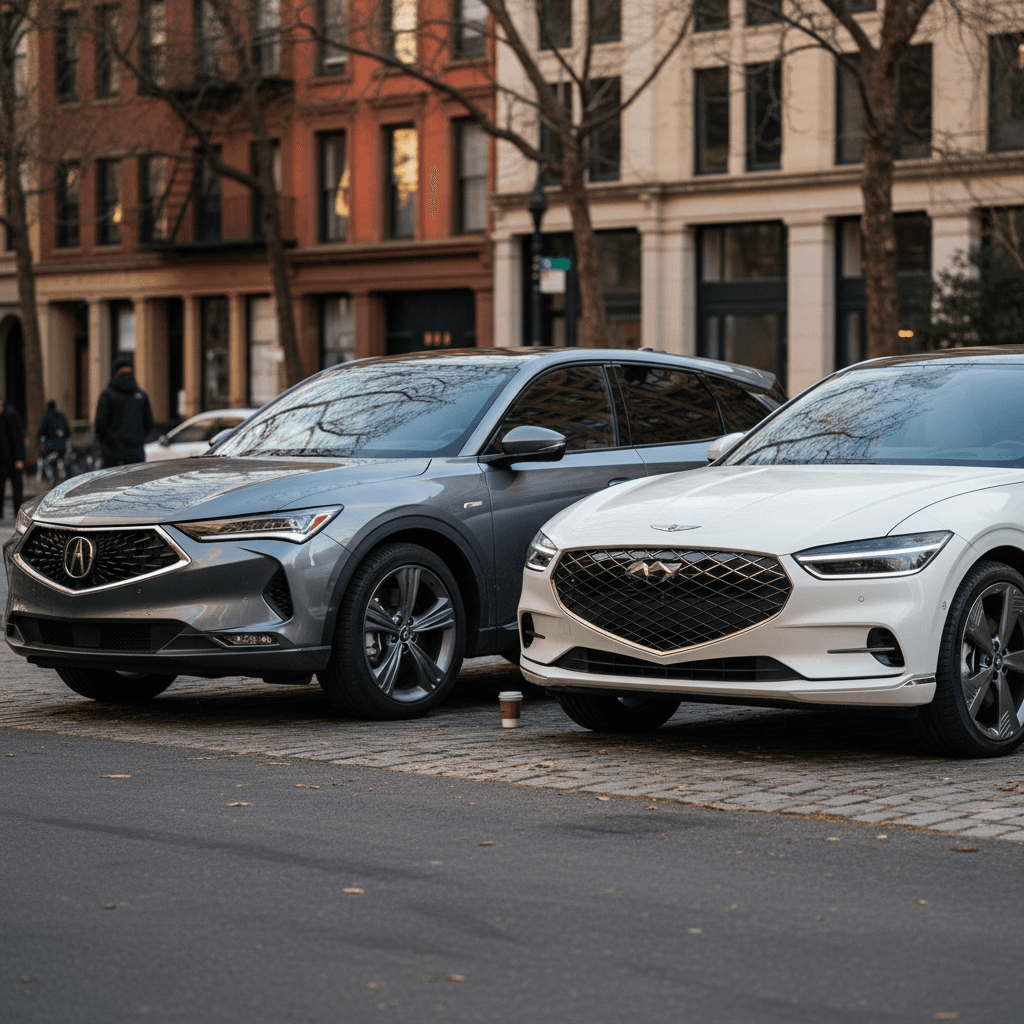
Performance and driving character
Both SUVs are quick by any normal standard, but they express that speed very differently. The Acura ZDX leans into secure, confident acceleration, while the Genesis GV60 runs closer to hot‑hatch territory, especially in Performance trim.
Acura ZDX: composed power
- A‑Spec RWD/AWD trims deliver roughly mid‑5‑second 0–60 mph times when optioned well, more than enough for effortless passing.
- The Type S steps up power significantly, targeting roughly 500 hp and 0–60 mph in the low‑4‑second range.
- Chassis tuning favors stability and comfort over razor‑sharp turn‑in; it feels like an electric MDX more than a sports car.
- Available adaptive dampers and larger wheels on the Type S can tighten things up but also add some firmness.
Genesis GV60: playful and agile
- The Standard RWD is the slowest on paper but still perfectly quick for daily use.
- Advanced AWD feels lively, with instant torque and a compact footprint that makes it enjoyable in city traffic.
- The Performance trim is genuinely fast: dual motors, up to 483 hp with boost mode, and 0–60 mph around 4 seconds.
- Steering is light but accurate, and the shorter wheelbase makes it easy to maneuver and park.
Performance verdict
Interior comfort, tech, and usability
This is where the Acura ZDX vs Genesis GV60 comparison becomes less about raw numbers and more about taste. Acura plays it relatively conservative, while Genesis leans hard into design and tech theater.
Inside the cabins: conservative luxury vs bold design
Both are premium, but they speak very different design languages.
Space & seating
Acura ZDX is a true midsize SUV with more rear legroom and cargo space. Adults will be more comfortable in the back, and the extra length makes highway cruising more relaxed.
Genesis GV60 is closer to a large hatchback or compact SUV. Rear headroom and legroom are fine for most, but it’s tighter for tall passengers and more urban‑oriented.
Infotainment & controls
ZDX runs Acura’s Google‑built‑in interface with a large central screen, plus more traditional physical controls. It’s straightforward, with good voice control and native Google Maps EV routing.
GV60 offers a dual‑screen layout with Genesis’s UX, good CarPlay/Android Auto integration, and more experimental elements like the Crystal Sphere shifter that rotates when you start the car.
Materials & ambiance
Acura leans toward familiar luxury: soft‑touch surfaces, tasteful trim, and a restrained design that won’t shock anyone trading up from an RDX or MDX.
Genesis aims to impress with bold color palettes, distinctive details, and a generally more upscale, boutique feel, especially in higher trims.
Seats and long‑drive comfort
On driver‑assist and safety tech, both SUVs offer a full suite: adaptive cruise, lane‑keeping assist, blind‑spot monitoring, and more. Acura’s systems skew a little more conservative, while Genesis’s lane‑centering and highway assist tend to be slightly more assertive and polished based on owner feedback from other E‑GMP models.
Value, pricing, and incentives
Upfront pricing for the Acura ZDX and Genesis GV60 is broadly similar when similarly equipped, but they take different paths in depreciation, incentives, and long‑term value, especially once you start looking at the used market.
- New pricing (typical MSRP bands): The ZDX A‑Spec and Type S trims generally land in the mid‑$60,000s to mid‑$70,000s. The GV60 Standard tends to start in the low‑to‑mid‑$50,000s when new, with Advanced and Performance trims moving into the $60,000s.
- Federal and state incentives: Because both are built outside the U.S., many configurations won’t qualify for the full federal clean vehicle tax credit as new vehicles. However, used EV tax credits and state/local incentives may still apply when you buy pre‑owned, worth checking before you shop.
- Depreciation: Early data suggests the GV60 has depreciated a bit faster than some rivals, which can make it a compelling value as a 1–3‑year‑old used EV. The ZDX is newer to market, so resale behavior is still stabilizing, but its large battery and Acura badge should help preserve value.
Leasing vs buying
Acura ZDX vs Genesis GV60: which is better to buy used?
From a used‑EV perspective, the Acura ZDX vs Genesis GV60 decision comes down to how you weigh battery size, charging curve, and platform maturity.
Key used‑EV questions for ZDX and GV60 shoppers
1. How much real range do you need?
If you regularly drive 200+ miles in a day or take frequent road trips where charging options are limited, the ZDX’s 100+ kWh battery and 300‑mile‑plus ratings give it a clear advantage. If most of your driving is urban or suburban, a GV60 with 230–280 miles of EPA range is plenty, and you may find better used pricing.
2. How is the battery health?
With any used EV, you want objective data on battery condition, not just a dash display. Recharged’s <strong>Recharged Score battery health diagnostics</strong> use high‑resolution pack data to give you a clear picture of remaining capacity and expected degradation, whether you’re looking at a ZDX or a GV60.
3. What’s your charging reality?
Apartment dwellers or those relying heavily on public fast charging will appreciate the GV60’s exceptional 800‑volt charging curve. If you have reliable Level 2 charging at home and mainly want to minimize stop frequency on road trips, the ZDX’s larger pack may serve you better.
4. Are you sensitive to tech quirks?
The GV60 packs in more novel features (face recognition, Crystal Sphere, V2L). If you love gadgets, that’s a plus. If you prefer a simpler, more conventional interface that will feel familiar to anyone who’s driven a recent Acura, the ZDX is the safer bet.
5. What does total cost of ownership look like?
Insurance, tires, and depreciation can differ meaningfully between trims. A GV60 Performance on sticky tires will cost more to keep in rubber than a ZDX A‑Spec on touring‑oriented all‑seasons. A used‑focused retailer like Recharged can help you compare total monthly cost, not just the payment.
Don’t skip a charging and software check
How Recharged helps you compare and buy confidently
The Acura ZDX and Genesis GV60 are both compelling EVs, but they’re also relatively low‑volume, first‑wave products for their brands. That makes transparency especially important when you’re shopping used.
Why shop a used ZDX or GV60 through Recharged
Data‑driven battery insights, EV‑specialist support, and nationwide convenience.
Recharged Score battery health report
Every EV on Recharged comes with a Recharged Score Report that includes verified battery health, fast‑charging history context, and range expectations. On a big‑battery SUV like the ZDX or a high‑performance GV60, that’s crucial to avoiding surprises.
EV‑specialist guidance from start to finish
Recharged’s team lives and breathes EVs. If you’re torn between a ZDX A‑Spec and a GV60 Advanced, they can walk you through real‑world charging behavior, software updates, and how each fits your daily driving.
Nationwide delivery and flexible selling options
Found your ideal ZDX Type S across the country? Recharged offers nationwide delivery, plus trade‑in, instant offer, or consignment options if you’re selling an older ICE vehicle or EV.
Financing and total‑cost clarity
With built‑in EV‑friendly financing, Recharged helps you compare payment options, estimated energy costs, and potential tax incentives so you can see the full monthly picture, not just sticker price.
Ready to find your next EV?
Browse VehiclesFAQ: Acura ZDX vs Genesis GV60
Common questions about the Acura ZDX and Genesis GV60
Bottom line: which EV SUV should you choose?
If you want a larger, long‑legged electric SUV that feels like a natural step up from an MDX or RDX, the Acura ZDX, especially in A‑Spec form, is the safer, more conventional choice. Its big battery and familiar driving experience make it easy to live with, and it’s a strong candidate if you regularly cover serious highway miles.
If you’re drawn to design, technology, and playful performance, the Genesis GV60 stands out. It’s smaller but more distinctive, with ultra‑fast charging and a cabin that feels more like a high‑end gadget than a traditional SUV. For urban and suburban drivers who value character as much as practicality, it’s arguably the more exciting pick.
The good news is that there’s no wrong answer between the Acura ZDX vs Genesis GV60, only the one that fits your life better. If you want help stress‑testing that choice against your commute, family needs, and budget, Recharged can provide battery‑health data, fair‑market pricing, EV‑specific financing, and end‑to‑end guidance so your next electric SUV is a confident step forward, not an experiment.