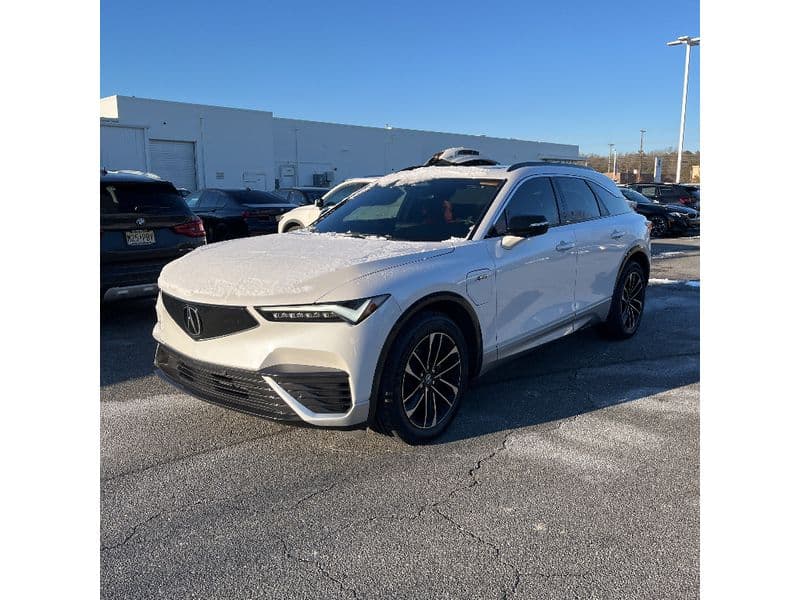
If you’re eyeing an Acura ZDX, whether new or used, you’ve probably heard whispers about depreciation. EVs in general lose value faster than gas SUVs, and early ZDXs have taken especially steep hits in year one. Understanding the Acura ZDX depreciation curve over 5 years is the difference between taking a painful loss and timing a smart, value‑driven purchase.
Quick take
Why Acura ZDX depreciation matters over 5 years
Depreciation isn’t just a theoretical curve on a chart; it’s real money you either lose when you sell or save when you buy used. On a premium electric SUV like the Acura ZDX, a 5‑year depreciation swing can easily move $25,000–$35,000 between the original buyer and the second (or third) owner.
- You’re thinking about leasing or buying a new ZDX and want to avoid being upside‑down on your loan.
- You’re shopping for a used ZDX and want to know when the pricing sweet spot hits.
- You already own a ZDX and are trying to decide when to sell, trade, or ride it out under warranty.
Because the ZDX is a relatively new EV with luxury pricing, its depreciation curve is still settling. But when you combine what we know about EV resale value in general with early market data and incentives on the ZDX, a clear 5‑year story starts to emerge.
How EVs depreciate vs gas SUVs
To understand the Acura ZDX specifically, you have to zoom out to EVs as a whole. Across the U.S. market, recent studies show that electric vehicles lose a larger share of their value over five years than comparable gas vehicles, often landing in the 55–65% loss range for many models, compared with something closer to 45–55% for conventional SUVs.
Typical 5‑Year Depreciation Patterns
The Acura ZDX is a premium crossover with a relatively high original MSRP. That puts it squarely in the part of the market that’s most sensitive to rapid tech improvements, changing incentives, and headline‑grabbing price cuts, exactly the ingredients that make the first few years of depreciation harsher than most buyers expect.
The luxury EV double‑whammy
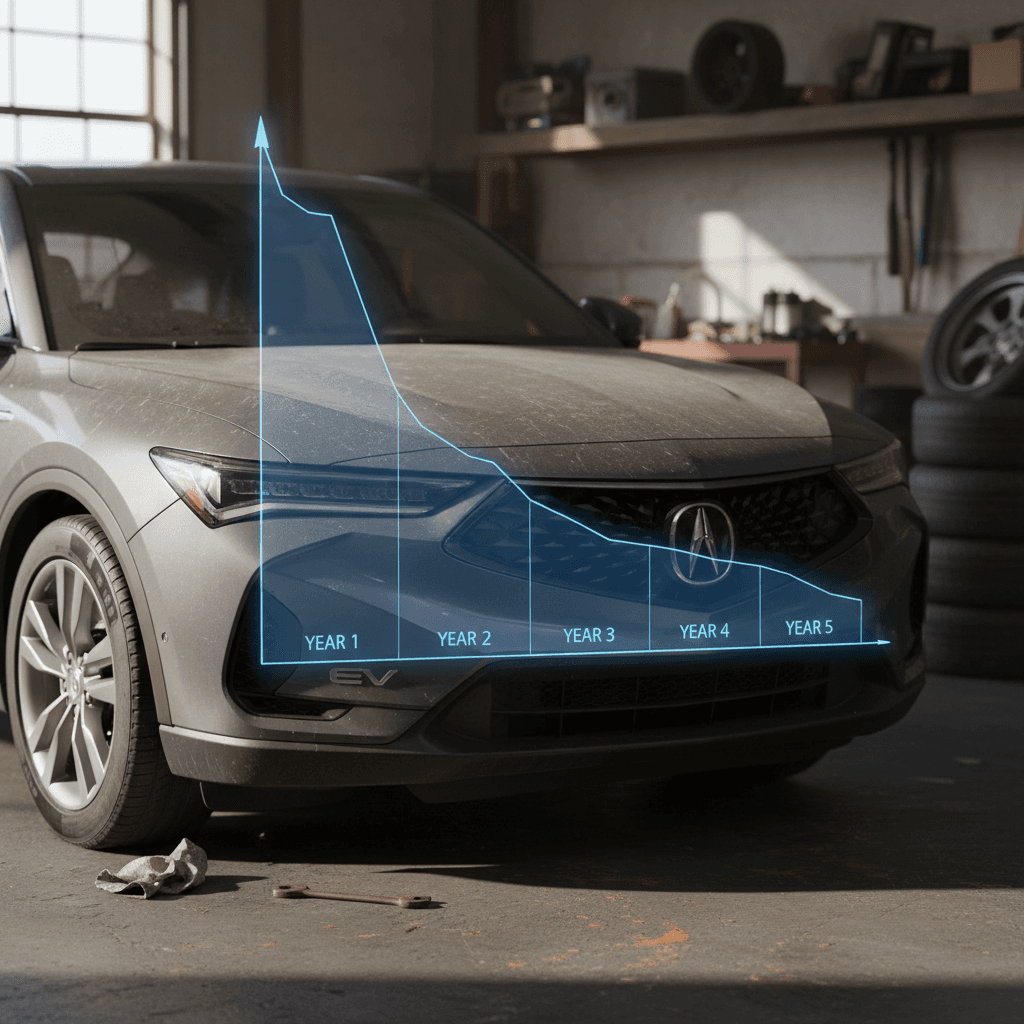
Projected Acura ZDX depreciation curve over 5 years
No one can tell you exactly what any individual ZDX will be worth in 2030, but you can build a realistic working model. Below is a hypothetical 5‑year Acura ZDX depreciation curve based on current EV market behavior, early ZDX resale anecdotes, and typical luxury SUV patterns. To keep numbers concrete, we’ll use a round $70,000 initial transaction price for an A‑Spec or Type S before taxes and fees.
Example 5‑Year Depreciation Curve for a $70,000 Acura ZDX
Illustrative values assuming normal mileage (about 12,000 miles per year), average condition, and a U.S. market that continues to favor buyers in EVs.
| Year | Vehicle age | Approx. value | Total depreciation from new | What this usually feels like |
|---|---|---|---|---|
| 0 | Brand new | $70,000 | 0% | You just rolled off the lot; any sale or trade now takes a big hit. |
| 1 | End of year 1 | $45,000–$50,000 | ≈30–35% | Heavy discounts on new ZDXs plus the usual first‑year drop combine for a painful paper loss. |
| 2 | End of year 2 | $40,000–$44,000 | ≈37–43% | Curve still steep as the market finishes repricing early builds and incentives linger. |
| 3 | End of year 3 | $33,000–$38,000 | ≈46–53% | Sweet spot for used buyers: big depreciation already taken, plenty of warranty left. |
| 4 | End of year 4 | $29,000–$34,000 | ≈51–59% | Battery warranty still active, but remaining term is shrinking, and newer EVs may offer better range/features. |
| 5 | End of year 5 | $25,000–$31,000 | ≈56–64% | Curve has mostly flattened; individual vehicle condition and battery health matter more than model‑wide trends. |
These numbers are directional, not guarantees, but they’re useful for planning payments, equity, and the best time to buy used.
Again, these ranges are directional. A high‑mileage ZDX used for ride‑hailing in harsh climates could land below the curve; a low‑mileage, well‑cared‑for example with clean battery data will often sit at the top of it, or even outperform it slightly.
How this compares to gas crossovers
Real‑world Acura ZDX price drops so far
If you spend any time in ZDX owner forums or dealer listings, a pattern emerges quickly: the earliest buyers paid something close to the full $70,000+ MSRP for Type S models, while shoppers in late 2024 and 2025 could suddenly negotiate $20,000–$25,000 below sticker on low‑mile examples. Some owners now report seeing effectively another $10,000–$15,000 of value gone within the first year.
Translated into simple terms, that means a first‑year ZDX owner might be looking at a real‑world 35–40% loss in year one when compared against what they actually paid, not the original MSRP. This is exactly why so many Acura salespeople quietly nudge ZDX shoppers toward leasing: the bank, not you, eats the bulk of that front‑loaded depreciation.
Why early buyers got hit so hard
Key factors that shape the ZDX depreciation curve
What pushes Acura ZDX values up, or down
Think of depreciation as a tug‑of‑war between market forces and how well a specific ZDX has been cared for.
Original pricing & discounts
The ZDX launched with premium MSRPs in the $60,000–$70,000+ range, then quickly saw heavy incentives and discounts. If thousands of nearly new examples get sold at big markdowns, they effectively reset what the used market will pay for similar builds.
EV tech and charging landscape
Newer EVs keep improving range, charging speed, and software, often at lower prices. At the same time, charging standards are shifting, and buyers are wary of being stuck with yesterday’s tech. That uncertainty is baked into ZDX resale values today.
Battery warranty & health
The ZDX’s high‑voltage battery warranty is 8 years/100,000 miles, with a separate 4‑year/50,000‑mile basic warranty. As the clock ticks down, the remaining coverage (and verified battery health data) is a huge driver of used pricing.
Mileage & use case
A ZDX that’s done 60,000 highway miles in 5 years will sit on a very different part of the curve than a 25,000‑mile commuter garage queen. EV shoppers increasingly scrutinize odometer readings and charge habits, not just model year.
Build quality & reliability
Acura’s reputation for durability helps, but early software gremlins or charging issues can sour demand. As more reliability data arrives, clean‑history ZDXs with documented fixes and maintenance should command stronger prices.
Macro EV market and incentives
Shifts in federal and state incentives, interest rates, and competitors’ price cuts all ripple directly into ZDX values. A sudden $7,500 rebate on new EVs or a round of price cuts from rivals can shave thousands off what used buyers are willing to pay.
Leasing vs buying an Acura ZDX in a high‑depreciation world
When depreciation is this front‑loaded, how you acquire the car matters just as much as which trim you pick. Many ZDX shoppers in 2024–2025 were offered extremely aggressive leases precisely because Acura’s finance partners wanted to control residual risk themselves.
When leasing a ZDX makes sense
- You want the latest tech and plan to move on in 2–3 years as charging, software, and autonomy all evolve.
- You don’t want resale risk. The bank sets the residual value; if the real market falls below it, you can just hand the keys back.
- There are big incentives on leases. In some cases, captive financing arms can pass through tax credits or other discounts more easily on leases than on retail purchases.
When buying (especially used) is smarter
- You’re value‑hunting. Buying a ZDX after the first 2–3 years lets someone else absorb the biggest drops on the curve.
- You plan to keep the SUV 6–8+ years. If you’ll run it deep into its battery warranty and beyond, the annualized depreciation can look much more reasonable.
- You have good battery and condition data. With tools like the Recharged Score, you can distinguish strong used examples from future headaches.
Rule of thumb for the ZDX
How to buy a used Acura ZDX without getting burned
In a market where first‑year ZDX depreciation has been described as “astronomical” by more than one owner, the upside is obvious: if you’re on the buy side of that transaction, you can get a lot of EV for the money. The catch is making sure you’re getting a good example, not just a low price.
Used Acura ZDX 5‑step buying checklist
1. Ignore the original MSRP
The price on the window sticker from 2024 isn’t what matters now. Focus on today’s market comps for similar mileage, trim, and condition. Many early ZDXs already traded hands far below sticker, so measuring depreciation off MSRP can be misleading.
2. Get real battery health data
For an EV, the traction battery is the single most important component. Look for a <strong>formal battery health report</strong>, like the Recharged Score battery diagnostics, rather than relying only on the in‑car range estimate or seller claims.
3. Verify remaining warranty coverage
Confirm in‑service date, current mileage, and exactly how much of the 8‑year/100,000‑mile high‑voltage battery warranty and 4‑year/50,000‑mile comprehensive warranty remains. That affects both your risk and the price you should be willing to pay.
4. Review software and recall history
Ask for documentation on software updates, recall campaigns, and any repeated issues. Early‑build EVs often get better over time as bugs are patched, if, and only if, previous owners have stayed current on updates and service bulletins.
5. Look at total cost, not just price
Fold in financing, insurance, charging costs, and expected depreciation from today’s purchase price. A slightly more expensive ZDX with cleaner history and stronger battery health may be cheaper to own over 5 years than a bargain‑basement example.
Where Recharged fits in
Ready to find your next EV?
Browse VehiclesHow to protect your Acura ZDX’s value over 5 years
If you already own a ZDX, or you’re about to buy one, there’s still a lot you can do to keep your individual vehicle on the upper half of the depreciation curve. Remember, market‑wide trends set the average, but condition, history, and documentation decide where your specific SUV lands relative to that average.
Practical ways to slow your personal depreciation curve
You can’t control macro EV pricing, but you can control how attractive your particular ZDX looks to the next buyer.
Treat the battery kindly
- Avoid living at 100% or 0% state of charge.
- Use DC fast charging when you need it, not every day.
- Park in shade or a garage in extreme heat.
Healthier batteries hold range, and resale, better.
Stay ahead on service
- Follow Acura’s maintenance schedule, even if EV service seems light.
- Keep all receipts and service records.
- Address warning lights promptly rather than deferring fixes.
Clean history sells; deferred maintenance discounts your future asking price.
Avoid accident stories
- Use high‑quality repairs and OEM parts if you do have a collision.
- Document work from reputable shops.
- Fix minor cosmetic issues before they grow.
On modern EVs, structural repairs and airbag deployments are especially damaging to resale.
Document your stewardship
- Keep a simple log of charging habits and long trips.
- Keep photos of the interior and exterior condition.
- Note major software updates or feature additions.
Serious buyers pay more when they can see a car’s full story.
Optimize your charging setup
- Install a reliable Level 2 home charger if possible.
- Charge on off‑peak rates to lower running costs.
- Show prospective buyers how easy your daily routine is.
Low operating costs make higher asking prices easier to justify.
Know your numbers before selling
- Check multiple instant offer tools and dealer bids.
- Compare private‑party values with trade‑in offers.
- Time your sale before major registration or tire expenses.
The more prepared you are, the less likely you are to accept a lowball offer in a panic.
When the ZDX depreciation curve finally flattens
The actionable question for most owners isn’t “What will my ZDX be worth in 2031?” It’s “When does this thing stop free‑falling so I can make a rational decision?” For most premium EVs, the answer is somewhere between years 4 and 6, once the market has fully priced in launch‑era optimism, post‑launch incentives, and the first wave of tech improvements.
- By year 3, the biggest price adjustments from early incentives and price cuts have usually worked their way through dealer and auction channels.
- By year 4, many first owners who leased have returned their ZDXs, increasing used supply but also helping the market find a clear price floor.
- By years 5–6, battery warranty remaining becomes the dominant value driver, and examples with documented health and clean histories start to separate from the pack.
For the Acura ZDX specifically, that suggests a scenario where today’s new buyers see the sharpest curve from years 0–3, while savvy used buyers who come in around years 2–4 enjoy a much gentler slope, especially if they buy well below original MSRP and plan to keep the vehicle through most of its battery warranty.
In EVs, depreciation isn’t just about age, it’s a referendum on how quickly the rest of the market has moved on.
FAQ: Acura ZDX depreciation over 5 years
Frequently asked questions about Acura ZDX 5‑year depreciation
The Acura ZDX is a case study in modern EV economics: a well‑engineered premium crossover caught in a rapidly evolving market where pricing expectations can shift in a single model year. Over 5 years, you should expect it to lose more value than a comparable gas SUV, especially in the first 2–3 years, but that same curve creates real opportunity for informed used‑EV buyers. If you approach the ZDX with clear eyes, realistic expectations, and solid battery data, you can position yourself on the right side of its depreciation curve, whether you’re buying, selling, or deciding when to move on from your current EV.