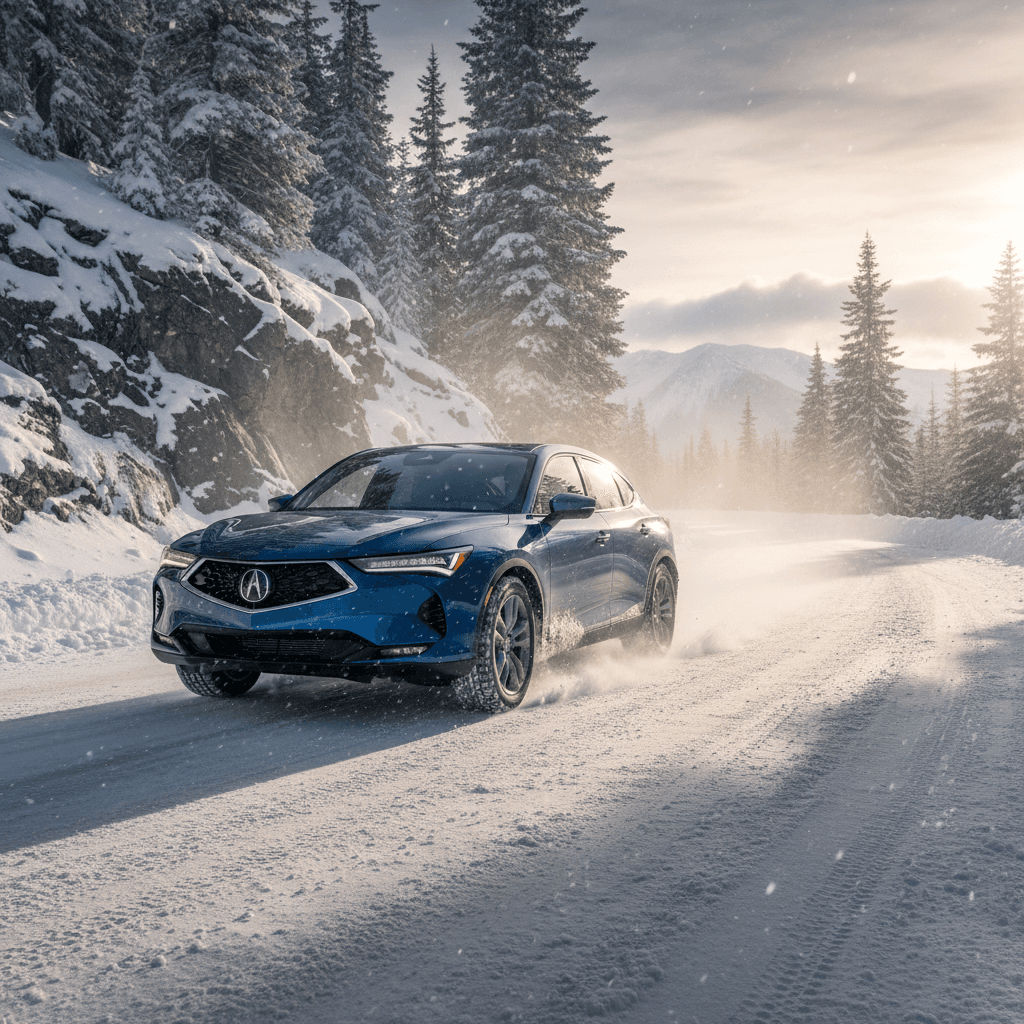
If you live where winter means real snow and ice, you’re probably asking a simple question: is the Acura ZDX good for winter driving? The short answer is that the ZDX can be a confident cold‑weather SUV if you pick the right trim, tires, and settings, and you understand how EVs behave when temperatures drop.
Quick take
Overview: Is the Acura ZDX good in snow and ice?
On paper, the Acura ZDX checks most of the winter-SUV boxes. Dual‑motor all‑wheel drive is available on A‑Spec and standard on Type S, there’s a selectable Snow drive mode, and ground clearance is about 7 inches, similar to many gas crossovers in this class. Owners in snowy regions are reporting that with good winter tires, the ZDX feels as sure‑footed as any comparable AWD SUV, and in some cases better thanks to precise traction control.
Like every EV, though, the ZDX faces two realities in winter: reduced driving range in cold temperatures and different braking behavior when regenerative braking is limited on icy roads. Understanding those trade‑offs is key to deciding whether the ZDX is the best choice for your mix of snow, ice, and highway miles.
Acura ZDX winter fundamentals at a glance
Reality check on winter range
Acura ZDX winter strengths and limitations
Where the ZDX shines in winter, and where it doesn’t
Use this high‑level snapshot before you drill into trim and tire details.
Winter strengths
- Available dual-motor AWD delivers quick, precise torque shifts between axles.
- Snow drive mode softens throttle response and prioritizes traction over acceleration.
- 7 inches of ground clearance is fine for plowed streets and moderate accumulation.
- Heavy curb weight helps stability and straight‑line grip on packed snow.
- Instant electric torque makes merging and hill climbs easy, if you use it gently.
Winter limitations
- Noticeable range loss in deep cold, especially on high‑speed interstate runs with cabin heat high.
- Regenerative braking may be reduced or feel inconsistent until the battery warms.
- Low‑profile OEM performance tires on some Type S models can hurt deep‑snow traction.
- Charging can be slower at DC fast‑chargers when the pack is cold.
- No EV is a substitute for ground clearance and proper tires in unplowed, deep snow.
Owner reports matter
Which Acura ZDX trim is best for snow and ice?
The Acura ZDX lineup gives you a choice between rear‑wheel drive and dual‑motor all‑wheel drive, plus two main trims: A‑Spec and Type S. From a winter‑driving standpoint, the drivetrain and tires matter far more than the extra power or styling cues.
Acura ZDX trims vs. winter driving
How each ZDX configuration stacks up for snow and ice if you live in a cold‑weather state.
| Trim | Drivetrain | Factory Wheels/Tires (typical) | Best use case in winter | Winter verdict |
|---|---|---|---|---|
| A-Spec RWD | Single-motor RWD | 20" all-season | Milder climates with occasional light snow, mostly plowed roads. | Adequate with good all‑weather tires; not ideal for steep, icy terrain. |
| A-Spec AWD | Dual-motor AWD | 20" all-season | Snow‑belt suburbs, mixed city/highway, ski trips on plowed routes. | Best all‑around winter choice; balanced ride, traction, and efficiency. |
| Type S | Dual-motor AWD | 21" performance-biased all-season | Performance‑oriented drivers who still see regular winter weather. | Very capable with winter tires; performance rubber can be a liability in deep snow. |
| Type S w/Performance Package | Dual-motor AWD | Upgraded 22" performance tires in some markets | Dry‑road handling and looks matter most; snow is only occasional. | Swap to smaller wheels and winter tires if you’re in real snow country. |
For serious winters, focus on dual‑motor AWD and room for proper winter tires.
If your winters look like Minnesota, upstate New York, or the Colorado Front Range, the ZDX A-Spec AWD is the sweet spot. You still get dual‑motor traction and Snow mode without the lower‑profile performance tires and extra weight of the Type S. In more moderate climates that plow quickly and rarely see deep accumulation, a Type S on dedicated winter tires can be both fun and secure.
Best overall trim for snow
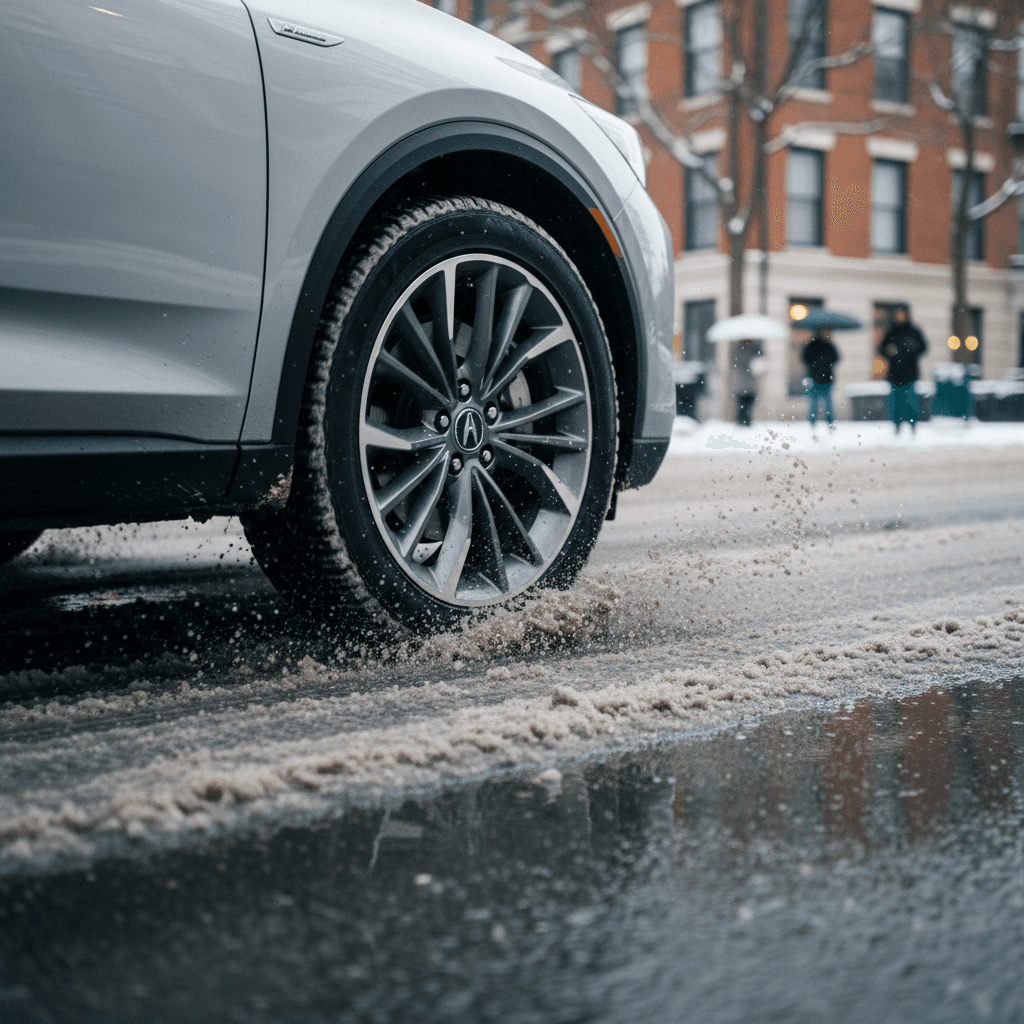
Tires: the biggest factor in ZDX snow performance
Ask any winter‑driving instructor and you’ll hear the same thing: tires matter more than anything else. That’s even more true on a heavy EV like the ZDX, where instant torque and extra mass can overwhelm mediocre rubber on slick surfaces.
- All-season tires: Fine for light snow and cold rain if you’re mainly on plowed roads. They’re what many ZDX models ship with, but they’re a compromise in deeper, colder conditions.
- All-weather tires: Carry the 3‑Peak Mountain Snowflake (3PMSF) symbol and are designed to meet real snow‑traction standards while staying on year‑round. A strong option if you don’t want to swap tires twice a year.
- Dedicated winter/snow tires: The gold standard for traction on packed snow and ice. Softer rubber and aggressive tread dramatically shorten stopping distances and help the ZDX’s traction control do its best work. Ideal for serious snow‑belt living or mountain driving.
Watch wheel size on Type S
ZDX winter tire checklist
Confirm tire type and symbol
Look for the sidewall markings. True winter and many all‑weather tires have the <strong>3‑Peak Mountain Snowflake</strong> icon, indicating they meet an industry snow‑traction standard.
Match tire size to wheel
If you’re switching to a separate winter set, consider a slightly narrower tire on a smaller wheel for better deep‑snow grip and a more compliant ride.
Check load rating for heavy EVs
The ZDX is a heavy SUV, so make sure any replacement tire’s load index meets or exceeds factory spec. Under‑rated tires can overheat or wear quickly.
Adjust TPMS and pressures
After swapping tires, ensure the tire‑pressure monitoring system (TPMS) recognizes the new set and check pressures frequently, cold air drops PSI, and EVs are sensitive to underinflation.
Ground clearance, weight and EV torque in winter
At roughly 7 inches of ground clearance, the Acura ZDX sits in line with many luxury crossovers. That’s plenty for plowed city streets, interstates, and most driveways, but not a recipe for bashing through unplowed back roads with a foot of fresh powder.
The ZDX’s curb weight, well over 5,500 pounds for many AWD trims, has a double‑edged effect in winter. On one hand, extra weight helps the tires bite into packed snow and gives the SUV a planted feel at speed. On the other, it increases stopping distances and punishes any lapse in tire quality or braking technique on ice.
Instant torque: friend and foe
- EV motors deliver peak torque from a standstill, which is fantastic for dry‑road acceleration.
- On snow and ice, that same characteristic can easily spin the wheels if you stab the accelerator.
- The ZDX’s Snow mode helps by softening throttle mapping and torque delivery.
How to use it safely
- Apply the accelerator smoothly and gradually, especially from a stop or on hills.
- Let traction and stability control do their work; don’t try to “power through” slick spots.
- Use Snow mode by default whenever roads are snowy, slushy, or icy.
Don’t rely on power to escape deep snow
Winter range loss and battery care in the ZDX
Cold weather affects every EV battery, and the ZDX is no exception. Chemistry slows down, internal resistance rises, and more energy gets diverted to cabin heat and pack conditioning. The result: the ZDX will not deliver its full EPA range on a 15°F day, especially at 70–75 mph with the heat blasting.
- Plan for roughly 20–40% less range on very cold days, depending on speed, terrain, and how warm you keep the cabin.
- Short city drives are often less efficient than highway runs in winter because the battery and cabin never fully warm up.
- DC fast‑charging can be noticeably slower with a cold pack; if possible, arrive at the charger with the battery already warm from driving.
- Using seat and steering‑wheel heaters is more energy‑efficient than cranking the cabin temp way up.
Preconditioning pays off
Simple habits to protect winter range
Start trips with a warm pack
When possible, finish charging shortly before you leave so the battery is already warm. On longer trips, plan the first fast‑charge after 45–90 minutes of driving.
Use eco or efficiency modes
If your ZDX offers an efficiency‑biased mode, combine it with Snow mode only when roads are clear but cold. On ice, traction takes priority over saving a few miles.
Rely on seat and wheel heaters
Turn on the seat and steering‑wheel heaters and try lowering the overall cabin temperature a couple of degrees to save energy without sacrificing comfort.
Avoid constant 0–100% charges
In deep winter, staying roughly between 20–85% state of charge is easier on the battery for daily use, reserving higher or lower extremes for road trips.
Driving techniques and settings for snow and ice
Hardware is only half the story. How you drive your Acura ZDX in winter, and which settings you choose, makes a big difference in traction, braking feel, and confidence.
Key settings to adjust on snowy days
Set these once the weather turns and leave them there until spring.
Enable Snow mode
Keep stability control on
Re‑think regen levels
- Increase following distance. EVs are heavy, and ice is unforgiving. Leave more space than you would in summer, even with AWD.
- Brake and steer smoothly. Sudden inputs, jabs at the pedal or big steering corrections, are what cause most winter mishaps.
- Look where you want to go. If the ZDX begins to slide, keep your eyes and light steering corrections aimed down your intended path, not at the obstacle you’re worried about.
- Avoid cruise control on patchy ice. If a driven wheel suddenly spins, cruise can add throttle at the wrong moment.
- Clear snow from sensors. Cameras and radar are crucial to driver‑assist systems; keep them free of packed snow and ice.
One‑pedal driving in winter
Shopping a (used) Acura ZDX for cold climates
As the first wave of Acura ZDXs enters the used market, cold‑climate shoppers have a chance to pick up a well‑equipped electric SUV at a discount. If you’re hunting specifically for a ZDX that’s best for snow and ice, it pays to look beyond price and paint color.
Cold‑climate shopping checklist for a used ZDX
Questions to ask and items to inspect when you’re buying a ZDX that will live in snow.
| Item | What to look for | Why it matters in winter |
|---|---|---|
| Drivetrain | A-Spec AWD or Type S (AWD) preferred over RWD. | AWD dramatically improves traction on snow and ice, especially on hills. |
| Tires & wheels | Evidence of a dedicated winter or all‑weather set; ask if it’s included. | A second set of wheels with proper snow tires can save you $1,000+ and headaches. |
| Underbody & wheel wells | Check for excessive rust or packed corrosion from salted roads. | Heavy salt use can accelerate corrosion on suspension and brake components. |
| Charging history in winter | Any fast‑charging issues or error messages in cold weather? | Helps you avoid cars with potential battery or thermal‑management quirks. |
| Software version & updates | Confirm the vehicle has current software, especially for drive‑mode and traction systems. | OEM updates often refine traction control, regen behavior, and energy management. |
These details tell you whether a used ZDX is truly winter‑ready or just snow‑belt‑adjacent.
Use an EV‑specific inspection
How Recharged helps EV shoppers in snowy states
Cold‑climate buyers face a tougher homework assignment than drivers in Phoenix or Miami. You’re not just asking whether a used EV like the ZDX looks clean and drives well, you’re asking how it will behave on a dark January commute with sleet, slush, and a long stretch of unlit highway.
That’s where a platform like Recharged is built to help. Every vehicle listed comes with a Recharged Score Report that includes verified battery health, fair‑market pricing, and expert guidance. For a winter‑bound Acura ZDX shopper, that means you can see how the pack has been treated, compare real‑world range expectations, and get human support from EV specialists who understand cold‑weather concerns.
Shopping a winter‑ready EV with Recharged
Why cold‑climate buyers often prefer a curated marketplace over a random classified ad.
Battery health transparency
Nationwide inventory & delivery
Flexible ways to move on
Ready to find your next EV?
Browse VehiclesIf you need a roomy electric SUV that can cope with real winter weather, the Acura ZDX deserves a spot on your shortlist, especially in A‑Spec AWD form on proper winter or all‑weather tires. It won’t defy the laws of physics or battery chemistry, but with the right trim, rubber, and driving habits, it can be a confident, comfortable companion in snow and ice. The key is to shop with your climate in mind, verify battery and tire condition, and lean on tools like the Recharged Score when you’re deciding which used ZDX is truly ready for your next storm.