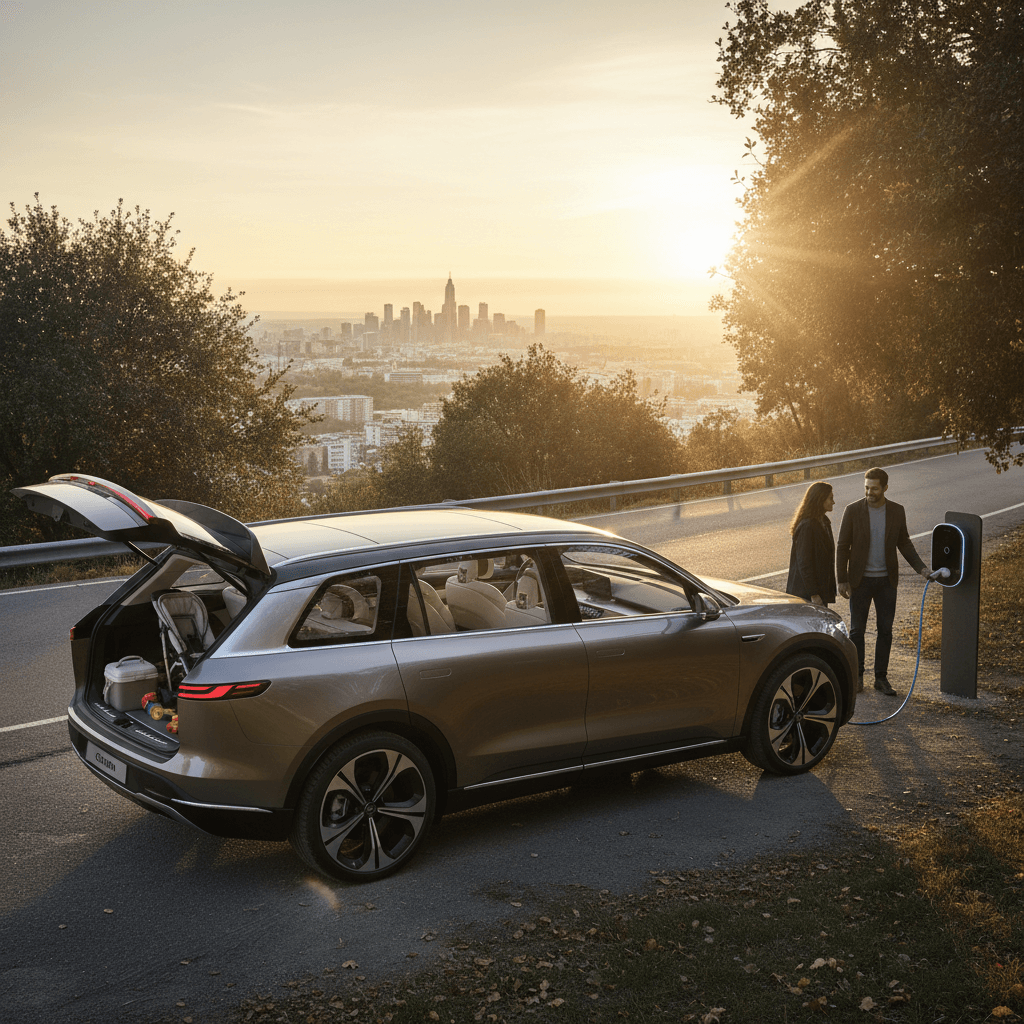
If you’ve got kids, carpools, or a weekend crew, a 7 seater EV is finally a realistic alternative to the traditional three‑row SUV. Just a few years ago, your choices were basically “Tesla Model X or nothing.” In 2025 you can pick from mainstream options like the Kia EV9, adventure rigs like the Rivian R1S, and even electric vans like Volkswagen’s ID. Buzz.
Good news for big families
Why 7‑Seater EVs Are Finally Taking Off
Electrifying a three‑row SUV isn’t trivial. You’re stacking a heavy battery pack under a tall, boxy body and asking it to carry seven people, their gear, and sometimes a trailer. Early EV platforms just weren’t optimized for that kind of mass and volume. Newer dedicated EV architectures, like Hyundai‑Kia’s E‑GMP, Rivian’s skateboard, or GM’s Ultium, finally make large, efficient 7‑seat EVs possible.
- Bigger, flatter battery packs free up cabin and cargo space.
- More efficient motors and inverters offset the extra weight of a third row.
- 400–800V architectures allow quicker DC fast charging, which matters on family road trips.
- Automakers have proof that families will actually pay for an electric three‑row if it’s done right.
Think beyond the spec sheet
7‑Seat EV Market Snapshot (U.S., 2025)
Quick‑Glance: Top 7‑Seater EVs in 2025
Here’s a high‑level look at the 7‑seat EVs families in the U.S. are most likely to cross‑shop in 2025. Exact prices and ranges vary by trim, but this gives you the basic lay of the land.
Key 7‑Seat EVs for U.S. Families (2025)
High‑level comparison of notable three‑row EVs. Specs are approximate and focus on family‑relevant factors rather than every configuration.
| Model | Seats | Approx. Range* | Starting Price* | Third Row | Best For |
|---|---|---|---|---|---|
| Kia EV9 | 6–7 | ~230–300 mi | ~$56k | Adult‑friendly, especially with captain’s chairs | All‑around family SUV value |
| Rivian R1S | 7 | ~270–400 mi | ~$78k | Good for adults, very configurable | Adventure and off‑road families |
| VW ID. Buzz (LWB) | 6–7 | ~230 mi | ~$60k | Van‑like, upright, flexible | Families who love van practicality |
| Tesla Model Y (3‑row option) | 7 | ~260–310 mi | ~$52k w/ 3rd row | Tight, kid‑only | Budget‑minded Tesla shoppers |
| Tesla Model X | 6–7 | ~330 mi | ~$86k | OK for teens, not huge | High‑end Tesla loyalists |
| Mercedes‑Benz EQS SUV | 5–7 | ~310 mi | ~$90k+ | Optional, tight | Luxury comfort focus |
| Volvo EX90 | 7 | ~300 mi (target) | ~$81k | Family‑friendly | Safety‑first premium buyers |
| Cadillac Escalade IQ | 7 | ~450+ mi (est.) | ~$130k | Huge, luxurious | Big‑SUV luxury and towing |
| Lucid Gravity | 5–7 | ~450 mi (target) | ~$97k | Configurable | Luxury + maximum range |
Always confirm exact specs for the trim you’re shopping, ranges, prices, and third‑row details can change year to year.
Beware of trim‑level traps
Spotlight: Kia EV9 vs Rivian R1S
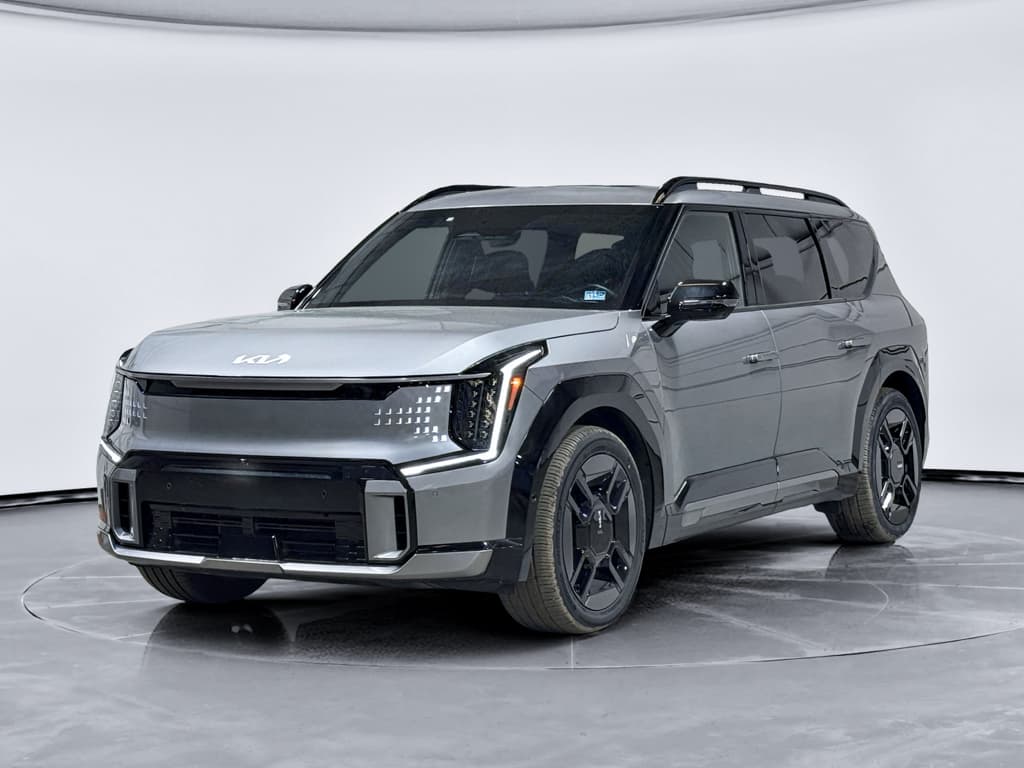
If you’re serious about a 7‑seater EV today, two models should be at the top of your list: the Kia EV9 and the Rivian R1S. They both offer legit adult‑usable third rows, solid range, and modern fast‑charging, but they take very different approaches.
Kia EV9: The New Default Family EV
- Packaging: Boxy, Telluride‑like footprint with a genuinely usable third row, especially with available captain’s chairs in the second row.
- Range & charging: Roughly 230–300 miles depending on trim, with fast‑charging that can add about 100 miles in around 10–15 minutes under ideal conditions.
- Experience: Calm ride, straightforward controls, and a price ladder that starts in the mid‑$50k range. Feels like a modern family SUV that just happens to be electric.
- Downsides: Not an off‑roader; base trims can feel a bit plain, and some desirable driver‑assist or luxury features live on higher trims.
Rivian R1S: Electric Adventure Bus
- Packaging: Short overhangs and an upright body hide huge interior space, with a 2‑3‑2 layout and good head‑ and legroom in all rows.
- Range & charging: Depending on battery, roughly 270–400 miles of rated range and strong DC charging performance. Over‑the‑air updates continue to refine efficiency.
- Experience: More power than most families will ever use, legitimate off‑road hardware, beautiful minimalist interior, and excellent ride-height adjustability.
- Downsides: Pricing starts much higher than the EV9, ride can be firmer, and charging/network planning takes more thought if you’re far from major corridors.
Which one is “better”?

Other Notable 7‑Seat EVs (Model Y, ID. Buzz, Escalade IQ and More)
Quick Profiles of Key 7‑Seat EVs
Where each three‑row EV fits in the market
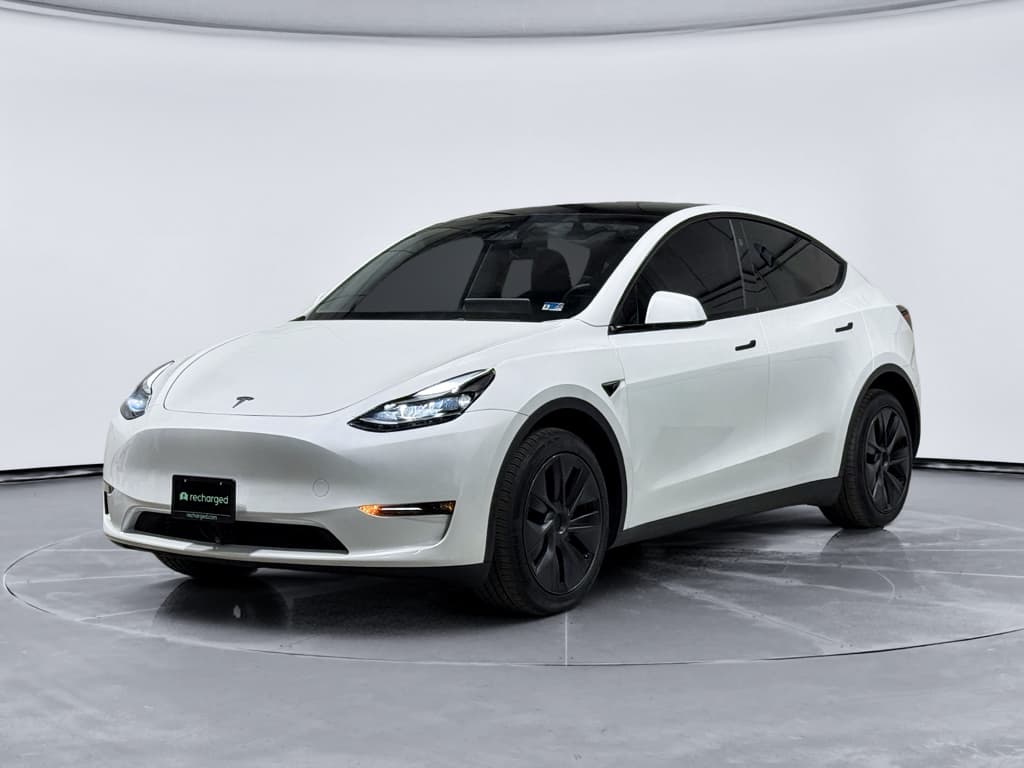
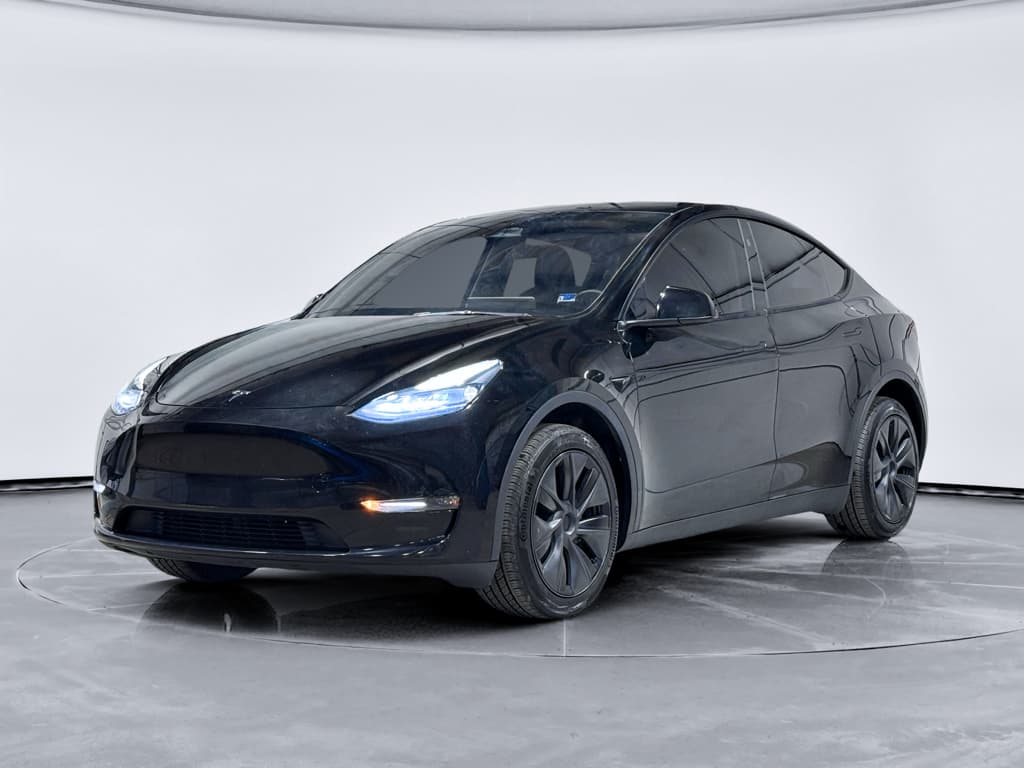
Tesla Model Y (7‑Seat Option)
What it is: A compact crossover that can be optioned with a tiny third row.
- Good range, access to Tesla Superchargers, strong software and OTA updates.
- Third row is kids‑only and cargo space takes a big hit when all seats are up.
- Best if you occasionally need 7 seats, not every day.
Tesla Model X
What it is: Tesla’s long‑running three‑row SUV with Falcon Wing doors.
- Excellent range and performance, distinctive looks.
- Interior and infotainment feel a bit dated versus newer rivals, and pricing is steep.
- Good choice for Tesla loyalists who want more space than a Model Y.
Volkswagen ID. Buzz
What it is: An electric minivan in disguise, with standard 3‑row seating in U.S. long‑wheelbase form.
- Seats six or seven depending on configuration, with huge windows and a friendly, retro style.
- Range is closer to the low‑200‑mile band; think family hauler, not cross‑country road warrior.
- Great if you miss minivans but want something cooler in the school pickup line.
Volvo EX90
What it is: The electric successor to Volvo’s XC90.
- Standard three rows, a tech‑heavy cabin, and Volvo’s typical safety focus.
- Pricing is firmly premium, but still undercuts ultra‑luxury options.
- Ideal if safety tech and Scandinavian design sit at the top of your list.
Cadillac Escalade IQ
What it is: A full‑size Escalade reinvented as an Ultium‑based EV.
- Enormous interior, serious towing, and projected range north of 400 miles on some versions.
- Price, size, and weight are all extreme; this is more rolling penthouse than family shuttle.
- Best for buyers cross‑shopping high‑end luxury SUVs rather than mainstream crossovers.
Lucid Gravity & Others
What they are: New wave of luxury three‑row EVs with sports‑sedan levels of performance.
- Lucid Gravity promises ~450 miles of range, big power, and a flexible, flat‑folding cabin.
- Mercedes‑Benz EQS SUV and EQB also offer optional third rows for certain configurations.
- These are aspirational products; depreciation could make them interesting used buys later.
What about non‑U.S. 7‑seat EVs?
7‑Seater EV vs Hybrid vs Gas SUV: Which Fits You?
Full EV (Battery‑Electric)
- Pros: Lowest running costs, smooth and quiet driving, no tailpipe emissions, access to HOV or local incentives in some states.
- Cons: Needs home or reliable public charging, range drops in cold weather and at highway speeds, towing cuts range significantly.
- Best for: Families with home charging who mostly drive under 200 miles in a day and take a few well‑planned road trips per year.
Plug‑In Hybrid (PHEV)
- Pros: Short‑trip electric driving plus gas backup; easier road trips without charging anxiety.
- Cons: More complexity (engine + EV powertrain), smaller battery means short EV‑only range, still needs gas and more maintenance.
- Best for: Households not ready to commit to full EV but who can plug in most nights and want to cut gas use drastically.
Conventional Gas or Hybrid
- Pros: Familiar, easy road‑trip logistics, abundant refueling options, broad model choice including used.
- Cons: Higher operating cost long‑term, more noise and vibration, emissions, plus potential future policy pressure on gas SUVs.
- Best for: People who tow heavy, road‑trip constantly in remote areas, or lack any reliable access to charging.
How to sanity‑check your use case
Buying a Used 7‑Seater EV: What Really Matters
As more early adopters trade out of their first three‑row EVs, the used market is starting to include 7‑seat Model Ys and Xs, Rivian R1S builds, and eventually EV9s, EX90s and others. That’s where Recharged comes in: a transparent used‑EV marketplace is critical when battery health and charging behavior matter as much as mileage.
Unique Risks With Used 7‑Seat EVs
Why you can’t just treat them like any other used SUV
Battery Health & Fast‑Charge History
Large three‑row EVs often see a lot of road‑trip duty, which means frequent fast charging. That’s fine within design limits, but high‑mileage DC fast‑charging can accelerate battery wear.
Look for a verified battery health report (like Recharged’s battery‑diagnostic Recharged Score) and ask how the vehicle was primarily charged, at home Level 2, or almost always on the road.
Interior Wear and Third‑Row Usage
Seven seats usually means kids, car seats, and a lot of climbing in and out of the third row. Check for broken seat releases, worn carpets, stained upholstery, and rattles in the rear quarter area.
A clean interior doesn’t just look better; it often indicates a more careful owner and fewer hidden surprises.
Used 7‑Seat EV Inspection Checklist
1. Get a real battery health report
Don’t rely on a dash‑displayed “range at 100%.” Ask for a professional battery diagnostic that measures pack capacity versus original. Every EV listed on Recharged includes a <strong>Recharged Score battery health report</strong> so you know what you’re getting.
2. Verify all seven seats and belts
It sounds obvious, but confirm that all seven seating positions, headrests, and belts are present and functioning. Some owners remove third‑row seats for cargo and never reinstall hardware correctly.
3. Test‑fold every row
Fold and unfold the second and third rows multiple times. Check latches, power‑fold mechanisms (if equipped), and access levers. Broken third‑row releases are more common than you’d think.
4. Check charging behavior and connectors
Confirm what connector the car uses (NACS vs CCS) and whether adapters are included. On a test drive, plug into both Level 2 and, if possible, a DC fast charger to make sure charging sessions start and stop cleanly.
5. Scrutinize tires and alignment
Heavy three‑row EVs are hard on tires and suspensions. Uneven tire wear or tramlining on the highway can hint at alignment issues or worn components that add cost right after purchase.
6. Understand software and warranty coverage
Ask what software features are included (driver‑assist packages, connectivity, etc.) and verify battery and drive‑unit warranty terms. Some brands offer 8–10 years of coverage that transfers to you.
How Recharged helps on the used side
Ready to find your next EV?
Browse VehiclesCost, Charging and Road Trips in a 7‑Seat EV
The question everyone eventually asks: can a 7 seater EV really replace our gas family SUV for road trips, and will it save us money? The short answer is yes for many households, but only if you’re realistic about charging and plan a bit.
Running Costs vs Gas
- Electricity vs gas: Even at average U.S. residential rates, powering a large EV tends to cost significantly less per mile than filling a comparable gas SUV, especially if you can charge mostly at home.
- Maintenance: No oil changes, fewer moving parts, and regenerative braking mean lower routine maintenance, though tires may wear faster due to weight and torque.
- Depreciation: Three‑row EVs are new enough that we’re still learning how they depreciate. Buying used, with verified battery health, can shield you from the steepest early‑years drop.
Road‑Trip Reality
- Plan your stops: With kids on board, you’re probably stopping every 2–3 hours anyway. Use that natural rhythm to line up 20–30 minute DC fast charges.
- Pack smart: Roof boxes and hitch racks hit range. So does driving 80+ mph. If you’re towing, assume a big range penalty and plan extra stops.
- Use apps: Tools like A Better Routeplanner, PlugShare, or built‑in trip planners in EV9/R1S make long trips far more predictable.
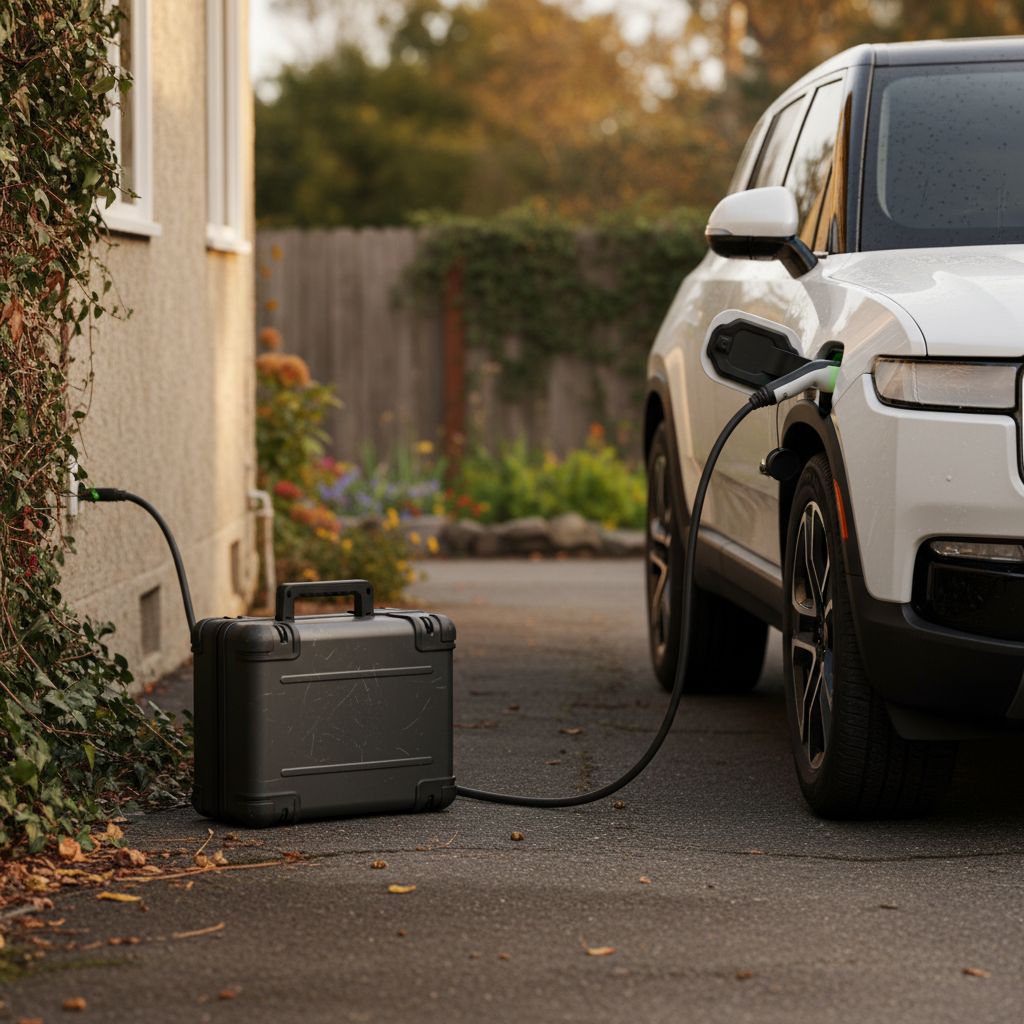
Don’t ignore home charging
Checklist: Choosing the Right 7‑Seater EV
Seven Questions to Answer Before You Sign
1. How often do you actually need all seven seats?
If you only cram seven people in a handful of times per year, a 3‑row option like a Model Y might be enough. If you’re running a constant soccer shuttle, prioritize a truly adult‑usable third row like EV9, R1S, EX90, or ID. Buzz.
2. What’s your realistic daily mileage?
Look at your longest regular days, not the once‑a‑year outlier. If that number is under ~200–250 miles, almost any 7‑seat EV with home charging will feel easy to live with.
3. Can you install (or do you already have) home Level 2 charging?
This is the single biggest quality‑of‑life upgrade. A simple 240‑volt circuit in your garage or driveway turns every night into a “full tank.” If that’s not possible, favor vehicles with the fastest DC charging and a strong public‑charging ecosystem.
4. Do you tow or carry roof boxes often?
If yes, look at models with higher tow ratings (R1S, Escalade IQ, EX90) and go for more range than you think you need to account for drag and weight penalties.
5. What’s your comfort and luxury expectation?
A well‑equipped EV9 or EX90 may hit the sweet spot between mainstream and luxury. If you’re cross‑shopping Escalades and Range Rovers, the Escalade IQ or Lucid Gravity will feel more aligned with your expectations.
6. How sensitive are you to tech and UX?
Some drivers love Tesla’s minimalist approach; others prefer more traditional controls. Spend real time in the infotainment and driver‑assist systems on a test drive, you’ll live with these decisions every day.
7. New or used, and how much do you value transparency?
Buying used can unlock a 7‑seat EV at a more accessible price point, but only if you understand the battery. Shopping through <strong>Recharged</strong> means every vehicle comes with a transparent Recharged Score, pricing data, and EV‑savvy support from start to finish.
7‑Seater EV FAQ
Frequently Asked Questions About 7‑Seat EVs
The Bottom Line on 7‑Seat EVs
A few years ago, wanting a 7 seater EV meant forcing your life to fit one or two quirky products. In 2025, you can choose between mainstream family haulers like the Kia EV9, rugged electric adventure rigs like the Rivian R1S, and futuristic people‑movers like Volkswagen’s ID. Buzz or Cadillac’s Escalade IQ.
The real trick is matching the platform to your reality: how often you fill all seven seats, where and how you charge, whether you tow or road‑trip, and how much you care about luxury versus value. Get those answers right and a three‑row EV doesn’t just “work”, it can actually be easier to live with than a gas SUV.
If you’re ready to explore real vehicles, not just spec sheets, Recharged can help you compare used 7‑seat EVs with verified battery health, transparent pricing, and EV‑savvy guidance. That’s how you turn a big, future‑proof purchase into a confident, informed decision instead of a leap of faith.