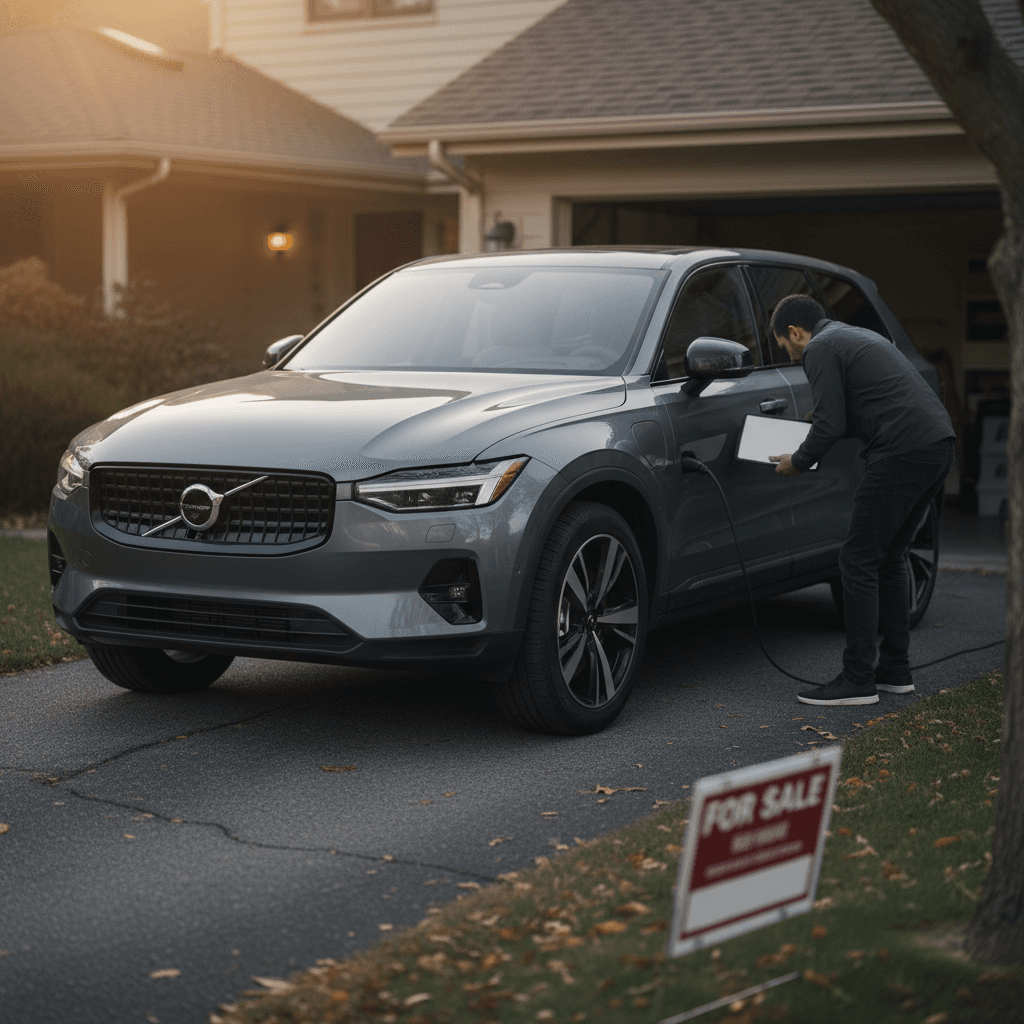
The 2026 Volvo EX90 arrives on the used market with the aura of a Scandinavian design object and the baggage of a first‑generation, software‑heavy electric SUV. If you’re hunting for a 3‑row luxury EV and have typed “2026 Volvo EX90 review used” into a search bar, you’re probably wondering: is this the safe, sensible choice Volvo promises, or an $80,000 beta test with a Carfax?
A Quick Snapshot
Overview: What the 2026 Volvo EX90 Is Like Used
2026 Volvo EX90 Key Numbers (U.S. Models)
On paper, the EX90 is everything families said they wanted from an electric XC90: three real rows, a calm Scandinavian interior, a serious safety mission, and enough range to get the kids to grandma’s without therapeutic intervention. The 2026 model year brings important updates, most notably an 800‑volt electrical architecture that dramatically improves DC fast‑charging speeds, just as the earliest 2024–2025 examples start circulating through the used market.
As a used EV, the EX90’s value proposition rests on three pillars: comfort that rivals anything in the segment, class‑leading safety hardware and software, and aggressive early depreciation that can work in your favor if you buy thoughtfully. The other side of the coin: patchy early reliability reports, complex software, and changing hardware spec, especially around lidar, that make build‑sheet literacy essential.

Driving Experience: Quiet, Calm, and Occasionally Glitchy
What It Feels Like to Drive
The EX90 is tuned for serenity, not slapstick. Even the Twin Motor Performance versions are more about seamless thrust than theater; you waft rather than lunge. Steering is light, body motions are well‑damped, and cabin isolation is excellent, kids can sleep in the third row while you carve up I‑95.
Ride quality is generally plush, especially on smaller wheels. The big‑wheel, big‑tire options look great on Instagram but add a low‑frequency thump over broken pavement, and nibble at range.
Quirks and Glitches
Early owners have reported annoyances that range from the merely modern (infotainment freezes, phone key misbehavior) to the more concerning (sensor faults, 12‑volt issues that can keep the car from waking up). Many of these are software‑side and addressed with over‑the‑air updates, but in a used EX90, you’re inheriting someone else’s update history.
If you’re coming from a gas XC90, expect less mechanical drama and more software theater. The good news: when it’s behaving, the EX90 delivers one of the most relaxed, confidence‑inspiring drives in the segment.
Test-Drive Tip
Range and Charging: Real-World Numbers vs Brochure Dreams
Volvo quotes roughly 300 miles of range for the dual‑motor EX90 depending on wheels and trim, with the 2026 update slightly adjusting battery capacity and efficiency. In the real world, think closer to 230–260 miles on the highway at U.S. speeds, more in city and suburban use where regen braking shines.
Real-World Range Expectations
What you’ll likely see in a used 2026 EX90 with healthy battery
Suburban commuting
260–290 miles between charges with mixed driving, moderate climate, and 19–20" wheels.
70–75 mph highway
220–260 miles depending on wind, temperature, and how many roof boxes and bikes you’ve lashed to it.
Cold‑weather use
In real winter, teens and 20s °F with heat on, plan on 30–40% less range, especially for short trips.
Charging the 2026 EX90: What to Expect
Approximate experiences for a healthy battery, from real owner reports and manufacturer guidance.
| Charging Type | Power (approx.) | 0–80% Time | Best Use Case |
|---|---|---|---|
| Level 1 (120V home outlet) | 1–2 kW | 30+ hours | Emergency top‑ups only |
| Level 2 (240V, 40A home or public) | 9–11 kW | 8–10 hours | Overnight home charging, workplace charging |
| DC fast (400V stations) | up to ~150 kW | ~30–40 minutes | Road trips on existing networks |
| DC fast (800V capable) | higher peak on compatible 800V stations | ~20–30 minutes | Best‑case scenario with 2026’s 800‑volt hardware |
Exact speeds vary by charger, temperature, and state of charge, but this table gives you the ballpark.
800-Volt Architecture Matters
Wheel Size vs Range
Tech & Safety: Lidar Drama and Driver-Assistance Reality
Safety is the EX90’s whole pitch. From launch, Volvo wrapped the SUV in a belt of radar, cameras and roof‑mounted lidar, backed by enough compute power to run a startup. For 2026, the story gets more complicated: Volvo has publicly moved away from its lidar supplier and shifted lidar from standard to optional equipment on the EX90, even as lawsuits fly and forums buzz.
What You’re Likely Getting
- Advanced driver assistance (Pilot Assist, lane‑keep, adaptive cruise) for highway cruising.
- 360° camera, parking sensors, cross‑traffic alerts.
- Interior driver‑monitoring watching eye movements and attention.
- Over‑the‑air software updates that can add or refine features over time.
Even without lidar, the EX90 remains one of the most over‑engineered safety cocoons on the used market.
The Lidar Question
Some 2024–2025 EX90s shipped with roof lidar as standard. Starting with 2026, many builds make it optional or delete it in favor of a camera‑heavy sensor suite. For you, the used shopper, that means two things:
- Resale complexity: Future buyers may value lidar‑equipped cars differently.
- Repair and availability: Lidar hardware is expensive; verify its condition and coverage.
Always decode the VIN or inspect the roof carefully and request the original window sticker if possible.
The Core Safety Good News
Reliability & Ownership: First-Gen Growing Pains
Let’s address the Nordic moose in the room: early EX90 reliability has been mixed. Owner reports include cars taken back for extended factory investigation, repeat visits for 12‑volt and sensor‑related issues, headlight and key‑fob glitches, and software behaviors that range from “quirky” to “lemon‑law attorney on speed dial.” This is not unique in the luxury EV world, but it is real.
Common Themes From Early EX90 Owners
Not every car will have these issues, but they’re patterns worth knowing.
Low-voltage gremlins
Some owners report repeated 12‑volt battery or controller issues that prevent the car from waking or starting, even when the main pack is fine.
Sensor & software faults
Random warnings, lidar or camera faults, and driver‑assist features that drop out or resist acceleration until reset.
Dealer dependence
Many fixes require software reflashes or complex diagnostics. Your experience will heavily depend on how competent and EV‑savvy your local Volvo retailer is.
Why a Generic Inspection Isn’t Enough
Battery longevity is likely to be good by design, Volvo is conservative with thermal management, and daily‑use charge limits (often defaulting to around 90%) protect the pack. But replacement costs on a 100‑plus‑kWh luxury pack can be eye‑watering, and warranty language and coverage details matter. On a used 2026 EX90, you want documentation of software updates, repair history, and any campaigns or recalls completed by Volvo.
Running Costs, Insurance, and Incentives on a Used EX90
The EX90 is not a cheap date, but daily running costs can be kinder than a gas XC90 or German rival. Electricity is generally cheaper per mile than premium fuel, and there’s almost no routine engine maintenance. Where the EX90 bites is in insurance, tires, and potential out‑of‑warranty repairs on complex electronics.
- Electricity vs fuel: Even at average U.S. residential rates, you’re typically paying the equivalent of $1–$2 per gallon for energy if you charge at home off‑peak.
- Maintenance: No oil changes, fewer moving parts, but you still have brake fluid, cabin filters, tires, and alignment. Heavy, powerful EVs like the EX90 can be hard on tires.
- Insurance: Luxury EVs with expensive bodywork and sensors tend to carry higher premiums. Shop quotes on the specific VIN before you fall in love.
- Incentives: While the new‑EV federal tax credit situation changes, some states and utilities offer rebates or reduced rates for used EVs or home chargers. It’s worth a call to your utility before installing Level 2 at home.
Pair It With Smart Financing
Used Market, Pricing & Depreciation: Where Values Are Heading
New EX90s have launched with MSRPs largely in the $80,000–$90,000 range depending on trim and options. Historically, luxury Volvos have depreciated faster than German rivals, and early EVs, even luxury ones, have seen steep first‑owner depreciation as technology marches on and new incentives come and go.
2026 Volvo EX90: Used Value Snapshot (U.S.)
Generalized picture based on early market behavior and comparable luxury EVs. Your local market, incentives, and trim will vary.
| Age / Mileage | Likely Positioning | What You Should Expect |
|---|---|---|
| 1–2 years / <20k miles | Lightly used, CPO candidates | 5‑figure discount from original MSRP, still under most factory coverage. |
| 2–4 years / 20k–45k miles | Sweet spot for value | Much lower price, still modern tech, but scrutinize software and battery health carefully. |
| 4+ years / >60k miles | High‑mileage pioneers | Attractive pricing, but only for buyers comfortable with out‑of‑warranty electronics and complex driver‑assist systems. |
Think in relative terms: versus a gas XC90 or Tesla Model X, you’re buying more comfort per dollar, but also more complexity.
Depreciation Cuts Both Ways
Who the Used 2026 EX90 Is (and Isn’t) For
Is a Used 2026 EX90 Right for You?
Match your use case to the EX90’s personality before you buy.
Great Fit If…
- You want a calm, safe, family shuttle more than a track toy.
- You regularly use three rows and care how adults feel in the second row.
- You have access to reliable home charging and at least one DC fast‑charging corridor for trips.
- You value design, comfort, and safety tech over brag‑worthy 0–60 times.
Probably Not For You If…
- You’re allergic to software updates, recalls, and the occasional glitch.
- You live far from a competent Volvo retailer or EV‑savvy independent shop.
- You need 300+ highway miles in all weather, with a ski box, at 80 mph.
- You prefer simple mechanical cars you can keep forever with a socket set.
How to Shop a Used EX90 With Confidence
Essential Steps Before You Buy a Used 2026 EX90
1. Verify build year, trim, and lidar spec
Don’t assume every EX90 is the same. Confirm whether the car has roof‑mounted lidar, which driver‑assist packages it carries, and whether it’s a 2026 with the 800‑volt architecture.
2. Get true battery-health data
Ask for a <strong>third‑party battery health report</strong>, not just a range estimate on the dash at 100%. At Recharged, our Recharged Score includes pack health, fast‑charging history, and degradation indicators so you know what you’re buying.
3. Scan recall and software campaign history
Use the VIN to check for open recalls and ask for a dealer printout of completed software campaigns. A car that’s been kept current is usually a safer bet than one that’s been living offline.
4. Drive it like you’ll actually use it
If you’ll commute in traffic, test it in traffic. If you’ll road‑trip, get it on the highway and use Pilot Assist. Listen for wind noise, feel for ride harshness on your typical roads, and watch for warning lights.
5. Inspect tires, wheels, and brakes
The EX90 is heavy and quick, which is tough on consumables. Uneven tire wear or scarred wheels can hint at alignment issues or a hard‑driven past.
6. Understand warranty transfer and coverage
Clarify which portions of Volvo’s original warranty transfer to you, including battery and high‑voltage components. Ask for documentation and read the fine print on what’s excluded.
How Recharged Can Help
Ready to find your next EV?
Browse VehiclesFAQ: 2026 Volvo EX90 as a Used EV
Frequently Asked Questions About the 2026 EX90 Used
Bottom Line: Should You Buy a Used 2026 Volvo EX90?
A used 2026 Volvo EX90 is one of the most compelling contradictions in the EV world: a rolling spa that can also be a rolling science project. As a family hauler, it’s magnificent, quiet, spacious, obsessively safe, beautifully finished. As a piece of early‑generation EV and software engineering, it demands a certain tolerance for updates, campaigns, and the occasional system message that makes you pull over and Google.
If you prioritize comfort, safety, and design over ultimate range and drag‑strip times, and you buy with your eyes open, armed with battery‑health data, service records, and a realistic sense of the tech, then a used 2026 EX90 can be a deeply satisfying, surprisingly good‑value way into the luxury 3‑row EV world.
If, on the other hand, you want set‑it‑and‑forget‑it simplicity and ironclad reliability above all else, you may be happier in something less ambitious. Either way, if the EX90 is on your shortlist, make your first stop a seller who can show you more than glossy photos, someone who can show you how healthy the battery is, how the software’s behaved, and what, exactly, you’re strapping your family into. That’s where a used EV marketplace like Recharged earns its keep.