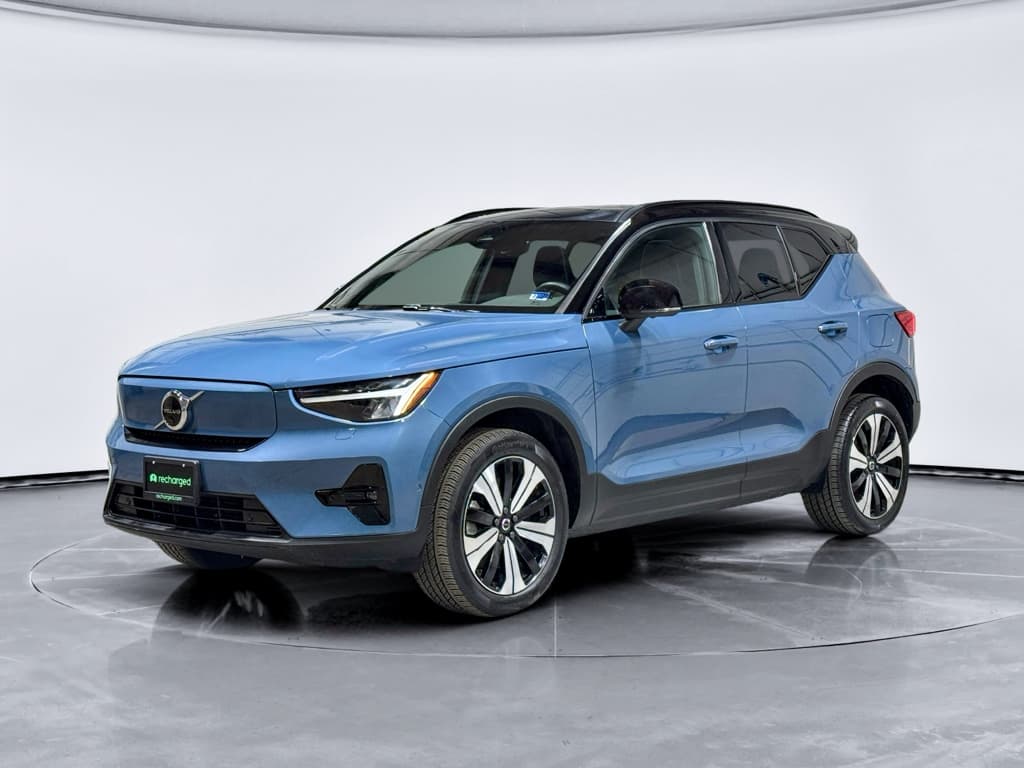
If you own one of the first U.S.‑market Volvo EX30s, you’re sitting on one of the most talked‑about small EVs of the decade, and one of the most unpredictable when it comes to 2026 Volvo EX30 trade in value. Between delayed U.S. deliveries, tariffs, and now a high‑voltage battery recall, the usual pricing guides only tell part of the story. This guide walks you through what your EX30 is really worth in 2026, and how to squeeze every last dollar out of it when you sell or trade.
Quick context for U.S. owners
2026 Volvo EX30 trade‑in value at a glance
Where early EX30 values are landing in 2026 (U.S.)
Most real‑world 2025–2026 EX30 trade‑in offers in the U.S. right now fall into the high‑$20,000s to low‑$30,000s for well‑kept Twin Motor cars with typical mileage. That’s in the same ballpark as mainstream pricing sites, but the spread between **“book value” and an actual check** can be thousands of dollars once a dealer (or marketplace like Recharged) digs into battery health, software history, and recall work.
Don’t anchor on MSRP alone
Why 2026 is a weird year for EX30 values in the US
1. A delayed start, then an early exit
European drivers started getting EX30s in 2023, but U.S. shoppers were put on pause when tariffs on China‑built EVs forced Volvo to delay stateside deliveries until 2025 and shift production to Ghent, Belgium. Just as that pipeline stabilized, Volvo confirmed in March 2026 that the EX30 will exit the U.S. market after roughly a year on sale.
That means few U.S. cars, a messy launch story, and a lot of confusion at traditional dealerships when you roll in asking what your EX30 is worth.
2. EV prices are correcting, hard
Across the board, EVs (especially luxury and near‑luxury crossovers) have been depreciating faster than early forecasts. Heavier incentives on new EVs, rising interest rates, and rapid tech improvements all pull used prices down sooner than owners expected.
The EX30 sits right in that splash zone: a small, premium‑leaning EV that’s still new to the U.S. but competing with fresh metal from Kia, Hyundai, Tesla, and others, often with factory discounts and tax credits baked in.
Discontinued doesn’t always mean collectible
How much is my 2026 Volvo EX30 worth right now?
Because EX30s are so new to the U.S., traditional pricing guides are leaning heavily on projections and early auction data. As of spring 2026, **a typical 2025 EX30 Twin Motor with about 12,000 miles, clean title, and no major accidents** often pencils out roughly like this for a U.S. owner:
Illustrative 2026 EX30 value ranges (U.S., early data)
These are ballpark ranges based on emerging U.S. wholesale and retail data for 2025 EX30s. Your individual car may sit higher or lower depending on condition, options, mileage, and battery health.
| Scenario | Example car | Estimated trade‑in | Likely retail asking price |
|---|---|---|---|
| Baseline Twin Motor Plus | 2025 EX30 Twin Motor Plus, ~12k miles, clean history, no major recalls outstanding | $28,000–$31,000 | $32,000–$36,000 |
| High‑spec Ultra | 2025 EX30 Twin Motor Ultra, ~10k miles, pano roof, driver‑assist suite | $30,000–$33,000 | $34,000–$39,000 |
| Above‑average miles | 2025 EX30 Twin Motor Plus, ~24k miles, fleet/commuter use, good condition | $25,000–$28,000 | $29,000–$33,000 |
| Minor accident on record | 2025 EX30 Twin Motor Ultra, ~12k miles, professionally repaired minor damage | $23,000–$27,000 | $28,000–$32,000 |
Always treat these as starting points, final offers will reflect your specific car and local market.
Important disclaimer
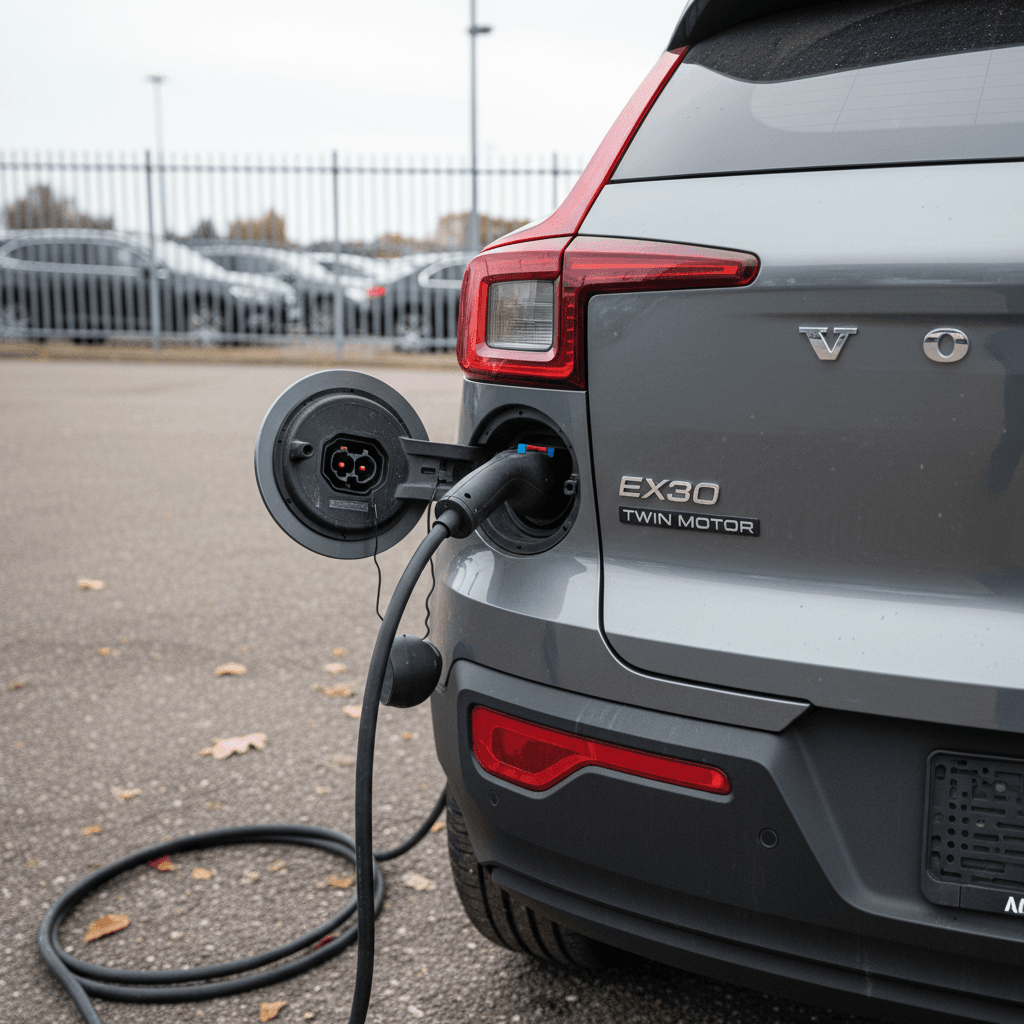
Factors that move your EX30 trade‑in value up or down
The levers that change your EX30’s number
Some you can’t control, some you absolutely can.
Mileage & usage pattern
Low‑teens mileage on a 2025 EX30 looks normal; under 8,000 miles usually earns a premium, while 20,000+ starts to pull value down.
Lots of short, cold‑weather trips or frequent DC fast charging can also show up in battery‑health data and hurt offers.
Trim, options & color
Well‑equipped Plus and Ultra trims, especially with popular colors and wheels, typically command more money than stripped‑down builds.
Polarizing colors or unusual interiors can narrow your buyer pool and push trade‑in offers down.
Title, accidents & recall history
A clean title with no accidents and properly documented recall repairs can easily be worth several thousand more than a branded title or poorly repaired car.
In 2026, proof that battery‑related recalls have been addressed is particularly valuable.
Condition & tires
Because the EX30 is still young, cosmetic condition is a big tiebreaker. Curb‑rashed wheels, interior scuffs, and mismatched tires all chip away at offers.
Fresh, name‑brand tires in the correct spec are an easy value signal for buyers and appraisers.
Your region
In EV‑dense coastal metros, EX30s may face more competition but also more demand. In areas where EV adoption lags, dealers may be cautious and bid lower, then ship good cars to friendlier markets.
Marketplaces that buy nationwide, like Recharged, can smooth some of those regional gaps.
Broader EV market mood
A round of new‑EV price cuts, a shift in tax‑credit rules, or a headline‑grabbing recall can move used EV values almost overnight.
Your EX30 lives in that ecosystem, so timing matters more than it would for, say, a basic gasoline crossover.
Battery health: the make‑or‑break number
For a nearly new EV like the EX30, **battery health is often more important than mileage**. Appraisers and informed buyers want to know two things: how much usable capacity the pack still has, and whether there’s any sign of abuse or defects beyond normal early‑life settling.
What smart buyers want to see on your EX30
1. Verified state of health (SoH)
A scan or report that shows estimated pack health (often expressed as a percentage of original capacity). Early EX30s with high‑90s SoH typically trade easier and closer to the top of the value range than cars that already show significant degradation.
2. Charging‑behavior history
Evidence that the car wasn’t quick‑charged to 100% every single day. A normal mix of home Level 2 charging and only occasional DC fast charging reassures buyers and lenders that the pack hasn’t been stressed unnecessarily.
3. No active battery warnings
Any persistent high‑voltage or thermal‑management faults will crater trade‑in offers and sometimes block financing entirely until diagnosed and repaired. Clearing warning lights without fixing the root problem is a red flag professionals will catch.
4. Recall work completed and documented
With a high‑voltage battery recall in play for some 2025 EX30s, proof that your car has had the correct software or hardware fix, and that it’s documented in Volvo’s service records, can keep lenders comfortable and your value intact.
5. Transparent third‑party report
A neutral, data‑driven battery report, like the <strong>Recharged Score</strong> we run on every EV we buy and sell, gives both you and future buyers confidence. It can also help you push back on lowball offers that ignore your car’s strong battery metrics.
How Recharged can help here
Trade‑in vs. selling your Volvo EX30: Which pays more?
You’ve got three main paths when it’s time to move on from your 2026‑era EX30: trading it to a dealer, selling it outright to a professional buyer, or listing it yourself and handling a private‑party sale. Each comes with its own math and headaches.
Ways to sell your 2026 Volvo EX30
Compare the typical money and hassle trade‑offs between selling options.
| Option | What it is | Typical price vs. top‑dollar | Pros | Cons |
|---|---|---|---|---|
| Traditional dealer trade‑in | You hand the EX30 to a franchised dealer as part of a new‑car deal. | Lowest, often bottom of wholesale range. | Simple, fast, potential tax savings on the new car in some states. | Dealers may be unfamiliar with EX30 demand and battery issues, so they often hedge with conservative offers. |
| Instant‑offer EV marketplace | Online buyers (like Recharged) that specialize in EVs and buy directly from you. | Usually higher than dealer trade, a bit below private‑party peak. | Fast, EV‑savvy pricing, nationwide demand, no strangers test‑driving your car. | You won’t see every last dollar a unicorn private buyer might pay. |
| Private‑party sale | You list the EX30 yourself on classified sites or marketplaces. | Potentially the highest price, if you find the right buyer. | Maximum control over price, chance to tell your car’s full story. | Time‑consuming, financing hurdles, safety concerns meeting strangers, buyers wary of recalls and battery questions. |
Numbers here are directional, but the trade‑off pattern holds for most EX30 owners.
Where Recharged fits in
Ready to find your next EV?
Browse VehiclesHow to get top dollar for your 2026 Volvo EX30
Pre‑sale checklist for EX30 owners
1. Pull all your service and recall records
Log into your Volvo account or call your servicing dealer and print everything you can. A tidy folder that shows completed maintenance, software updates, and recall work is money in the bank during inspections.
2. Get a battery‑health snapshot before you list
Don’t wait for an appraiser to surprise you. Have the battery checked by a shop with proper EV diagnostics or use a marketplace like Recharged that provides a <strong>Recharged Score Report</strong> as part of the offer. If the numbers look great, you can use them in your listing or negotiations.
3. Fix the cheap stuff, price around the rest
Detail the car, touch up obvious scuffs, replace missing trim or wipers, and consider fresh floor mats. Skip big cosmetic spends like full wheel refinishing unless you know they’ll pay back. If you have curb rash or a small ding, disclose it and price realistically instead of hiding it.
4. Time your move around market swings
Watch new‑EV incentives and local inventory. If a rival small EV goes on fire‑sale locally, used EX30 offers may dip. Conversely, if a tax credit changes or inventory tightens, your timing may suddenly look brilliant. If you have flexibility, get multiple quotes over a few weeks.
5. Get at least two real offers
Don’t accept the first number you hear. Grab a quote from your local Volvo or multi‑brand dealer, then compare it with an instant offer from an EV specialist like Recharged. If they’re far apart, ask both sides what’s driving their valuations, battery data, condition, auctions, or simple guesswork.
6. Be honest in your description
Whether you’re filling out an online form or meeting a buyer in person, accurate answers about condition, charging habits, and any issues help prevent last‑minute price drops and rescinded offers.
How recalled batteries and warranty claims affect value
In 2026, no EX30 value conversation is complete without talking about the high‑voltage battery recall affecting certain 2025 cars. Safety work like this doesn’t automatically torpedo value, but how it’s handled absolutely does.
Two EX30 owners, two very different outcomes
Same recall, different paperwork trail.
Owner A: Recall handled, records ready
- Received recall notice and booked service promptly.
- Software/parts updated, no open campaigns in Volvo’s system.
- Battery health scan shows normal behavior.
- Service invoices and campaign closure letter saved in a folder.
Result: Lenders and buyers are reassured. Trade‑in offers barely move, and some buyers see it as a positive that the pack has the latest updates.
Owner B: Ignored notices, spotty history
- Recall letters unopened or misplaced.
- No proof the work was ever completed.
- Battery warnings occasionally appear but were cleared without diagnosis.
- Gaps in service history and vague answers to questions.
Result: Appraisers either walk away or price the car as a problem child, baking in the risk of future repairs and buyer hesitation.
Don’t hide recall or warranty history
When should you sell or trade your EX30?
Because the EX30’s U.S. story is so compressed, arriving in 2025, discontinued in 2026, figuring out the “right” time to get out can feel like reading tea leaves. You don’t control tariffs or new‑EV price wars, but you can make a smart timing plan based on how long you intend to keep the car and how much uncertainty you’re willing to tolerate.
Timing strategies for different EX30 owners
Short‑term owners (1–3 years in)
If you bought early in 2025 and like to flip cars frequently, consider shopping trade‑in offers before your EX30’s third birthday, while it’s still under bumper‑to‑bumper coverage.
You’ll likely take a 15–30% hit from MSRP, but you’re selling while the car is still "nearly new" and before longer‑term battery questions creep in.
Watch for windows when competing small EVs aren’t being fire‑sold in your region; that’s when your EX30 stands out better.
Medium‑term owners (3–5 years)
For many owners, 3–5 years is the sweet spot: you’ve gotten good use out of the car, but it’s still young enough to feel current in range and tech.
Plan to sell before the 8‑year/100,000‑mile battery warranty looks close on the calendar or odometer; values can soften as warranty safety nets shrink.
Make sure every recall has been addressed and documented well before you start shopping offers.
Long‑term keepers (5+ years)
If you love your EX30 and plan to drive it deep into its battery warranty, resale value is less important day‑to‑day, but it still matters as a backstop.
Stay on top of software updates and consider a thorough battery health check around years 4–6. It will give you a reality check on how the pack is aging.
If used EX30 values unexpectedly strengthen (for example, if new EV incentives shrink or new rivals stumble), you’ll want to be ready with clean records in case it suddenly makes sense to sell.
FAQs: 2026 Volvo EX30 trade‑in value
Frequently asked questions about EX30 trade‑in value
Bottom line on 2026 Volvo EX30 trade‑in value
The Volvo EX30’s U.S. story has been anything but boring: a delayed launch, a short run, a battery recall, and a used‑EV market that’s still finding its balance. That’s exactly why your 2026 Volvo EX30 trade in value isn’t just a number in a pricing guide, it’s a moving target shaped by battery health, paperwork, timing, and who’s sitting across the negotiating table.
If you want a grounded sense of what your EX30 is really worth, start by cleaning up your records, getting a clear view of your battery’s health, and collecting a few real‑world offers. A specialist like Recharged can take that one step further with a detailed Recharged Score Report, fair market pricing, and options to sell outright, trade in, or consign your EX30 altogether online. However you decide to move on, going in with data, not just hope, will do more for your bottom line than any sales pitch on the lot.