The Volvo EX30 is one of the most talked‑about small EVs on the market, but it’s also been hit with several high‑profile recalls since launch. If you’re trying to make sense of the **2026 Volvo EX30 recalls list**, especially the global battery fire‑risk campaign, this guide breaks down what’s actually happening, which model years are affected, and what it all means if you own or are considering a used EX30.
Quick snapshot
Overview: EX30 recalls through early 2026
Before we dive into line‑by‑line recall codes, it helps to understand the big picture. The EX30 is a new, global EV platform being sold into a wide range of markets, often with different suppliers and build specs. That’s why **not all recalls apply to every EX30**, and why you sometimes see headlines about “40,000 EX30s recalled” even though your own VIN shows no action at all.
EX30 recall picture as of April 2026 (global context)
Recall info moves fast
Major Volvo EX30 recalls list (chronological)
Here’s a simplified, owner‑focused **2024–2026 EX30 recalls list**. The exact campaign IDs differ by region, but the core issues are consistent. We’ll use U.S. and European naming where possible and flag when something looks market‑specific.
Key EX30 recalls through early 2026
High‑level view of the most important EX30 recall campaigns so far. Always verify applicability with a VIN lookup.
| Approx. launch date | Issue | Typical affected EX30s | Type of fix | Owner impact |
|---|---|---|---|---|
| June 2024 | Infotainment / software glitch (screens freezing, incorrect behavior) | Early global EX30 production (2024 build, all powertrains) | Over‑the‑air (OTA) software update or dealer flash | Annoying but low physical risk; usually fixed quickly via software. |
| Late 2024–2025 (market‑specific) | Front seatback welding / recliner strength | Certain 2024 EX30s with manually operated front seats in Europe/UK and other markets | Seat hardware inspection and potential replacement | Potentially serious crash‑protection issue if unrepaired. |
| January–February 2026 | High‑voltage battery cell overheating / fire risk (R10355 and related) | Tens of thousands of 2025 EX30s globally with specific battery supplier cells; coverage varies by region | Battery pack replacement or major HV component replacement; temporary 70% charge limit in many markets | Most serious campaign to date; significant downtime but long‑term safety benefit. |
| Early 2026 (U.S., Canada and others) | Loss of interior audio on Premium Sound systems (R10365 and similar) | Sub‑set of EX30s with Premium Sound, mostly 2024–2025 builds | Software and/or amplifier module update | Safety relevance is moderate, no chimes or alerts, but fix is relatively quick. |
This table is a guidance tool only. Use official Volvo and government tools for legally binding recall information.
Why this list is a guide, not gospel
High-voltage battery fire-risk recall (R10355 / 26V001)
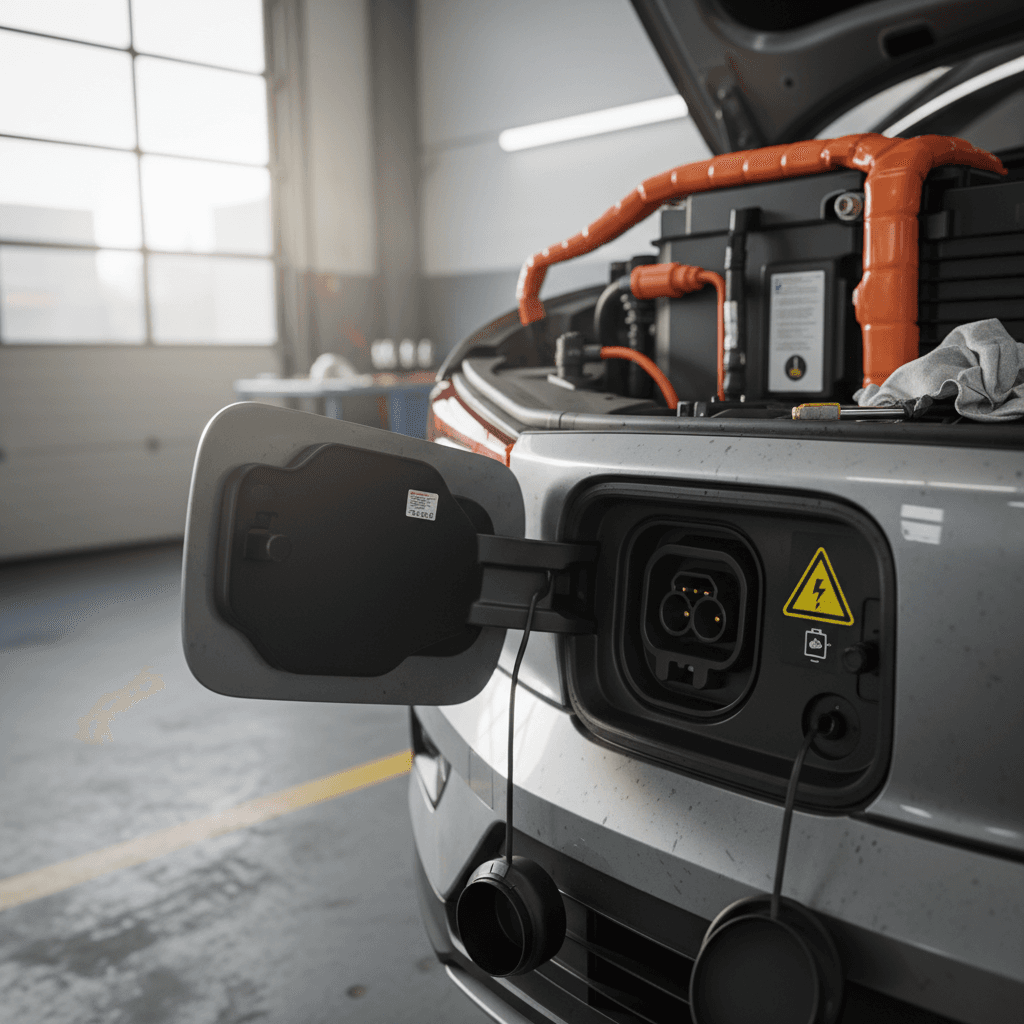
The campaign that has made the most noise in early 2026 is the **high‑voltage battery fire‑risk recall**. In plain English, certain EX30s were built with battery cells that can overheat and, in worst‑case scenarios, start a high‑energy fire. Volvo’s response has been aggressive by industry standards: in many markets the company is replacing entire packs and telling owners to limit state of charge while they wait.
- Issue: Specific high‑voltage battery cells can overheat, creating a risk of internal short and thermal runaway.
- Scope: Roughly 40,000+ EX30s globally, heavily concentrated in 2025 production with cells from a particular supplier.
- Regions: Europe, Latin America and parts of Asia are clearly covered; North American coverage is more tightly defined by VIN and build date.
- Interim instructions: Owners in many markets have been told not to charge past ~70% and to park outside until work is done.
- Remedy: Replacement of the affected battery pack or HV modules, free of charge, usually requiring extended shop time.
Take battery safety notices seriously
From a market‑analysis standpoint, this recall is brutal for Volvo’s balance sheet in the short run but actually **good news** if you’re evaluating a used EX30. Replacing packs rather than relying solely on software limits is the expensive but safety‑first choice, and it means many recalled cars will end up with essentially “zero‑mile” battery packs part‑way through their life.
Global EX30 software glitch recall (2024)
The EX30 launched in 2024 into a software‑defined EV world, and, unsurprisingly, it stumbled. In June 2024 Volvo announced a **global software recall** for nearly all EX30s built up to that point, roughly 70,000 vehicles worldwide. The core issue: the central screen cluster and driver‑assist systems could behave unpredictably or even go blank due to software bugs.
What the 2024 EX30 software recall covered
Annoying day‑to‑day, but largely fixable over the air
Glitchy user interface
Owners reported central screens rebooting, freezing or failing to display key info like speed and navigation.
Cluster behavior
In rare cases, driver information could be incorrectly displayed or temporarily unavailable, unacceptable in a modern EV.
OTA or dealer fix
Most cars received an over‑the‑air update; some required a dealer visit if connectivity was poor or software was too far behind.
Software‑heavy EVs live and die by their update discipline. The EX30’s 2024 campaign is a reminder that **recall doesn’t always mean hardware**, increasingly it means you should install that software update you’ve been putting off. When you’re shopping used, it’s worth checking in the car’s menus (or with a dealer) that it’s on current software and not a year behind.
Front seat welding / seatback safety recall
Separate from software, some 2024‑build EX30s have been flagged in Europe and the UK for **front seatback welding** concerns, particularly on manually adjusted front seats. The weld between the seatback recliner and lower bracket may not always meet strength targets, potentially affecting occupant protection in a crash.
Why it matters
- In a severe rear‑impact crash, a weak seatback weld could deform in ways Volvo didn’t design for.
- That can affect how well your head, neck and torso are managed by the seat and restraint system.
- It’s a low‑probability but high‑consequence failure, exactly what recalls are meant to catch early.
Typical remedy
- Dealers inspect the seat structure and recliner hardware.
- Cars that pass may only need documentation; those that fail get new seat frames or components.
- Work is free to the owner but may require the car for most of a day.
Quick check for this recall
Audio loss and other minor EX30 recalls
Like most new EVs, the EX30 also has a growing constellation of **smaller campaigns and service actions** that don’t make international headlines but absolutely matter in everyday use, and for safety.
- Loss of interior audio on Premium Sound systems: some EX30s in North America have seen recalls or service campaigns for a fault that can silence all interior audio, including turn‑signal clicks and warning chimes.
- Charging‑related software patches: updates to how the EX30 talks to certain public chargers and how charging limits and warnings are displayed to the driver.
- Market‑specific safety notices: in some countries, the battery issue started as a “do not charge above 70%” safety notice before being formalized as a full recall.
Individually, these smaller items won’t make or break an EX30 purchase, but collectively they tell you how quickly Volvo is iterating the product. When you’re shopping used, a car that is **fully up to date on these campaigns** is usually a safer, less frustrating bet than one that has been ignored.
How to check if your 2025–2026 EX30 has open recalls
Because the **2026 Volvo EX30 recalls list** is fragmented by region and build spec, the only answer that really matters is whether a specific VIN has open actions. Fortunately, you have several tools available, especially in the U.S.
Step‑by‑step: checking an EX30 for open recalls
1. Grab the VIN
You’ll find the EX30’s 17‑digit VIN on the driver’s side dashboard (visible through the windshield), on the door jamb sticker, or on the registration/title.
2. Use NHTSA’s recall lookup (U.S.)
Go to the official NHTSA recall lookup site and enter the VIN. It will show any **U.S. safety recalls** that have not been completed, critical for American buyers.
3. Check Volvo’s own recall page
Most national Volvo sites have a recall checker where you enter the VIN. This may surface market‑specific campaigns or service actions in addition to NHTSA‑listed recalls.
4. Ask the Volvo retailer for a printout
Any Volvo dealer can pull up a service history and recall status for that VIN. Ask for a printout or screenshot showing which campaigns are completed and which are still open.
5. Confirm battery recall status explicitly
Don’t just ask “are recalls done?” Ask **specifically** whether the high‑voltage battery campaign (e.g., R10355 or your local code) applies, and whether the pack has already been replaced.
6. Look for documentation in the service file
On a used car, ask for invoices or repair orders showing recall work done, especially if a battery pack was replaced. This documentation is valuable for future resale as well.
Good sign: OTA updates installed
What the battery recall means if you’re buying a used EX30
From a used‑EV buyer’s perspective, the battery recall is both a red flag and a potential **hidden opportunity**. High‑voltage battery defects are serious, but they’re also extremely expensive for an automaker to fix, so if Volvo is footing the bill for a replacement pack, that’s value you’re effectively getting for free.
How the battery recall changes the used EX30 equation
Short‑term hassle, long‑term upside if handled correctly
Risks if the recall is open
- Car may be subject to **charging limits** (e.g., 70% max) until the repair is done.
- Some insurers and lenders get nervous about unresolved battery recalls.
- You may face long wait times if parts are constrained in your region.
Upside if the recall is completed
- You may end up with a **new or reworked battery pack** under warranty.
- Fresh pack can mean better long‑term range and resale confidence.
- Completed recall paperwork is a strong selling point down the road.
Where you need to be careful is in the **timing**. If you’re buying a used EX30 while your local market is still in the early stages of the battery campaign, you should assume some downtime will be required. That might be fine if you have another car, or a disaster if you rely on the EX30 as your only vehicle.
How Recharged can help
Questions to ask a seller or dealer about EX30 recalls
Whether you’re dealing with a Volvo franchise retailer or a private seller, you’ll get better answers if you ask **precise, recall‑focused questions** instead of “is everything OK?” Here’s a script you can adapt.
Conversation checklist: EX30 recall due diligence
Has this EX30 ever been subject to the battery recall?
Ask which campaign code applied (for example, R10355) and whether the remedy was a full pack replacement or a partial fix. Request documentation of the work.
Is the car currently under any charging or parking restrictions?
If the seller mentions a 70% charge cap or “park outside” guidance, that’s a sign the recall is still active or not fully remedied.
Can you provide a recent recall status printout by VIN?
Ideally from a Volvo retailer within the last 30 days. This is a simple way to verify what’s open or closed.
What software version is the car currently running?
A car that’s a year behind on software likely hasn’t had recall work taken seriously either. Up‑to‑date software is a good proxy for attentive ownership.
Have seat or safety‑equipment recalls been checked?
If the car has manual seats or unusual options, make sure any seatback or safety‑equipment campaigns have been addressed.
If recall work is still pending, who will own the process?
Clarify whether the seller will complete the recalls before sale or discount the car and leave the logistics to you.
2026 Volvo EX30 recalls FAQ
Frequently asked questions about 2026 Volvo EX30 recalls
Bottom line on the 2026 Volvo EX30 recalls list
The **2026 Volvo EX30 recalls list** looks intimidating at first glance, global software fixes, seatback welding campaigns, and a high‑profile battery recall will do that. But if you step back, what you see is a young EV platform being aggressively debugged in public. That’s uncomfortable for Volvo in the short term, yet it can ultimately produce **safer, more reliable used EX30s** for informed buyers.
If you already own an EX30, your job is straightforward: stay on top of software updates, respond promptly to any recall notices and **never ignore battery‑related instructions** from Volvo. If you’re shopping for a used EX30, focus on VIN‑level recall status, documentation of any battery or seat work, and overall maintenance history. And if you want help cutting through the noise, Recharged’s combination of verified battery health, recall transparency and EV‑specialist support can make owning, or selling, an EX30 a lot less stressful.