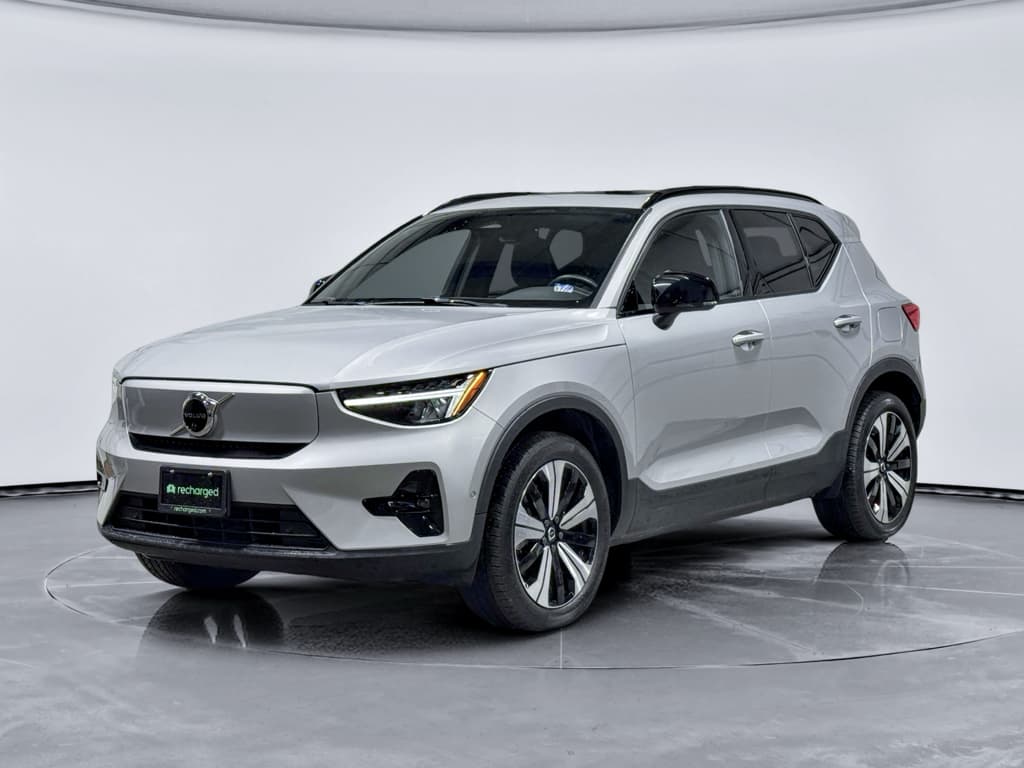
The 2026 Volvo EX30 is one of the most talked‑about small EVs on the road: quick, stylish, and relatively affordable. But it’s also a brand‑new platform, which means owners are effectively beta‑testing Volvo’s ideas. If you’re driving one, or thinking about buying a used EX30, you’re smart to ask about 2026 Volvo EX30 problems and fixes before you sign anything.
What this guide covers
2026 Volvo EX30 problems: what we’re seeing so far
Because the EX30 only launched in late 2023 globally and reached more volume in 2024–2025, we’re still in the "early data" phase. Long‑term reliability simply doesn’t exist yet. What we do have are early owner reports, Volvo’s own software‑update notes, and a small but important set of recalls.
Early Volvo EX30 problem patterns (2024–2026)
In plain English: the EX30 isn’t a disaster, but it’s not a "set it and forget it" appliance either. Expect more software updates than with a mature gas car, and understand that some rough edges are part of early‑generation EV ownership.
How reliable is the Volvo EX30 in 2026?
What we know
- Short track record: The EX30’s been on sale for about two model years, so there’s no 5‑ or 10‑year reliability data.
- Pattern of OTA fixes: Volvo is pushing frequent over‑the‑air (OTA) updates to clean up bugs, great if you install them, annoying if you don’t like being a software tester.
- Safety‑first brand: When issues do arise, Volvo tends to be conservative, using recalls and service campaigns to stay ahead of safety problems.
What owners report
- Solid drivetrain: Motors and battery packs, so far, appear stout. Few reports of complete drive‑unit failures.
- Annoying, not fatal: Most complaints are about glitches, frozen screens, flaky driver‑assist, weird app behavior, rather than tow‑truck episodes.
- Dealer variation: Experience depends heavily on your local Volvo dealer’s familiarity with EVs and the EX30 specifically.
Tip for 2026 shoppers
Problem 1: Software glitches and infotainment bugs
If the EX30 has a signature flaw, it’s software. Owners report a grab‑bag of glitches: disappearing audio, frozen main display, apps misbehaving, or Google Maps acting like it pre‑gamed lunch. The good news is that most of this can be addressed with updates and resets, not wrenches.
Common EX30 software problems
Symptoms you’re likely to see on 2024–2026 cars
Audio dropouts or no sound
Some owners report losing all sounds, turn signals, media, Google Assistant, after certain OTA updates.
Often tied to a buggy firmware version; usually fixed by a full update or dealer reflash.
Frozen or laggy center screen
Infotainment freezes, slow response, or black screen on startup.
Steering‑wheel buttons and climate shortcuts may still work, but navigation and apps become unusable until rebooted.
App & profile weirdness
Volvo EX30 app shows wrong interior, update status stuck, or remote functions unavailable.
Usually a cloud/account issue rather than a hardware failure in the car itself.
- Hold the home button or use the on‑screen menu to soft‑reboot the infotainment. This clears many frozen‑screen issues.
- If audio is gone, try a full power cycle: lock the car, walk away with the key for 10–15 minutes, then re‑enter.
- Open the Software Update menu in the EX30 and in the Volvo EX30 app to confirm there isn’t a pending OTA update waiting to install.
- If the car previously had a dealer‑installed update, confirm that OTA updates are enabled in your privacy/data‑sharing settings.
- For persistent bugs (like repeated sound loss), book a dealer visit and ask for a full firmware reflash, not just a quick check of error codes.
When a software bug becomes a safety issue
Problem 2: Charging issues at home and on the road
Charging complaints on the EX30 tend to fall into two buckets: handshake/connectivity problems (the car and charger won’t talk to each other) and speed surprises (slower‑than‑expected charge rates). These are frustrating, but they’re not unique to Volvo, every modern EV is a diplomat trying to talk to dozens of charging‑network "governments."
Typical EX30 charging problems and quick checks
Use this as a first‑pass diagnostic before assuming something is broken.
| Symptom | Most likely causes | Owner steps before dealer visit |
|---|---|---|
| Car won’t start AC charge at home | Loose connector, faulty outlet or EVSE, scheduled charging set, pilot signal error | Try another outlet or home charger, disable scheduled charging in the car and app, ensure connector is fully seated until it clicks. |
| Public DC fast charge won’t initiate | Network back‑end glitch, station failure, card/app auth failure | Move to another stall, reboot the charger if allowed, try a different network, verify payment method in app. |
| DC charging much slower than expected | High state of charge, cold battery, shared charger, battery‑health protection | Arrive with 10–40% battery, precondition if supported, avoid very high SoC fast charges, compare multiple stations on different days. |
| Car shows some chargers as “incompatible” | Map/app database error, connector‑type mismatch, outdated software | Double‑check connector type (CCS vs NACS, etc.), use another charging app, install latest map/vehicle software updates. |
Many EX30 charging issues turn out to be cable, station, or settings related, not failed hardware.
Best practice for EX30 charging
If your EX30 consistently refuses to charge on multiple different AC and DC stations known to work with other EVs, that’s your cue to involve a dealer. Document dates, locations, station brands, and what the app or car displayed, screen photos are gold when it comes to getting a warranty fix approved.
Problem 3: Battery worries and recent recalls
Whenever a new EV hits the market, the word "battery" looms like a storm cloud. For the EX30, it’s important to separate normal EV behavior, range swings with temperature, software‑estimated range learning from your driving, from genuine defect territory like overheating cells or repeated high‑voltage fault codes.
What we’re seeing with EX30 batteries so far
Early 2026 snapshot
Targeted battery recalls
In early 2026, Volvo filed a small recall for a limited number of EX30s over potential high‑voltage battery cell overheating. The affected VIN range is narrow, not a full model‑wide recall.
If your car is in that batch, the fix is dealer‑performed and should be free under recall/warranty.
Everyday range complaints
Most owners talking about "battery issues" are really describing range anxiety: winter range drops, aggressive driving, and high‑speed highway use cutting into the EPA number.
That’s normal EV physics, not necessarily a failing pack.
Quick health check for your EX30 battery
1. Compare rated vs. real‑world range
On a normal‑temperature day, charge to 90–100% and compare the projected range to Volvo’s rating. A moderate difference is expected; dramatic drops can justify a dealer battery‑health test.
2. Watch for warnings or limp‑mode behavior
Repeated high‑voltage battery errors, sudden power cuts, or the car refusing to charge above a low percentage are red‑flag symptoms that warrant immediate professional diagnosis.
3. Check for open recalls by VIN
Use Volvo’s recall lookup or the federal NHTSA site with your VIN to see if your specific EX30 is part of an active battery or software recall.
4. Avoid abusive charging habits
Frequently fast‑charging to 100% and leaving the car full for days isn’t ideal. Aim for 20–80% in daily use, with 90–100% reserved for trips.
Don’t self‑diagnose serious battery faults
Problem 4: Interior, build quality and noise complaints
The EX30’s cabin is Scandi‑minimal and eco‑conscious: lots of recycled and plant‑based materials, clever storage, a big single screen. The trade‑off, according to some owners, is that it can feel more IKEA starter kit than bank vault, especially compared with larger Volvos.
Typical EX30 build‑quality complaints
What owners point out after a few months
Squeaks & rattles
Door trims, cargo area panels, or the large dashboard speaker grille can squeak on rough pavement.
Often fixable under warranty with better clips, felt tape, or revised parts.
HVAC & fan noise
Some EX30s exhibit noticeable blower noise at low speeds, or a faint whistle from vents at highway speeds.
Dealer can check for loose ducting, software updates, and HVAC TSBs.
Road and wind noise
Short wheelbase + big tires = more tire slap and wind noise than some buyers expect from a Volvo badge.
Different tire choice and added sound‑deadening can help.
Low‑tech interior fixes that help
Problem 5: Driver-assistance and safety-system quirks
Volvo leans hard on its safety credentials, and the EX30 is packed with advanced driver‑assist tech: automatic emergency braking, lane keeping, adaptive cruise, park assist, cross‑traffic alerts, the works. That’s great on paper, but each of those subsystems is one more way your car can annoy you when it misreads reality.
Common EX30 driver‑assist complaints
What systems do, how they misbehave, and where to look for fixes.
| System | Annoying behavior | What to do |
|---|---|---|
| Lane keeping assist | Tugs the wheel too often, misreads worn lane lines, or "pings pong" between markings. | Adjust sensitivity in settings, limit use to well‑marked roads, and ask dealer to check camera calibration if behavior is extreme. |
| Speed‑limit recognition | Displays wrong speed limit or misses temporary signs, especially in complex urban areas. | Keep your own situational awareness; treat it as advisory only. Confirm you have the latest maps and camera/software updates. |
| Automatic emergency braking | Occasional false positives, hard braking for parked cars on curves or metal plates. | Have the dealer check radar/camera alignment. If repeatable in the same spot, record a video; it may be a software edge‑case Volvo is already tuning. |
| Parking & cross‑traffic alerts | Random beeps with no clear obstacle, or failure to warn in some tight scenarios. | Clean sensors, remove aftermarket plate frames blocking radar, and ask dealer to test system in diagnostic mode. |
Most issues relate to over‑sensitive tuning or sensor calibration, not outright hardware failure.
Remember: these are assistance systems, not autopilot
When you can DIY a fix, and when you can’t
Reasonable DIY steps
- Reboots and power cycles: Restarting the infotainment, locking the car and letting it fully sleep, then waking it again clears many transient bugs.
- Settings sanity check: Make sure scheduled charging, driver‑assist toggles, and profile settings are actually set the way you think they are.
- Software‑update hygiene: Install OTA updates promptly when the car and app notify you, ideally when the car can sit undisturbed.
- Basic charging triage: Try multiple stations and cables before concluding the car is at fault.
Time to see a dealer
- Recalls or safety campaigns: Battery, brake, steering, or critical software recalls should be handled as soon as possible.
- Repeat high‑voltage or drivetrain errors: Anything that limits power, range, or basic drivability needs professional diagnostics.
- Persistent sensor/driver‑assist faults: Warnings that return immediately after each restart usually require calibration, not guesswork.
- OTA failures: Updates stuck for days, or cars that never offer OTA updates despite being eligible, are dealer territory.
Document everything
Buying a used 2025–2026 Volvo EX30: inspection checklist
Shopping used is where the EX30 gets interesting. Depreciation on new‑to‑market EVs can be steep, which means a 2025 or 2026 EX30 might look temptingly cheap. The key is separating "quirky but normal" behavior from red‑flag problems you don’t want to inherit.
Used EX30 problems & fixes: buyer checklist
1. Scan for open recalls and campaigns
Use the VIN to check Volvo’s recall site and the NHTSA database. Any open EX30 recall, especially involving the battery or braking, should be completed before you take delivery or baked into the sale agreement.
2. Verify software version and OTA history
During a test drive, open the Software menu and note the current version. Ask for service records or screenshots that show previous OTA or dealer updates, especially if early versions were known to be buggy.
3. Test AC and DC charging in real life
If possible, plug into a Level 2 charger and, time permitting, a DC fast charger before purchase. You’re looking for consistent connection, reasonable speed, and no error messages.
4. Listen for rattles and road noise
Drive on rough pavement and at highway speeds. Note any persistent buzzes, hatch rattles, or excessive wind noise that might point to build‑quality fixes you’ll want under warranty.
5. Stress‑test infotainment and audio
Cycle through media sources, voice commands, navigation, and phone pairing. Any freezing or missing audio should trigger questions about pending updates or recent software work.
6. Confirm driver‑assist behavior
Safely test lane keeping, adaptive cruise, parking sensors, and emergency braking alerts. You’re not trying to trick the systems, just making sure warnings are sensible and functions are available.
7. Review warranty and battery coverage
Volvo’s basic and high‑voltage battery warranties can cover many early‑life issues, but transfers can depend on time and mileage. Make sure you know exactly what’s left on a 2025–2026 EX30.
8. Get an independent EV‑savvy inspection
If you’re buying outside of a certified program, an inspection from an EV‑literate shop, or a marketplace like <strong>Recharged</strong> that performs battery and software health checks, can surface issues you won’t spot in a 10‑minute drive.
How Recharged helps with EX30 problems before you buy
A compact EV like the EX30 lives and dies by its software and battery health. On a used example, those are exactly the things that are hardest to judge from a window sticker or a Carfax line item. That’s where a structured process matters more than gut feel.
What you get with a Recharged Volvo EX30
Designed to de‑risk early‑generation EVs
Recharged Score battery diagnostics
Every EX30 sold on Recharged comes with a Recharged Score Report, including battery‑health data, range performance, and charging behavior so you’re not guessing about pack condition.
Full history & pricing transparency
We verify service and recall status, pull detailed history, and price each EX30 against fair‑market data so early‑life issues are reflected in the number, not hidden behind showroom glass.
EV‑specialist support & delivery
Our EV‑specialist team helps you understand software versions, warranty coverage, and charging options, then arranges nationwide delivery or a visit to our Richmond, VA Experience Center.
Ready to find your next EV?
Browse VehiclesBottom line on EX30 problems in 2026
2026 Volvo EX30 problems: FAQ
Frequently asked questions about 2026 Volvo EX30 problems
The 2026 Volvo EX30 is not a trouble‑free appliance, and it was never going to be. It’s a compact, high‑performance electric crossover built on fresh hardware and ambitious software, which means a certain amount of drama comes baked in. If you understand the most common EX30 problems and fixes, and you’re willing to insist on proper updates, recalls, and inspections, the car’s strengths easily outweigh its flaws. Go in with eyes open, buy carefully, and let the car’s software evolve instead of fighting it, and the EX30 can be a deeply satisfying small EV to live with.