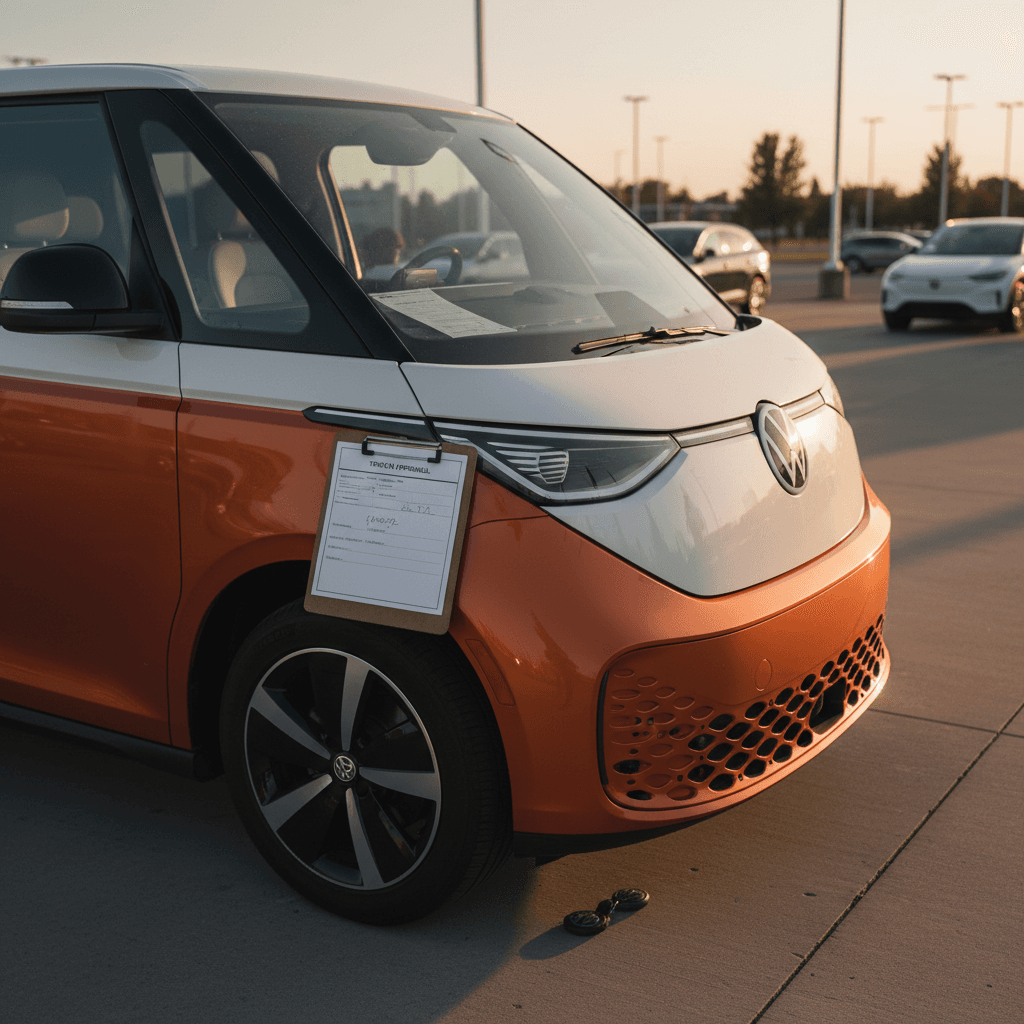
If you were one of the early adopters who snapped up Volkswagen’s electric microbus, you’re probably wondering what a 2026 Volkswagen ID. Buzz trade in value really looks like. The ID. Buzz is still a rare sight on U.S. roads, and VW’s stop‑and‑start launch plans plus fast‑moving EV incentives make pricing feel like a moving target.
A quick reality check
Why ID. Buzz Trade‑In Values Are Tricky in 2026
With most vehicles, you can peek at a pricing guide, glance at the odometer, and get close to a fair trade‑in number. The ID. Buzz doesn’t play by those simple rules. It’s a niche, high‑MSRP EV minivan, launched into a fast‑changing market where incentives and inventory can swing overnight. On top of that, its battery health and software matter as much as paint and upholstery.
- Limited U.S. sales volume means fewer comparable recent sales for pricing tools to use.
- Some buyers paid over MSRP early on, while others got huge discounts and lease cash later.
- EVs in general have seen steeper early‑year depreciation than comparable gas vehicles.
- Battery health, fast‑charging history, and software updates can move value up or down thousands of dollars.
Don’t assume your Buzz is “collector proof”
What a 2026 VW ID. Buzz Trade‑In Value Might Look Like
Because the ID. Buzz only reached U.S. buyers in the 2025 model year, there is no literal "2026 model" to trade in stateside yet. When people talk about 2026 Volkswagen ID. Buzz trade‑in value, what they really mean is: “If I trade my 2025 Buzz in sometime during 2026, what will it be worth?”
New 2025 ID. Buzz Pro S and Pro S Plus vans launched in the low‑$60,000s MSRP range, with some shoppers later seeing hefty lease cash and discounts as VW worked through inventory. Based on how similar premium EVs behave, plus early ID. Buzz discounting chatter, here’s a realistic directional picture, not a promise, but a way to frame expectations:
Directional 2026 ID. Buzz Trade‑In Scenarios (U.S.)
Illustrative ranges for a 2025 ID. Buzz traded sometime in calendar‑year 2026. These are not official Recharged offers, just ballpark scenarios to help you think about value.
| Vehicle condition | Mileage & battery | Possible trade‑in range* | Who might offer it |
|---|---|---|---|
| Near‑new Buzz | Under 10,000 miles, excellent battery health, clean history | High‑$40,000s to mid‑$50,000s | Brand dealer on a good day, EV‑specialist buyer |
| Typical 1‑year‑old Buzz | 10,000–20,000 miles, normal battery health, a few cosmetic flaws | Low‑ to mid‑$40,000s | Most dealers, EV‑focused marketplaces |
| High‑mileage workhorse | 20,000+ miles in year one, visible wear, frequent DC fast charging | High‑$30,000s to low‑$40,000s | Dealers that know they can recondition and retail it |
| Rough example | Accident history, cosmetic damage, weak battery health report | Below $35,000 | Auction buyers, wholesalers, low‑inventory dealers |
Actual offers depend on trim, options, region, history, and especially verified battery health.
Important disclaimer
Key Factors That Shape Your ID. Buzz Trade‑In Offer
The Big Levers on 2026 ID. Buzz Trade‑In Value
Some things you can’t change. Others you absolutely can.
Trim & options
A Pro S Plus with dual‑motor AWD, panoramic roof, and upgraded interior will always be worth more than a base rear‑drive Pro S. Dealers know those vans are easier to resell and can ask stronger prices.
Mileage & use pattern
For a 2025 Buzz traded in 2026, dealers love to see under 15,000 miles. Higher mileage in the first year isn’t a dealbreaker, but it will drag your offer down, especially if the odometer suggests lots of road‑trip fast charging.
Battery health
Because the Buzz is an EV, usable battery capacity matters as much as anything else. A van that still shows strong range and a healthy battery score will pull a meaningfully better offer.
Accidents & repairs
A clean Carfax (or equivalent) and properly documented repairs matter. Minor cosmetic work is fine; major structural repairs or anything involving the high‑voltage system will spook buyers and lower bids.
Local demand
An electric microbus with three rows is easier to sell in some markets than others. A Buzz in a coastal EV‑dense metro may be worth more than the same van in a region where charging infrastructure and EV adoption lag behind.
Incentives & remaining warranty
Shoppers paying used‑Buzz money will ask hard questions about the remaining battery warranty and what the first owner did with incentives or lease cash. A van with clear paperwork and warranty coverage left will always be easier to move.
Think like the next buyer
How Battery Health Impacts What Your ID. Buzz Is Worth
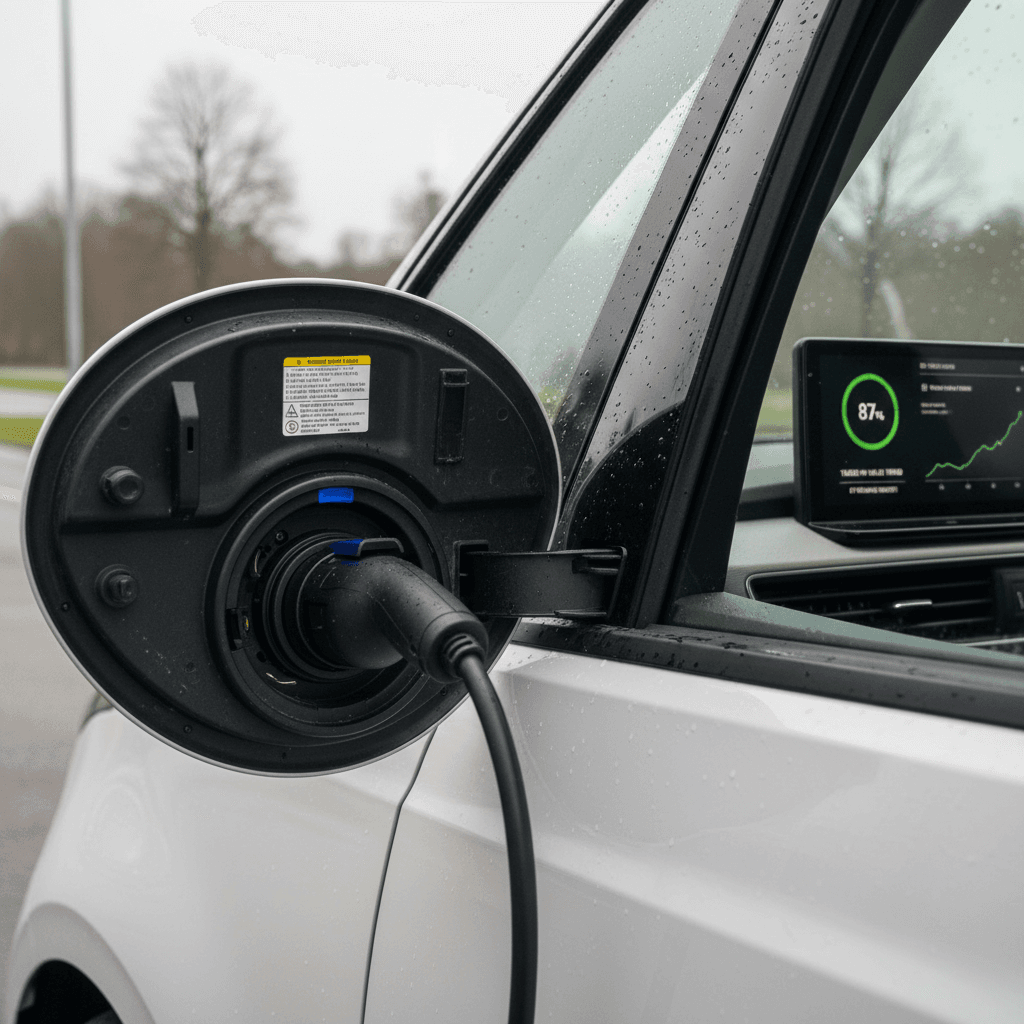
Volkswagen builds the ID. Buzz around a roughly 86 kWh usable battery pack feeding rear‑ or all‑wheel‑drive motors. On paper, EPA range numbers land in the low‑ to mid‑200‑mile band, depending on configuration. In the real world, the question is simpler: how much of that original range does your van still have?
Why Buzz Battery Health Dominates Trade‑In Value
The hard part for most owners is that your dash only shows a percentage, not the underlying state of health. That’s where dedicated diagnostics help. At Recharged, every ID. Buzz we sell or purchase comes with a Recharged Score battery report so both sides can see verified capacity and fast‑charging history instead of arguing over guesses.
When good news pays you back
Leasing vs. Owning: What It Means for Your Trade‑In
If you leased your ID. Buzz
Many early ID. Buzz customers chose leases, especially when Volkswagen added aggressive lease cash to move vans off lots. In that case, the financial piece you’re dealing with in 2026 isn’t exactly a trade‑in, it’s the buyout value versus what the Buzz is actually worth.
- Check your payoff quote from VW Credit or your lender.
- Compare it to real‑world offers from dealers and online buyers.
- If offers are lower than payoff, you’re often better off turning the van in.
- If offers are higher than payoff, you may have built equity you can cash out or roll into your next EV.
If you bought your ID. Buzz
Owners who purchased outright or financed conventionally can trade or sell at any time. Here the question is simply how much depreciation you’ve eaten in the first year.
- Expect steeper early‑year depreciation than a comparable gas minivan.
- Dealer discounts and incentives given to the next buyer indirectly pressure your resale price.
- Strong battery health, service records, and a clean body can close some of that gap.
Either way, it pays to collect actual offers instead of assuming a pricing‑guide guess will match the real world.
How to Prepare Your 2026 ID. Buzz for Maximum Trade‑In Value
Practical Steps to Boost Your ID. Buzz Trade‑In
1. Document charging and service history
Gather receipts for home charger installation, scheduled maintenance, tire rotations, and any warranty work. If you’ve mostly charged at home on Level 2, note that, it supports a better battery‑health story.
2. Get a battery‑health report
If possible, obtain a third‑party or marketplace battery report before you shop your Buzz around. At Recharged, this is baked into the Recharged Score so you can walk into negotiations with hard data, not just the range estimate on yesterday’s commute.
3. Fix obvious cosmetic issues
Touch‑up paint on small chips, a professional detail, and a thorough interior clean go a long way. For deeper bodywork, get estimates first, sometimes it’s smarter to disclose the damage and let a dealer’s body shop handle it.
4. Clear warning lights and update software
No one wants to see warning icons on a digital cluster during appraisal. Address any check‑engine or battery‑system alerts and make sure your Buzz is up to date on VW software campaigns before you start getting bids.
5. Remove personal add‑ons
Roof boxes, bike racks, or DIY camper conversions may be meaningful to you, but they can narrow your buyer pool. Return the van as close to stock as possible, or at least be ready to price those mods realistically.
6. Get multiple offers in a short window
Because ID. Buzz pricing is still volatile, gather several offers, local VW dealers, EV‑focused used dealers, and online buyers, within the same week. Then compare not just price, but fees, tax advantages on trade‑ins, and how convenient the process is.
Leverage tax savings on trades
Where to Sell or Trade Your ID. Buzz
You’ve done the homework, maybe even have a battery report in hand. Now you have to answer a different question: who should you sell to? Each path has its own strengths and headaches.
Your Main Options for a 2026 ID. Buzz Trade or Sale
Pick the lane that matches your priorities, speed, price, or control.
Volkswagen dealer trade‑in
Pros: Easiest path if you’re buying another VW; potential tax credit on trade difference; dealer knows the product and can CPO it.
Cons: May be conservative on value if they’re long on Buzz inventory or wary of EV depreciation.
EV‑specialist marketplace
Pros: Teams that live and breathe EVs understand how battery health, charging hardware, and software updates affect value. At Recharged, every ID. Buzz gets a Recharged Score battery report and fair‑market pricing based on real EV comps, not generic gas‑car models.
Cons: Fewer physical locations; much of the process happens online (which many owners actually prefer).
Private‑party sale
Pros: Often yields the highest top‑line price if you find a superfan buyer who’s been dreaming of a Buzz and can’t get a new one at the right deal.
Cons: Requires listing, screening strangers, handling test drives, and explaining EV basics. You’ll also need to manage payoff, paperwork, and, in some cases, buyer financing.
Don’t forget online instant offers
How Recharged Values a Used VW ID. Buzz
At Recharged, we built our entire process around EV transparency, because guessing at battery health or relying on generic gas‑car depreciation curves doesn’t cut it, especially for something as quirky and expensive as an ID. Buzz.
- We start with detailed VIN‑level data: build sheet, trim, options, and original MSRP.
- Then we layer in EV‑specific market data, looking at how similar ID. Buzz vans and comparable three‑row EVs are actually selling, not just being listed.
- Next comes a Recharged Score Report with verified battery health, fast‑charging history indicators, and overall condition notes.
- Finally, we factor in timing, incentives, and regional demand so you aren’t punished for a headline or local over‑supply that doesn’t match how people really shop.
The result is a clear, documented offer instead of a mysterious number scribbled on the back of a worksheet. If you decide to sell your Buzz through Recharged, you also get access to EV‑specialist support, digital paperwork, and nationwide pickup or delivery options, no old‑school dealership dance required.
Thinking about trading out of your Buzz?
Ready to find your next EV?
Browse VehiclesFAQ: 2026 Volkswagen ID. Buzz Trade‑In Value
Common Questions About ID. Buzz Trade‑In Value
Bottom Line on 2026 ID. Buzz Trade‑In Value
Your 2026 Volkswagen ID. Buzz trade in value isn’t a single number hiding in some book; it’s a story made up of battery health, mileage, options, history, timing, and where you choose to sell. The early U.S. market for the Buzz is quirky, part cult classic, part heavily incentivized new EV, which makes it all the more important to ground your expectations in live offers instead of wishful thinking.
If you treat your ID. Buzz like the future classic it looks like, charging it gently, keeping it clean, staying ahead on software and service, you’ll give yourself the best shot at a strong number when it’s time to move on. When you’re ready to see what the market really thinks, an EV‑specialist buyer like Recharged can pair a verified battery‑health report with fair market data so you can trade, sell, or consign your electric microbus with clear eyes and no guesswork.