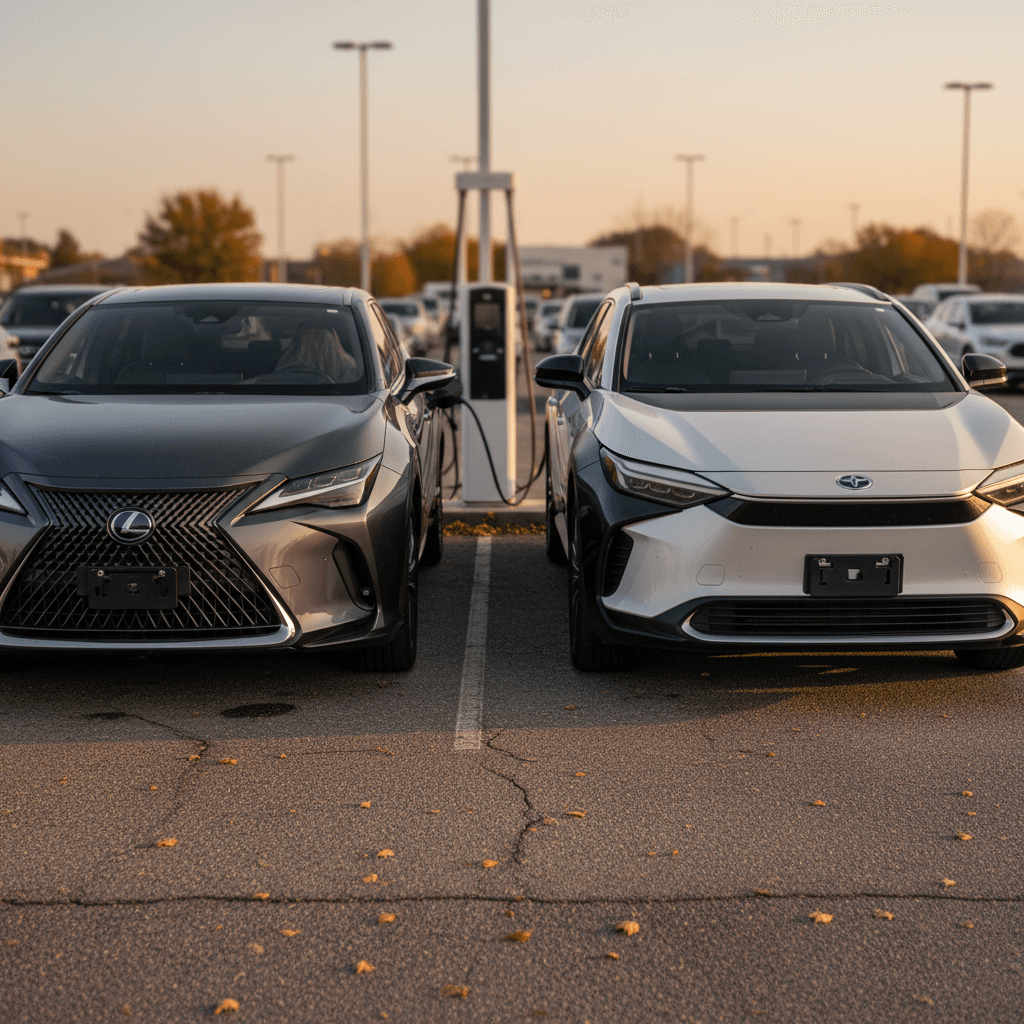
If you’re searching for a 2026 Toyota electric SUV, you’re really looking at one main vehicle: the refreshed Toyota bZ (formerly bZ4X). For 2026 it gets more range, more power, a NACS charging port for Tesla Supercharger access, and a more conventional interior. The question is whether it’s the right EV for you, and whether you should buy new or consider a used Toyota EV instead.
Toyota’s 2026 EV focus
Overview: What is the 2026 Toyota electric SUV?
Toyota has simplified naming for its compact electric SUV: what launched as the bZ4X is now just the 2026 Toyota bZ. It rides on the same e‑TNGA platform shared with the Subaru Solterra, but the 2026 refresh is more significant than a typical mid‑cycle cosmetic tweak.
- Compact two-row electric SUV, similar in size to a Toyota RAV4 or Tesla Model Y
- Single-motor front‑wheel‑drive (FWD) and dual‑motor all‑wheel‑drive (AWD) versions
- Two battery sizes, both improved efficiency over the outgoing bZ4X
- New NACS (also badged SAE J3400) charging inlet for direct access to Tesla Superchargers
- Updated cabin with a larger touchscreen and more conventional controls
Naming nuance: bZ vs bZ4X
2026 Toyota bZ specs at a glance
Key 2026 Toyota bZ electric SUV numbers
2026 Toyota bZ expected trims and configurations (U.S.)
Official 2026 trim walk hasn’t been fully detailed at the time of writing, but based on Toyota’s announcements and typical patterns, here’s what shoppers can expect conceptually. Always verify final specs and pricing at launch.
| Configuration | Drive | Battery | Est. range* | Power | Target buyer |
|---|---|---|---|---|---|
| bZ FWD (base) | FWD | 57.7 kWh | ~230–270 mi | ~160 hp | Budget‑focused commuter, lighter daily use |
| bZ FWD Plus / XLE | FWD | 74.7 kWh | Up to ~314 mi | ~220 hp | Max range for highway commuters |
| bZ AWD | AWD dual‑motor | 74.7 kWh | High‑200s mi | Up to 338 hp | All‑weather traction with strong acceleration |
Use this as a directional guide, not a price sheet.
Specs and pricing still in flux
Range, battery options and efficiency
Range was the weak point of the original bZ4X, especially compared with vehicles like the Tesla Model Y, Hyundai Ioniq 5, and Kia EV6. The 2026 refresh goes straight at that criticism with new batteries and efficiency improvements.
- Two battery choices: an entry 57.7 kWh pack in select FWD trims and a 74.7 kWh pack in higher trims and AWD.
- More miles per kWh: Toyota’s own preview numbers point to as much as roughly 314 miles on the most efficient FWD trim, an improvement of around 60+ miles versus the earlier EPA bZ4X ratings.
- Better cold‑weather behavior: A revised thermal management system and battery pre‑conditioning help protect winter range and charging speeds, a pain point for early owners.
- Towing and utility: On extended‑length bZ variants like the bZ Woodland / Touring, Toyota quotes up to around 3,500 lb of towing, enough for a small camper or utility trailer.
Range reality check
Charging, NACS and Tesla Supercharger access
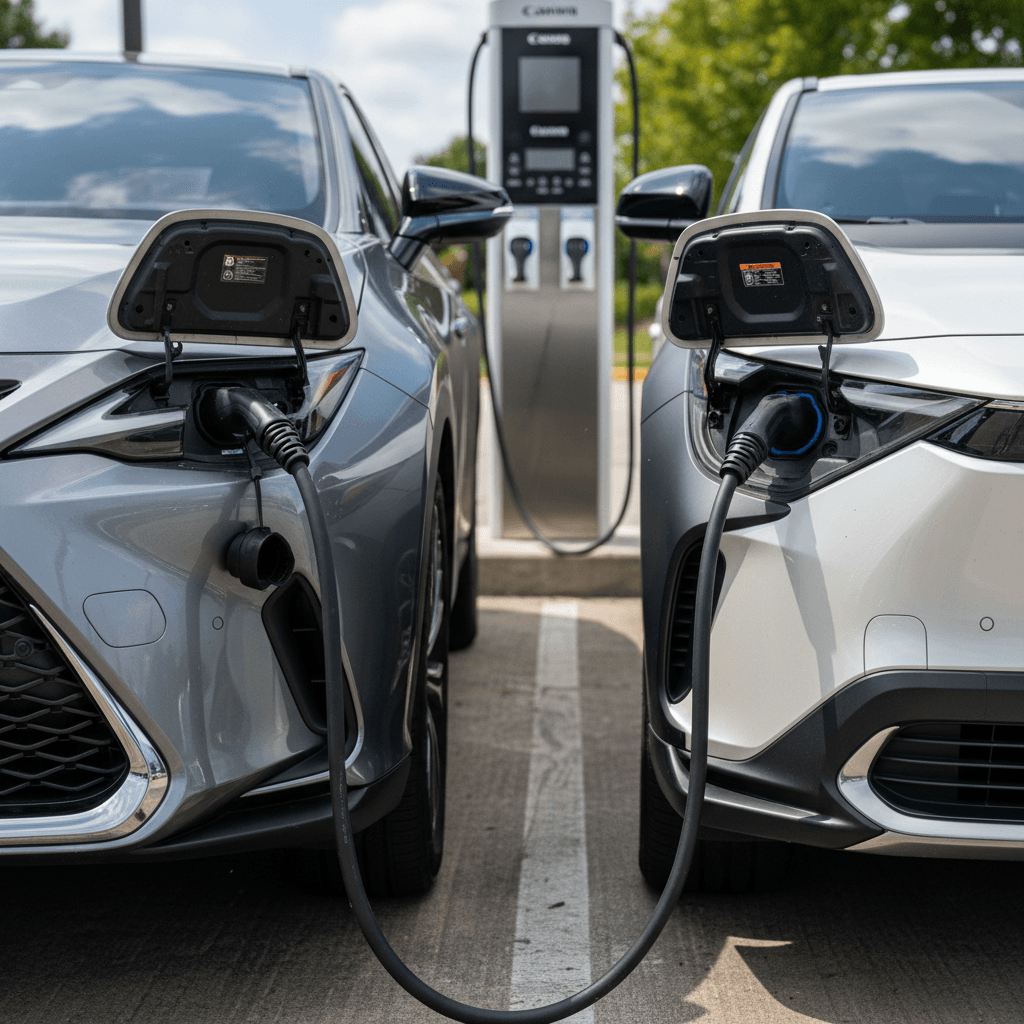
For 2026, the biggest strategic change to Toyota’s electric SUV isn’t under the floor, it’s at the charge port. The bZ switches to the NACS / SAE J3400 connector that Tesla popularized, and Toyota has announced broader charging‑network access around that move.
- NACS inlet standard: The 2026 bZ comes with the same physical charge port used on Tesla Superchargers and many new public DC fast chargers in North America.
- 11 kW onboard AC charger: Earlier bZ4X models were limited to 6.6–7.6 kW on Level 2. The 2026 bZ steps up to 11 kW, which can cut home or workplace charging time substantially if your electrical panel supports it.
- 150 kW DC fast charging: Peak DC rate stays at a claimed 150 kW, but with better pre‑conditioning and thermal management for more consistent performance, especially in the cold.
- Tesla Supercharger access: Toyota says 2026 bZ drivers can tap into tens of thousands of NACS plugs on the Tesla Supercharger network plus emerging NACS‑equipped sites from IONNA, ChargePoint, EVgo and others.
- Adapters included: 2026 Toyota BEVs are expected to ship with adapters for legacy J1772 and CCS stations, so you can still use today’s non‑NACS chargers.
Plan your home charging around 11 kW
Driving experience and interior updates
On the road, the 2026 Toyota bZ is less about headline‑grabbing performance and more about predictable, quiet daily driving. Still, the upgrades add some welcome urgency. Dual‑motor AWD models now make up to about 338 horsepower, cutting 0–60 mph times into the high‑4‑ to low‑5‑second range, while FWD models sit in the low‑200‑hp band, plenty for commuting.
Ride and handling
- Comfort‑first tuning: Toyota still prioritizes a compliant ride over sharp, sport‑sedan reflexes. If you like a RAV4 Hybrid’s demeanor, this will feel familiar.
- Low noise floor: Additional sound deadening and acoustic glass help keep highway noise in check, important when there’s no engine to mask wind and tire roar.
- All‑weather confidence: The dual‑motor AWD system, with Snow/Dirt modes and hill‑descent control on Woodland/Touring variants, should inspire confidence in bad conditions more than on a twisty back road.
Cabin and tech
- Less quirky cockpit: The 2026 refresh tones down the controversial gauge pod and steering‑wheel geometry. Sightlines and ergonomics are more conventional.
- Bigger screen, better controls: A 14‑inch touchscreen replaces the 12.3‑inch unit on higher trims, and Toyota added physical knobs for climate and volume.
- Charging‑aware navigation: With Toyota’s latest multimedia and Apple Maps EV routing, you get more intelligent charger stops baked into route guidance.
Who will feel at home in a 2026 bZ?
How the 2026 Toyota bZ compares to rival electric SUVs
Shoppers searching for a 2026 Toyota electric SUV are usually also eyeing a Tesla Model Y, Hyundai Ioniq 5/9, Kia EV6 or EV9, and perhaps a Ford Mustang Mach‑E. Toyota isn’t trying to win every spec war, but the 2026 update moves the bZ from “also‑ran” to “credible contender” in several key dimensions.
2026 Toyota bZ vs key electric SUV rivals
Where Toyota’s compact electric SUV shines, and where it doesn’t
Strengths vs rivals
- Familiar Toyota feel: Conservative styling and controls will appeal to traditional Toyota buyers.
- Improved range: With ~314 miles in its best guise, the bZ closes much of the gap to mainstream rivals.
- Network flexibility: Native NACS plus adapters for J1772 and CCS gives you an unusually wide net of chargers.
Trade‑offs to know
- Charging speed ceiling: 150 kW is fine, but some rivals approach or exceed 200–230 kW, especially on 800‑V platforms.
- No three‑row option yet: Families wanting a Toyota‑branded three‑row EV will be waiting for the Highlander EV.
- Interior flair: If you like the lounge‑like cabins in Ioniq and EV9, the bZ may feel conservative.
Market context
- Late but learning: Toyota is arriving later to BEVs, which means early bZ4X owners absorbed more of the “beta‑tester” pain than 2026 buyers will.
- Policy and incentives: U.S.‑built rivals like Model Y or Ioniq 5 (Georgia) may have stronger tax‑credit positioning than an imported bZ, depending on final rules.
Should you wait for Toyota’s three-row electric SUV?
Toyota has now confirmed an all‑electric Highlander EV, its first three‑row electric SUV, to be built in Kentucky with batteries from North Carolina. Early previews point to roughly mid‑50‑thousand‑dollar starting prices, optional bigger battery packs, and range targets around 300+ miles, which would put it squarely against Hyundai’s Ioniq 9 and Kia EV9.
Timeline reality
- Choose the 2026 bZ if you want a two‑row EV now and like compact‑SUV dimensions.
- Consider waiting for Highlander EV if you truly need three rows and want to stay with Toyota long‑term.
- Cross‑shop Ioniq 9, EV9, Model Y/Model X, and Cadillac Lyriq if you’re open to other brands for a family‑size electric SUV.
New vs used Toyota electric SUV: what makes sense?
Because Toyota’s only mass‑market EV SUV has been the bZ4X/bZ, the used market is already starting to fill with 2023–2025 models. As 2026 inventory builds, you’ll face a classic EV decision: buy the latest hardware at a higher price, or scoop up a discounted earlier model with a shorter range and older charging tech.
Reasons to go new (2026 bZ)
- Much better range: Opting for the 74.7 kWh pack and efficient FWD trim can net you ~300+ real‑world miles, a big step up from early bZ4X ratings.
- NACS from day one: No need to juggle adapters for Tesla Superchargers and other NACS sites.
- Improved reliability learnings: Software, thermal management, and charging behavior benefit from several years of real‑world feedback.
Reasons to consider used (2023–2025 bZ4X)
- Lower upfront cost: Early EVs often depreciate faster than comparable gas models, making used examples strong values.
- Free NACS adapter programs: Toyota is offering complimentary NACS adapters to earlier bZ4X owners, which should pass along to used buyers in many cases.
- Similar size and feel: If you don’t need the very best range, a well‑priced bZ4X can deliver much of the 2026 experience for less.
Don’t guess on battery health
Checklist: shopping a 2026 Toyota bZ or used bZ4X
Key questions to answer before you sign
1. How much real range do you actually need?
Map your longest regular drives. If they’re usually under 180–200 miles round‑trip, even an earlier bZ4X may work. If you routinely do 250‑plus‑mile highway days, aim for a 2026 bZ with the larger battery.
2. What’s your charging reality at home?
Check whether your panel can support a 48‑amp Level 2 charger. If not, you can still own a 2026 bZ, but the 11 kW onboard advantage won’t show up fully until you upgrade your electrical service.
3. How often will you road‑trip?
If you’ll DC fast charge regularly, prioritize the 2026 bZ for better pre‑conditioning and widespread NACS access. For mostly local driving, an older bZ4X with a NACS adapter is likely enough.
4. Are you okay being an early adopter?
Earlier bZ4X owners lived through more recalls and software updates. By 2026, the bZ ecosystem is more mature. If you’re risk‑averse, lean new; if you’re value‑driven, used can make sense.
5. How important is three‑row seating?
If you genuinely need three rows, a 2026 bZ is the wrong tool, look at a hybrid Highlander now or plan to revisit once the Highlander EV actually hits the used market down the road.
6. Do you have clear data on the battery?
For any used Toyota EV, insist on objective battery‑health data, not just a salesperson’s assurance. Platforms like <strong>Recharged</strong> include a Recharged Score report with verified diagnostics so you’re not buying blind.
FAQ: 2026 Toyota electric SUV
Frequently asked questions about the 2026 Toyota bZ electric SUV
Bottom line: Is the 2026 Toyota electric SUV right for you?
The 2026 Toyota bZ doesn’t try to be the flashiest EV on sale. Instead, it quietly fixes the original bZ4X’s biggest weaknesses: range, charging flexibility, and cabin ergonomics. Add in native NACS access and Toyota’s gradual EV learning curve, and you get a compact electric SUV that finally feels aligned with what long‑time Toyota buyers expect.
If you want a familiar, easy‑to‑live‑with EV and are okay with compact‑SUV space, the 2026 bZ deserves a spot on your test‑drive list alongside a Model Y, Ioniq 5, and Mach‑E. If you need three rows or cutting‑edge performance, you’ll either be looking elsewhere for now or waiting on the Highlander EV.
When you’re ready to start shopping, platforms like Recharged can make the process far more transparent. Every used EV on Recharged includes a Recharged Score battery‑health report, fair‑market pricing analysis, and EV‑specialist support, plus options for financing, trade‑in, and nationwide delivery, so whether you land on a used bZ4X or another electric SUV entirely, you’ll know exactly what you’re getting.