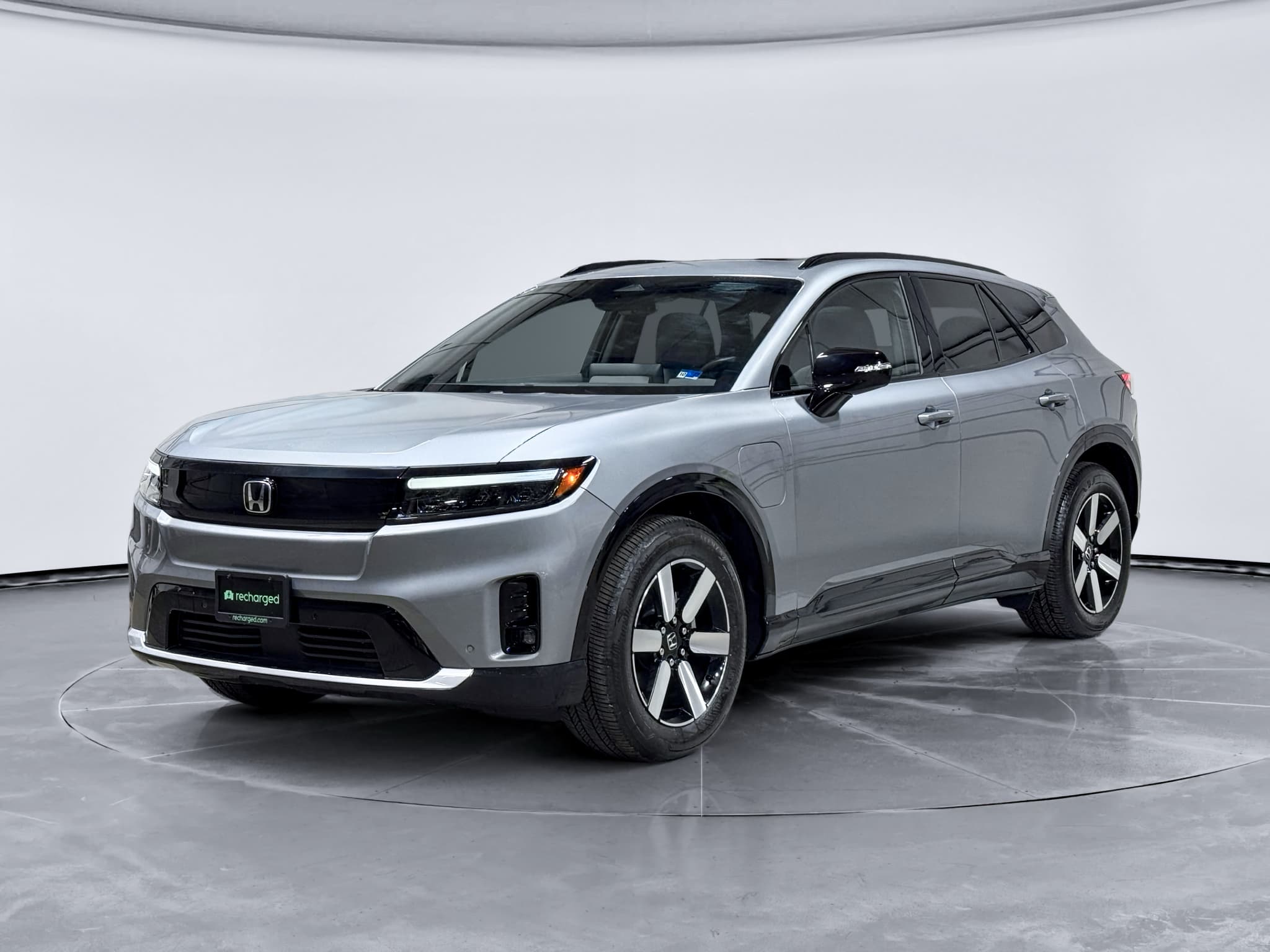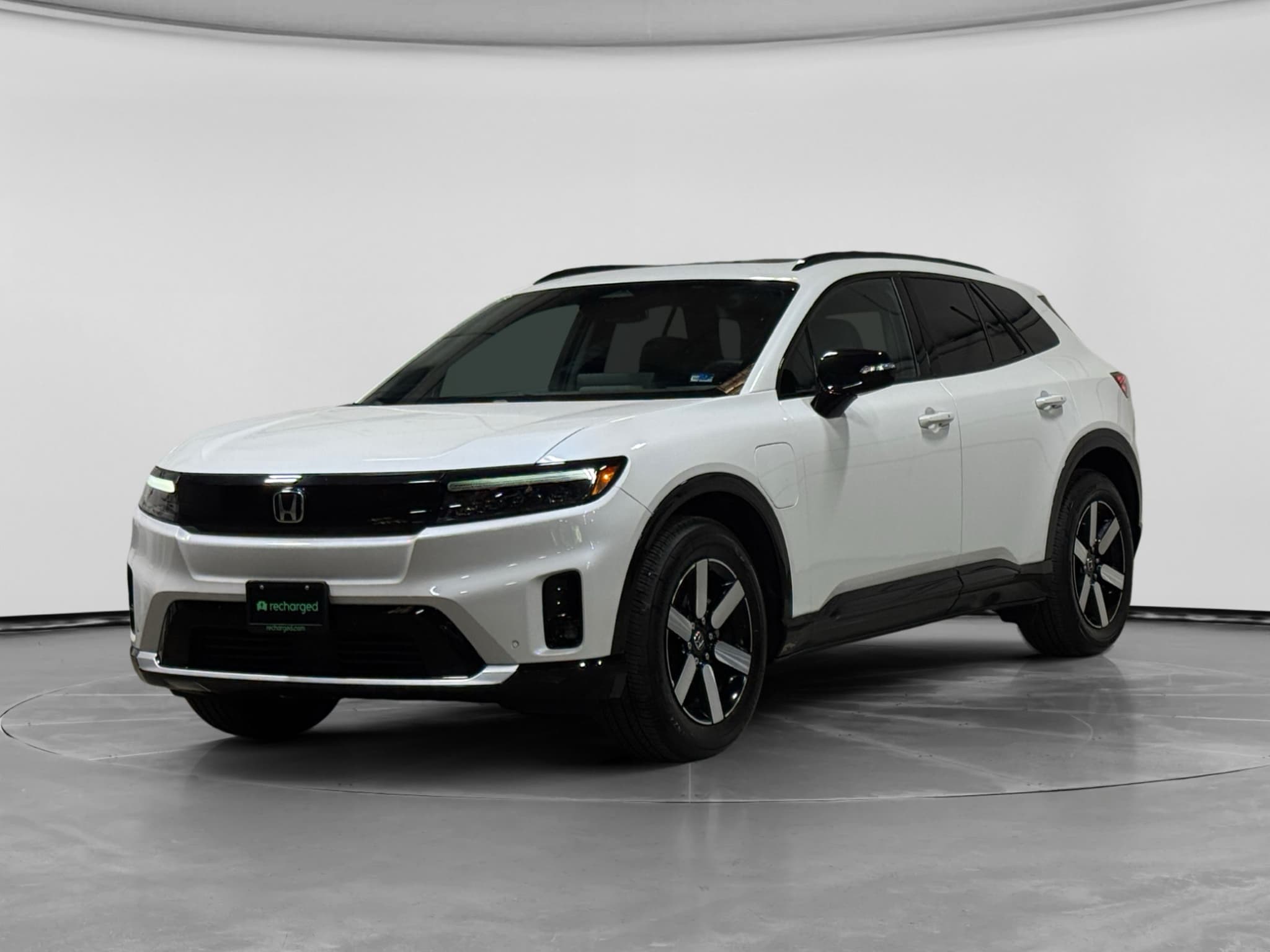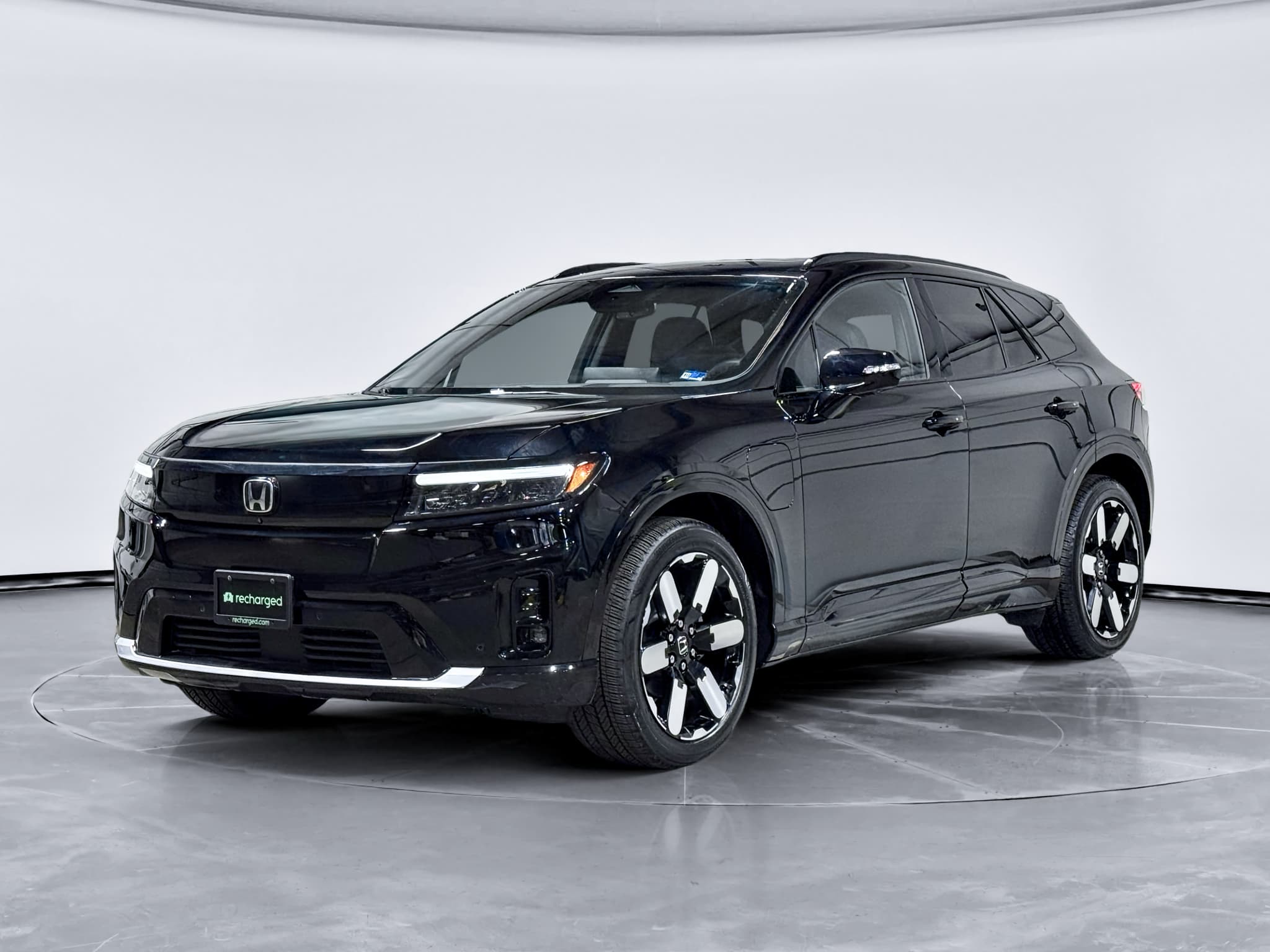
For shoppers evaluating the Prologue in 2026, its strongest qualities are space, familiar controls, and competitive used pricing. Recharged’s hands-on examples came from earlier Prologues, so individual equipment should be confirmed on the exact vehicle rather than assumed from the trim badge. The market data, however, is current and gives you a useful picture of what buyers are paying now. If you’re new to pre-owned electric cars, start with our used-EV buying guide.
Why the Prologue works
The Prologue works best as a practical midsize SUV that happens to be electric. In Recharged’s hands-on reviews, the rear seat stood out for generous legroom, air vents, charging ports, cupholders, and child-seat anchors. The cargo area was also notably roomy, making the Prologue a credible family vehicle rather than an EV that asks you to sacrifice everyday usefulness.
The cabin favors familiar technology over experimentation. An earlier EX example inspected by Recharged had separate driver and media displays, dual-zone climate control, heated seats, wireless phone charging, Apple CarPlay, Android Auto, and useful console storage. Its cloth-textured seating felt comfortable and durable, although the manual liftgate made the vehicle feel basic beside more heavily equipped versions.
Basic doesn’t mean bad, the Prologue can still provide the space, connectivity, and comfort features most drivers actually use.
What Recharged’s Prologue data shows
Recharged’s current data places the used Prologue market around the low-$30,000 range. Among 11 Prologues listed on Recharged on September 22, 2026, the average asking price was $30,341 and the median was $30,599; asking prices ranged from $25,999 to $34,499. Scored vehicles in that group had an average Recharged Score of 4.74, with individual scores ranging from 4.44 to 4.91.
Actual retail sales support a similar market center. Across 45 Prologues sold by Recharged during the trailing 12 months, buyers paid an average of $29,272 and a median of $29,593, with final retail prices spanning $21,997 to $36,999. Those figures cover multiple vehicles and configurations rather than guaranteeing the value of one specific Prologue, but they give you a stronger benchmark than a single advertisement.
The market takeaway
Recharged data
Used Honda Prologue prices at Recharged
$30,599
median list price
Current list prices for matching inventory at Recharged.
- Lowest
- $25,999
- Average
- $30,341
- Highest
- $34,499
Average Recharged Score on these listings
4.7 / 5
Range
4.4 – 4.9
Based on available listings
Recharged data
Recent Honda Prologue sold prices
$29,593
median sold price
What buyers actually paid through Recharged, not list price.
- Lowest
- $21,997
- Average
- $29,272
- Highest
- $36,999
Monthly median sold price
Based on Recharged sales in the last 12 months
Every EV is battery-tested with a Recharged Score. Nationwide delivery.
Which version should you consider?
Choose the Prologue by equipment and condition rather than relying only on the trim name. Recharged has inspected a straightforward earlier EX and a much more feature-rich earlier Elite, illustrating how different two Prologues can feel. This table summarizes the shopping paths without treating earlier equipment as a guaranteed 2026 specification.
Prologue shopping paths
Observed equipment can vary by model year, configuration, and individual vehicle.
| Shopping path | Look for | Best for | Watch for |
|---|---|---|---|
| Earlier EX example | Core comfort features | Value-focused buyers | Manual liftgate |
| Earlier Elite example | Cooled seats, foot hatch | More cabin equipment | Higher asking price |
| Condition-first choice | Strong Score Report | Long-term confidence | Missing accessories |
Confirm every listed feature on the specific Prologue you plan to buy.
The EX example demonstrated that an affordable Prologue doesn’t have to feel stripped of essentials. Recharged’s earlier Elite example added cooled seats and a foot-activated hatch, but the more important distinction was its near-new condition. A better-equipped badge is useful only when the vehicle’s condition, price, and battery assessment support it.
Charging and everyday driving
The Prologue can fit normal home-charging routines, but you should verify the cable and equipment included with the specific vehicle. Recharged inspected an earlier example with a portable cable that could be configured for Level 2 charging and converted for Level 1 use. Level 1 uses a standard household outlet and charges slowly, while Level 2 uses a higher-powered home or public connection and is the more practical overnight solution; see our Level 1 versus Level 2 charging guide for setup details.
Regenerative braking can slow the vehicle when you lift off the accelerator, turning some motion back into stored electrical energy. It can reduce how often you press the brake pedal, but it doesn’t remove your responsibility to brake or justify assuming the vehicle will stop for traffic controls. Using the friction brakes periodically can also help keep surface rust from accumulating on the brake components; our regenerative-braking guide explains the system in more detail.
Use regenerative braking as assistance, not as permission to stop paying attention. You still control the car and should use the brake pedal whenever conditions require it.
What should you check before buying?
You should verify the exact vehicle’s battery condition, equipment, charging accessories, and software before committing. Used Prologues may look similar online while differing meaningfully in comfort features and convenience hardware. Recharged includes a Score Report with verified battery health and fair-market pricing so you can compare the vehicle itself, not just its mileage and trim label.
Honda Prologue inspection checklist
Read the battery report
Review verified battery health and ask what the result means for your driving needs. Learn more in our battery-health explainer.
Test every cabin feature
Check climate control, heated or cooled seats, phone integration, wireless charging, cameras, and both displays.
Inspect the liftgate
Confirm whether it is manual, powered, or foot-activated and make sure it operates correctly.
Confirm charging equipment
Identify the included portable cable, adapters, connector condition, and home-charging compatibility.
Check the rear-seat setup
Test vents, charging ports, cupholders, child-seat anchors, and passenger space with your normal seating positions.
Drive and brake normally
Test regenerative deceleration and conventional braking without assuming driver-assistance systems will stop the vehicle.
Don’t count on a federal EV tax credit
Instant offer, trade-in, or consignment. Pickup available.
Honda Prologue FAQ
The final verdict
The Honda Prologue is a sensible used electric SUV for buyers who value space and usability more than novelty. Recharged’s pricing data shows an established used market centered near $30,000, while its hands-on examples demonstrate that even a simpler Prologue can cover the equipment most drivers need. Compare the exact features, read the battery-health report, and favor the best-condition vehicle at a fair price rather than automatically choosing the highest trim.