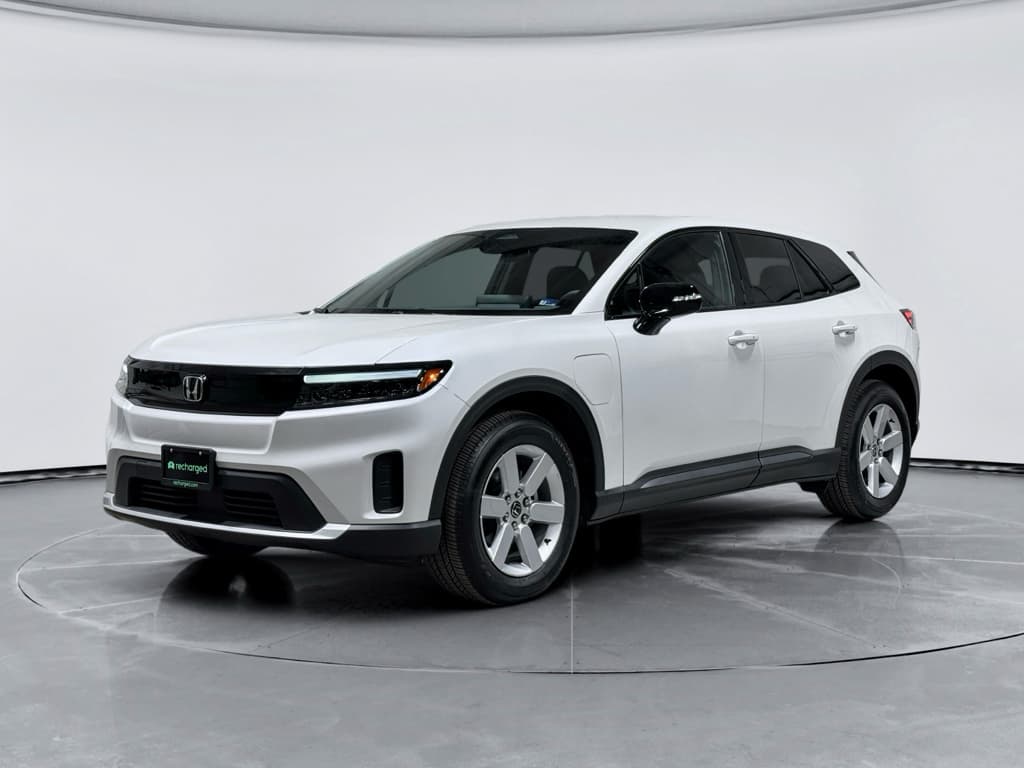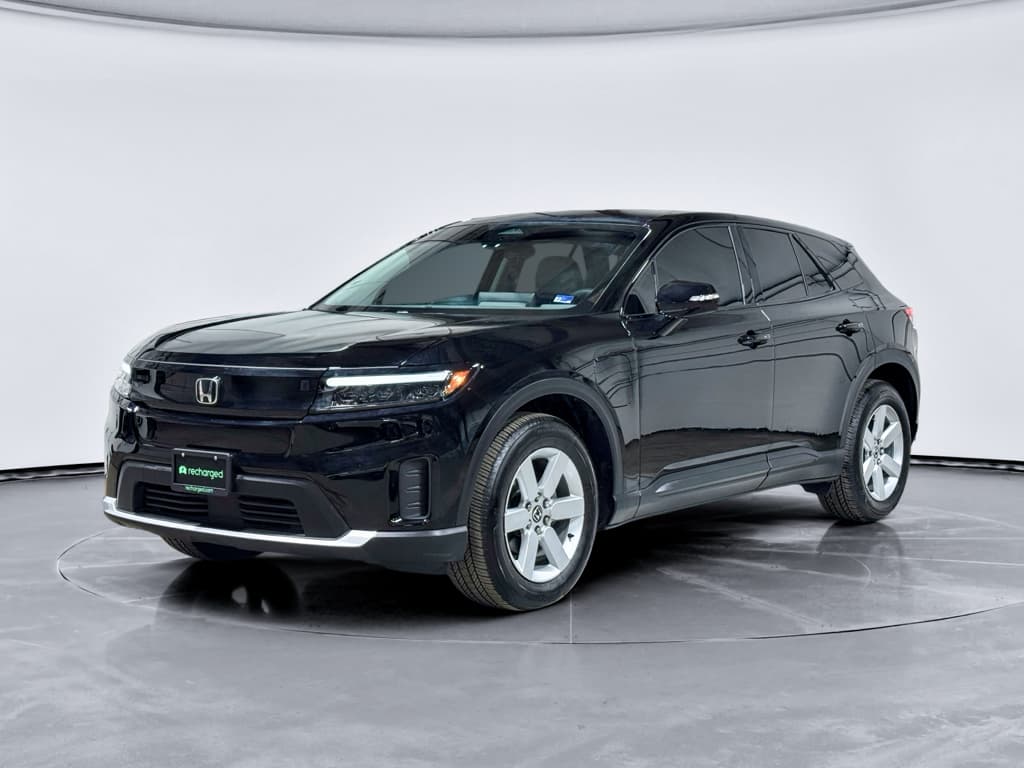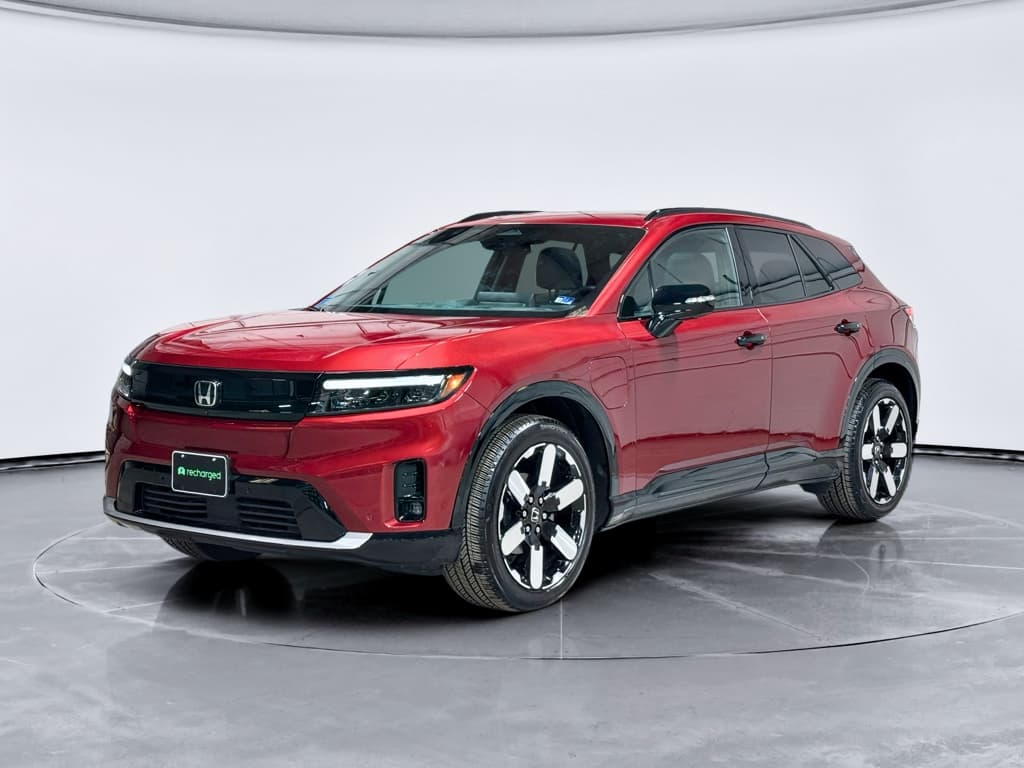
If you own, lease, or are thinking about buying a 2024–2026 Honda Prologue, you’ve probably heard about software glitches, “Service High Voltage System” warnings, and new recall headlines. This guide pulls together the latest 2026 Honda Prologue recalls list, explains what each campaign fixes, and shows you how to protect yourself as an owner or used‑EV shopper.
Model years covered
Overview: Why 2026 Honda Prologue recall info matters
The Prologue is Honda’s first modern long‑range EV, built on GM’s Ultium platform. That means you’re getting a lot of new technology all at once: a high‑voltage battery pack, shared GM electronics, and Honda’s own software on top. Early production runs of any new EV tend to spawn recalls and technical service bulletins (TSBs) as real‑world miles reveal weak spots. Understanding which issues rose to the level of a safety recall, and which are handled quietly as software updates, helps you decide how urgent a fix is, and how nervous to be about a specific used Prologue.
Honda Prologue recall snapshot through early 2026
Quick 2026 Honda Prologue recalls list
Here’s the high‑level 2026 Honda Prologue recalls list for U.S. vehicles as of April 10, 2026. Details and naming can vary slightly between NHTSA, Honda bulletins, and owner paperwork, but the core issues are consistent.
Major Honda Prologue recalls through April 2026
Use this as a starting point, then confirm your own vehicle’s status with a VIN lookup.
| Campaign (NHTSA) | Model Years | Approx. Build Range | Main Issue | Primary Fix | Risk if Ignored |
|---|---|---|---|---|---|
| 26V112 (Software / Displays) | 2024 Prologue | Built ~Oct 10, 2023 – Dec 21, 2024 | Instrument cluster and center display can intermittently go blank; rearview camera may show no image in Reverse. | Dealer applies updated software (often labeled safety recall / Service Bulletin 26‑056) to multiple control modules. | Loss of key driving info like speed and warning lights; no rear camera image when backing up, increasing crash risk. |
| 24V540 (Front Suspension) | 2024 Prologue | Early production 2024 units | Possible defect in right front lower control link (front suspension component) that may crack. | Dealer inspects the part; if affected, the control link is replaced with an improved component. | In extreme cases, a fractured link can affect steering and stability, raising the risk of a crash. |
Formal recalls are handled for free by Honda dealers; product updates and TSBs are typically applied when you complain about a related symptom.
Recalls vs complaints and TSBs
Recall 26V112: Blank screens and software “brain transplant”
The headline recall for Prologue owners in 2026 is NHTSA campaign 26V112, covering certain 2024 Honda Prologue and 2024 Acura ZDX models. On affected vehicles, software bugs can cause the digital instrument cluster to go dark or the center screen to fail to show the rearview camera image when you shift into Reverse.
- Applies to: 2024 Honda Prologue and 2024 Acura ZDX (exact build dates depend on VIN).
- Symptoms: Blank or frozen instrument cluster, blank center screen, no backup‑camera image, warning messages about displays or cameras.
- Regulation angle: The bug violates federal rules around required driver information and rear visibility, which is why this became a safety recall rather than a quiet TSB.
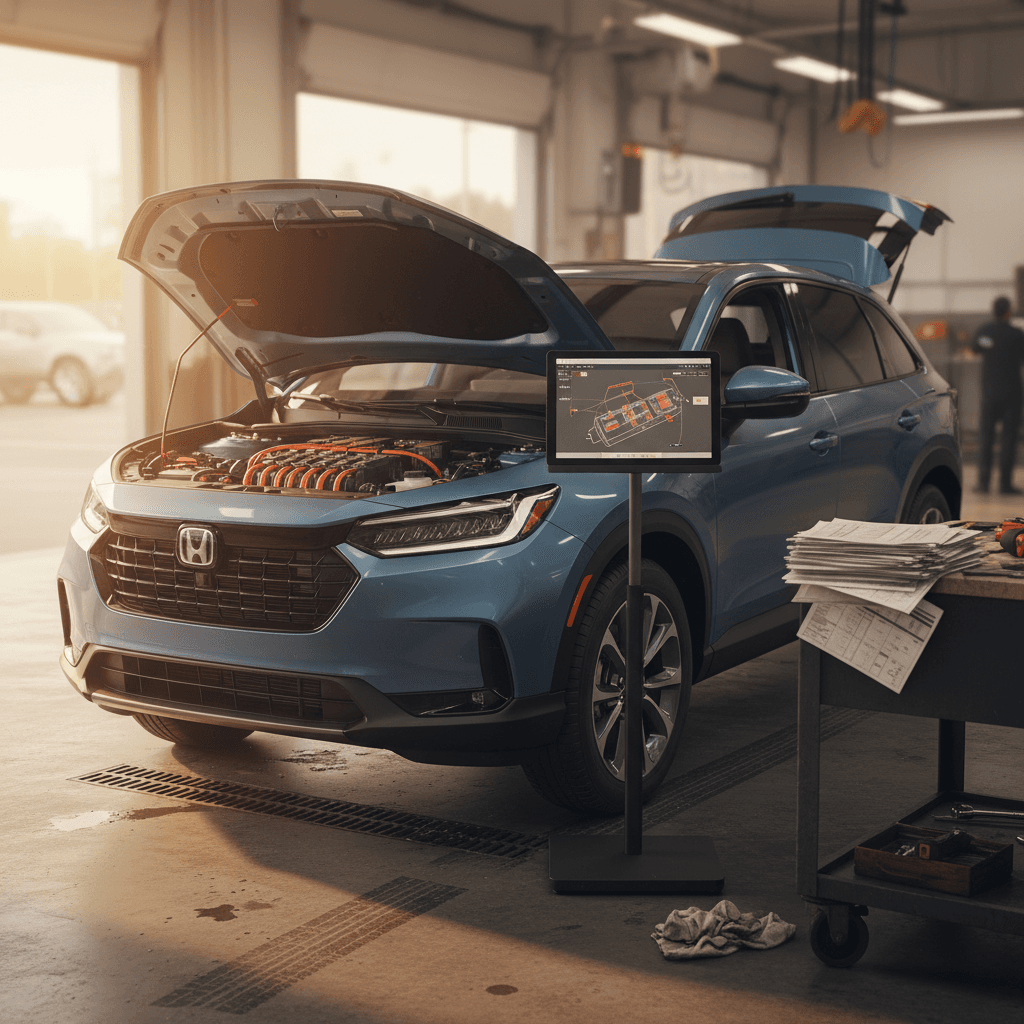
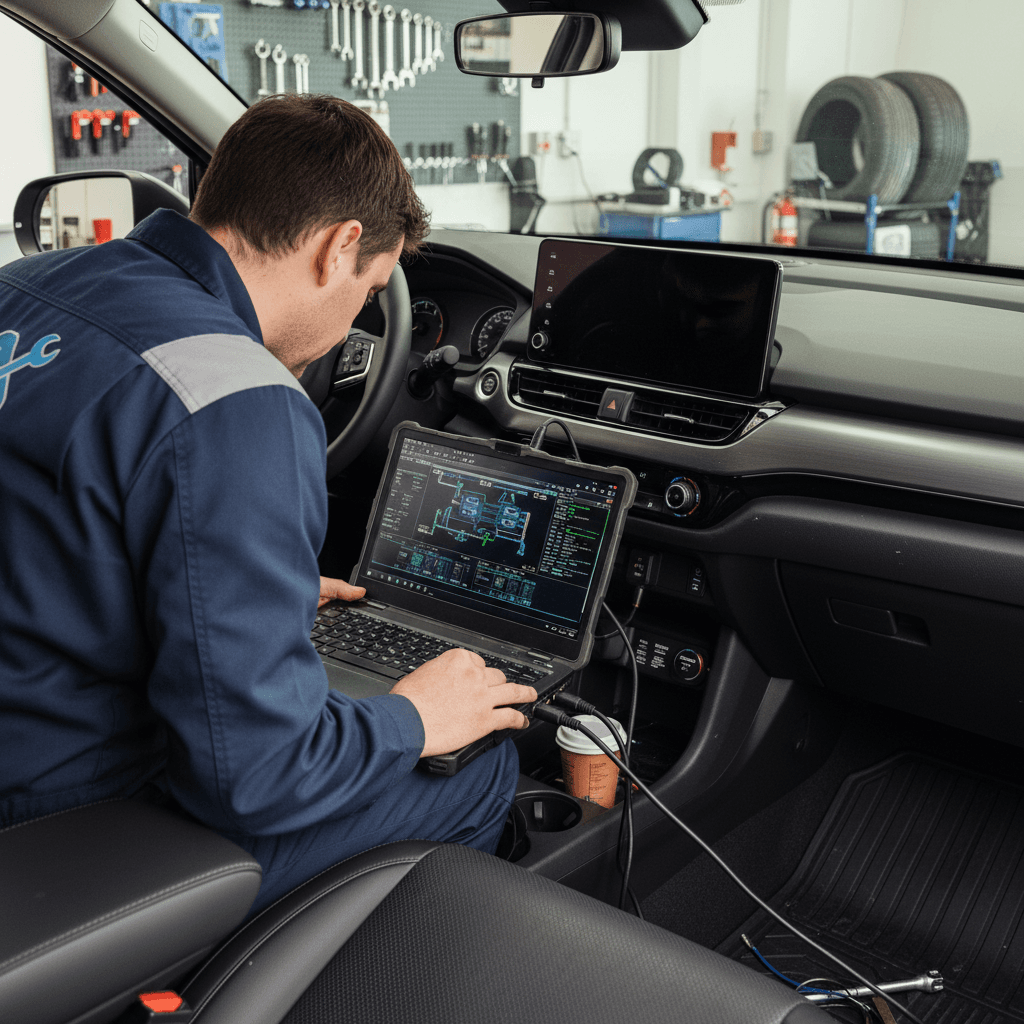
Honda’s solution is a comprehensive software refresh. At the dealer, your Prologue gets control modules reprogrammed with updated code, owners sometimes describe it as a “brain transplant” because it touches both the instrument panel and infotainment system. The job itself doesn’t add hardware, but it can take some time because technicians must follow a strict sequence to avoid bricking modules.
Ask how long the update really takes
2024 Prologue suspension recall: right front lower control link
The earlier, quieter Prologue recall centered on the **right front lower control link**, a crucial part of the front suspension that helps locate the wheel and manage loads. On a small batch of early‑build 2024 Prologues, Honda identified a risk that this link could crack under certain conditions.
- Safety Recall ID: 24V540 in NHTSA documentation.
- Scope: Limited subset of 2024 Honda Prologue units, your VIN will confirm whether you’re in the affected range.
- What dealers do: Inspect the right front lower control link with a specific procedure. If it passes, they note the inspection in your file; if not, they replace it with an updated part.
- Why it matters: A fractured control link can change alignment, create clunks or instability, and in a worst‑case scenario compromise steering control.
Do not ignore suspension noises
Software updates vs recalls: high-voltage and charging issues
If you spend any time in Prologue owner groups, you’ll see a steady drumbeat of posts about “Service High Voltage System” messages, cars refusing to DC‑fast‑charge, or the car suddenly limiting power. These are legitimate problems, but most are handled through TSBs and product updates, not full safety recalls, as of early 2026.
What a safety recall means
- Filed with NHTSA and publicly searchable.
- Triggered when an issue creates a safety risk or violates federal standards.
- Repair is free for all current and future owners, regardless of warranty status.
- Dealers are required to complete the recall before selling the vehicle.
What a TSB / product update means
- Guidance from Honda to dealers on how to fix a known problem.
- Usually only applied when an owner reports a symptom.
- Covered under normal warranty terms, not lifetime like a recall.
- Often addresses issues like high‑voltage error messages or charging quirks.
From the owner’s seat, a TSB can feel just as serious as a recall, you’re still stuck with a car that won’t charge or throws scary warnings. The difference is how long the fix is guaranteed to be free, and how aggressive Honda must be about tracking down every affected VIN. That’s why documentation matters: each visit builds a paper trail that can help if later campaigns or buyback discussions appear.
How Recharged handles Prologue software history
Ready to find your next EV?
Browse VehiclesHow to check if your Honda Prologue has open recalls
Even with a tidy 2026 Honda Prologue recalls list in hand, nothing beats checking your specific VIN. Campaigns can be narrowed to certain build months, factories, or option packages. Here’s the quickest way to see what your Prologue still needs.
Step-by-step: run a Honda Prologue recall check
1. Find your 17-character VIN
You’ll find the VIN at the base of the windshield on the driver’s side, on the driver‑door jamb label, and on your registration or insurance card. Snap a photo to avoid typos.
2. Use Honda’s official recall lookup
Go to Honda’s recall‑lookup tool and enter your VIN. This will show any open (unperformed) recalls for your Prologue. You can also call Honda customer service if you prefer to talk to a human.
3. Cross-check with NHTSA
Search your VIN on the NHTSA recall site as a backup. This is especially useful if you’re in Canada or buying a Prologue that previously lived in another state.
4. Ask the service advisor to print your campaign history
At your next dealer visit, request a printout of completed and outstanding campaigns. Keep it with your service records, especially if you plan to sell or trade the car later.
5. Set a reminder to re-check
For a first‑generation EV like the Prologue, new campaigns may appear as more data rolls in. Make it a habit to re‑run your VIN every 6–12 months.
Do this before your next long trip
Owner checklist after a recall repair
A completed recall shouldn’t just be a line item in the dealer’s system. You want to know exactly what they did and confirm the car behaves the way it should. Here’s a practical owner checklist to run through when you pick your Prologue up.
What to do after your Prologue recall visit
1. Get the repair order and campaign code in writing
Make sure your paperwork clearly lists the recall number (for example, 26V112) and what work was performed, software update, part inspection, or replacement. Keep this in your glovebox file.
2. Test the specific system that was fixed
If it was a display or camera recall, cycle the car on and off several times and back into Reverse in different lighting. For suspension work, listen for new noises and confirm the steering feels normal.
3. Ask about software versions
Politely ask the advisor or technician which software package your Prologue is now on, and whether it incorporates any other product updates beyond the recall itself.
4. Note any new warnings or odd behavior
If fresh warnings appear or the car behaves differently after the repair, document it immediately and contact the dealer. Sometimes an update exposes a separate issue that also needs attention.
5. Confirm if any follow-up is recommended
For some campaigns, Honda may recommend a quick recheck after a set number of miles. If that’s the case, schedule it on the spot so you don’t forget.
Shopping used: how recalls affect a 2024–2025 Prologue purchase
If you’re considering a used 2024 or 2025 Prologue, recalls are not necessarily a deal‑breaker. In fact, they can be a sign that Honda is taking issues seriously. What matters more is **whether the fixes were done correctly**, and how the car’s history lines up with known problem patterns.
How to read recall history on a used Prologue
Use recall records as a lens, not a red flag by default.
Look for completed safety campaigns
On a 2024 Prologue, an open 26V112 software recall or 24V540 suspension recall is a job for the seller, not you. A car with all recalls marked complete is usually the safer bet.
Check for repeat high-voltage visits
Multiple warranty visits for “Service High Voltage System” messages or charging failures deserve extra scrutiny. Ask for details on what was replaced or reprogrammed.
Factor in warranty runway
The Prologue’s battery and electric‑drive components carry a long warranty. A 2024 with fresh high‑voltage work and plenty of coverage left might be a smarter buy than a flawless car on the edge of warranty expiry.
How Recharged de-risks a used Prologue
When to push harder with Honda and your dealer
Most recall visits go smoothly: you book, they fix, you leave. But early‑generation EVs can stump even seasoned techs, and Prologue owners have shared plenty of stories about long waits for parts, repeated software flashes, and cars sitting at the dealer for weeks. Here’s when to dig in your heels a bit.
- You experience the same safety‑related symptom after a recall fix, especially loss of displays, power, or braking‑related warnings.
- Your Prologue is undriveable due to a high‑voltage or charging fault and the dealer says they’re "waiting on guidance" with no ETA.
- The advisor insists your VIN is not covered, but you believe it matches the recall scope based on NHTSA or Honda documents.
- You suspect the dealer is refusing recall work on a used Prologue because you didn’t buy it there.
Escalation playbook
FAQ: Honda Prologue recalls and common questions
Frequently asked questions about Honda Prologue recalls
Bottom line on 2026 Honda Prologue recalls
Every first‑generation EV writes its own early‑years story in recalls and TSBs, and the Honda Prologue is no exception. Right now, the big headlines are a **blank‑screen software recall** and a targeted **front‑suspension inspection**, layered on top of a growing stack of high‑voltage and charging updates. None of that automatically makes the Prologue a bad EV, it just means you need to be proactive.
Run your VIN through Honda and NHTSA tools, keep a tidy folder of recall and repair paperwork, and don’t be shy about pressing dealers for clear answers if safety‑critical issues resurface. If you’re shopping used, treat recall history and high‑voltage repairs as data points, not scare stories. And if you’d rather have experts do the digging, vehicles sold through Recharged include a Recharged Score Report with battery diagnostics, recall status, and EV‑savvy support from first click to delivery.