If you’re eyeing the 2025 VW ID.4, you’ve probably also heard whispers about Volkswagen’s electric SUV struggling with battery recalls, software gremlins, and mixed owner reviews. Reliability matters even more with an EV, because a glitchy battery or charging system can sideline the entire vehicle. Let’s walk through what we actually know about 2025 VW ID.4 reliability, and how to protect yourself if you’re buying new or used.
Why 2025 reliability is tricky to judge
Overview: How Reliable Is the 2025 VW ID.4?
VW ID.4 Reliability Snapshot (Through Early 2026)
The short answer: the 2025 VW ID.4 is not a disaster, but it isn’t a benchmark for rock‑solid reliability either. Like many first‑wave EVs from traditional automakers, it mixes a fundamentally sound powertrain with software quirks and a higher‑than‑average recall count. The good news is that many of the most serious issues (like battery fire‑risk recalls and charging control problems) are being addressed under warranty. The bad news: you’ll want to treat recall and software history as a must‑check item, not an afterthought.
Important for 2025 shoppers
How the 2025 ID.4 Compares to Earlier Model Years
2021–2022: First‑generation teething issues
- Early software bugs in infotainment, instrument cluster, and driver‑assist systems.
- Some high‑voltage battery module replacements and charging‑related problems.
- Owners reported random warning lights and rebooting screens; many issues improved with software updates.
2023–2024: More recalls, mixed owner experiences
- Consumer surveys ranked the ID.4’s reliability well below average, largely due to battery/charging system and in‑car electronics.
- Multiple recalls for high‑voltage battery fire risk and charging‑system faults, plus a separate gear indicator software recall that could allow rollaway if the parking brake wasn’t set.
- Some owners report flawless experiences; others have dealt with repeated sensor, door handle, and infotainment issues.
Volkswagen has updated both hardware and software over these years, and by the time you reach the 2025 ID.4, you’re getting a later‑production vehicle that benefits from several rounds of fixes on the assembly line and in software. However, the fact that 2023–2025 vehicles are included in recent high‑voltage battery recalls shows that the story isn’t as simple as “later is always safer.”
How to interpret the track record
Common Issues VW ID.4 Owners Report
Most Common VW ID.4 Problem Areas
These patterns show up repeatedly in owner reports and complaint databases.
High‑voltage & 12V battery issues
- Error messages or sudden power loss tied to the high‑voltage battery or onboard charger.
- 12‑volt battery failures causing a no‑start condition or multiple warning lights.
- Recent recalls specifically target battery overheating and fire‑risk concerns on 2023–2025 models.
Infotainment & digital cockpit glitches
- Screens freezing, rebooting, or going blank while driving, sometimes taking the speedometer with them.
- Navigation and GPS showing incorrect location, disabling connected services and SOS functions.
- Occasional lag or unresponsive touch controls needing a reboot.
Sensors, doors & charging hardware
- Faulty parking sensors triggering false proximity alerts in low‑speed maneuvers.
- Charge port door or lock malfunctions, preventing normal charging until repaired.
- Door handle sensor recalls on some recent model years.
Important nuance
Recent Recalls Affecting the 2025 VW ID.4
Key Recent Recalls Relevant to 2025 ID.4 Shoppers
Always confirm recall status using the VIN on the NHTSA site or with a VW dealer.
| Issue | Model Years Affected (U.S.) | Risk | Typical Remedy |
|---|---|---|---|
| High‑voltage battery overheating / fire risk | 2023–2025 ID.4 | Overheating battery may cause a thermal event; NHTSA advises outdoor parking and charging limits until repaired. | Battery software update; high‑voltage battery or modules replaced if needed. |
| Battery cell misaligned electrodes (fire risk) | 2023–2024 ID.4 | Misaligned electrodes in some packs can lead to battery fire during or after charging. | Battery module replacement; owners told to park outside and avoid DC fast charging until fixed. |
| Gear-indicator software fault | Earlier ID.4 production through mid‑2020s (including many 2024s and some 2025s) | Incorrect or missing gear display could let the vehicle roll away if the parking brake isn’t set. | Software update to correct gear‑indicator logic. |
| Door handle / sensor faults | Primarily 2023–2024 ID.4 | Door handles may malfunction or fail to detect presence, affecting locking/unlocking and some safety functions. | Replace or repair affected door handles and sensors. |
Recall campaigns evolve; always verify the latest guidance before buying.
Battery fire‑risk recalls are serious
Battery Health & Charging: The Heart of ID.4 Reliability
With any EV, the battery pack and charging hardware effectively are the engine and fuel system. For the ID.4, long‑term battery capacity loss hasn’t been the main story. Instead, reliability concerns focus on charging behavior and control electronics, the systems that decide when, how fast, and how safely the pack charges.
- Charging sessions that stop unexpectedly at public DC fast chargers or home Level 2 stations.
- Error messages related to the onboard charger or high‑voltage system, sometimes requiring dealer visits.
- High‑voltage battery failure modes serious enough to trigger recalls and battery replacements on affected vehicles.
- Smaller 12‑volt battery problems that can immobilize the car, even though the main high‑voltage pack is fine.
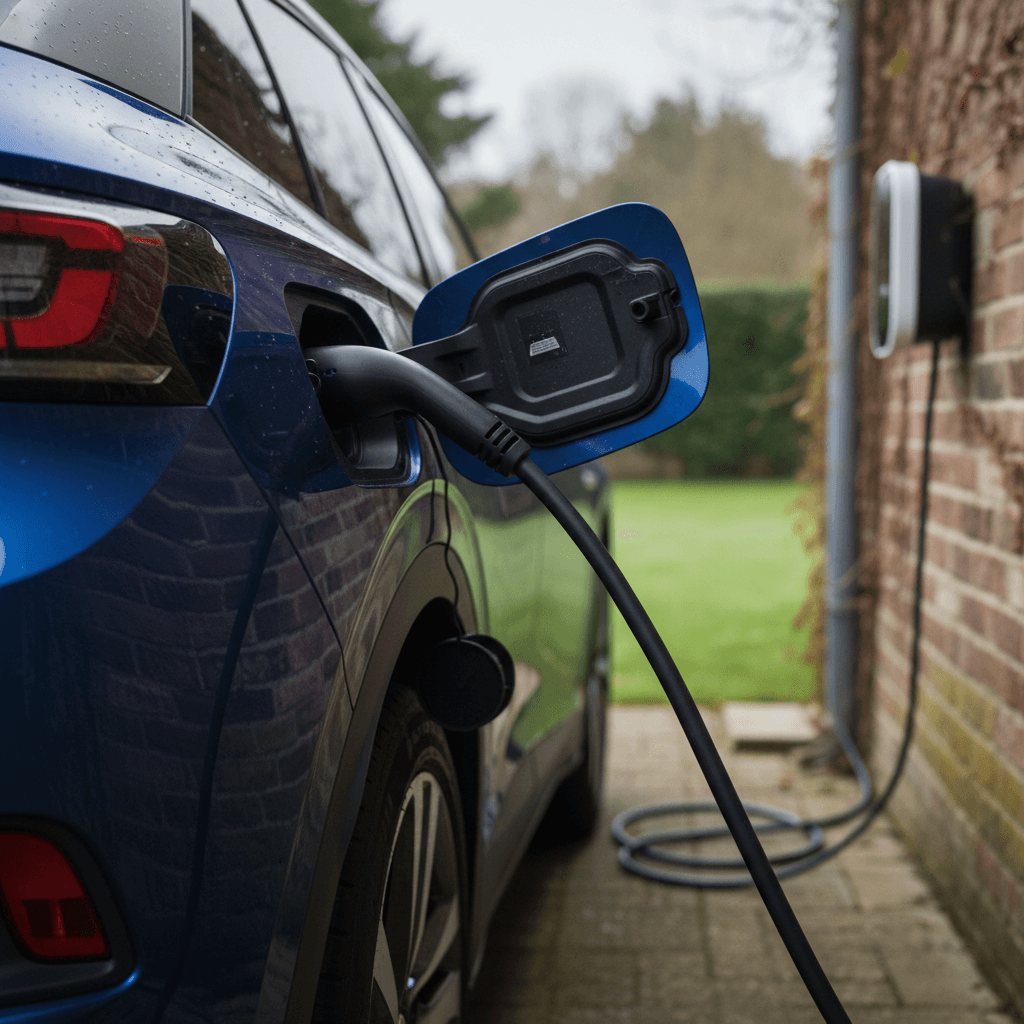
How to check charging reliability on a test drive
Software and Infotainment: Still a Weak Spot
If there’s a single theme across owner forums and complaint databases, it’s that the ID.4’s software hasn’t always lived up to its hardware. The vehicle relies heavily on two screens and a complex software stack for everything from climate control to driver‑assist settings, great when it works, frustrating when it doesn’t.
Typical Software‑Related Complaints
These can range from minor annoyances to genuine safety concerns depending on when they occur.
Screen blackouts & reboots
Navigation & connectivity glitches
Why this matters for reliability scores
Warranty Coverage and What It Means for You
The 2025 VW ID.4 is covered by a typical mainstream‑brand warranty package in the U.S., plus the longer high‑voltage battery coverage required for EVs. That matters because many of the ID.4’s notable problems, battery control units, modules, software updates, are expensive if you’re paying out of pocket.
- Basic bumper‑to‑bumper warranty: typically 4 years/50,000 miles from in‑service date.
- Powertrain and high‑voltage battery warranty: generally 8 years/100,000 miles for the battery pack, often including specific capacity retention standards.
- Corrosion and roadside assistance: coverage length varies, but can be helpful if a breakdown strands you due to a software or charging issue.
- Recall repairs: always performed at no cost, regardless of ownership changes.
How Recharged reduces the risk on used EVs
Ready to find your next EV?
Browse VehiclesShould You Buy a Used VW ID.4 (Including 2025)?
Here’s where things get interesting. Because the ID.4 carries a reputation for mixed reliability and has seen multiple recalls, resale values on some model years are softer than you’d expect for a relatively new EV. That means you can sometimes get a lot of electric SUV for the money, if you’re selective.
When a used ID.4 can be a smart buy
- All recalls have been completed and documented.
- The car shows a clean battery health report with normal capacity for age and mileage.
- Software is updated and the infotainment system behaves on a test drive.
- You value comfort, interior space, and a quiet ride more than absolute bulletproof reliability.
When you should walk away
- Open battery or charging‑related recalls with no clear repair plan or long part backorders.
- Repeated dash or touchscreen blackouts that the seller dismisses as “normal.”
- Charging failures at multiple stations or an unwillingness to demonstrate charging.
- Incomplete service records or a vague history of “electrical issues” without documentation.
Leasing vs buying
Quick Checklist: Shopping for a Used ID.4
Essential Reliability Checks Before You Buy
1. Run the VIN for recalls
Use the NHTSA lookup tool or call a VW dealer with the VIN. Confirm that all high‑voltage battery, charging, gear‑indicator, and door‑handle recalls are completed. Ask for printed or digital proof.
2. Get a battery health report
Request a recent high‑voltage battery health test or have one performed. At Recharged, our <strong>Recharged Score</strong> does this for you, showing usable capacity and charging performance compared with new.
3. Test both home and DC fast charging
If possible, observe the car on a Level 2 charger and, separately, a DC fast charger. Watch for aborted sessions, error messages, or unusual noises from the battery area.
4. Stress‑test the software on your drive
During the test drive, change drive modes, use navigation, toggle driver‑assist features, and make a few phone calls via Bluetooth or CarPlay/Android Auto. Screens should stay responsive and stable.
5. Scan for warning lights and stored codes
Even if the dash is clear, a professional scan can reveal stored fault codes for the battery, charging system, or driver‑assist hardware that haven’t yet turned into visible warnings.
6. Review service history carefully
Look for repeated visits for the same issue, especially electrical, charging, or infotainment complaints. A one‑off repair isn’t unusual; a pattern is a red flag.
Alternatives to the VW ID.4 If Reliability Worries You
If you like the idea of a compact electric SUV but want a model with a cleaner reliability record, you do have options. No EV is perfect, most have more issues than the best gas cars, but some have generated fewer serious complaints than the ID.4 so far.
Comparable EVs to Cross‑Shop
Always compare incentives, charging networks, and real‑world range, not just brochure specs.
Hyundai Ioniq 5
Kia EV6
Tesla Model Y
How Recharged can help you compare
FAQ: 2025 VW ID.4 Reliability Questions Answered
2025 VW ID.4 Reliability FAQ
Bottom Line: Is the 2025 VW ID.4 a Smart Bet?
If your top priority is rock‑solid reliability, the 2025 VW ID.4 is a mixed proposition. It offers a pleasant drive, good space, and competitive range, but it also carries the baggage of earlier‑year recalls, software quirks, and a reputation for below‑average reliability in owner surveys. The powertrain itself isn’t the villain; the supporting cast of electronics and control modules is where most headaches originate.
That doesn’t mean you should automatically strike the ID.4 from your list. It does mean you should buy the specific vehicle in front of you, not the brochure version. Confirm recall completion, demand transparency around battery health and charging behavior, and walk away from any car with a fuzzy electrical history. If you’d rather not do that detective work alone, shopping through Recharged gives you a used‑EV marketplace built around verified battery diagnostics, fair pricing, and EV‑specialist support from first click to final delivery.