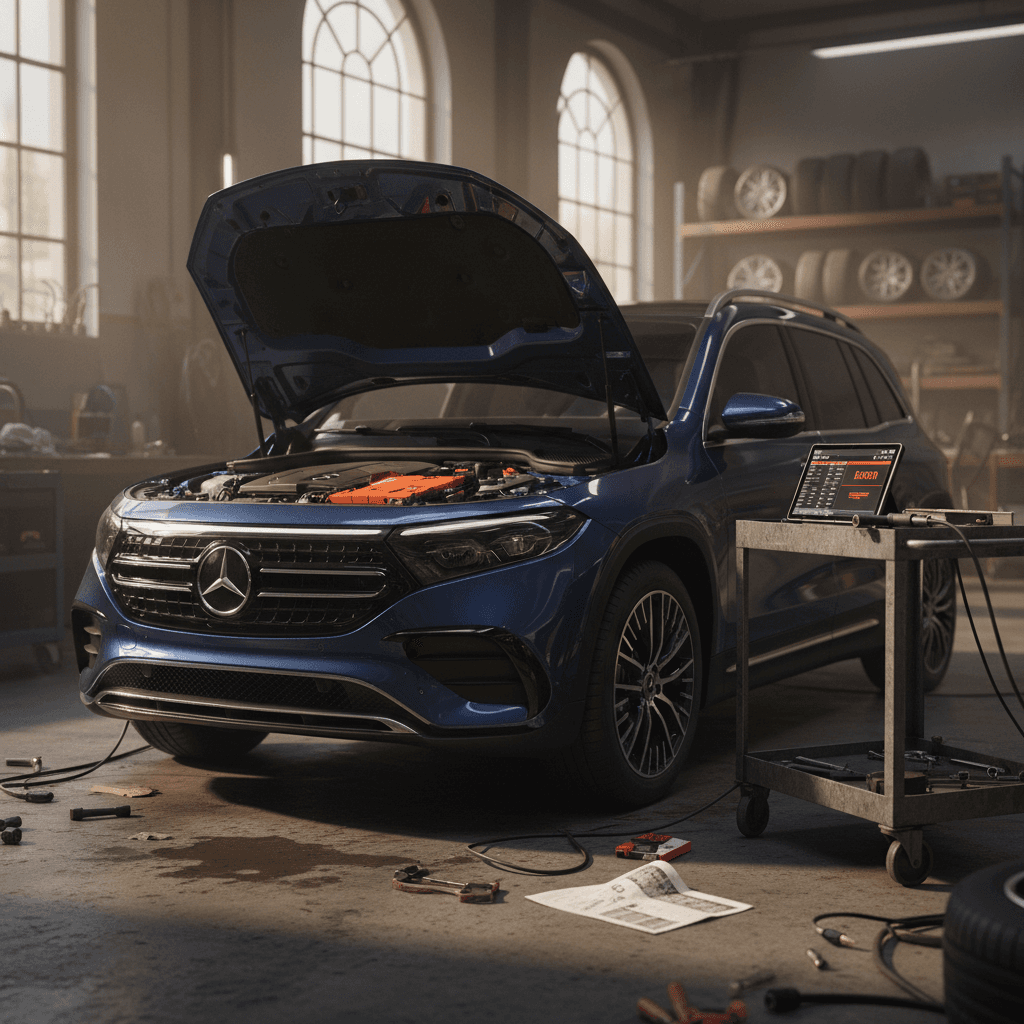
If you’re considering a 2025 Volvo EX30, you’re probably drawn to its compact size, distinctive Scandinavian design, and punchy performance. But with any brand-new EV, especially a brand‑new model, the big question is reliability. In this guide, we’ll walk through what we know so far about 2025 Volvo EX30 reliability, from safety scores and battery recalls to everyday owner complaints and what used‑EV shoppers should look for.
Early days for a brand‑new EV
Overview: How reliable is the 2025 Volvo EX30?
Volvo EX30 reliability snapshot (as of early 2026)
Pulling it all together, the EX30’s **underlying hardware looks promising**, but this is a software‑heavy car that’s gone through some high‑profile teething problems. Owners and testers generally praise how it drives and how solid it feels. At the same time, we’re seeing recurring themes: glitchy infotainment, app connectivity problems, and now a significant battery recall that Volvo is addressing with module replacements.
Key reliability takeaway (so far)
Safety vs reliability: Where the EX30 shines, and where it doesn’t
Volvo built its reputation on safety, and the EX30 follows that script. In late 2024, Euro NCAP awarded the EX30 a maximum five‑star safety rating, with strong scores for adult and child occupant protection and good performance for vulnerable road users. That’s the kind of result you want to see if you’re planning to drive kids around in a small SUV.
Where the EX30 is strong
- Crash safety: 5-star Euro NCAP rating with especially good child occupant scores.
- Standard active safety: AEB, blind‑spot monitoring, rear cross‑traffic alert, traffic‑sign recognition and more included on most trims.
- Battery warranty: 8‑year/100,000‑mile coverage on the high‑voltage pack, in line with class leaders.
Where questions remain
- Assisted driving tech: Euro NCAP’s 2025 Assisted Driving grading gave EX30 a “Moderate” rating, suggesting the driver‑assist implementation isn’t best‑in‑class.
- Software stability: Early adopters report buggy behavior from the infotainment system, app, and keyless entry.
- New‑model unknowns: The EX30 only arrived for 2024–2025; long‑term durability (5–10 years out) is still an open question.
How to read safety vs reliability
Battery and recall issues: What’s happening with the EX30 packs?
The biggest reliability headline for the EX30 so far is a **global battery recall**. In early 2026, Volvo announced that more than 40,000 EX30s worldwide equipped with certain 69 kWh battery packs would be recalled because some cells could overheat during charging, especially when charged beyond about 70%. Volvo advised owners of affected cars to cap charging at 70% and avoid parking close to buildings until replacement modules are installed at no cost.
- The recall primarily affects Single Motor Extended Range and Twin Motor Performance versions using packs from a specific supplier.
- Volvo is replacing defective battery modules free of charge; work is handled through Volvo dealers.
- As of early 2026, Volvo describes the fire‑risk incidents as rare, but is treating the issue seriously because of the potential severity.
- In some markets (such as certain Nordic countries), EX30s built with a different battery supplier are not part of the recall.
If you own or are test‑driving an EX30
From a long‑term reliability standpoint, a large recall isn’t automatically a deal‑breaker. We’ve seen similar battery campaigns on other EVs where, once replacement packs are installed, owners enjoy years of trouble‑free use. The key is verifying that the work has been done and that the car’s battery health looks strong for its age and mileage.
Software and electronics: The most common early complaints
Like many modern EVs, the EX30 leans heavily on software. A large central touchscreen handles most controls, and the car is tightly integrated with the Volvo Cars app. That’s convenient when it works, and frustrating when it doesn’t. Early owner reports point to **software and electronics** as the main pain points so far, more so than motors, suspension, or core drivetrain hardware.
Typical EX30 software & electronics complaints
Most of these are annoying rather than dangerous, but they affect day‑to‑day satisfaction.
App & connectivity
- App fails to connect or complete pairing.
- Remote preconditioning and charge monitoring not working.
- Occasional Bluetooth oddities, phone stays connected even when you’re not in the car.
Infotainment glitches
- Freezes or slow responses from the Google‑based system.
- Intermittent audio drops or navigation bugs.
- Owner surveys and forums suggest this is the most common fault category.
Keyless entry & convenience
- Laggy locking/unlocking with key fob or phone key.
- Doors sometimes fail to lock on walk‑away.
- Minor hardware quirks (e.g., glovebox not opening reliably) on some early‑build cars.
The good news on software issues
In the 2025 What Car? reliability survey, the EX30 scored a respectable 90.6%, with **most of the reported problems tied to infotainment**. That’s not ideal, but it’s far from catastrophic. If you’re tech‑tolerant and willing to live through a few updates, these may be acceptable trade‑offs. If you hate glitchy screens, they might be deal‑breakers.
Mechanical and build quality: Any serious hardware red flags?
So far, the complaints that move metal off dealer lots, serious drivetrain failures, suspension breakage, structural issues, have been relatively rare on the EX30. Reviews consistently praise the car’s **solid feel, comfortable seats, and overall fit and finish** for the segment.
- Electric motors and driveline: No pattern of motor or inverter failures has emerged yet in public data.
- Brakes and steering: No major systemic mechanical issues widely reported as of early 2026, though EVs in general have seen software‑related braking recalls, so always confirm outstanding campaigns.
- Body and interior: Typical small‑SUV squeaks and rattles may show up with mileage, but there’s no consistent “this part always breaks” story yet.
Hardware outlook is cautiously positive
Warranty coverage on the Volvo EX30
Typical Volvo EX30 warranty coverage (U.S.)
Always confirm exact terms for your model year and location, this is a general guide.
| Component | Volvo EX30 Coverage | Competitive Context |
|---|---|---|
| Basic bumper‑to‑bumper | 3 years / 60,000 miles | Shorter than Kia’s 7 yr / 100k, similar to many premium brands. |
| High‑voltage battery | 8 years / 100,000 miles | On par with most mainstream EVs. |
| Powertrain (where separate) | Typically covered under basic warranty | Details vary by market; check your contract. |
| Corrosion / rust | Varies by region, often 8–12 years | Comparable to other compact crossovers. |
| Software & infotainment | Covered under basic warranty; OTA updates ongoing | Expect frequent updates in the first years of production. |
How the Volvo EX30’s coverage stacks up against common EV benchmarks.
Ask the dealer to print the warranty history
How the EX30’s reliability compares to rival small EVs
The EX30 plays in a fast‑growing segment of small electric SUVs, think Kia EV3/EV6, Hyundai Kona Electric, Smart #1, and entry trims of vehicles like the Mercedes EQA in some markets. Against that backdrop, its reliability picture looks **middle‑of‑the‑pack** so far.
EX30 vs key small‑EV rivals (early reliability view)
Based on owner surveys, warranty terms, and early problem patterns.
Kia EV3 / EV6
- Very strong reliability survey scores so far.
- Long 7‑year/100,000‑mile vehicle warranty in many markets.
- Fewer software complaints, but less premium cabin feel than Volvo.
Hyundai Kona Electric
- Proven powertrain with years on the road.
- Generally good reliability; occasional charging‑curve complaints.
- Interior not as upscale as EX30, but ownership risks are well understood.
Smart #1 / similar compact EVs
- Share some hardware with Geely‑related brands like Volvo and Polestar.
- Mixed early reports on software, generally solid drivetrains.
- Less crash‑safety data than EX30 in some markets.
Where EX30 lands today
- Hardware and safety on par with or better than many rivals.
- Software and the recent battery recall pull down its perceived reliability.
- Warranty coverage is competitive on the battery, average on everything else.
Shopping for a used EX30: Checks, questions, and red flags
If you’re evaluating a used Volvo EX30, you’re in early‑adopter territory, most cars on the market will be less than two years old. That’s actually an advantage: you can get a newer design with plenty of factory warranty left, as long as you verify that the first owner didn’t skip critical updates and recall work.
Pre‑purchase checklist for a used Volvo EX30
1. Confirm all battery recalls and software campaigns
Ask the seller for documentation that battery recall work has been completed. If not, factor time and convenience into your decision and confirm Volvo will perform the repair promptly under recall.
2. Review the service and warranty history
Look for repeated visits for the same issue (e.g., persistent infotainment crashes). A few software‑related visits on a new model aren’t unusual, but a pattern of unresolved problems is a red flag.
3. Test the infotainment and app thoroughly
Connect your phone, set a route, stream audio, and use Google‑based features. Then test the Volvo Cars app for remote lock/unlock and preconditioning. You want to find the quirks *before* you buy.
4. Check keyless entry and basic convenience features
Lock/unlock repeatedly using both the fob and phone key. Test the glovebox, windows, seats and all switches. New models sometimes hide the smallest but most annoying defects here.
5. Inspect tires, brakes and suspension on a lift
Even with low mileage, aggressive city driving and heavy curb contact can chew up tires and suspension components. A quick look underneath can reveal bent wheels, leaks, or impact damage.
6. Get independent battery health data
Whenever possible, pair a <strong>professional battery health report</strong>, like the Recharged Score, with test‑drive impressions. That tells you whether the pack is aging normally for its miles and climate.
How Recharged can help with a used EX30
Battery health, range and resale value over time
Because the EX30 is new, we don’t yet have 8–10 years of degradation data the way we do for some earlier EVs. But we can make reasonable projections based on similar pack chemistries and early owner experiences.
- Most EX30s use a ~69 kWh pack with DC fast‑charging capability suitable for road‑trip use, especially on the Extended Range versions.
- Early owners report that **charging speed is adequate but not class‑leading**, and that the absence of manual battery pre‑conditioning can slow winter fast‑charging sessions.
- Assuming the recall fixes the overheating‑cell issue, we’d expect EX30 battery degradation to be broadly similar to other modern EVs, often in the 8–15% range after 8–10 years with typical use, though climate and charging habits matter a lot.
- Because the EX30 is a stylish, compact premium EV with strong safety credentials, resale values should remain competitive **if** Volvo handles recall and software issues promptly and transparently.
Habits that help your EX30’s battery age gracefully
So, should you buy a 2025 Volvo EX30?
Good candidate for you if…
- You want a small premium EV with strong safety scores and Scandinavian design.
- You’re comfortable being an early adopter and can live with occasional software quirks in exchange for over‑the‑air improvements.
- You can confirm that **battery recall work and key software updates** have been completed on the car you’re considering.
- You prioritize city and suburban use over constant long‑range, multi‑state road trips.
You might want to wait or look elsewhere if…
- You’re extremely risk‑averse on reliability and want a model with a longer track record, like a Kona Electric or Tesla Model 3.
- You rely heavily on seamless phone‑app integration and will be frustrated by glitches.
- You’re shopping heavily used and can’t verify recall or software history.
- You need more rear‑seat space than a sub‑compact SUV like the EX30 can provide.
Viewed objectively, the 2025 Volvo EX30 is **not a slam‑dunk reliability champion, nor is it a model to avoid outright**. It’s a first‑generation EV with excellent safety, competitive warranty coverage, a significant battery recall now being addressed, and software that’s still maturing. If you go in with clear eyes, especially on recall status, software version, and battery health, you can end up with a very compelling small EV. If you’d rather let someone else debug the early model years, there’s no harm waiting a couple of years for more data or shopping used EVs with longer track records on platforms like Recharged.
2025 Volvo EX30 reliability: FAQ
Common questions about Volvo EX30 reliability
“With any brand‑new EV, you’re trading some reliability certainty for the latest tech. The smart move is to make sure you’re not the one paying to debug the car.”