If you’re eyeing a 2025 Volkswagen ID.4, you’ve probably heard mixed things about its reliability. Earlier model years were hammered in owner surveys for battery and charging problems, plus glitchy software. That history matters, because there isn’t yet a standalone "2025 Volkswagen ID.4 reliability rating" from the big rating agencies, early scores are largely an extension of the ID.4’s track record from 2021–2024.
Where current reliability scores come from
2025 VW ID.4 reliability at a glance
2025 VW ID.4 reliability snapshot (early data)
In plain English, the **2025 ID.4 is not a disaster, but it isn’t a Toyota RAV4 either**. You’re trading some reliability risk for a comfortable, roomy EV with solid range and a good value story, especially if you lease or buy used at the right price.
Key takeaway for shoppers
How the 2025 Volkswagen ID.4 reliability rating is shaped
When you see any 2025 Volkswagen ID.4 reliability rating mentioned online today, it’s usually **an extrapolation** from earlier years. Consumer surveys in late 2023 and 2024 ranked the ID.4 near the bottom of the EV pack, largely due to issues with its **high‑voltage battery, DC fast‑charging performance, 12‑volt battery, and in‑car electronics**. Those scores don’t magically reset just because the window sticker now says "2025."
What the ratings are (and aren’t)
- Survey‑based: Reliability scores mostly reflect owner reports of problems per vehicle, not lab tests.
- Model‑family based: New model years inherit the reputation of earlier years until enough unique data exists.
- Weighted by severity: Battery and charging failures count far more than a sticky cupholder or quirky infotainment.
Why 2025 is still a wildcard
- 2025 production hasn’t been on the road long enough to build a large data set.
- VW has pushed multiple software and hardware updates over 2023–2025 that may quietly improve reliability.
- Most problems show up in the first 1–3 years, so 2025 models are just entering that window.
How to use early ratings wisely
Carryover issues: what 2021–2024 ID.4 owners have faced
To understand where the 2025 ID.4 might give you trouble, look at the shared bones: platform, battery packs, and software lineage. Across 2021–2024 model years, owners and regulators have flagged three major problem themes:
Top historical VW ID.4 problem areas
These are the issues that shaped today’s reliability ratings, and that you should still screen for on a 2025.
High‑voltage battery & charging
Complaints range from DC fast‑charging failures and unexpected session drops to warning lights suggesting battery overheating or reduced power. In a few cases, owners report the car refusing to charge until modules were replaced or reflashed.
12‑volt battery & low‑voltage system
On several years, a weak 12‑volt battery has caused no‑start situations and random electronic gremlins. VW has addressed some cases with recalls and revised parts, but 12‑volt health is still worth checking on any ID.4.
Software & infotainment bugs
Owners report frozen screens, missing GPS/data, wireless CarPlay hiccups, and systems that only behave after a "fuse pull" or dealer reset. Most of these are hassles, not hazards, but they drive down satisfaction and perceived reliability.
The 2025 ID.4 shares the same basic MEB platform and battery families as those earlier years, along with a continuously updated software stack. That means **the potential for similar problems remains**, even if Volkswagen has gradually improved the hardware and code.
Battery and charging reliability on the 2025 ID.4
For any EV, the high‑voltage battery and charging system are the heart of the reliability story. With the ID.4, they’re also the reason Consumer Reports and others have scored the model so harshly. Battery pack failures aren’t widespread, but a meaningful minority of owners have reported **charging behavior that simply isn’t normal**, and that’s what you need to screen for on a 2025.
- DC fast‑charging sessions that stall at low power or drop unexpectedly while other EVs charge normally on the same stall.
- Error messages related to battery temperature, battery management, or power limitation under ordinary driving.
- Home Level 2 charging that fails intermittently, requiring unplugging and re‑plugging or a full vehicle reboot.
- Onboard charger or charging module replacements within the first few years of ownership.
Don’t normalize weird charging behavior
The good news: long‑term Volkswagen battery chemistry has looked solid in related models. Independent testing of the ID.3, built on the same platform and using similar packs, found only modest capacity loss after roughly 100,000 miles, well inside VW’s eight‑year/100,000‑mile battery warranty commitment. In other words, the core pack itself usually holds up; it’s the **charging and control hardware/software** that most often causes headaches rather than outright battery degradation.
Software and electronics glitches
If you’re coming from a gas SUV, the ID.4’s software will shape a lot of how you feel about the car’s reliability. When your infotainment freezes or the app forgets your location, it may not strand you, but it does chip away at your confidence.
Typical ID.4 software & electronics complaints
These issues have been reported across 2021–2024 models and can plausibly show up on 2025s without current updates.
| Symptom | Impact on daily use | How it’s usually fixed |
|---|---|---|
| Frozen or laggy infotainment | Delayed climate, navigation, and media controls; feels "cheap" | Over‑the‑air update, dealer software reflash, or hard reset |
| GPS/data loss ("fuse 19" syndrome) | Navigation and live data stop working until reset | Fuse pull/reset, updated navigation module software |
| Buggy phone integration | Wireless CarPlay/Android Auto drops, odd Wi‑Fi behavior | Phone OS updates, ID.4 software update, or wired connection |
| Random warning lights with no fault found | Driver anxiety, extra dealer visits | Diagnostic scan, software update, 12‑volt battery check/replacement |
Make sure any 2025 ID.4 you’re considering is on the latest software and has had applicable recalls addressed.
Quick test drive checklist
Safety issues and recalls to watch
A reliability rating isn’t only about how often a vehicle breaks, it’s also about **how serious those failures are**. On the ID.4, the most worrying cases have involved battery‑system faults, sudden loss of power, or warning messages about overheating. When NHTSA complaints or recalls reference those systems, they demand attention, not patience.
- High‑voltage battery or battery‑safety recall campaigns that require dealer inspection or replacement of components.
- 12‑volt battery or low‑voltage harness recalls aimed at preventing no‑start or shut‑down events.
- Software recalls to address powertrain or stability‑control behavior, including unexpected loss of propulsion.
- Any recall involving fire risk, unintended acceleration, or steering/braking performance.
Never shrug off battery‑system warnings
Real‑world costs: what repairs might look like
One piece of encouraging news: while the ID.4 has scored poorly on reliability, its **projected 10‑year maintenance and repair costs** are still lower than many gas SUVs in its class. Analyses of earlier ID.4 model years suggest thousands of dollars of savings versus typical compact crossovers, mainly because you’re skipping oil changes, transmission service, and many engine‑related repairs.
What’s likely covered by warranty
- 8‑year/100,000‑mile battery warranty: Protects you against significant loss of high‑voltage battery capacity or outright failure.
- 4‑year/50,000‑mile bumper‑to‑bumper: Covers most electronics, screens, charger modules, and interior hardware during early ownership.
- Many early battery/charging faults have been repaired under warranty, including onboard charger replacements and software campaigns.
What can still sting your wallet
- Out‑of‑warranty electronics like infotainment units or charge ports can be pricey, even if they’re rare failures.
- Frequent dealer visits for software bugs cost time, even when repairs are covered.
- If you buy used without documentation, catching up on neglected recalls or software can mean multiple trips just after purchase.
How a used 2025 ID.4 can still pencil out
Should you buy or lease a 2025 VW ID.4?
Given the ID.4’s mixed reliability history, the way you pay for the car matters almost as much as the car you pick. For many shoppers, a **lease or short‑term ownership window** is the sweet spot, because it keeps the vehicle under full factory warranty while you enjoy the low operating costs of an EV.
When leasing makes sense
- You want to avoid long‑term reliability risk and battery‑age uncertainties.
- You like the idea of upgrading as EV tech and charging networks improve over 3–4 years.
- Manufacturer lease incentives on the ID.4 are strong in your region, lowering monthly costs.
Bottom line: Leasing lets you enjoy the ID.4’s strengths while Volkswagen eats most of the reliability risk.
When buying can still be smart
- You’re comfortable doing due diligence on battery health, charging behavior, and recall status.
- You plan to keep the vehicle within the warranty period, or you budget for potential out‑of‑warranty repairs.
- You find a used 2025 ID.4 at a price that already reflects its so‑so reliability reputation.
In those cases, a carefully vetted ID.4 can be a value play.
Use Recharged to de‑risk a used ID.4
Used 2025 ID.4 shopping checklist
10 things to check before you buy a 2025 ID.4
1. Confirm recall and campaign completion
Ask the seller for a printout of all completed recalls and service campaigns, especially anything related to the high‑voltage battery, 12‑volt system, or powertrain software.
2. Verify software version
Have the dealer or seller show you the current software version on the infotainment screen. Outdated software is more likely to glitch and may be missing reliability fixes.
3. Test Level 2 home charging
If possible, plug into a known‑good Level 2 charger for at least 15–20 minutes. Watch for error messages, unexpected stops, or unusually low charge rates for the state of charge and temperature.
4. Test DC fast charging
On a pre‑purchase inspection, hit a reputable DC fast‑charging station. Compare charge rates to what other ID.4 owners commonly see at similar state of charge. Weirdly low or unstable rates are reason for caution.
5. Scan for warning lights or stored codes
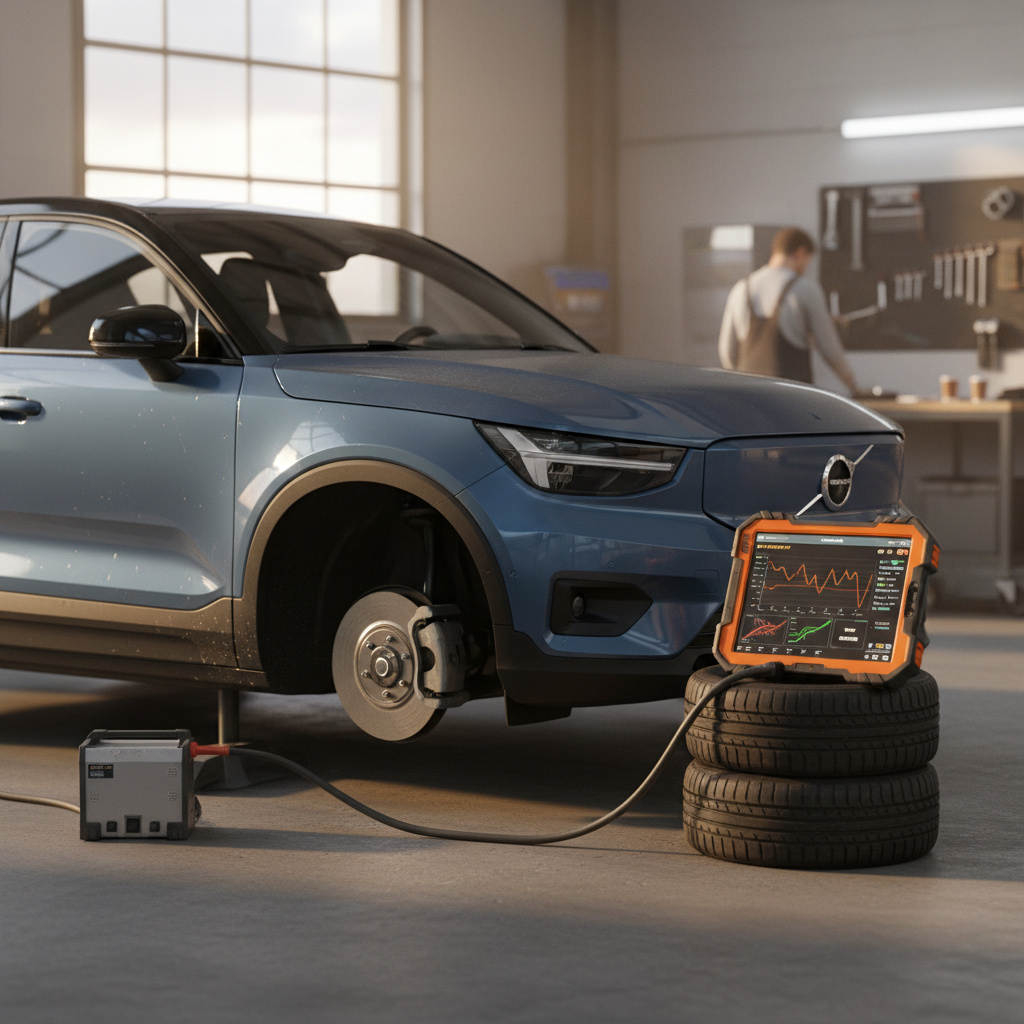
Ask for a diagnostic scan, not just a quick glance at the cluster. Intermittent faults often leave stored trouble codes even if no dash lights are currently on.
6. Check 12‑volt battery age and health
A weak 12‑volt battery has triggered a lot of no‑start and glitch reports. If it’s original or shows low voltage, budget to replace it proactively.
7. Exercise all electronics
Spend time with navigation, camera views, climate controls, one‑pedal modes, park assist, and app connectivity. Anything that freezes, lags badly, or crashes needs to be resolved before you sign.
8. Inspect tires and brakes
Uneven tire wear can hint at alignment or suspension issues; noisy or pulsing brakes can indicate lack of use or prior problems, even if the car has low miles.
9. Review usage history
Ask how the car was charged, mostly DC fast charging, mostly Level 2, or a mix. Neither is inherently bad, but heavy DC use plus abnormal behavior deserves extra scrutiny of battery health.
10. Get a third‑party or Recharged battery health report
Whenever possible, rely on an independent battery‑health assessment. At Recharged, this is baked into every ID.4 we sell via the Recharged Score, so you’re not guessing about pack condition.
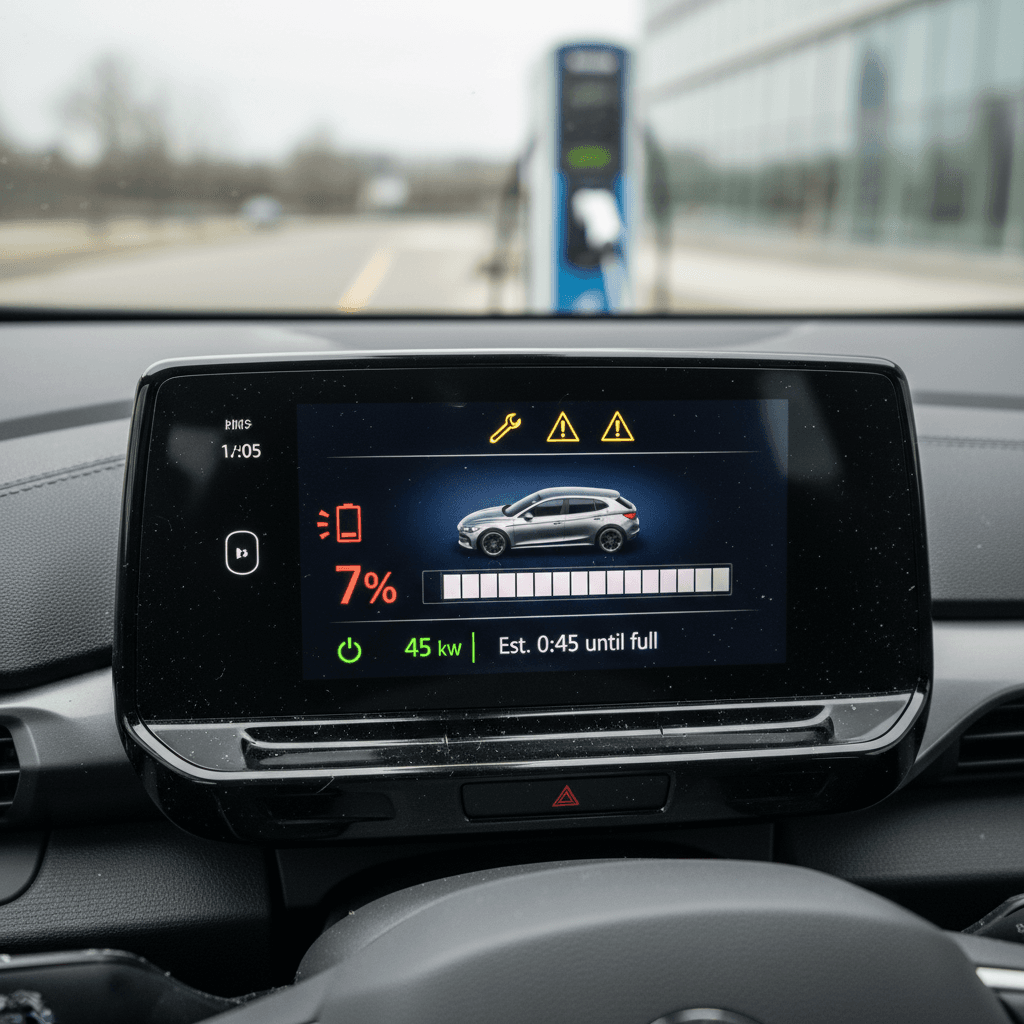
How Recharged evaluates VW ID.4 battery health
Because battery and charging problems dominate the ID.4 reliability discussion, Recharged puts unusual emphasis on **objective battery diagnostics** when we list one for sale. A clean history report is nice, but on an EV, it’s not enough.
Inside the Recharged Score for an ID.4
What we look at before we ever list a 2025 ID.4 on the site.
Battery state of health
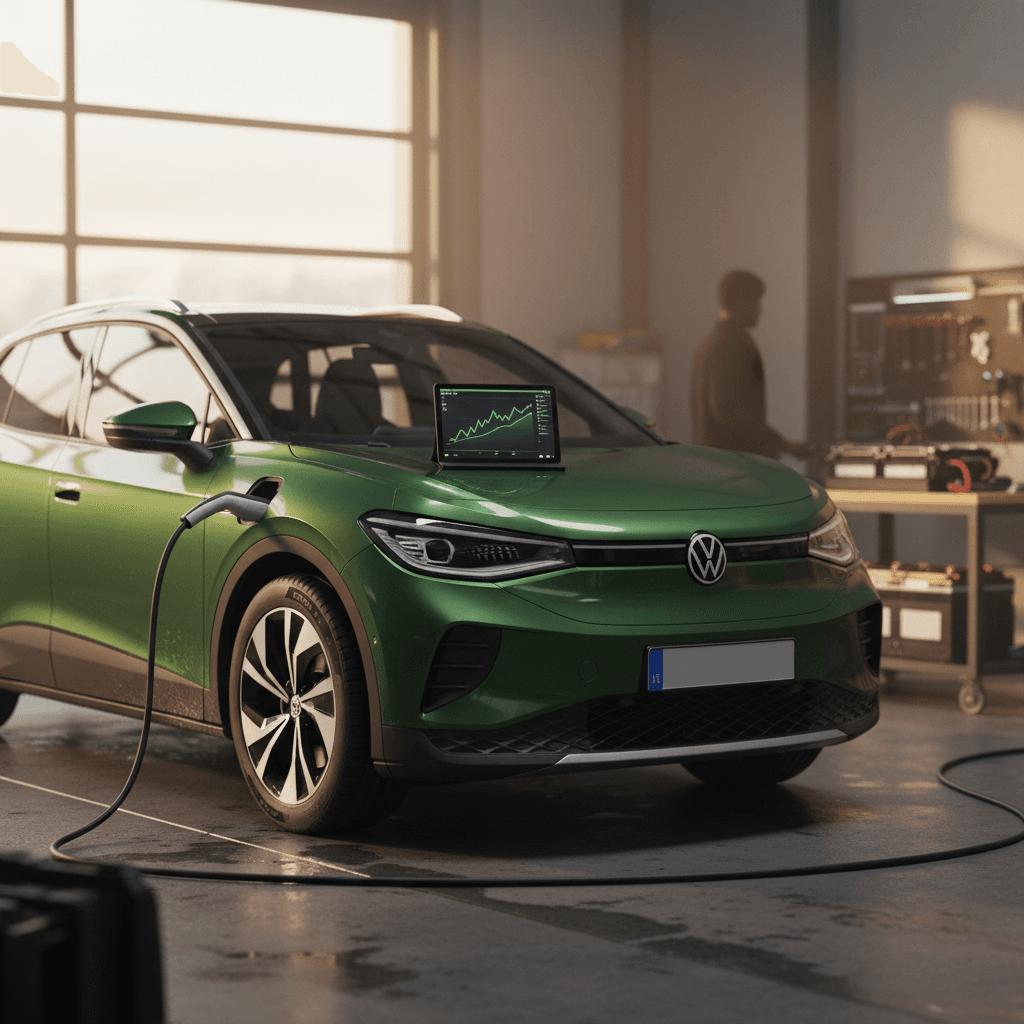
We use specialized tools to estimate usable battery capacity versus original spec. That helps you understand how much real‑world range you’re buying, not just what the EPA rating once was.
Charging behavior
Our evaluations include observing how the car behaves on Level 2 charging and, when appropriate, DC fast charging. We’re watching for abnormal taper, error codes, or dropped sessions.
History & pricing sanity check
We review prior warranty work, recalls, and market pricing. If an ID.4 shows a pattern of unresolved battery/charging complaints, it won’t meet our standards, no matter how good the deal looks on paper.
Ready to find your next EV?
Browse VehiclesIf you’re shopping a 2025 ID.4 privately or at a non‑EV‑specialist dealer, you can mimic a lot of this process by insisting on **detailed service records, a fresh diagnostic scan, and a thorough charging test**, or by starting your search with pre‑vetted cars on Recharged.
2025 VW ID.4 reliability FAQ
Frequently asked questions about 2025 VW ID.4 reliability
Bottom line: is the 2025 ID.4 reliable enough?
If you’re hoping the 2025 Volkswagen ID.4 suddenly jumps to the top of the reliability charts, you’re going to be disappointed. The best current read is that it remains **below average for an EV**, with most risk clustered in battery/charging hardware and software, plus the still‑maturing infotainment system. At the same time, outright catastrophic failures are not the norm, and when you factor in low running costs and aggressive pricing, the 2025 ID.4 can make sense for the right buyer.
The smart approach is to use early reliability ratings as a caution flag, not a stop sign. Decide whether leasing or a carefully vetted used purchase fits your risk tolerance, then let data, not wishful thinking, guide your choice. And if you’d rather not become a part‑time EV engineer, consider starting your search with **Recharged‑inspected ID.4s** that already come with a Recharged Score battery health report, transparent pricing, and EV‑specialist support from first click to driveway delivery.