If you own or are shopping for a 2025 Volkswagen ID.4, you’ve probably heard about battery fire-risk news and a long history of recalls on earlier ID.4s. This guide pulls everything together into a clear, plain‑English 2025 Volkswagen ID.4 recalls list so you know what’s actually out there today, what it means for safety, and how to protect yourself, especially if you’re buying used.
First, a quick reality check
Overview: What recalls affect the 2025 VW ID.4?
The ID.4 has earned a reputation for great packaging and value, and for more than its share of software and quality headaches. When you narrow that down to the **2025 model year**, the recall picture is actually fairly focused:
2025 VW ID.4 recall snapshot (U.S., as of April 2026)
The key nuance here is that **recalls follow VINs, not model‑year labels in marketing brochures**. A 2025 ID.4 produced early in the run can fall into the same campaign as late‑2023 or 2024 builds. That’s why checking your individual VIN matters more than memorizing campaign numbers.
Dates matter
2025 Volkswagen ID.4 recalls list (model year-specific)
Here’s the up‑to‑date 2025 Volkswagen ID.4 recalls list for U.S. vehicles as of April 10, 2026. This focuses on campaigns that explicitly include 2025 model‑year ID.4s or have production ranges overlapping the 2025 build window.
Known 2025 VW ID.4 recall campaigns (U.S.)
Always confirm details by running your VIN through NHTSA or Volkswagen’s recall tools; this table is a high‑level overview, not a legal record.
| Recall / Code | Model Years Included | Rough Build Dates | Main Issue | Applies to 2025 ID.4? |
|---|---|---|---|---|
| NHTSA 26V030 | VW 93EA | 2023–2025 | Sept 2, 2022 – Apr 10, 2025 | High‑voltage battery software can fail to detect abnormal self‑discharge, raising fire risk; software update adds monitoring and protections. | Yes – this is the primary recall that explicitly includes 2025 ID.4s. |
| Other historic ID.4 recalls (door handles, gear display, 12V issues, etc.) | Mostly 2021–2023, some 2023–2024 | Varies by campaign | Range of software, hardware and visibility issues (e.g., rollaway risk if gear display doesn’t show Neutral). | Generally no – these typically stop at 2023 or, for a few, 2024 build dates. Check your VIN to be sure. |
Campaign numbers and build dates can change; your dealer and NHTSA are the final authority.
Why your recall list may look short
Battery fire-risk recall 26V030 / 93EA (2023–2025 ID.4)
The headline recall you should care about as a 2025 ID.4 owner or shopper is the **high‑voltage battery fire‑risk software campaign**, known as NHTSA **26V030** and Volkswagen internal code **93EA**. It originally covered 2023–2024 ID.4s, then was expanded to reach **43,881 total 2023–2025 vehicles built from September 2, 2022 through April 10, 2025**.
- Issue: The battery management system (BMS) software may not reliably detect abnormal self‑discharge in the high‑voltage pack. In a worst‑case scenario this could allow a damaged cell module to overheat and, over time, increase fire risk.
- Symptoms: Most vehicles will show no obvious symptoms before the software update. In some cases, owners may see battery warnings, reduced power, or charging faults, but the recall is being done proactively.
- Fix: Dealers apply updated BMS and traction‑battery software that adds self‑discharge detection logic and can safely shut the pack down or limit use if it detects a problem. The work is free to you and usually takes a few hours.
- Usage guidance: Unlike some earlier high‑voltage recalls on other EVs, 26V030 does not broadly prohibit indoor parking or DC fast charging once the software is installed. Until the fix is done, following conservative habits, like avoiding prolonged 100% parking in hot weather, is reasonable, but not officially required.
Don’t ignore battery software recalls
If you’re shopping used, ask the seller for a service printout that shows 93EA completed, or check for yourself by running the VIN through NHTSA and Volkswagen’s recall tools before you sign anything.
Other ID.4 recalls that may touch some 2025 builds
Because the ID.4 has been on sale since the 2021 model year, there’s a long list of historic recalls, door‑handle sensors, rear‑motor bolts, gear‑indicator visibility, 12‑volt battery wiring, and more. Most of these **stop at earlier model years or build dates**. Still, it’s worth understanding the landscape so you’re not blindsided by an older bulletin your car happens to fall under.
Historic ID.4 recall themes (mostly pre‑2025)
These help explain the model’s reputation, even if many do not touch 2025 VINs.
Door & latch issues
Gear display & rollaway risk
12V & high‑voltage hardware
Don’t guess, check build date & VIN
How to check if your 2025 Volkswagen ID.4 has a recall
The most important step, whether you already own a 2025 ID.4 or are about to buy one, is a **proper recall check by VIN**. Here’s how to do it in a few minutes.
Step‑by‑step: Run a 2025 ID.4 recall check
1. Locate your VIN
Your ID.4’s 17‑digit VIN appears on the driver’s side dashboard (visible through the windshield), on the door jamb label, and on your registration or insurance card.
2. Use the official NHTSA recall tool
Go to the National Highway Traffic Safety Administration’s recall lookup, enter the VIN, and review any <strong>unrepaired safety recalls</strong>. This is the most authoritative public source.
3. Check Volkswagen’s recall site or app
Volkswagen also offers a VIN lookup on its owner website and sometimes in the VW app. This can surface OEM campaigns and service actions that don’t always appear in NHTSA’s database right away.
4. Call your VW dealer’s service department
Once you’ve confirmed an open recall, call any Volkswagen dealer. Give them your VIN and ask for a <strong>recall and campaign status printout</strong> and the first available appointment for the fix.
5. Confirm parts & loaner availability
For high‑demand campaigns like 26V030, ask if parts and technician capacity are available and whether a loaner vehicle or ride‑share credit is offered while they complete the software update.
6. Keep documentation
After the repair, keep copies of the <strong>repair order showing the campaign code</strong>. If you later sell or trade the vehicle, that paperwork helps demonstrate you stayed on top of safety work.
Good news for owners and shoppers
Living with a recalled ID.4: safety steps & dealer visits
If your 2025 ID.4 shows an open recall, especially the battery‑fire‑risk campaign, the fix should move to the top of your to‑do list. But in the real world, dealer capacity, software availability, and your schedule don’t always line up perfectly. Here’s how to manage the in‑between period without losing sleep.
Short term: before the fix
- Schedule promptly, not obsessively. Call your dealer as soon as you get a recall notice or see an open campaign online. Get on the schedule even if the appointment is a few weeks out.
- Watch for warning lights. If you see high‑voltage battery, drivetrain, or charging errors, don’t shrug them off, document with photos and mention them at service.
- Adjust your charging habits. For battery‑risk campaigns, it’s reasonable to avoid long periods at 100% state of charge and to park in a well‑ventilated area when possible until the fix is done.
- Know your rights. If a serious safety recall leaves your ID.4 undriveable and parts are delayed, ask the dealer and Volkswagen customer care what support, like loaners or buyback review, is available.
Long term: after the fix
- Keep all paperwork. File your recall repair orders with your title or digital records; they matter for resale and for any future warranty or goodwill claim.
- Monitor for repeat issues. If the same warning lights or behaviors come back after a software update, document the pattern. Multiple failed fixes can strengthen warranty or lemon‑law claims.
- Stay current on software. Many ID.4 frustrations show up as software bugs, not formal recalls. Ask the dealer to confirm you’re on the latest software family when the car is in for recall work.
- Use recalls as a bargaining chip. If you’re buying used and a recall is still open, you can negotiate price or insist the seller completes the fix before delivery.
Recall ≠ reliability, but they’re related
Buying a used 2025 ID.4? Recall & reliability checklist
If you’re looking at a used 2025 ID.4, whether from a private seller, traditional dealer, or an EV‑focused marketplace like Recharged, you’re juggling two questions: Have the recalls been done? and Does this particular car behave itself? This checklist tackles both.
Used 2025 ID.4 pre‑purchase checklist
1. Run a full VIN recall check
Don’t accept “the seller says it’s all done.” Use the NHTSA tool and Volkswagen’s own lookup to confirm whether 26V030/93EA or any other campaigns are still open.
2. Ask for dealer service records
Ideally, you want <strong>printed repair orders</strong> showing recall campaign codes and any warranty work, especially for high‑voltage battery, charging, or infotainment issues.
3. Test charging behavior
Charge on both Level 2 and (if possible) DC fast charging before you buy. Watch for unexpected stopping, error messages, or unusually slow rates that might hint at unresolved battery or software problems.
4. Stress‑test the software
Take a long enough drive to use navigation, driver‑assist, and infotainment. 2024–2025 ID.4s are better than early cars, but owners still report <strong>random black screens, dropped connectivity, and stuck alerts</strong> when software is flaky.
5. Inspect for warning lights on startup
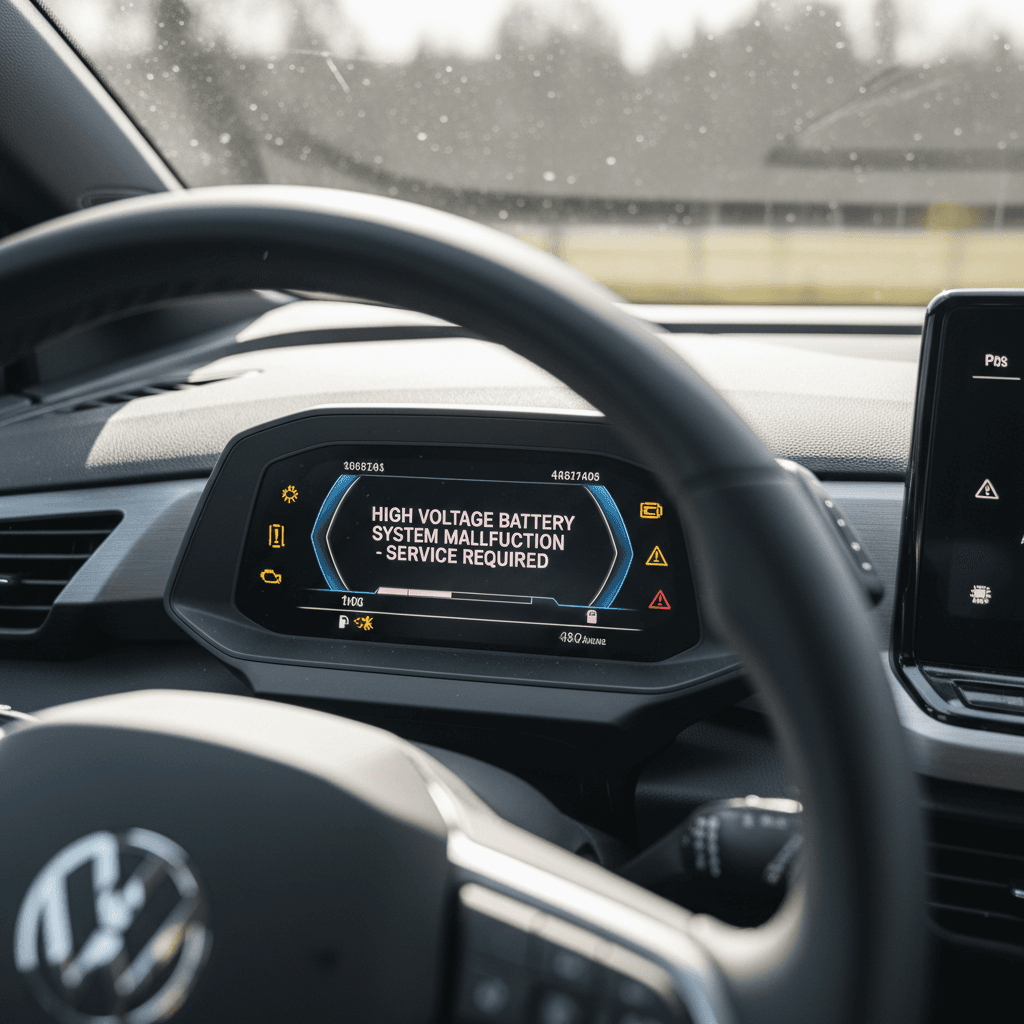
With the car cold, power it up and look for any persistent yellow or red warnings on the cluster. These should be resolved <em>before</em> you sign, especially anything mentioning the high‑voltage system.
6. Consider third‑party inspection
For a private‑party purchase, paying an independent EV‑savvy shop or an EV‑focused retailer’s inspection service can surface hidden problems, and give you leverage on price if repairs are needed.
How Recharged can de‑risk the process
Where Recharged fits in: safer used ID.4 shopping
The ID.4 is a classic case of a modern EV whose value proposition improves dramatically when you have good data. Battery health matters. Completed recalls matter. Real‑world reliability history matters. That’s exactly the gap Recharged was built to fill.
Buying a 2025 ID.4 through Recharged vs. the old way
Same vehicle, very different level of transparency.
With Recharged
- Recharged Score Report on every car, including battery state‑of‑health diagnostics and charging performance.
- Verification of open safety recalls and what’s already been completed.
- EV‑specialist guidance on whether a given ID.4’s history is typical, concerning, or a hard pass.
- Nationwide delivery and an Experience Center in Richmond, VA if you prefer to see vehicles in person.
Traditional used‑car route
- Salespeople who may not know the difference between a software update and a recall.
- Little or no battery data, just a guess based on dash range numbers.
- Inconsistent disclosure of prior warranty work or failed repairs.
- Recall status often left for you to figure out after the sale.
Ready to find your next EV?
Browse VehiclesIn a market where software and battery behavior define the ownership experience, recall status is just one piece of a much bigger puzzle. You want to understand the whole car, not just whether a campaign shows as “closed.”
2025 VW ID.4 recalls FAQ
Frequently asked questions about 2025 Volkswagen ID.4 recalls
Bottom line: Are 2025 ID.4 recalls a deal-breaker?
Taken on its own, the 2025 Volkswagen ID.4 recalls list is relatively short: one major high‑voltage battery software campaign plus the possibility that a few late‑2024 builds wearing 2025 badges overlap older bulletins. The bigger story is how you handle that information. If you’re an owner, that means staying on top of software and recall appointments and not ignoring battery‑related warnings. If you’re a shopper, it means digging beyond the Carfax headline to understand which campaigns a given VIN has seen and how the car behaves in daily use.
In other words, recalls are a data point, not a verdict. A 2025 ID.4 with a clean repair history, healthy battery, and completed 26V030 update can be a smart value play in the compact EV SUV segment. And if you’d rather have expert eyes on that puzzle, a Recharged listing, with a full Recharged Score Report, battery diagnostics, and recall review, can dramatically lower the risk of betting on the wrong ID.4.