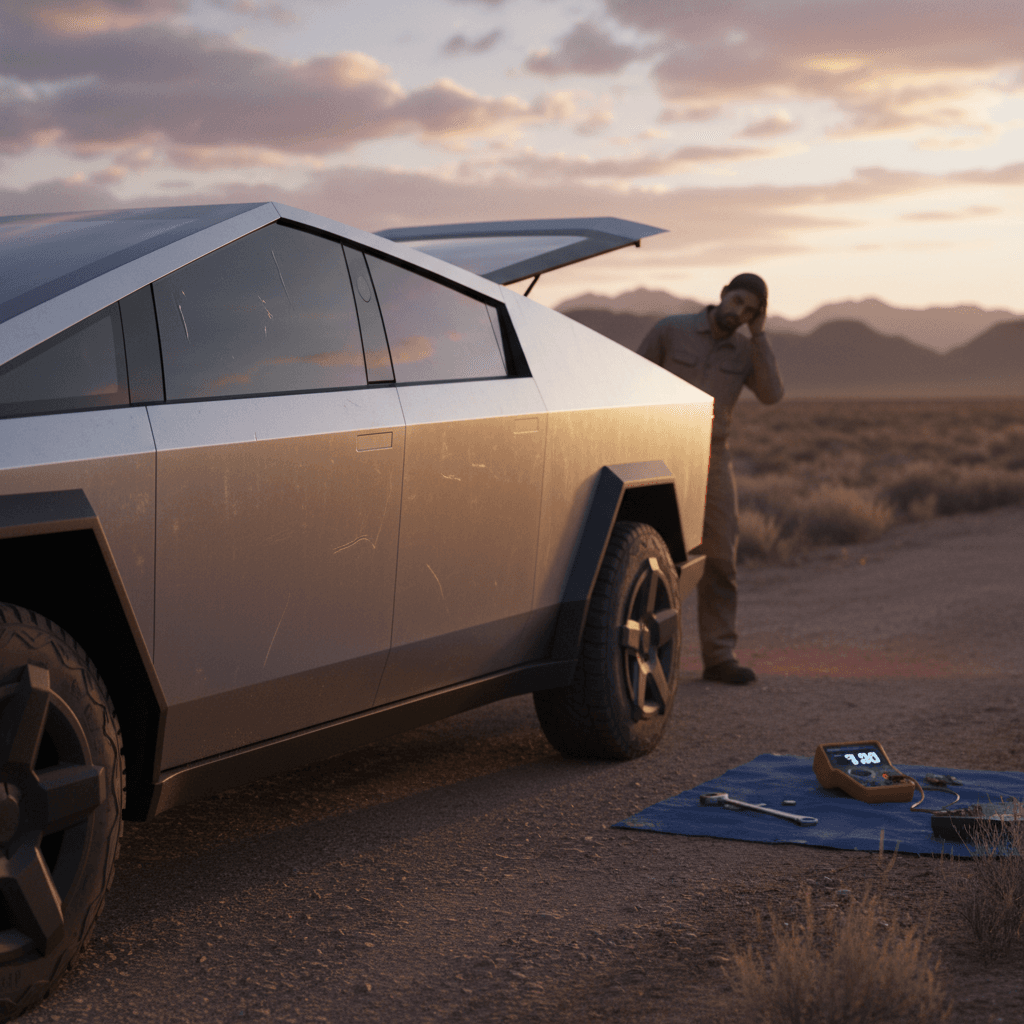
If you’re looking at a stainless‑steel, wedge‑shaped pickup and wondering about 2025 Tesla Cybertruck reliability, you’re not alone. The truck is only a few years into production, and it already has an outsized reputation, for bold engineering, polarizing design, and a flurry of recalls and owner complaints. The question is whether those headlines should stop you from buying one, especially in the used market where prices are starting to soften.
Important context
Why Cybertruck reliability matters in 2025
For many shoppers, the Cybertruck isn’t a second car, it’s the family hauler, work truck, or long‑distance road‑trip machine. That makes reliability and uptime just as important as 0–60 times. Add in Tesla’s history of over‑the‑air fixes, fast design changes, and sometimes rocky rollouts, and you’ve got a vehicle where reliability can swing quickly based on the latest software build or service bulletin.
If you’re thinking about a used Cybertruck, reliability also ties directly into resale value. Early production hiccups, recall campaigns and owner complaints can push depreciation higher than for more established EV trucks. That’s a risk if you’re buying new, but it can also be an opportunity if you’re shopping used and know what to look for.
The big picture on 2025 Tesla Cybertruck reliability
2025 Cybertruck reliability snapshot
Taken together, early data points to the 2025 Cybertruck being less reliable than the average new vehicle. Third‑party reliability snapshots flag it as below‑average, and the truck has already been swept up in multiple recalls in its first two model years. On the positive side, most of the issues we’ve seen so far fall into the category of build hardware and trim rather than catastrophic powertrain failures.
How to interpret early reliability scores
Recalls and safety campaigns you should know about
By early 2026, the Cybertruck has already seen multiple safety campaigns, especially around exterior trim and lighting. If you’re buying used, you’ll want to confirm that every recall has been completed on the specific truck you’re considering.
Key Cybertruck recalls affecting 2024–2025 trucks
This overview focuses on recalls most relevant to 2025 Cybertruck reliability. Always verify an individual truck’s status by VIN before you buy.
| Issue | Model years affected | What can go wrong | Typical fix | Buyer takeaway |
|---|---|---|---|---|
| Roof cantrail trim delamination | 2024–2025 | Stainless panel on the roof edge can loosen or detach while driving, creating a road hazard. | Tesla replaces the cantrail assembly with improved adhesive and hardware at no cost. | Check that the cantrail recall is marked complete in the service history or VIN lookup. |
| Front light‑bar / trim detachment | 2024–2025 | Light‑bar or trim can delaminate and detach from the vehicle. | Replacement of the affected assembly and updated mounting hardware. | Inspect front fascia closely for uniform gaps and ask for documentation of recall work. |
| Labeling / software‑related campaigns | 2024–2025 | Various compliance issues such as warning labels or software behavior across Tesla’s lineup, including Cybertruck. | Over‑the‑air software updates or label replacements. | Make sure the truck is on current software and that any open campaigns have been addressed. |
Recall campaigns can look scary, but most Cybertruck issues so far are fixable with updated parts or software.
Don’t ignore an “open” recall
Common owner complaints and real‑world issues
Look past the memes and you see a fairly consistent pattern in early Cybertruck complaints: trim and body hardware that doesn’t always behave as expected, software that occasionally gets ahead of real‑world validation, and day‑to‑day usability quirks that traditional trucks figured out decades ago.
Early Cybertruck trouble spots owners talk about most
Not every truck has these issues, but they’re patterns worth checking for on a test drive.
Body & trim fitment
Owners report inconsistent panel gaps, wind noise from misaligned trim, and in some cases exterior pieces that loosen over time.
Look closely at roof rails, tailgate edges, and the seam between stainless panels.
Door latching oddities
A minority of owners have reported doors that unlatch unexpectedly or that require extra effort to close cleanly.
On a test drive, open and close every door from inside and out, on level ground and on a slope.
Dirty rear camera & visibility
Because of the Cybertruck’s shape and up‑high tailgate, the rear camera can get dirty quickly on dusty or muddy roads.
That’s more of a usability annoyance than a failure, but it matters if you tow or reverse often.
Software & driver‑assist behavior
Tesla leans hard on software, and Cybertruck is no exception. Some owners praise frequent over‑the‑air updates, while others describe unnerving behavior from advanced driver‑assist features when they don’t disengage or respond the way the human driver expects. If you plan to use supervised self‑driving or lane‑keeping regularly, take time on a test drive to see how the truck behaves on the roads you actually drive.
“Beta‑feeling” features and hardware lag
Several owners describe the Cybertruck as feeling like a rolling beta test: headline features that arrive later than promised, hardware like accessory light bars arriving months after delivery, and a general sense that the platform is still maturing.
That’s exciting if you like being first, but it also means living through more service appointments and running changes than you might with a more traditional truck.
Be cautious with early‑build trucks
Battery and range: how reliable is the powertrain?
Amid all the noise about trim pieces and stainless‑steel panels, the Cybertruck’s core EV hardware, battery, motors, and high‑voltage systems, has been comparatively drama‑free so far. There’s not yet evidence of widespread pack failures or chronic motor problems unique to the truck, and Tesla’s broader EV fleet has built a track record of batteries that generally hold up well when cared for properly.
- Real‑world range for the dual‑motor Cybertruck tends to fall below headline EPA estimates once you factor in speed, weather, and accessories, but that’s true of every EV truck on the market.
- Fast‑charging speeds are competitive, especially on Tesla’s Supercharger network, but like other large EVs, power can taper aggressively if the pack is very cold or very hot.
- There’s no large dataset yet isolating Cybertruck battery degradation, but there’s also no early signal that it’s significantly worse than Tesla’s other high‑volume models.
How to protect Cybertruck battery health
If you’re shopping used, you’ll want more than a quick range estimate. This is where tools like a Recharged Score battery health report become invaluable, giving you an objective look at pack condition instead of guessing based on the dash display and a seller’s word.
Off‑road utility and daily use: where reliability gets tested
Tesla marketed the Cybertruck as a go‑anywhere, do‑anything rig, but hard use is exactly where early‑production quirks tend to reveal themselves. Suspension components, air systems, seals and trim pieces all get stressed when you bounce a 7,000‑plus‑pound EV down a rutted trail or through winter slush week after week.

How usage affects perceived Cybertruck reliability
Think about how you’ll actually use the truck, then shop accordingly.
Daily driver / light duty
- Short commutes, school runs, warehouse parking lots.
- Lower chance of suspension or body damage.
- Most issues will show up as squeaks, rattles, or cosmetic trim problems.
For this use case, a later‑build 2025 truck with completed recalls may be a reasonable bet.
Towing & off‑road duty
- Frequent towing, gravel roads, trails, or job sites.
- Higher stress on air suspension, steering, underbody, and seals.
- Rough use can amplify minor build‑quality defects.
If this is you, budget more time for inspections and consider an extended warranty or service plan if available.
Depreciation and resale: what reliability means for your wallet
Reliability doesn’t just decide whether your truck starts in the morning, it helps determine how much it’s worth when you go to sell. Early data suggests the Cybertruck is depreciating faster than Tesla hoped and faster than many competing EV pickups.
Cybertruck value trends so far
For used buyers, that depreciation can be a silver lining: you’re no longer paying the full hype premium, and the market has had time to surface early problems. For new‑truck buyers, it’s a reason to think hard about how long you plan to keep the truck and how comfortable you are riding out a volatile first few years.
How Recharged can help with resale risk
Ready to find your next EV?
Browse VehiclesShould you buy a used 2025 Cybertruck?
The answer depends less on whether the Cybertruck is perfect, it isn’t, and more on your risk tolerance and expectations. As of 2026, a used 2025 Cybertruck is best thought of as an early‑adopter truck that’s still maturing, not a bulletproof, set‑and‑forget workhorse.
Who a used Cybertruck fits
- You like being on the cutting edge and don’t mind a few service visits.
- You want access to Tesla’s charging ecosystem in a truck package.
- You’re buying at a meaningful discount versus original MSRP.
- You have another vehicle you can rely on if the Cybertruck is in the shop.
Who should probably wait
- You need a primary work truck that must run every day, no excuses.
- You’re highly sensitive to squeaks, rattles, and cosmetic flaws.
- You plan to tow or off‑road heavily in remote areas.
- You’re counting on strong resale value within 3–4 years.
Compare against other used EV trucks
Checklist: what to inspect on a used Cybertruck
Pre‑purchase inspection checklist for a 2025 Cybertruck
1. Run a full VIN recall check
Use both Tesla’s recall tool and NHTSA’s database to verify that all open campaigns, especially roof cantrail and front light‑bar fixes, have been completed. Ask the seller for service invoices or in‑app screenshots confirming the work.
2. Inspect stainless panels and trim up close
Walk the truck in good daylight. Look for uneven gaps, misaligned panels, or signs of previous reattachment around the roof rails, tailgate edges, and front fascia. Slight cosmetic variation is normal; loose or uneven trim is not.
3. Test every door, latch, and window
Open and close each door from inside and outside, parked on both level ground and a slight incline. Check that windows travel smoothly and that there are no mysterious unlatching events or warning messages.
4. Listen for wind noise and rattles at highway speed
On your test drive, take the Cybertruck to highway speeds. Pay attention to whistling around the roof or windshield and rattles from the bed or interior trim that might suggest poor fitment.
5. Validate battery health and fast‑charging behavior
Don’t rely on the dash alone. A Recharged Score battery health report or equivalent diagnostic can give you a clearer view of pack condition, recent DC‑fast‑charge history, and any logged high‑voltage faults.
6. Check tires, suspension and underbody
Because Cybertrucks are heavy and sometimes driven hard, look underneath for scrapes, bent panels, or fluid stains. Check for even tire wear and listen for clunks from the suspension over bumps.
7. Review software version and feature set
Confirm that the truck is running current software and that any paid driver‑assist or connectivity features you care about are actually active and transferable. Ask the seller to show these screens in the infotainment system.
FAQ: 2025 Tesla Cybertruck reliability
Frequently asked questions about 2025 Tesla Cybertruck reliability
The 2025 Tesla Cybertruck is exactly what it looks like: a bold experiment still finding its footing in the real world. Reliability so far is mixed, plenty of fixable issues and recalls, but no red flags suggesting a fundamentally flawed powertrain. If you’re an early adopter who loves the design and understands the trade‑offs, a carefully vetted used Cybertruck can make sense at the right price. If you prize quiet predictability over stainless‑steel drama, you may be happier with a more conventional EV truck for now.
Either way, don’t shop this truck in the dark. Lean on objective data, battery diagnostics, recall history, depreciation trends, and, if you’re browsing the used market, consider using a marketplace like Recharged that was built from the ground up to make EV ownership simpler, more transparent, and a lot less stressful.