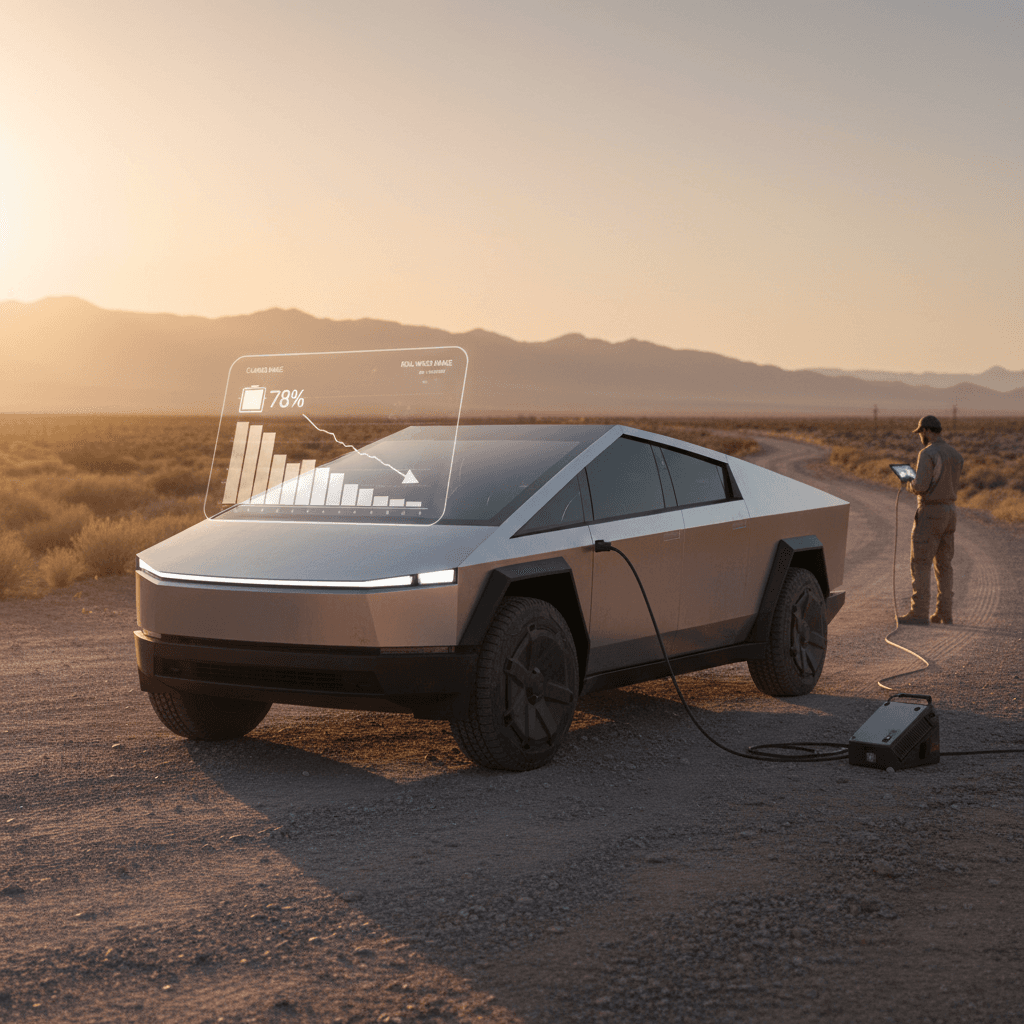
You don’t buy a 2025 Tesla Cybertruck because you want subtlety. But you also don’t buy a truck, electric or otherwise, if it can’t go the distance. The question lurking behind every TikTok clip of stainless‑steel mayhem is simple: in real‑world 2025 tests, how much range does the Cybertruck actually deliver?
Key takeaway up front
Why Cybertruck range tests matter in 2025
Tesla’s marketing history with the Cybertruck has been… aspirational. Early promises of a $40,000 truck with 500+ miles of range have given way to reality: six‑figure builds, cancelled range extenders, and range ratings that look more mortal than mythic. For shoppers in 2025, especially anyone eyeing a used Cybertruck, independent range testing isn’t a nerdy side quest. It’s the difference between a workable work truck and a 6,600‑pound conversation piece.
Range also matters more with a pickup than a crossover because truck owners actually use them for towing, hauling, and long highway slogs. That’s where EVs take their biggest efficiency hits. So we’ll look at three core situations: - Steady‑state highway cruising - Towing realistic loads - Winter and cold‑soak driving
About the data in this guide
Official 2025 Cybertruck range claims
Before we talk about what independent tests see, we need Tesla’s own yardsticks. For 2025 in the U.S., Cybertruck trims relevant to range look roughly like this (on standard tires, with no range extender):
2025 Tesla Cybertruck range estimates (manufacturer / EPA style)
Approximate published or widely reported range figures for 2025 Cybertruck trims, on OEM tires and without the cancelled range extender.
| Trim | Motors | Approx. rated range* | Notes |
|---|---|---|---|
| Dual Motor AWD | 2 | ~325 miles | Tesla’s primary volume configuration; roughly mid‑300s in U.S. estimates |
| Long Range AWD | 2 | ~354 miles | Higher‑capacity pack; smaller volume, more money, more range |
| Cyberbeast (Tri‑motor) | 3 | ~300–320 miles | High‑performance model trades efficiency for power |
| New lower‑priced AWD | 2 | ~325 miles | 2025 price‑cut variant keeps similar claimed range despite fewer lux features |
Think of these as marketing‑adjacent best cases, not what you’ll get towing at 75 mph in January.
Those headline numbers look respectable next to the Ford F‑150 Lightning and Chevy Silverado EV. But, like every EV truck, Cybertruck’s real‑world range is a moving target once you add speed, wind, temperature, and a trailer into the mix.
Range extender: dead and buried
Real‑world highway range testing
Independent 2025 tests of the dual‑motor Cybertruck give us the clearest picture of how far it really goes when you’re just chewing highway miles. Edmunds’ standardized EV range loop, for instance, saw *two* different dual‑motor Cybertrucks land on essentially the same number: about **334 miles** on a full charge in mixed highway‑biased driving, slightly exceeding Tesla’s own stated 325‑mile expectation on all‑season tires.
Highway‑biased real‑world Cybertruck range
Those numbers are mildly surprising, in a good way. In sane driving at legal-ish speeds, Cybertruck isn’t some rolling brick of inefficiency. It’s worse than an electric crossover, yes, but competitive with or better than other heavy‑duty EV trucks.
Highway planning rule of thumb
Towing range: how fast the numbers collapse
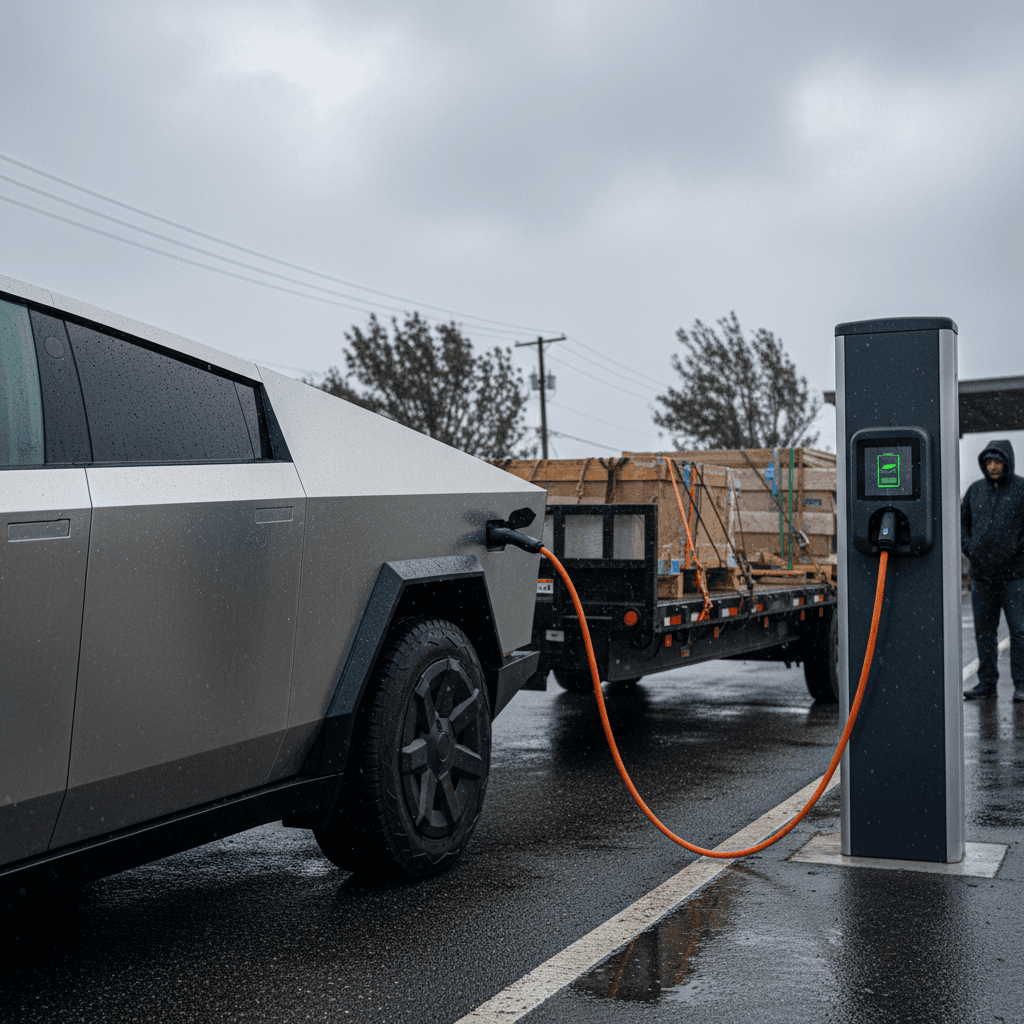
Every EV truck wears the same scarlet letter: towing turns the battery into a very large, very expensive Gatorade bottle. Tesla is no exception. Tesla itself quietly concedes this with language about "range varying significantly with load" and owner reports bear it out. The pattern is simple: - Light aero‑friendly trailer (small camper, pair of dirt bikes): ~35–45% range loss - Boxy utility trailers, enclosed car haulers, serious weight: **50% or more** range loss - High speeds or headwinds on top of that: you can easily fall below half the rated range
Realistic Cybertruck towing range scenarios
Approximate planning numbers for a healthy 2025 dual‑motor truck, starting near 100% in mild temperatures.
Light, low trailer
Example: Small utility trailer, two motorcycles, low frontal area.
- Rated range: ~325 mi
- Expect: 180–220 mi between fast charges
- Range hit: ~30–40%
Mid‑size camper
Example: 20–24 ft camper with bluff front.
- Rated range: ~325 mi
- Expect: 140–170 mi at 60–65 mph
- Range hit: ~45–55%
Big enclosed hauler
Example: Tall car hauler or enclosed work trailer near max tow rating.
- Rated range: ~325 mi
- Expect: 100–140 mi at highway speeds
- Range hit: 55–65% or more
Don’t forget the charger dance
Cold‑weather range tests
If towing is the first boss battle for EV trucks, winter is the second. Owner testing of Cybertruck in the American Midwest and mountain states paints a familiar picture to anyone who’s driven an EV below freezing: **plan on losing 30–50% of your rated range in serious cold**, especially on short trips where you keep repeatedly heating a cold battery and cabin.
How winter hits Cybertruck range
Winter playbook for Cybertruck owners
Efficiency vs other electric trucks
Under the origami‑panel cosplay, the Cybertruck is still a Tesla, which means a serious obsession with efficiency. EPA coastdown data and independent comparisons show the Cybertruck AWD is **more efficient than the GMC Hummer EV and Ford F‑150 Lightning**, but can’t quite match a Rivian R1T at high speeds. One widely cited comparison of 50‑ and 70‑mph consumption lines the players up like this:
Pickup efficiency snapshot (coastdown / EPA test data)
Approximate energy use at steady cruise, showing why Cybertruck sits mid‑pack for efficiency among electric pickups.
| Model / variant | 50 mph (Wh/mi) | 70 mph (Wh/mi) | Takeaway |
|---|---|---|---|
| Rivian R1T dual‑motor (efficient setup) | ~150 | ~230 | The efficiency champ among current electric pickups, especially at highway speeds. |
| Cybertruck AWD (20" wheels) | ~160 | ~270 | Better than Lightning, Silverado, Hummer; slightly worse than Rivian at 70 mph. |
| Cybertruck Cyberbeast (20" wheels) | ~170 | ~280 | Performance‑tuned; pays a clear penalty in highway consumption. |
| Ford F‑150 Lightning Platinum | ~180 | ~300 | Respectable around town; struggles at higher speeds vs Tesla and Rivian. |
| GMC Hummer EV pickup | 200+ | 370+ | A rolling monument to inefficiency, impressive, but thirsty. |
Lower Wh/mi is better. All numbers are approximate and depend heavily on tires and configuration.
In plain English: Cybertruck isn’t the most efficient electric pickup, but it’s on the right side of the bell curve. For a 6,000‑plus‑pound stainless‑steel wedge, that’s an achievement.
How driving style and setup change your range
The gulf between "best case" and "worst case" in Cybertruck land is wide, and most of it is under your right foot, or bolted to your hubs. A few big levers make outsized differences:
Five levers that move your Cybertruck’s range by 10–30%
1. Speed, speed, speed
Pushing from 65 to 80 mph is the single fastest way to murder range. At 75–80 mph, expect **20–25% less range** than at 60–65 mph, even with no trailer.
2. Tire choice and pressure
The all‑terrain tires look the part but cost you miles. Swapping from aggressive A/Ts to more efficient all‑season tires can claw back **10–15%** range on the highway if you keep them properly inflated.
3. Ride height and accessories
Cranking the suspension up and hanging racks, light bars, and lift kits off a Cybertruck is like driving into a headwind. Keep the truck in its lower highway setting for long trips and think twice before bolting a windbreak to the roof.
4. Climate control strategy
On cold days, rely more on <strong>seat and steering‑wheel heaters</strong> and a moderate cabin setpoint instead of blasting HVAC. Preheating while plugged in keeps battery and cabin warm without stealing as much from your trip range.
5. Trip patterns
One 200‑mile highway run uses energy very differently from ten 20‑mile errands starting from a cold soak. If you live in a cold climate and mostly drive short hops, your effective winter range will look like the worst‑case stories.
Gentle driver, stock setup
If you keep speeds near the limit, run the truck on factory all‑season tires, and don’t load the bed like a Cabela’s catalog, you can see **better‑than‑rated** numbers in mild weather. Owner logs in the mid‑200s Wh/mi over long trips aren’t uncommon.
Hard driver, lifted & loaded
Big A/T tires, lifted stance, aggressive driving and a roof rack will put you much closer to the Cyberbeast’s thirst even if you bought the dual‑motor. Don’t be surprised by **250–300 miles dropping to 180–220** in the real world under those conditions.
What Cybertruck range really means for daily driving
For commuting and normal errands, Cybertruck’s range is almost boringly adequate. A U.S. driver doing 35–50 miles a day can charge every two or three nights on Level 2 at home and never really think about it. Where things get spicy is when you try to make a **full‑size EV truck do full‑size truck things**, long‑distance towing, mountain passes, winter skiing runs with a loaded bed.
Range reality by use case
How a 2025 dual‑motor Cybertruck feels in different ownership scenarios.
Suburban commuter with weekend projects
- Daily miles: 30–60
- Home Level 2 charging: Yes
- Experience: Effortless. Even with winter losses, you’re rarely going below 40–50% in a normal day.
Contractor or adventurer who tows often
- Trailer: 4,000–8,000 lb, not very aero
- Trips: 150–250 miles one way
- Experience: Fine if you accept **90–150‑mile legs** between charges and plan around charger locations.
Where Cybertruck shines
Range considerations when buying a used Cybertruck
By 2026, we’re starting to see the first wave of early‑build Cybertrucks trickle into the used market. That’s where range questions stop being abstract and start sounding like, "How much battery has this thing burned off doing YouTube launches and towing Airstreams?"
Used Cybertruck range checklist: what to verify
1. Confirm the exact trim and tire setup
A used listing that just says "Cybertruck" is like a dating profile that only lists height. Verify whether it’s dual‑motor, Long Range or Cyberbeast, and whether it’s on all‑season or all‑terrain tires, each choice changes real‑world range.
2. Look at real trip data, not just %
Ask for screenshots of recent longer drives showing miles, Wh/mi, and remaining battery. A healthy dual‑motor truck with stock tires should still be able to pull **mid‑300 miles** in gentle mixed driving in mild temps.
3. Check DC fast‑charge history
Heavy, frequent fast‑charging, especially to 100%, can age packs faster. It’s not the kiss of death, but it’s useful context. Look for a seller who mostly AC‑charged at home or work.
4. Ask about towing and payload use
A Cybertruck that spent its life commuting is going to have a different battery story than one that hauled a race car across the Rockies twice a month. Light, infrequent towing is fine; constant max‑tow work merits closer inspection.
5. Get an independent battery health snapshot
Whenever you can, have the truck evaluated with a <strong>battery health diagnostic</strong> that estimates usable capacity versus new. This tells you much more than a simple "range estimate on the dash" reading.
Battery degradation expectations
How Recharged helps you shop Cybertruck range smarter
If you’re considering a used Cybertruck, you’re not just buying a fast stainless‑steel polygon; you’re buying a gigantic battery that will determine how the truck fits your life for years. That’s why Recharged treats range as a first‑class citizen, not a footnote.
What you get with a Cybertruck from Recharged
Range clarity without the guesswork.
Recharged Score battery diagnostics
Fair‑market pricing tied to range
EV‑specialist guidance
Ready to find your next EV?
Browse VehiclesYou can browse and buy entirely online, trade in your current vehicle, arrange financing, and have the truck delivered nationwide, or visit our Experience Center in Richmond, VA if you prefer to kick the stainless steel in person.
FAQ: 2025 Tesla Cybertruck range tests
Frequently asked questions about 2025 Cybertruck range
Bottom line: should range stop you from buying a Cybertruck?
If you came here expecting the 2025 Tesla Cybertruck to be a 500‑mile miracle machine, the range tests are going to feel like a letdown. It’s not that truck. It is, however, a surprisingly competent electric pickup that can reliably deliver **300‑plus miles unloaded**, and a perfectly workable 100–200 miles when you’re towing or freezing, provided you do some adult trip planning.
For most buyers, the real question isn’t whether the Cybertruck has enough range. It’s whether its particular flavor of range, shaped by speed, weather, and trailers, fits the life you actually live, not the one in the commercial. That’s where shopping with clear, test‑based expectations and a verified battery report matters more than the latest headline figure from a configurator.
If you’re cross‑shopping a used Cybertruck against other EV trucks, that’s exactly the kind of nuance Recharged was built for: transparent battery health, fair pricing tied to real‑world range, and EV‑specialist support that won’t flinch when you ask, "Okay, but what happens when I put a car hauler on it in February?"