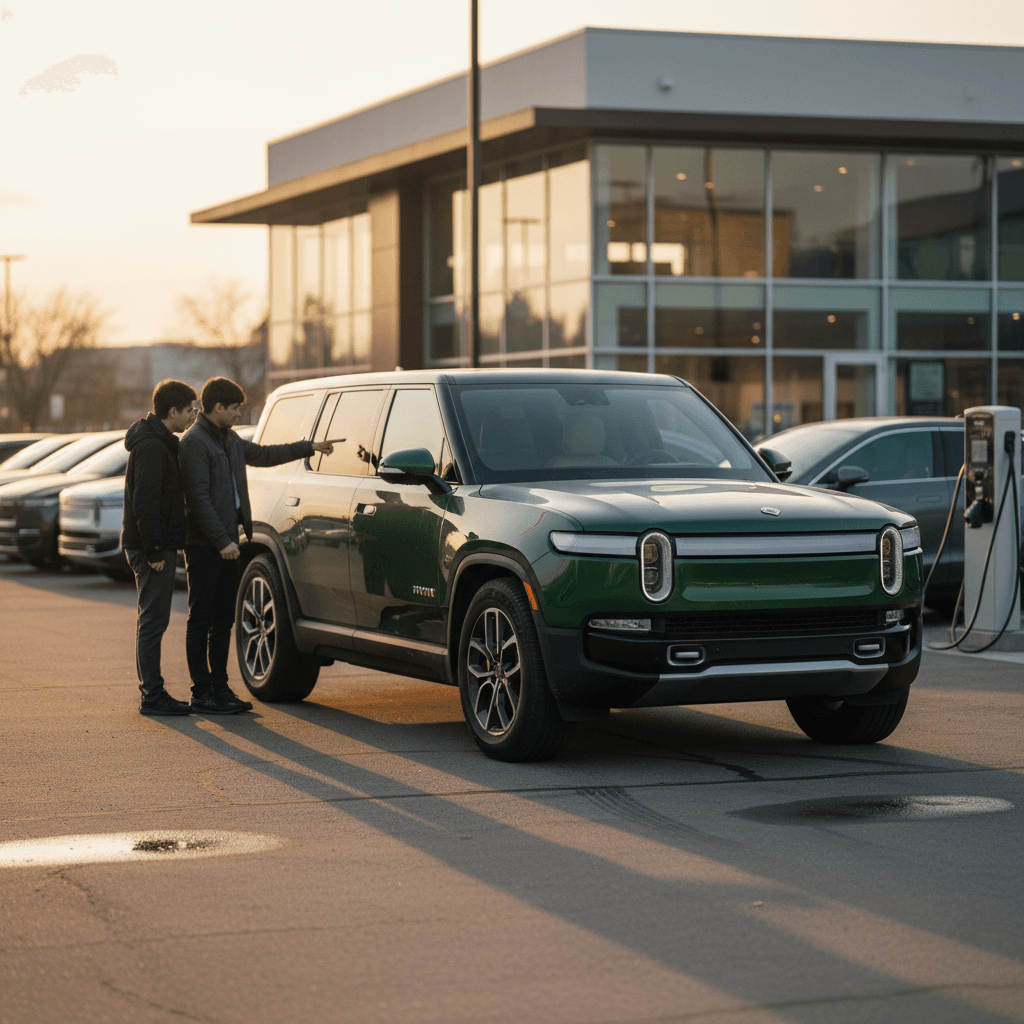
If you’re eyeing a used 2025 Rivian R1S, you’re shopping one of the most capable electric SUVs on the road: three rows, serious off‑road chops, big‑battery range, and sports‑car acceleration. But you’re also buying into a young brand, evolving hardware, and a market that’s still figuring out how to price these trucks. This 2025 Rivian R1S review is written specifically for used buyers, so we’ll focus on real-world range, reliability trends, depreciation, and exactly what to inspect before you put money down.
Used-Focused Review
2025 Rivian R1S at a Glance for Used Buyers
Key 2025 Rivian R1S Numbers (U.S. Models)
For used shoppers, the 2025 model year is important because it brings Rivian’s “Gen 2” hardware refresh: updated electrical architecture, new battery chemistry options, more efficient motors, and expanded fast‑charging support. That makes 2025 trucks notably different from 2022–2024 R1S models you may also be considering on the used market.
What Changed for 2025 vs Earlier R1S Models
How 2025 Gen‑2 R1S Differs from Gen‑1
These updates matter when you’re buying used
New Electrical Architecture
Rivian reworked the R1S electrical system for 2025, consolidating control modules and simplifying wiring. In practice, this can mean fewer potential failure points and easier service compared with early trucks.
Revised Battery Lineup
There’s a new Standard LFP pack plus updated Large and Max packs. LFP favors longevity and cost; Large and Max prioritize range and performance.
More Powertrain Choice
2025 adds Tri‑Motor and updated Quad‑Motor options on top of Dual‑Motor models. Power ranges from quick to absurd, even by EV standards.
2022–2024 R1S (Gen‑1)
- Primarily Large and Max packs, with earlier Quad‑Motor focus.
- Older electronics and software base; more early‑production quirks.
- Higher new‑MSRPs and steeper early depreciation.
- Still very quick and capable, but somewhat less efficient.
2025 R1S (Gen‑2)
- New Standard LFP pack plus improved Large/Max packs.
- Updated electronics aimed at better efficiency and reliability.
- New Tri‑ and updated Quad‑Motor trims, more range diversity.
- Native NACS charging port and improved DC fast‑charging curve.
Model-Year Sweet Spot
Powertrains, Batteries & Real-World Range
Used 2025 Rivian R1S listings can be confusing because of the mix of motor counts and battery packs. Here’s how to decode them and what they mean for you on the road.
2025 Rivian R1S: Common Used Configurations
Approximate specs for U.S. models; always confirm exact equipment on the specific used vehicle.
| Configuration | Battery Pack | Horsepower (approx.) | EPA Range (mi) | 0–60 mph (sec) | Best For |
|---|---|---|---|---|---|
| Dual-Motor Standard | Standard LFP (~92 kWh) | ~533 hp | ~258 | ~4.5 | Shorter commutes, urban use, frequent DC charging |
| Dual-Motor Large | Large (~109 kWh) | ~533 hp | ~329 | ~4.5 | Balanced range and price |
| Dual-Motor Max | Max (~141 kWh) | ~533 hp | Up to ~410 | ~4.5 | Maximum road‑trip range |
| Performance Dual-Motor Max | Max (~141 kWh) | ~665 hp | High 300s | ~3.5 | Quickest dual‑motor; strong passing power |
| Tri-Motor Max | Max (~141 kWh) | ~850 hp | ~371–405 | Low 3s | Enthusiasts who still want strong range |
| Quad-Motor Max | Max (~141 kWh) | Up to ~1,025 hp | ~368 | Low 3s | Halo performance, off‑road and snow traction |
Figures are based on manufacturer data and major third‑party tests; actual range depends heavily on wheels, tires, weather and driving style.
Highway vs EPA Range
If you commute under 60 miles a day and mostly charge at home, a Dual‑Motor Large pack R1S is often the best used buy. It’s efficient, cheaper than Max‑pack trucks, and still delivers a comfortable buffer for weekend trips. If you’re towing, live in cold climates, or expect frequent 250‑ to 300‑mile highway days, a Max pack truck buys you needed headroom, especially as the battery ages.
Range in Cold Weather
Charging Experience: NACS Port & Supercharger Access
Every 2025 Rivian R1S sold in the U.S. uses the North American Charging Standard (NACS) connector, Tesla’s plug design, and Rivian has enabled access to much of the Tesla Supercharger network. For a used buyer, that’s a big advantage over many older EVs that still rely on CCS and adapters.
What Charging a 2025 R1S Used Is Really Like
Home habits matter more than peak kW numbers
Home Level 2 Charging
On a 48–80 amp Level 2 charger, you’re typically adding 25–35 miles of range per hour, depending on pack size and weather. Overnight is more than enough for most daily use.
DC Fast Charging Speeds
With the Gen‑2 battery and updated charging curve, many trims can briefly peak near the 200 kW ballpark and hold strong mid‑session speeds. You’re usually looking at 10–80% in 30–40 minutes when conditions are ideal.
Tesla Supercharger Access
NACS hardware plus software integration means you can plug into many Supercharger sites without an adapter. Availability varies by station and region, but it’s a major convenience on road trips.
Plan Around Time, Not Just Speed
As the charging landscape keeps shifting, the 2025 R1S’s native NACS port future‑proofs you better than many 2023–2024 rivals. You’ll still want to verify which charging networks you’ll use locally and whether your daily routes line up with NACS or CCS infrastructure, but you’re starting from a strong position.
Towing, Hauling & Off-Road Use in the Real World
On paper, every 2025 Rivian R1S can tow up to 7,700 pounds. In practice, your experience depends heavily on which motor and battery combo you buy, and on your expectations for range while towing or off‑roading.
How Towing Affects 2025 R1S Usability
General guidance for used shoppers who plan to tow or adventure off‑road.
| Use Case | Recommended Config | What to Expect | Used-Buyer Tip |
|---|---|---|---|
| Light Utility (under 3,000 lb) | Dual-Motor Large or Max | Manageable range hit; 150–220 mi between DC fast charges for modest trailers. | Check for factory hitch equipment and trailer‑brake wiring; aftermarket installs should be clean and documented. |
| Family Camper (3,000–5,000 lb) | Dual-Motor Max or Tri-Motor Max | Plan for frequent stops; 120–180 mi towing range is realistic on the highway. | Look for service records after heavy towing (brakes, tires) and inspect for rock chips and hitch wear. |
| Heavy or Frequent Towing (5,000–7,700 lb) | Tri-Motor Max or Quad-Motor Max | Power is no issue, but expect 40–60% range loss; charging logistics become the limiting factor. | If most of your miles are towing, a used diesel SUV or pickup may still be more practical today. |
Real‑world range while towing can drop by 40–60% depending on trailer size, speed, terrain, and weather.
Towing Is Tough on Range
Off‑road, the R1S remains one of the most capable electric SUVs you can buy used. Adjustable air suspension, multiple drive modes, and instant torque at all four wheels (especially in Tri‑ and Quad‑Motor trims) make it feel closer to a Land Rover or 4Runner alternative than a typical crossover. Just be aware that heavy off‑road use often shows up in underbody scrapes, wheel rash, and prematurely worn tires, points you’ll want to check during inspection.
Interior Space, Tech & Daily-Driver Impressions
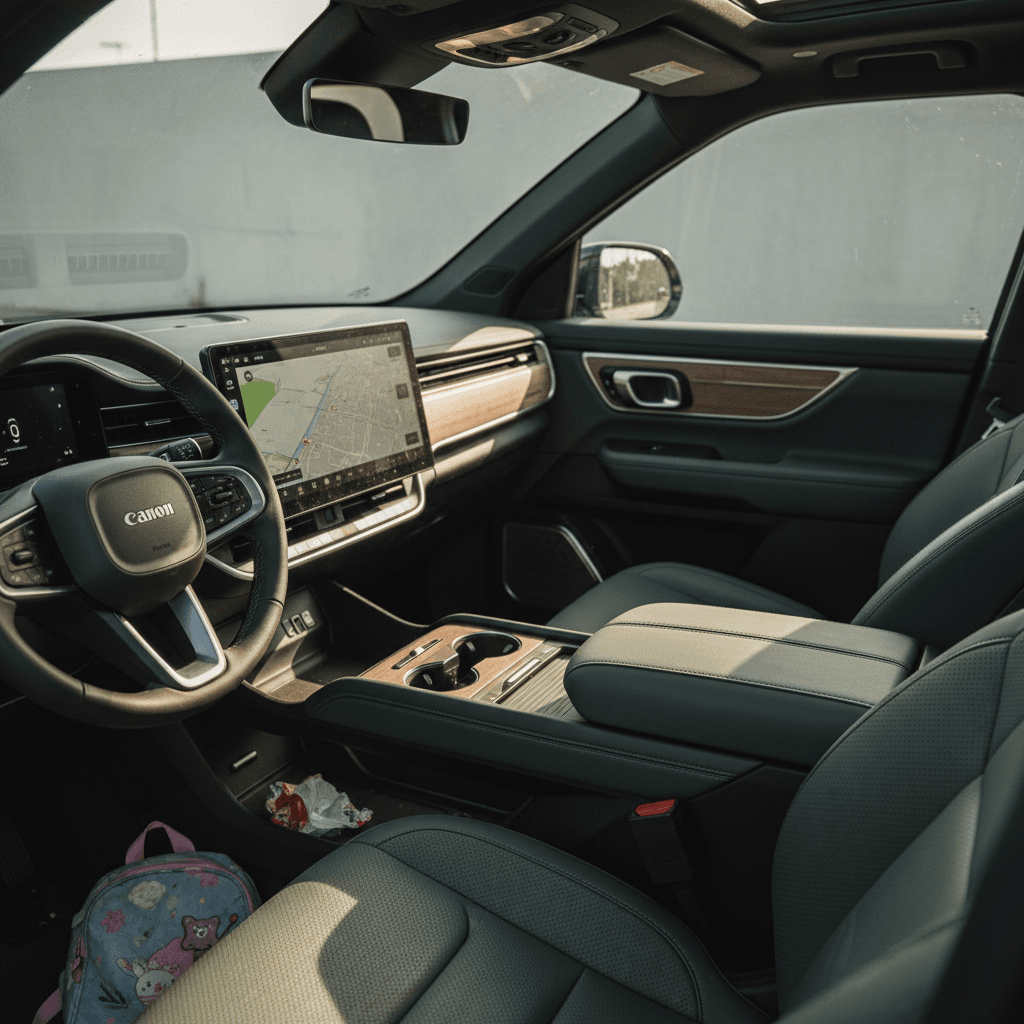
Inside, the 2025 R1S sticks to Rivian’s distinctive, outdoorsy‑modern design: big glass, a squared‑off dash, a large center screen, and a dedicated driver display. The three‑row layout is one of the main reasons families cross‑shop it against full‑size luxury SUVs and minivans.
- Adult‑friendly first and second rows with good headroom and legroom.
- Third row is usable for kids and smaller adults on shorter trips, but tall passengers will prefer the second row.
- Cargo space is generous with the third row folded, and the absence of an engine frees up a front trunk (frunk) for dirty gear or charging cables.
- Quiet, refined ride for a boxy SUV, though big all‑terrain tires can add some road noise.
- OTA (over‑the‑air) software updates mean the infotainment, driver‑assistance and drive modes can improve over time.
No Apple CarPlay or Android Auto
For commuting and school runs, the 2025 R1S behaves like a very quick, very composed luxury SUV. Steering is light but accurate, one‑pedal driving is well‑tuned, and the blend of storage cubbies, USB‑C ports, and a high‑resolution camera system makes daily life easier. If you’re stepping out of a full‑size gas SUV, the main adjustments are learning charging routines and living without traditional dealer networks.
Reliability, Service, and Recalls to Watch
Rivian is still a relatively young automaker, and reliability is mixed. Owner reports paint a nuanced picture: many R1S drivers log tens of thousands of miles with only minor issues, while others experience frustrating service delays or early quality snags. Consumer survey data tends to rate Rivian below average for reliability but above average for owner satisfaction, people love how the trucks drive even when they’ve had problems.
Common Reliability Themes on R1S
What to listen for when buying used
Build & Trim Issues
Scattered reports of misaligned panels, wind noise, and interior rattles, more common on early Gen‑1 trucks but still worth checking on 2025s.
Software & Electronics
Glitches with infotainment, driver‑assist warnings, or occasional reboot needs are the most common complaints. OTA updates often help, but not always immediately.
Service Center Access
Some owners praise attentive service; others struggle with long waits or distant service centers. Where you live matters a lot.
TSBs, Campaigns, and Recalls
Reliability Checks for a Used 2025 R1S
Confirm Recall & Campaign Completion
Ask the seller for service invoices and run the VIN through Rivian or NHTSA tools to verify that all open recalls and customer‑satisfaction campaigns have been addressed.
Inspect for Water Leaks & Wind Noise
Look for water staining on headliners, door panels, and cargo areas. During your test drive, listen for whistle or roar around the windshield and doors at highway speeds.
Test Every Door Handle & Power Feature
Cycle all door handles, windows, seat adjusters, and power tailgate functions multiple times. Small electrical gremlins are annoying and can be costly out of warranty.
Check for Software Update History
In the settings menu, look for recent OTA updates. A truck that’s been regularly updated suggests an engaged owner and gives you the latest fixes.
Evaluate Service Access in Your Area
Before you buy, map out the nearest Rivian service center or mobile coverage. A great truck can still be a headache if you’re 200+ miles from support.
Depreciation and Used Rivian R1S Pricing
Early Rivian R1S models saw sharp price swings as the company adjusted MSRPs and federal EV tax credit rules evolved. By 2026, the 2025 R1S has settled into a more predictable spot on the used market, but values still move faster than for legacy luxury SUVs.
How the R1S Depreciates
- Like most premium EVs, the biggest drop is usually in the first 1–2 years.
- Battery size and motor count matter, Dual‑Motor Large/Max trucks generally hold value better than niche specs.
- Color, wheels, and option packages influence pricing but less than miles, condition, and service history.
- Market sentiment about Rivian as a company can move values faster than for established brands.
What to Expect in 2026
- Many 2025 R1S trucks will be coming off their first owners, often with 10,000–30,000 miles.
- Gen‑2 hardware and NACS charging make 2025s more desirable than many earlier EV SUVs.
- Expect to pay a healthy premium for Max pack, Tri‑ and especially Quad‑Motor models versus Dual‑Motor Large.
- Clean histories, no accidents, and documented service are worth stretching for.
Where Recharged Fits In
Ready to find your next EV?
Browse VehiclesInspection Checklist for a Used 2025 Rivian R1S
Beyond the usual walk‑around and test drive, a used 2025 R1S deserves a focused look at battery health, charging behavior, and signs of heavy off‑road or towing use. Use this checklist as your baseline; at Recharged, our technicians go even deeper as part of the Recharged Score evaluation.
Detailed Used 2025 R1S Inspection Checklist
1. Battery Health & Charging History
Review any available battery‑health reports or dealer printouts. Ask the owner how often they fast‑charged vs. home‑charged. Consistent 0–100% fast charges are harder on the pack than 20–80% home charging.
2. Underbody & Suspension
Peek underneath for scrapes on skid plates, control arms, and the battery case. Check for uneven tire wear that might suggest alignment issues from hard off‑road use or curb hits.
3. Wheels, Tires & Brakes
Rash on 20–22" wheels is common but still a bargaining chip. Confirm there’s enough tread on the tires, replacing a set of 22" all‑terrains is not cheap. Look for brake‑rotor rust on low‑miles, lightly used trucks.
4. Interior Electronics
Spend time with the center screen: navigation, camera views, drive‑mode changes, phone pairing, audio levels, and climate. A smooth, lag‑free experience is a good sign; repeated freezes are not.
5. ADAS and Driver Assistance
On a safe test route, try adaptive cruise, lane‑keeping, parking sensors, and 360° cameras. Verify that all sensors read correctly and no persistent warnings appear.
6. Documentation & Warranty
Confirm the in‑service date so you know how much factory warranty remains. Ask for a full service history, including any third‑party body work or windshield replacements.
Who a Used 2025 R1S Fits Best (and Who It Doesn’t)
Great Fit For
- Drivers who want a three‑row EV with real off‑road and all‑weather capability.
- Families stepping out of a luxury SUV or truck into their first EV and willing to learn charging routines.
- Enthusiasts who value design, performance, and tech over old‑school dealer networks.
- Buyers who live within a reasonable distance of a Rivian service center or strong mobile‑service coverage.
Think Twice If
- You rely on a dealer for every small issue and expect same‑day walk‑in service.
- Your towing needs involve frequent long hauls at or near the 7,700‑lb limit.
- You can’t live without Apple CarPlay or Android Auto and don’t want to adapt.
- You live far from Rivian support and aren’t comfortable with occasional mobile‑service visits and loaner logistics.
FAQ: Buying a Used 2025 Rivian R1S
Frequently Asked Questions About Used 2025 R1S Models
Bottom Line: Is a Used 2025 R1S Worth It?
If you want a three‑row electric SUV that can tackle ski weekends, dirt roads, and daily errands in equal measure, a used 2025 Rivian R1S belongs on your short list. The Gen‑2 hardware, NACS fast‑charging, and improved efficiency make it a more compelling long‑term bet than many early EVs, and depreciation between new and lightly used examples can work firmly in your favor.
The trade‑offs are real: reliability is still a work in progress, service access varies by region, and range while towing or in winter won’t match the brochure. But if you’re comfortable with a younger brand and willing to be a bit more engaged with your vehicle than you might be with a decade‑old Toyota, the 2025 R1S delivers a blend of performance, utility, and character that few used EVs can match.
Shopping through Recharged can tilt the odds further in your favor. Every vehicle comes with a Recharged Score Report that verifies battery health, pricing fairness, and vehicle history, plus EV‑specialist support to help you compare the R1S with other used EV SUVs. If you’re ready to explore whether a used 2025 Rivian R1S fits your life, that kind of objective data and guidance is exactly what you want before you plug in.