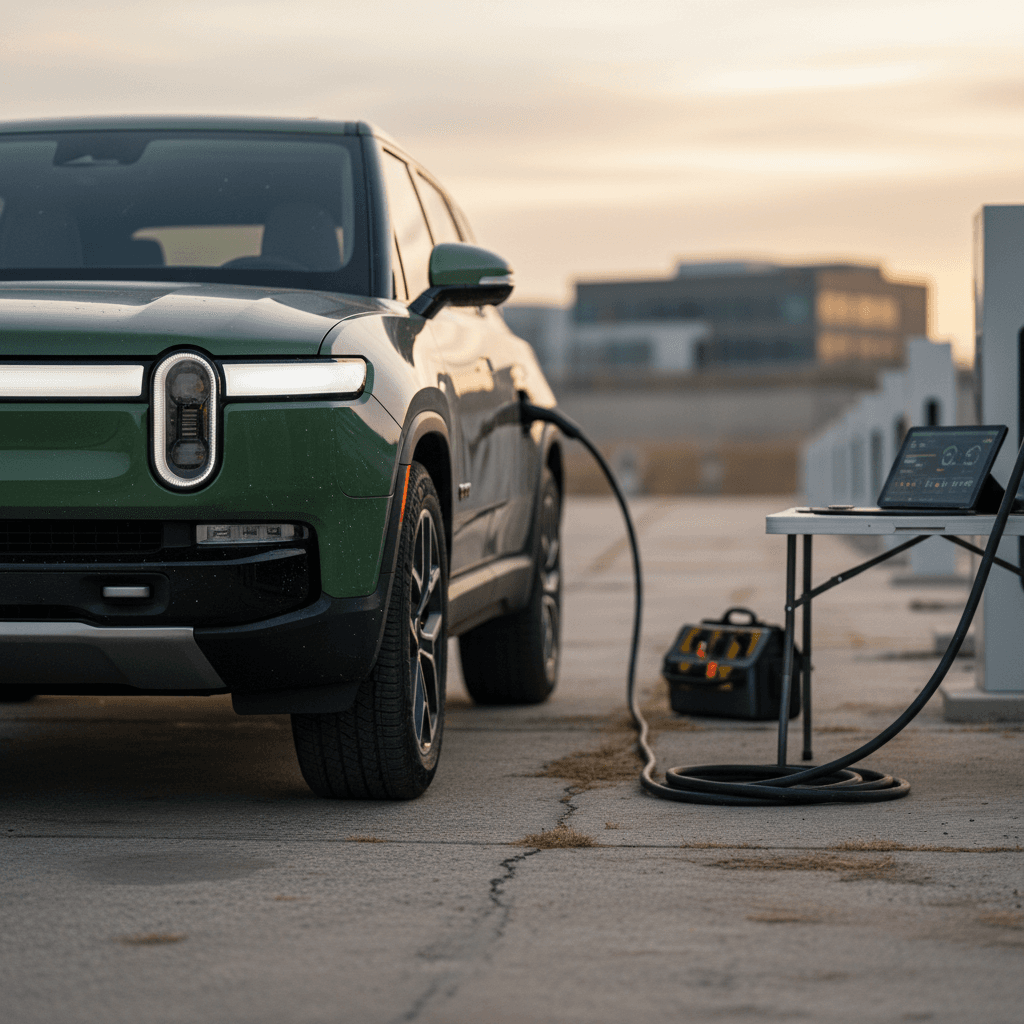
If you’re looking at a 3-row electric SUV with serious off‑road cred, the 2025 Rivian R1S is probably at the top of your list. But then you type in “2025 Rivian R1S reliability rating” and fall down a rabbit hole of owner horror stories, glowing fan posts, and ominous recall notices. So what’s real, what’s noise, and how should you factor reliability into a buying decision, especially if you’re considering a used R1S?
Quick take
Overview: How reliable is the 2025 Rivian R1S?
Let’s start with the thing most shoppers want but almost never get with a young EV brand: a clean, simple reliability score. There is no official 2025‑only reliability rating yet from the big agencies. What we do have are early reliability data for 2022–2024 R1S models, Rivian‑wide brand scores, owner surveys, and a growing pile of real‑world anecdotes from 2025 R1S drivers.
Rivian R1S reliability at a glance
So if you forced a number onto the 2025 Rivian R1S reliability rating, it’s not “terrible car, avoid at all costs.” It’s closer to: “mechanically promising, software‑needy, service‑dependent.” Think first‑generation iPhone, not final‑form Camry.
How rating agencies and surveys view Rivian reliability
If you look at the big third‑party scorekeepers, Rivian is a paradox: near‑bottom reliability, near‑top owner satisfaction. Owners love how the R1S drives, looks, and feels. They’re just not convinced it will always start on Monday morning.
Where the 2025 R1S sits in the reliability landscape
What the numbers and surveys are really telling you
Consumer-style reliability scores
Early‑year R1S models have scored below average for reliability, mainly for paint, trim, electronics, and software issues. These scores typically lag by a model year or two, so what you see now mostly reflects 2022–2024 vehicles, not just 2025.
Owner satisfaction vs. reliability
In large EV owner surveys, the R1S routinely lands near the top for comfort, performance, and overall satisfaction, even while the brand scores poorly for reliability. In other words: people love the thing, even when it misbehaves.
EV hardware durability so far
The encouraging news: catastrophic failures of the main battery pack or drive units are rare and usually handled under Rivian’s long EV hardware warranty. Most “reliability” complaints are about the surrounding ecosystem, software, seals, trim, and 12‑volt systems.
How to read a low reliability score
2025 Rivian R1S common issues and weak spots
If you’re cross‑shopping the 2025 R1S against a Kia EV9 or Tesla Model X, this is the part you actually care about: What’s likely to go wrong, and how bad is it when it does? The pattern across owner reports and early‑build 2025 models is surprisingly consistent.
- 12‑volt battery problems: The tiny 12‑volt battery that powers control systems has been a recurring villain. When it dies, an R1S that has plenty of charge in the big pack can be bricked in your driveway or on a trailhead. Rivian has pushed software updates and hardware revisions, but 12‑volt drama hasn’t disappeared entirely.
- Software glitches and phantom errors: Rivian’s software is ambitious, big screens, over‑the‑air updates, app keys. The flip side is periodic bugs: random warning lights, stuck update installs, buggy phone‑as‑key behavior, or climate control misbehavior in the second and third rows.
- Build quality and water leaks: Early trucks saw complaints about door seals, hatch alignment, rattles, and wind noise. 2025 build quality is better than the very first R1S units, but owners still report the occasional leak, squeak, or interior trim issue that requires a service visit.
- Thermal system and drive-system faults: A small but attention‑getting set of owners has reported early‑life warning messages like “Vehicle Battery Issue,” thermal system faults, or motor faults at a few hundred to a few thousand miles. Most were repairable under warranty but sometimes required towing and extended service-center stays.
- Charging communication errors: Some R1S owners have run into occasional communication faults at public DC fast chargers, particularly on non‑Tesla networks. Usually cycling the charger or moving stalls fixes it, but it adds friction to long‑distance trips.
The 12‑volt problem, in plain English
Issues that are annoying but manageable
- Glitchy phone key or app connection.
- Random infotainment reboot or lag.
- Wind noise from roof rails or mirrors.
- Interior trim creaks, misaligned panels.
- Occasional charging hiccup that resolves with a reboot.
These are the “living with an early‑adopter EV” inconveniences. They cost time more than money and are often addressed with software updates or minor adjustments.
Issues that can strand you or eat weekends
- 12‑volt battery failure that prevents the car from waking up.
- Major thermal system or drive-unit fault requiring a tow.
- HV battery error messages that limit power or driving.
- Recall work that requires special parts and long waits.
These are rarer but define the emotional temperature of Rivian ownership. The warranty usually covers the bill, but not the lost time or stress.
2025 R1S recalls and software-driven fixes
An honest 2025 Rivian R1S reliability rating has to include recalls. The R1 family has already seen several, ranging from minor labeling issues to items that could cause a loss of power. The good news: Rivian has shown a willingness to move quickly with recalls and to lean heavily on software updates where possible.
The recall picture: What shoppers should understand
Example issues R1S owners have faced and how Rivian typically addresses them
| Issue type | What can happen | How it’s fixed | What it means for you |
|---|---|---|---|
| High‑voltage system grounding or connection faults | Potential loss of drive power or warning messages if a connection isn’t properly tightened or grounded. | Inspection at a service center; repair of the connection or replacement of the affected high‑voltage component, covered by Rivian. | Serious but relatively rare; if addressed promptly, it’s more a hassle than a long‑term reliability death sentence. |
| 12‑volt battery or wake‑sleep behavior | Car may not start, show multiple cascading errors, or require a tow despite a full main battery. | 12‑volt replacement and/or software update to change how the car manages that battery’s charge. | Annoying and potentially trip‑ruining, but generally resolved permanently once updated and replaced. |
| Software-related safety or performance issues | Bugs that affect driver‑assist behavior, charging speed, or instrumentation. | Over‑the‑air (OTA) software updates pushed directly to the vehicle, often without a dealer visit. | The upside of a software‑heavy EV: some “recalls” fix themselves overnight while the car sleeps. |
Exact recall campaigns and dates vary by build; check your specific VIN before you buy, especially on the used market.
Use recalls to your advantage on a used R1S
Ready to find your next EV?
Browse VehiclesWarranty coverage: How much does Rivian’s safety net matter?
One big reason you don’t see more scorched‑earth owner reviews is the warranty. Rivian quietly backs the R1S with robust coverage, especially for the expensive EV hardware. That doesn’t prevent breakdowns, but it can keep a nightmare from becoming a financial catastrophe.
Rivian R1S warranty basics (U.S. market)
Typical coverage terms for recent R1S model years
New‑vehicle limited warranty
Generally 4–5 years or around 50,000–60,000 miles for most non‑EV components, depending on configuration. This covers defects in materials and workmanship on things like suspension, interior, electronics, and body hardware.
Battery & drive unit warranty
Coverage up to 8 years and high mileage thresholds (well into six figures) for the main battery and motors. If a pack or drive unit fails prematurely, Rivian is on the hook, not you.
Corrosion & adjustments
Additional coverage for body corrosion and a shorter “adjustment” period for squeaks, rattles, and trim alignment. Not glamorous, but useful for early build-quality fixes.
What this means for used buyers
Because Rivian’s EV hardware warranty is time‑ and mileage‑based, a 2–3‑year‑old R1S can still have years of coverage left. That’s a major reason a vetted used R1S can be smarter than a fresh‑off‑the‑line one if you’re risk‑averse.
Always line up the VIN with the warranty
Owner experience: Service, downtime, and day-to-day livability
Reliability isn’t just about what breaks; it’s about how painful it is when it breaks. On that front, Rivian is a mixed bag. When the brand is good, it’s very good. When it’s bad, it’s a three‑week wait for a loaner that never materializes.
The upside: concierge EV service
- Mobile technicians can handle many fixes at your home or workplace.
- OTA updates quietly squash bugs in the background.
- When big repairs are needed, Rivian has shown a willingness to eat very expensive warranty bills to make things right.
- Owners often praise front‑line service staff for communication and effort.
The downside: thin network, long waits
- Service centers are still sparse; you might be an hour or more away.
- High demand can mean wait times of weeks for appointments or parts.
- Loaners aren’t guaranteed; some owners report being without their car for extended periods.
- If you rely on a single vehicle for long‑distance trips, downtime risk matters.
Reliability vs. your ZIP code
Should you buy a 2025 Rivian R1S? Shopper profiles
There is no single 2025 Rivian R1S reliability rating that applies to every shopper. The same set of facts will feel totally different to someone coming out of a leased BMW X5 versus a long‑suffering Jeep Wrangler owner who thinks a weekend in the service bay builds character. Here’s how to think about it by personality type.
Who the 2025 R1S is, and isn’t, for
Match your risk tolerance to the right electric SUV
The adventure-first early adopter
If you value design, off‑road ability, and uniqueness, and you keep a backup vehicle in the household, the R1S reliability story is acceptable collateral. You might see more warnings and service visits than in a Toyota, but you’ll also have one of the most capable EV SUVs on the planet.
The family hauler who can’t be stranded
The value-focused used shopper
A lightly used R1S that’s already had its early bugs sorted, at a fair market price with lots of warranty left, can be the sweet spot. This is exactly the niche Recharged serves: used EVs with verified battery health, transparent pricing, and expert guidance so you’re not decoding risk on your own.
How to shop for a used Rivian R1S wisely
If you like everything about the 2025 R1S except the idea of being the guinea pig, the used market is your friend. You’re looking for proof that someone else has already suffered through the early‑life issues, and that they were fixed correctly.
Used Rivian R1S reliability checklist
1. Verify battery health, not just mileage
On an EV, odometer mileage is only half the story. Ask for a <strong>verified battery health report</strong> that shows usable capacity and fast‑charging behavior over time. Every R1S sold through Recharged includes a Recharged Score battery assessment so you can see how strong the pack really is.
2. Confirm recall and campaign history
Run the VIN through Rivian’s tools and ask the seller for documentation. You want to see that all applicable recalls and service campaigns were completed, not ignored.
3. Look for a stable software update history
A vehicle that’s been regularly updated is less likely to have lingering glitches. Ask which software version it’s on and whether the owner kept up with over‑the‑air updates.
4. Inspect for leaks, wind noise, and trim issues
Pay attention to door and hatch seals, roof rails, and glass. Take a highway test drive and listen for excessive wind noise from the mirrors or roof. These aren’t deal‑breakers, but they are bargaining chips and repair considerations.
5. Test all seats, climate zones, and doors
Cycle the third‑row seats, check every power hatch and window, and run the climate control in all zones. A lot of R1S complaints live in the second and third rows, not in the driver’s seat.
6. Map warranty coverage forward
Use the in‑service date and mileage to calculate how many years and miles of <strong>EV hardware and basic warranty</strong> coverage you have left. On Recharged, this is summarized right in the listing so you’re not doing spreadsheet gymnastics.
How Recharged de-risks a used R1S
FAQ: 2025 Rivian R1S reliability questions answered
Common 2025 Rivian R1S reliability questions
Bottom line on 2025 R1S reliability
The 2025 Rivian R1S is one of the most charismatic vehicles on sale today: handsome, absurdly capable, and deeply satisfying to drive. Its reliability rating, however, is still a patchwork of improving build quality, lingering software ambition, and a young service network learning on the job. This is not the car for people who judge success solely by how few times they see a service bay.
But if you understand the trade, choose your specific vehicle carefully, and lean on real data, battery health reports, warranty status, completed recalls, the R1S stops looking like a dice roll and starts looking like a calculated risk. That’s exactly where a platform like Recharged comes in: curated used EVs, transparent Recharged Scores, and specialists who know the difference between a simple software gremlin and a genuine red flag.
For the right buyer, the 2025 Rivian R1S is worth the occasional headache. Just go in with your eyes open, your expectations calibrated, and your support network, both mechanical and human, already lined up.