The 2025 Porsche Taycan is the most refined version of Porsche’s flagship EV yet, with better efficiency, stronger performance, and updated tech. But like every complex electric car, especially one built on an earlier platform, there are real 2025 Porsche Taycan problems and fixes you should understand before you buy new or used.
Context: 2025 Taycan = Heavy Refresh, Not a Clean-Sheet Car
What’s New for the 2025 Porsche Taycan
Before you can separate true problems from internet noise, it helps to know what actually changed for 2025. Porsche’s own launch materials describe the updated Taycan as “improved in every discipline,” with reworked power electronics, revised battery packs, more range, and faster DC fast charging compared with earlier years.
Key 2025 Taycan Changes That Matter for Reliability
Most upgrades are good news, but they interact with an existing track record.
New battery variants
Faster DC charging
Reworked software & electronics
How to Think About 2025 vs. Earlier Years
Big-Picture Reliability: How Worried Should You Be?
Porsche Taycan: Risk Profile in 2025
In other words, the Taycan isn’t “unreliable” in the sense of constant breakdowns. It’s a high-performance EV with a narrow band between normal and expensive. Most owners enjoy trouble-free driving, until a recall, software fault, or battery anomaly pulls them into the dealer’s orbit.
High-Voltage Battery Recalls and Short-Circuit Risk
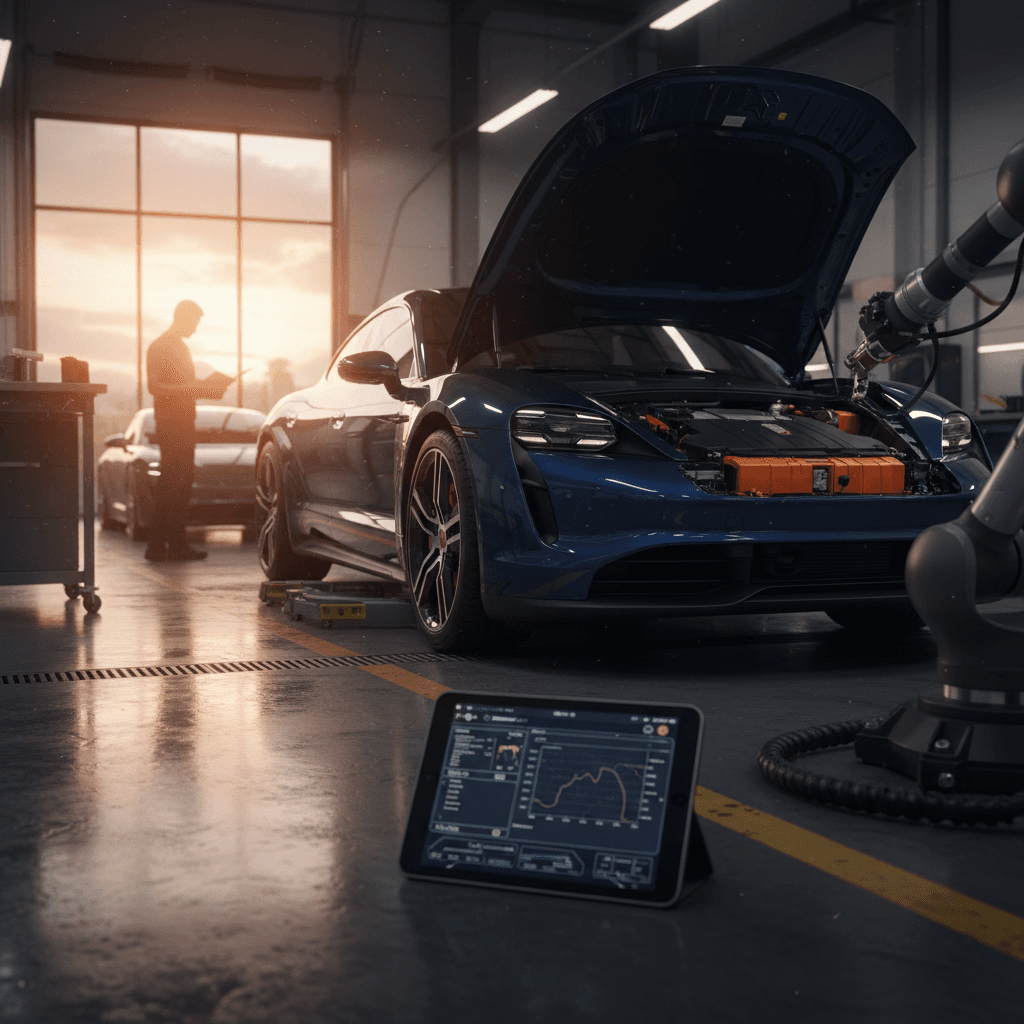
The single most important issue to understand on any Taycan, including 2025 models, is the series of high-voltage battery recalls. Earlier campaigns covered 2020–2024 vehicles whose battery modules could develop internal short circuits, potentially leading to a thermal event. The fix has generally involved software diagnostics and, if anomalies are found, replacing affected battery modules at no cost.
Taycan High-Voltage Battery Issues: What’s Been Happening
How earlier recalls frame the risk profile for 2025 cars.
| Issue | Who It Affected Most | Symptoms | Typical Fix |
|---|---|---|---|
| Potential battery module short circuit | Primarily 2020–2024 Taycan variants | In rare cases, errors or no warning at all; Porsche often asked owners to limit charge to ~80% pending fix | New diagnostic software; in some cases, high-voltage battery module replacement |
| Battery monitoring gaps | Cars not fully connected to Porsche’s telemetry services | Owners told to limit charging until dealer could update software | Diagnostic update plus ongoing remote monitoring of cell behavior |
| Post-update range or charge-speed changes | Owners after recall or powertrain software updates | Reported slower charging or lower usable range in some cases | Software recalibration and, occasionally, further updates over time |
Details for any specific VIN should always be checked against Porsche and NHTSA records.
Important: 2025 Models Still Share the Same Basic Pack Concept
- Always run a VIN check for open recalls with Porsche or NHTSA before you buy.
- Ask specifically whether any high-voltage battery work has been performed, and why.
- On a used example, request documentation for battery-related campaigns and capacity checks.
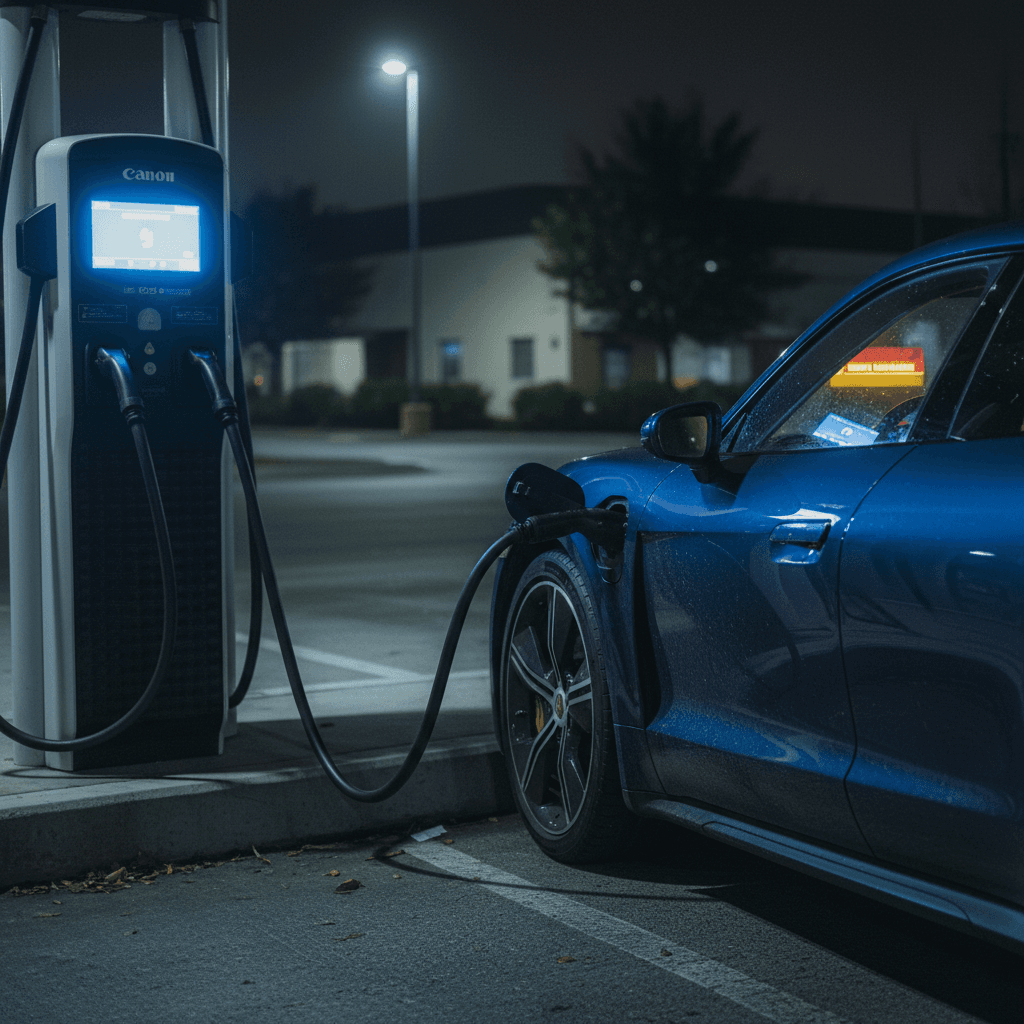
Charging Problems on the 2025 Porsche Taycan
Most Taycan complaints in owner forums and legal summaries cluster around charging: failed sessions, strange error messages, or inconsistent behavior between home and public DC fast chargers. The 2025 update improves some of these pain points, but it doesn’t magically erase them.
1. AC Home Charging Issues
- Charging starts, then stops after a few minutes with messages like “Charging error” or “Charging interrupted.”
- Car charges correctly on Level 1 (120V) but not on a 240V circuit, hinting at charger, wiring, or software problems rather than a dead onboard charger.
- Issues often triggered after a dealership software update or after setting complex schedules in the app.
2. DC Fast Charging Quirks
- Inconsistent charge curves across sites, some stations ramp quickly, others hover at low power.
- Charging stalls that refuse to initiate a session until cable is re-seated or another stall is tried.
- Occasional failures tied to station firmware rather than the Taycan itself, given its 800V architecture and higher demands than many CCS cars.
Quick Diagnostic Trick When Charging Is Fussy
Common Charging Problems and Practical Fixes
1. Verify home electrical and EVSE first
Have a licensed electrician confirm your 240V circuit is correctly wired and sized. Many "car issues" turn out to be loose neutrals, miswired grounds, or marginal breakers.
2. Simplify charging schedules
Turn off complex schedules in the Porsche app and in-car menus. Charge with immediate start for a week to see if the problem disappears, this often confirms a software or settings conflict.
3. Update charger and vehicle software
Make sure both your Taycan and your home charger have the latest firmware. For a 2025 Taycan, you want all campaign and PCM updates fully applied, even if they require a dealer visit.
4. Try a different public network
If DC fast charging fails repeatedly at one brand of station, test another brand or location. Some CCS networks still struggle with high-voltage, high-power cars like the Taycan.
5. Capture error messages
When something goes wrong, photograph the dash and station screen. Fault codes and timestamps make it much easier for Porsche service to reproduce and fix the issue.
Software and Infotainment Glitches
Like most modern EVs, the Taycan leans heavily on software to manage everything from thermal strategy to charging behavior. Earlier model years saw enough software-driven shutdowns and infotainment freezes that Porsche issued recalls for sudden power loss and various control-module updates. The 2025 refresh runs newer code, but the basic reality remains: this car lives and dies on software quality.
Typical Taycan Software/Infotainment Issues
Seen on earlier years, still worth watching on 2025 cars.
PCM freezes or slow boot
Connectivity dropouts
Weird range estimates
Good News: Many Software Problems Are Fixable
Suspension, Brakes, and Ride-Related Issues
Compared with battery and software headaches, mechanical problems on the Taycan have been relatively rare, but there are still a few patterns worth knowing, especially because Porsche has issued recalls touching suspension components on some years.
- Reports of suspension warning lights or noises, sometimes traced to control-arm or damper issues on heavier trims.
- Brake-cable and parking-brake related recalls on certain model years, which can overlap with 2025 production depending on build date.
- Ride-height sensor or air-suspension glitches that trigger warnings rather than immediate failures.
Don’t Ignore Chassis or Brake Warnings
How Porsche Is Fixing 2025 Taycan Problems
The good news is that Porsche hasn’t tried to pretend Taycan issues don’t exist. Recalls covering battery modules, power electronics, software shutdowns, and even charging accessories show that the company is willing to intervene at scale when necessary. For 2025, that means you’re looking at a car with a long history of iterative fixes behind it.
Typical 2025 Taycan Fixes You’ll See on Service Records
Understanding the type of remedy matters when you’re judging long-term risk.
| Type of Fix | What It Involves | What It Means for You |
|---|---|---|
| Software update only | PCM, power electronics, or BMS reprogramming with no hardware swap | Lower immediate risk; verify that post-update range and charge behavior feel normal. |
| Diagnostic + monitoring | Battery diagnostics plus instructions to limit charging or return if certain warnings appear | Neutral if followed; you’re relying on software to catch rare failures early. |
| Module or pack replacement | High-voltage battery module or full pack replaced under warranty/recall | Big near-term win, but demand documentation. A fresh pack can be a selling point if done correctly. |
| Component recall (brakes, suspension, charger) | Replacement or inspection of specific parts such as brake cables, control arms, or charging cables | Routine recall work; make sure it’s done and no related warnings are present. |
Ask the seller for a full printout of Porsche dealer history for any Taycan you’re considering.
Why Service History Matters More Than Mileage
Used 2025 Taycan Checklist: Problems to Screen For
If you’re shopping the used market, especially via a marketplace like Recharged, you want to translate all of this into a concrete inspection plan. The goal isn’t to avoid every risk; it’s to avoid expensive unknowns.
Used 2025 Porsche Taycan Problem Checklist
1. Run a full recall and campaign check
Use the VIN to confirm all open recalls and service campaigns are completed. For any still open, factor the downtime and uncertainty into your negotiation, or insist the work be done before delivery.
2. Review high-voltage battery history
Ask for printouts showing battery diagnostics, capacity reports, and any module/pack replacements. Look for stability: few warnings, consistent capacity, and no repeat visits for the same issue.
3. Test AC and DC charging
Charge the car on a known-good Level 2 charger and one DC fast charger. Watch for aborted sessions, unusual noises, or charge rates far below what the spec sheet promises at moderate state of charge.
4. Scan for stored fault codes
A Porsche dealer or independent EV specialist can pull diagnostic codes. A “clean” Taycan with no current or recent high-voltage or power-electronics faults is worth a premium.
5. Check software version and update status
Confirm the PCM and powertrain software match the latest versions for that VIN. Cars that missed or declined updates can be red flags.
6. Inspect suspension, brakes, and tires
Look for uneven tire wear, clunks over bumps, or warning lights related to chassis systems. Taycans are heavy and fast; neglected hardware ages quickly.
7. Confirm charging accessories and recalls
If the car includes a Porsche-branded charger, verify whether it was subject to any recalls and whether the included unit is the updated version.
How Recharged Helps Here
When to Walk Away vs. When a Fix Is Good Enough
Green Lights: Problems with Solid Fixes
- Battery recall performed, with clear documentation and no repeat faults since.
- Software-only campaigns applied months ago, with no current warnings or owner complaints about range or charging.
- Minor infotainment issues that disappeared after a known update.
- Suspension or brake recalls completed with parts invoices in the file.
Red Flags: Problems That Just Aren’t Worth It
- Repeated high-voltage or power-electronics codes, even after dealer visits.
- Owner or dealer can’t explain why a battery or module was replaced, or refuses to share documentation.
- Car still shows open battery-related recalls with no clear timeline for parts or software availability.
- Charging behavior that your test drive or test charge can’t reproduce consistently, especially if the seller hand-waves it away.
With high-end EVs like the Taycan, the problem isn’t that issues exist, it’s how transparent the history is and how confidently you can model the downside risk.
FAQ: 2025 Porsche Taycan Problems and Fixes
Common Questions About 2025 Taycan Issues
Should You Buy a 2025 Taycan, Especially Used?
If you want a luxury EV that feels like a proper Porsche rather than a science project, the 2025 Taycan remains one of the most compelling cars on the market. But it’s also a car where you absolutely earn your discount by doing your homework: understanding battery recalls, testing charging behavior, and insisting on real documentation instead of vibes.
Treat the Taycan less like a mysterious black box and more like a high-end piece of industrial equipment. The issues we’ve covered, high-voltage battery campaigns, charging quirks, software updates, and chassis recalls, are manageable if you know how to spot and verify the fixes. That’s exactly where a data-driven marketplace like Recharged shines: verified battery health, fair pricing grounded in real condition, and EV specialists who can walk you through the trade-offs before you sign anything.
Go in with clear eyes and the right inspection process, and a 2025 Porsche Taycan can be not just a thrilling EV, but a smart one. Skip that due diligence, and you risk turning a great deal into an expensive education.