If you own, or are considering, a 2025 Lucid Air, you’ve probably heard about a string of safety recalls. The headlines can be confusing: some issues sound scary, others are just software tweaks. This guide pulls together the current 2025 Lucid Air recalls list into one clear, owner‑friendly reference so you can see what’s affected, how serious each recall is, and what to do next.
Why 2025 Lucid Air recalls matter
Overview: 2025 Lucid Air recalls at a glance
2025 Lucid Air recall snapshot
- One recall for loss of drive power on 2024–2025 Air Pure RWD.
- One recall for a rearview camera image that can be blank or delayed.
- One or more recalls for wiring and electrical harness issues that can trigger warnings or power loss.
- A driveline recall involving half‑shaft bolts that may loosen on some 2024–2026 Pure RWD vehicles.
2025 Lucid Air recalls list and quick summary
Known 2025 Lucid Air recall campaigns
High‑level view of NHTSA campaigns that include 2025 Lucid Air models. Exact VIN eligibility depends on production dates and software versions.
| Recall focus | Likely NHTSA category | Affected model years | Key symptom | Repair type |
|---|---|---|---|---|
| Loss of drive power – Pure RWD | ELECTRICAL SYSTEM: WIRING / PROPULSION | 2024–2025 Air Pure RWD | Sudden loss of propulsion, warning messages | Software + harness inspection at Lucid |
| Rearview camera blank/lag | BACK OVER PREVENTION: SOFTWARE | 2022–2025 Lucid Air | Rear camera image blank or delayed in Reverse | OTA update to version 2.8.0 or later |
| Electrical / wiring harness fault | ELECTRICAL SYSTEM: WIRING | 2022–2025 Lucid Air (select VINs) | Warnings, possible drivability faults | Harness inspection and repair/replacement |
| Half‑shaft bolt security – driveline | POWER TRAIN: DRIVELINE: DRIVESHAFT | 2024–2026 Pure RWD (includes 2025) | Possible loss of drive if shaft disengages | Physical inspection and re‑torque or replacement |
Always confirm with your VIN, this table is a guide, not a substitute for an official NHTSA or Lucid lookup.
Recall list vs. your specific car
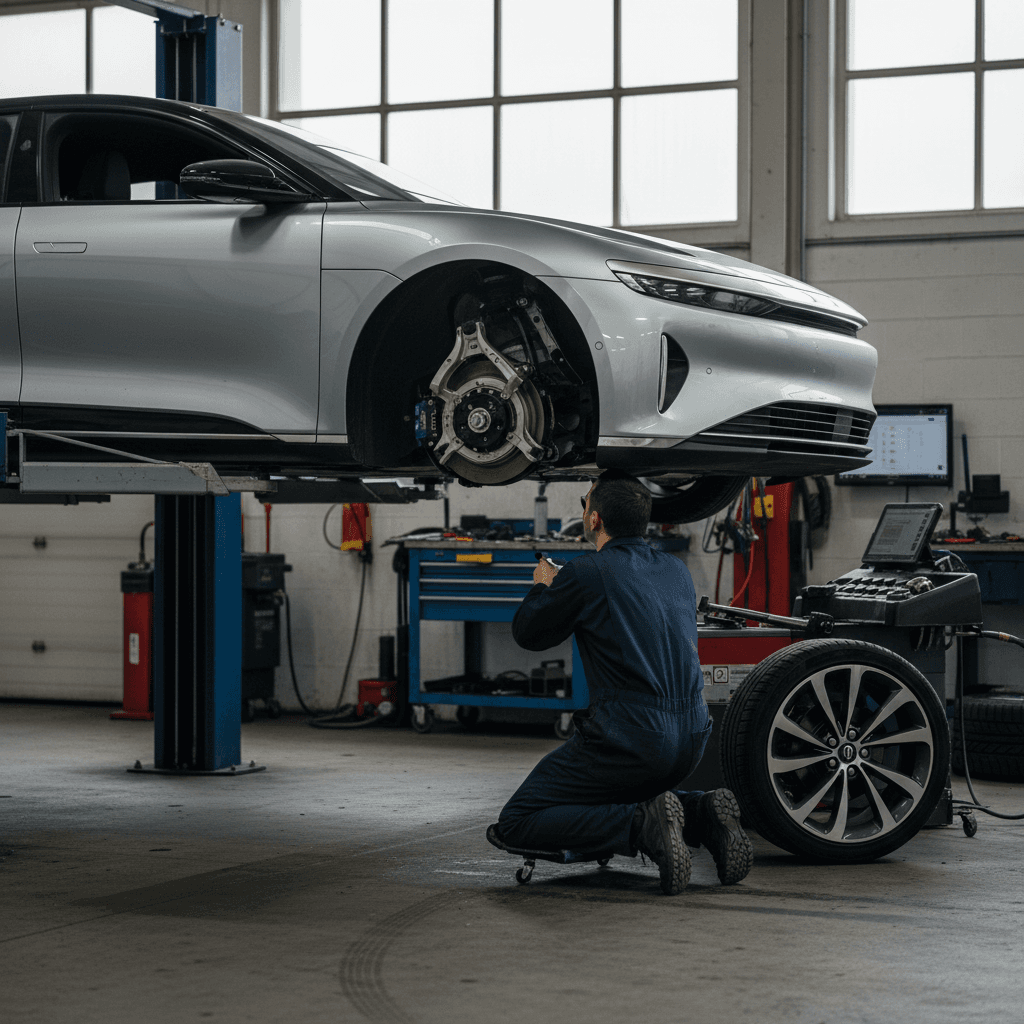
Recall: Loss of drive power on Air Pure RWD
One of the most serious items on the 2025 Lucid Air recalls list involves the Air Pure Rear‑Wheel Drive (RWD). NHTSA records describe a wiring‑related fault that can cause the high‑voltage system to shut down unexpectedly. If that happens while you’re driving, you can lose propulsion without much warning, even though 12‑volt systems like lights may stay on.
- Concerned systems: high‑voltage electrical, propulsion system, wiring harness
- Primary risk: unintended loss of drive power, increasing crash risk if it happens in traffic
- Population: roughly 1,500+ 2024–2025 Air Pure RWD sedans built before Lucid’s wiring change in October 2024
- Remedy: software logic update plus harness inspection and, if needed, repair or replacement at a Lucid service facility
Don’t ignore loss‑of‑power warnings
What to do if your 2025 Air Pure RWD is in this recall
1. Run a VIN recall check
Use the NHTSA lookup tool or Lucid’s owner portal to see if your specific Air Pure RWD is in the loss‑of‑power recall population.
2. Confirm software version
Check your vehicle’s software information in the settings menu. If Lucid specifies a minimum version as the remedy, make sure you’re at or above it.
3. Schedule a service visit
Even with updated software, Lucid may still need to physically inspect and secure the wiring harness. Book the earliest appointment you can reasonably make.
4. Document symptoms
If you’ve experienced any stalling, jerking, or drive‑system warnings, write down dates, speeds, and conditions. That makes diagnosis faster and protects you if any dispute arises later.
5. Arrange alternate transportation
Ask Lucid about loaners, rideshare credits, or shuttle options while your Air is in for recall work, especially if you rely on it as your daily driver.
Recall: Rearview camera blank-or-lagging image
Another major campaign affecting the 2025 Lucid Air focuses on the rearview camera display on model years 2022–2025 running software versions prior to approximately 2.8.0. The issue: when you shift into Reverse, the camera feed on your center screen can either stay blank with a warning or show up with a noticeable delay. That’s a direct hit on back‑over prevention, which is why NHTSA treats it seriously.
What owners report
- Screen stays black or shows a message instead of the live camera view.
- Reverse image appears one or two seconds after the car begins moving.
- Intermittent behavior that’s hard to reproduce on demand.
Why NHTSA cares
- Federal rules require that the rearview image appear promptly after shifting into Reverse.
- Even a brief delay can hide a child, cyclist, or obstacle behind the car.
- Because it’s software‑related, the fix can be fast and wide‑reaching via OTA update.
Good news: this one is mostly software
How to make sure your camera recall is fixed
1. Check your software release notes
Open your infotainment settings and view the software history. Look for a release that mentions rear camera performance, rearview monitoring, or compliance updates.
2. Enable automatic updates
If you’ve been deferring updates, turn auto‑updates back on and allow the car to install the latest Lucid‑approved version overnight.
3. Test the camera in a safe area
In an empty parking lot, shift into Reverse several times. The image should appear quickly and consistently, without long delays or blank screens.
4. Call Lucid if you’re unsure
If your software is current but symptoms persist, contact Lucid Customer Care. They can see whether your VIN is still flagged in the recall campaign and advise next steps.
Recall: Wiring harness and electrical issues
Separate from the Pure RWD loss‑of‑power campaign, NHTSA data shows electrical system and wiring recalls covering 2022–2025 Lucid Air models more broadly. In practice, these issues tend to show up as warning lights, drive‑system messages, or intermittent faults rather than a single clear symptom.
Typical wiring‑related recall patterns on Lucid Air
Your 2025 car may or may not be affected, VIN checks are essential.
Intermittent faults
Owners may see occasional drive system or electrical warnings that clear on their own. A recall may require re‑routing or securing part of the harness to prevent chafing or signal loss.
High‑voltage communication
Some campaigns focus on how the car detects and reacts to changes in high‑voltage circuits. Software updates refine this logic so momentary glitches don’t trigger harsh or unsafe responses.
Physical harness repairs
In higher‑risk cases, Lucid technicians inspect wiring runs under the car or in the motor bay, adding protection, re‑seating connectors, or replacing sections as needed.
Pro tip for electrical warnings
Recall: Half-shaft bolts and driveline safety
A newer campaign in the 2025 Lucid Air recall story involves half‑shaft bolts on Pure RWD models, spanning 2024–2026 production. Lucid identified cases where these bolts may not be secured to specification. If the half shaft disengages from the drive unit, you can lose propulsion without warning, even though the car’s electronics may look normal.
What you might notice
- Clunking or unusual noises from the rear under hard acceleration.
- Vibration at speed that wasn’t there before.
- In a worst‑case scenario, sudden loss of drive with the ability to steer and brake.
What Lucid’s remedy involves
- Inspection of the half‑shaft bolts on affected cars.
- Re‑torquing hardware to updated specifications.
- Replacing components if any looseness or damage is found.
Don’t self‑diagnose driveline noises
Bonus: Lucid all-weather floor mat recall
While not limited to the 2025 model year, Lucid also recalled a batch of all‑weather floor mats for the Air that lack proper anchors. In affected cars, the driver’s mat can slide forward and interfere with the accelerator pedal, exactly the sort of low‑tech problem that still matters a lot for safety.
- NHTSA classifies this as an equipment recall, not a vehicle‑specific defect.
- The fix is simple: remove the unanchored driver’s mat and work with Lucid for reimbursement or replacement with a compliant design.
- Even if your VIN isn’t in this campaign, make sure any third‑party mats are trimmed and anchored so they can’t bunch up under the pedals.
Quick pedal‑area safety check
How to check if your 2025 Lucid Air has open recalls
Because multiple campaigns overlap across 2022–2025 model years, the only way to know what applies to your 2025 Lucid Air is to run a VIN‑specific recall check. Here’s the simple playbook:
Step‑by‑step: confirm recall status on your 2025 Lucid Air
1. Locate your VIN
You’ll find it on the lower driver’s side of the windshield, the driver’s door jamb label, your insurance card, or in your Lucid app profile.
2. Use the NHTSA recall lookup
Go to the NHTSA recall lookup website and enter your 17‑digit VIN. It will list all open federal safety recalls that still need to be performed.
3. Check the Lucid owner portal
Log into your Lucid account or app and look for any open campaigns or service actions tagged to your vehicle. OEM portals sometimes show campaigns that aren’t yet in the federal database.
4. Review software version in the car
On the center screen, open the settings or software menu and note your current version. Compare it with any Lucid messaging you’ve received about OTA recall remedies.
5. Save recall letters or emails
If Lucid mails you a recall notice, keep a digital copy. It’s useful for verifying the campaign number and remedy details if you ever sell the vehicle or move states.
Keep a simple recall folder
Living with a recalled EV: safety, value, and insurance
If you’re new to EVs, or to a young brand like Lucid, it’s easy to panic when you see that your car has four NHTSA campaigns tied to its model year. In reality, modern vehicles of every brand are under constant scrutiny, and software‑heavy EVs tend to accumulate more recalls early in their life cycle.
What 2025 Lucid Air recalls actually mean for you
Three angles every owner should consider.
Safety first
Open recalls are about risk management. A camera delay might be inconvenient; a drive‑power loss recall is more serious. Prioritize anything that affects propulsion, braking, steering, or crash avoidance.
Resale value
Buyers and dealers expect recalls, especially on early‑generation EVs. What hurts value isn’t the existence of recalls, it’s unperformed recalls and spotty documentation.
Insurance & liability
Insurers typically don’t surcharge for recalls, but if you ignore a safety notice and then crash, it can complicate claims. Keeping your Air current on recalls is cheap peace of mind.
Completed recalls are a selling point
Buying a used 2025 Lucid Air after recalls
If you’re shopping the used market, the 2025 Lucid Air can be an appealing value: cutting‑edge range and performance, often at a steep discount from original MSRP. But you’ll want to be methodical about recalls and overall condition before you commit.
Questions to ask the seller
- “Have all current recalls on this 2025 Lucid Air been completed?”
- “Do you have service records or app screenshots to verify?”
- “Has the car ever lost power while driving or shown persistent drive‑system warnings?”
Checks you can do yourself
- Run the VIN through NHTSA’s recall tool to confirm nothing is open.
- Inspect the driver’s floor mat and pedal area for interference or bunching.
- Test the rearview camera multiple times to see if it responds promptly.
How Recharged handles recall checks
Smart checklist for a used 2025 Lucid Air
1. Verify recall completion
Ask for documentation that the loss‑of‑power, camera, wiring, and driveline campaigns have been performed, or confirm “no open recalls” for that VIN.
2. Review battery health
Because battery packs are the most expensive component, use tools like the Recharged Score to understand real‑world degradation before you buy.
3. Evaluate software history
A car that’s several versions behind on software may have missed recall remedies or quality‑of‑life improvements. Factor that into your offer and your first service visit.
4. Consider financing and coverage
If you’re financing through Recharged or another lender, ask how manufacturer recalls interact with any extended coverage you’re considering.
FAQ: 2025 Lucid Air recalls
Frequently asked questions about the 2025 Lucid Air recalls list
Bottom line on the 2025 Lucid Air recalls list
The 2025 Lucid Air sits at an interesting crossroads: it’s one of the most advanced long‑range EVs on the road, and it’s also part of an evolving platform that’s still working through early‑production recalls. That’s not unusual for a young automaker, but it does mean you should treat the 2025 Lucid Air recalls list as essential reading, not fine print.
If you already own a 2025 Air, the action items are simple: run a VIN check, accept any pending OTA updates, and stay current on Lucid’s recall notices. If you’re shopping used, focus less on whether recalls exist and more on whether they’ve been properly completed and documented. Tools like the Recharged Score Report can give you that clarity in one place, along with verified battery health and fair‑market pricing.
Handled proactively, these recalls don’t have to be deal‑breakers. They’re part of the reality of owning a cutting‑edge EV, and when you approach them with good information and a clear plan, they become one more box you can confidently check on your path to enjoyable, low‑emissions driving.