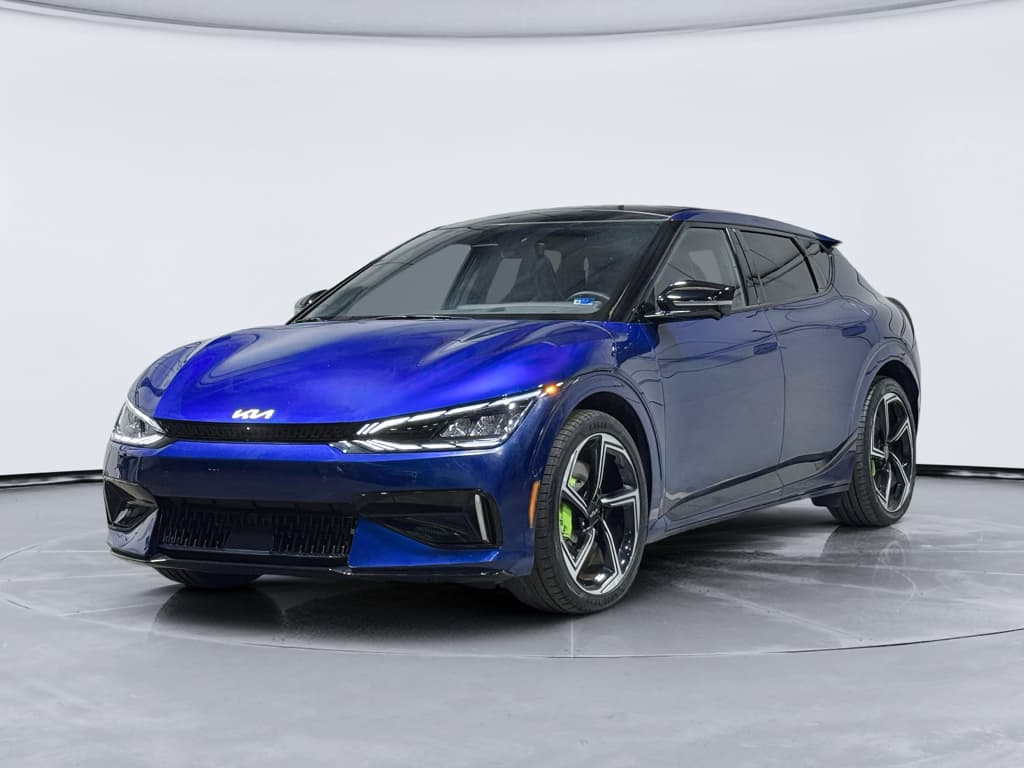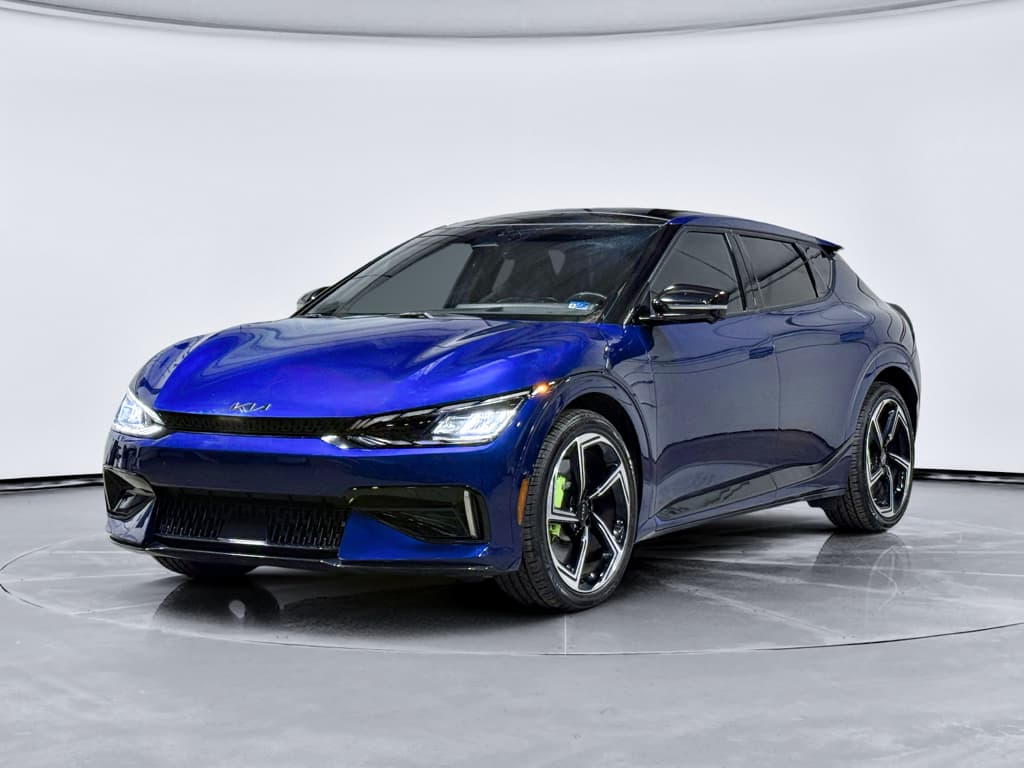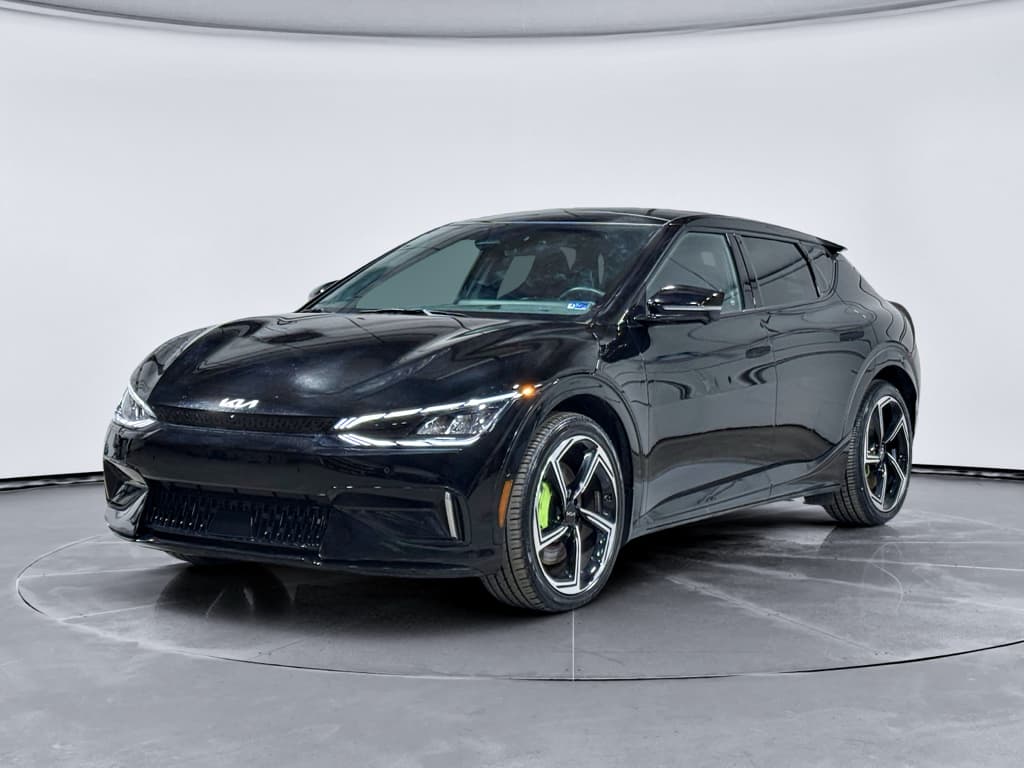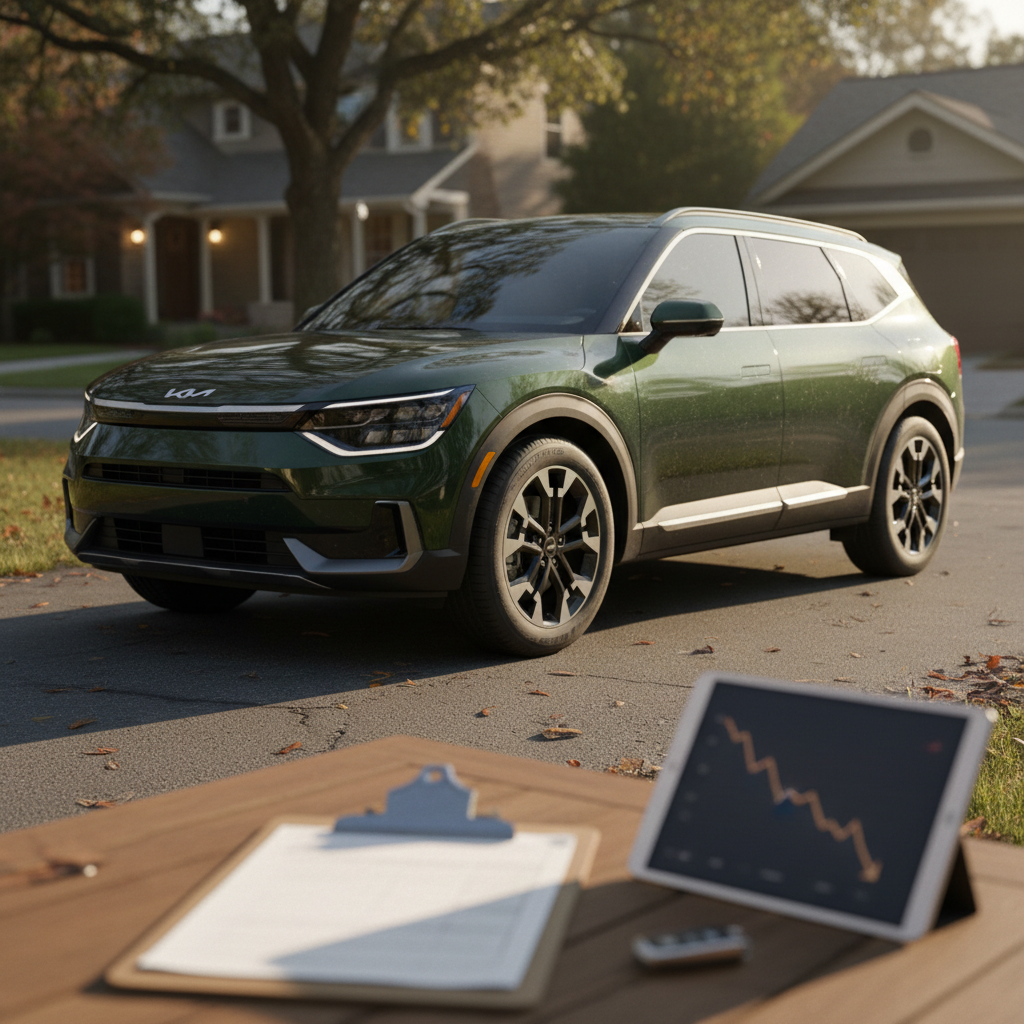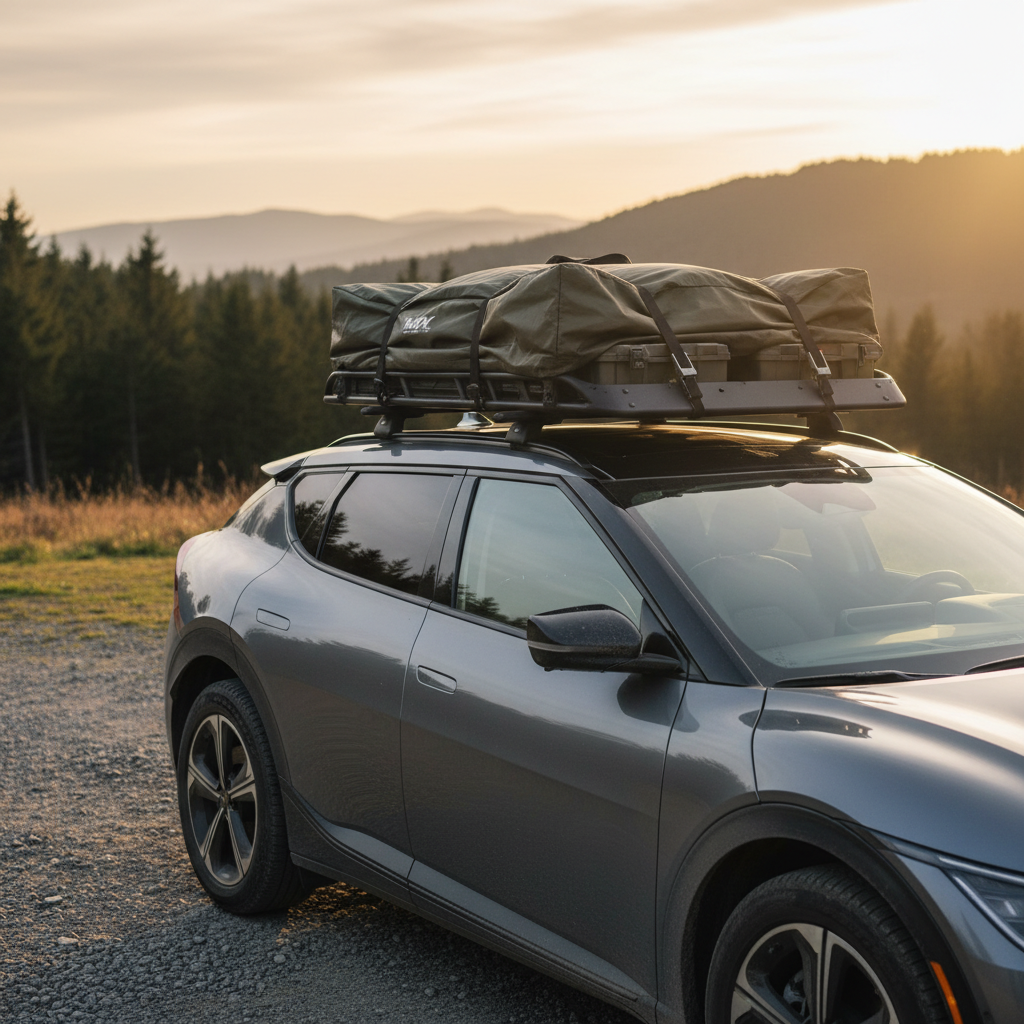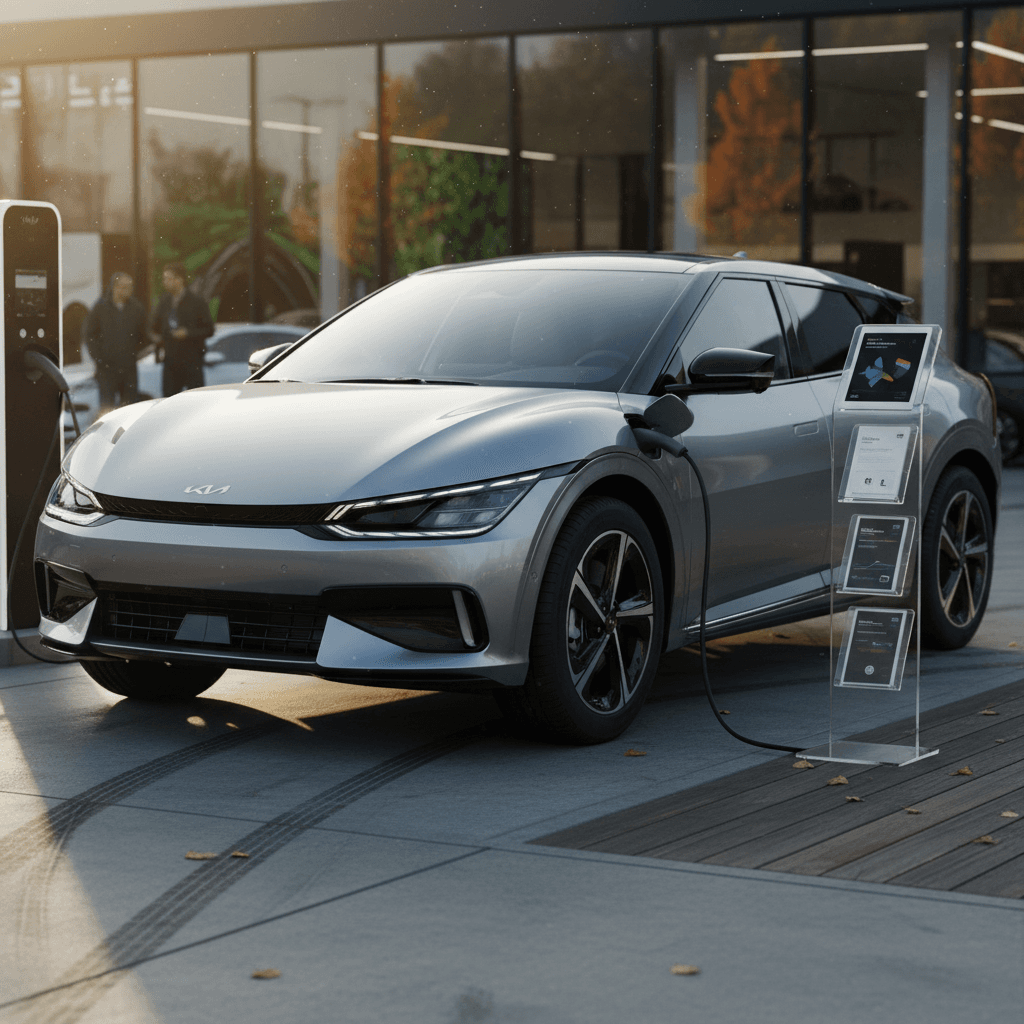
If you’re shopping for a sleek electric crossover that charges quickly, handles like a sporty hatchback, and doesn’t cost luxury money, the 2025 Kia EV6 will end up on your short list. This 2025 Kia EV6 buying guide walks you through trims, range, charging, pricing, and what to watch for if you’re considering a lightly used or off‑lease EV6.
Quick take
Why the 2025 Kia EV6 is worth a look
A driver’s EV, not just an appliance
The EV6 sits low, with a long wheelbase and quick steering. It feels more like a sporty wagon than a tall SUV. Even non‑GT trims are responsive, and the EV6 GT is a legitimately quick performance car that can embarrass a lot of sports sedans.
If you’ve driven a few bland crossovers and thought, “EVs are all the same,” the EV6 is one of the exceptions.
Real charging advantages
While many EVs claim fast charging, the EV6’s 800‑volt architecture lets it hold high power longer on a good DC fast charger. In practice, that means 10–80% in roughly 18–25 minutes in ideal conditions, right in line with the best non‑Tesla EVs.
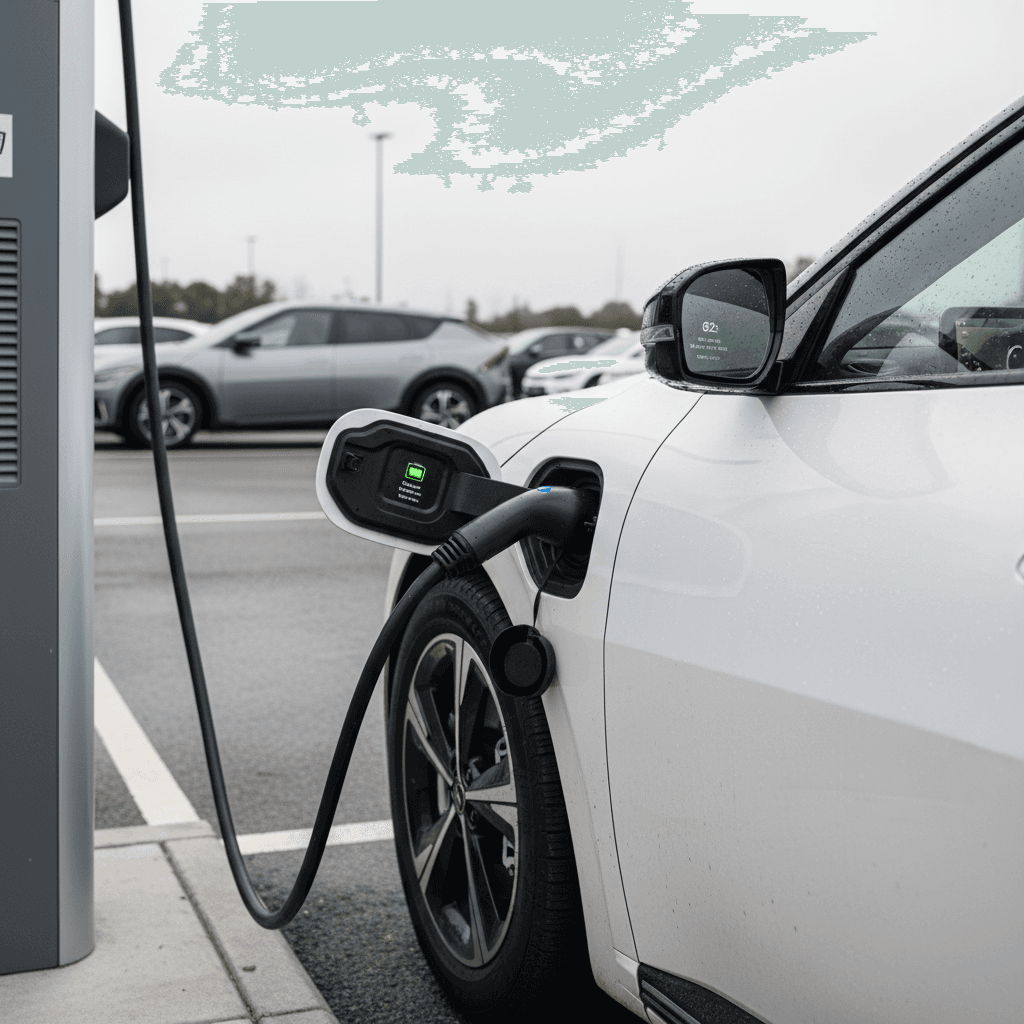
For 2025, U.S. models add a NACS (Tesla‑style) charge port, opening up far more fast‑charging options as networks standardize around the connector.
2025 EV6: what’s new and what stayed the same
Key updates for the 2025 Kia EV6
Bigger battery, fresh design, more charging flexibility
Larger batteries
The smaller pack grows to about 63 kWh and the long‑range pack to roughly 84 kWh, up from 58 kWh and 77.4 kWh in earlier years. More usable energy means more real‑world range without changing how you use the car.
More range targeted
Kia targets around 319 miles of EPA range on certain rear‑drive long‑range trims, up from about 303 miles on comparable earlier models. Expect slightly less with all‑wheel drive or larger wheels.
NACS charge port
2025 U.S. EV6 models switch to the North American Charging Standard (NACS) connector, the same plug used by Tesla, while retaining full CCS charging capability via adapter on most networks.
Beyond the hardware, the 2025 refresh brings a new front and rear lighting signature, updated interior materials, and the latest Kia driver‑assist software. The basic layout, 800‑volt platform, and overall size are unchanged, which is good news: the fundamentals were already strong.
Tip for used shoppers
2025 Kia EV6 trims at a glance
Kia keeps the 2025 EV6 lineup familiar: Light, Light Long Range, Wind, GT‑Line, and GT. The same basic recipe spans them all, single‑motor rear‑wheel drive (RWD) or dual‑motor all‑wheel drive (AWD), two battery sizes, and varying levels of comfort and performance gear.
2025 Kia EV6 trims overview (U.S.)
High‑level snapshot of how the main 2025 EV6 trims differ. Always check a specific vehicle’s window sticker or Recharged listing for exact equipment.
| Trim | Drivetrain | Battery | Targeted range role | Who it fits best |
|---|---|---|---|---|
| Light | RWD | 63 kWh | Shortest range, lowest price | Drivers with short commutes who mostly charge at home and want EV6 style on a budget. |
| Light Long Range | RWD or AWD | 84 kWh | Best value range, entry long‑range | One‑car households that road‑trip occasionally and want maximum miles per dollar. |
| Wind | RWD or AWD | 84 kWh | Comfort‑oriented, long‑range | Families who want more comfort features, quieter cabin, and available AWD. |
| GT-Line | RWD or AWD | 84 kWh | Sporty look & tech | Buyers who care about styling, features, and a more premium cabin than Wind. |
| GT | AWD | 84 kWh performance tune | Performance flagship | Enthusiasts who want vivid acceleration and sport‑tuned hardware more than maximum range. |
Battery sizes and features can vary slightly by market; this table reflects the typical U.S. lineup.
Trim names can be misleading
2025 Kia EV6 spec highlights (approximate U.S. targets)
Battery, range, and real‑world mpg‑e
On paper, the 2025 EV6’s larger batteries unlock better range. In the real world, it’s still about how, where, and when you drive. Here’s how to think about it when you’re cross‑shopping or comparing a new 2025 with a used earlier EV6.
- Standard battery (≈63 kWh): Found on Light RWD. Good for commuters, urban drivers, and two‑car households. Expect daily range that feels similar to a compact gas car with a small tank, fine for around town with overnight charging.
- Long‑range battery (≈84 kWh): Optional or standard on most other trims. This is the sweet spot if you’re planning regular highway trips or you live in a cold‑weather climate where range drops in winter.
- RWD vs. AWD: All‑wheel drive adds traction and quicker acceleration but typically shaves 20–40 miles off EPA range versus the same battery with RWD.
- Wheel size matters: Big 20‑ or 21‑inch wheels look terrific but steal both efficiency and comfort compared with 19‑inch wheels. If you care about maximum range, shop for the smaller wheels.
Cold‑weather reality check
If you’re comparing a 2025 EV6 to earlier years, remember that a healthy 2022–2024 long‑range pack will still feel stout in day‑to‑day driving. The 2025’s larger pack simply stretches your buffer, especially useful for high‑speed highway runs, mountain driving, or towing a small trailer.
Charging speed: home and road‑trip realities
The EV6’s charging story is one of its selling points, but only if you set up home charging correctly and understand what to expect on the road. Charging speed is a partnership between the car, the charger, and the conditions.
At home: Level 1 vs. Level 2
- Level 1 (120V): Adds roughly 3–4 miles of range per hour. Fine for very short commutes or as a backup, but frustrating if you regularly drive more than 30–40 miles a day.
- Level 2 (240V): With an 11 kW onboard charger, the EV6 can go from empty to full overnight, typically 7–8 hours for the long‑range pack when paired with a 40–48 amp home charger.
If you own a home, budgeting for a proper Level 2 setup is every bit as important as choosing the right trim.
On the road: DC fast charging
- Peak power: On a healthy 350 kW station in good weather, the EV6 can pull well over 200 kW for a chunk of the session.
- Best window: Plan stops from about 10–15% up to 60–80%. Above 80%, charge speeds slow dramatically to protect the battery.
- Connector: 2025 models use the NACS plug in the U.S., and most networks are rolling out support. Earlier cars use CCS; some will come with adapters.
Road‑tripping an EV6 is more about picking good stations and charging windows than chasing the biggest number on the charger’s screen.
Safety note on home charging
If you’re not sure how to size a home charger or which portable vs. hard‑wired option fits your situation, it’s worth talking to an EV‑savvy retailer. At Recharged, EV specialists can help you match a charging setup to your driving pattern before you commit to an EV6.
Pricing, incentives, and where the EV6 fits the market
Kia positions the 2025 EV6 as a mainstream‑priced, near‑premium EV. Official MSRPs change throughout the year, but broadly the EV6 slots between mass‑market crossovers like the Hyundai Kona Electric and true luxury entries like a BMW iX or Mercedes EQE SUV.
How the 2025 EV6 stacks up
Think of it as a premium‑feeling EV without luxury‑brand pricing
Versus mainstream EVs
Compared with compact EV crossovers, the EV6 offers more power, faster DC charging, and a more refined cabin. It often costs more than the smallest competitors but brings long‑trip comfort they can’t match.
Versus luxury EVs
Luxury‑brand rivals can offer quieter cabins and more badges, but at a steep price jump. The EV6’s tech, performance, and range are in the same conversation for far less money.
Total cost picture
Factor in potential federal and state incentives, lower fuel and maintenance costs, and the EV6 can undercut a similarly quick gas crossover on total monthly ownership cost.
Don’t forget used and CPO pricing
New vs. used EV6: how to shop smart
The 2025 EV6 is the best version yet, but it’s not the only smart buy. Depending on your budget and priorities, a nearly new or off‑lease EV6 can be a better deal, if you know what you’re looking at.
Reasons to favor a new 2025 EV6
- Bigger battery for longer range and more buffer on harsh days.
- NACS charge port from the factory, lining up with where the U.S. charging market is headed.
- Full warranty window, including high‑voltage battery coverage.
- Latest interior tech, lighting, and small comfort tweaks.
If you road‑trip often, live on public fast charging, or just want maximum future‑proofing, the 2025 car makes the strongest case.
Reasons to favor a used EV6
- Lower upfront price, especially as three‑year leases from 2022–2023 roll off.
- Similar 800‑V charging hardware and driving dynamics to the 2025 model.
- Plenty of lightly driven examples with modest mileage.
- Some earlier cars may still qualify you for used‑EV incentives depending on price and income rules.
If you mostly charge at home and keep highway trips under 300 miles between stops, an earlier EV6 can make a lot of financial sense.
How Recharged helps on the used side
Ready to find your next EV?
Browse VehiclesInspection checklist when buying a used or off‑lease EV6
Essential checks for a pre‑owned EV6
1. Confirm battery health and DC fast‑charge history
Ask for a battery‑health report, not just a range estimate on the dash. Frequent high‑power DC fast charging isn’t automatically bad, but you want to see that charging behavior and battery health line up. A Recharged Score or similar third‑party test is ideal.
2. Check charging ports and cables
Inspect the charge port for broken pins, corrosion, or physical damage. Plug and unplug a charger to confirm a smooth latch. If the car includes a portable EVSE or adapters, verify they’re present and functioning.
3. Test DC fast charging before you buy
If possible, do a short fast‑charge session from 10–60%. You’re not looking for a perfect curve, just for the car to ramp up quickly and hold healthy power without errors or sudden drop‑offs.
4. Verify software and recall status
Ask for documentation that all <strong>software updates</strong> and recalls (including any charging‑related campaigns) have been addressed. A Kia dealer or EV‑focused retailer can print a service history tied to the VIN.
5. Inspect tires, brakes, and suspension
EVs are heavy and torquey. Uneven tire wear, tired shocks, or warped rotors can show up earlier than you’d expect. Take a test drive over rough pavement and do a few firm, straight stops from highway speed.
6. Live with the driver‑assist systems
On a test drive, use adaptive cruise control and lane‑keeping on a highway stretch. Make sure you’re comfortable with how the systems behave; you’ll use them a lot on an EV6, especially on long trips.
Don’t rely only on advertised range
Is the 2025 Kia EV6 right for you?
The 2025 Kia EV6 is at its best when you use its strengths: fast home charging, fast DC road‑trip stops, and a chassis that’s more fun than a tall, soft SUV. The bigger battery and NACS connector make it easier to live with than early EVs, particularly if this will be your first electric daily driver.
Great fit if…
- You want an EV that’s genuinely enjoyable to drive.
- You’ll install Level 2 at home or have reliable workplace charging.
- You value quick DC fast charging for occasional or frequent road trips.
- You like a distinctive design and premium‑leaning interior without paying luxury‑brand prices.
Maybe not ideal if…
- You can’t install home charging and rely entirely on public stations.
- You need three rows of seating or minivan‑like cargo space.
- Your driving mix is mostly extremely short hops in a very cold climate (a smaller, cheaper EV might make more financial sense).
How Recharged can help
- Compare used and nearly new EV6s side‑by‑side with a clear Recharged Score.
- Get trade‑in, instant cash offer, or consignment options if you’re moving out of a gas car.
- Arrange nationwide delivery or visit the Recharged Experience Center in Richmond, VA to see EVs in person.
If the 2025 Kia EV6 matches your needs, the next step is to put real numbers and real cars in front of you. Look closely at battery size, drivetrain, wheel choice, and charging plans, not just paint colors and screens. Whether you land on a brand‑new 2025 or a well‑priced used EV6 with a strong battery‑health report, taking the time to shop carefully will reward you every time you plug in. And if you’d like a partner in the process, Recharged’s EV specialists can walk you through options, financing, and trade‑in choices from the first question to delivery day.