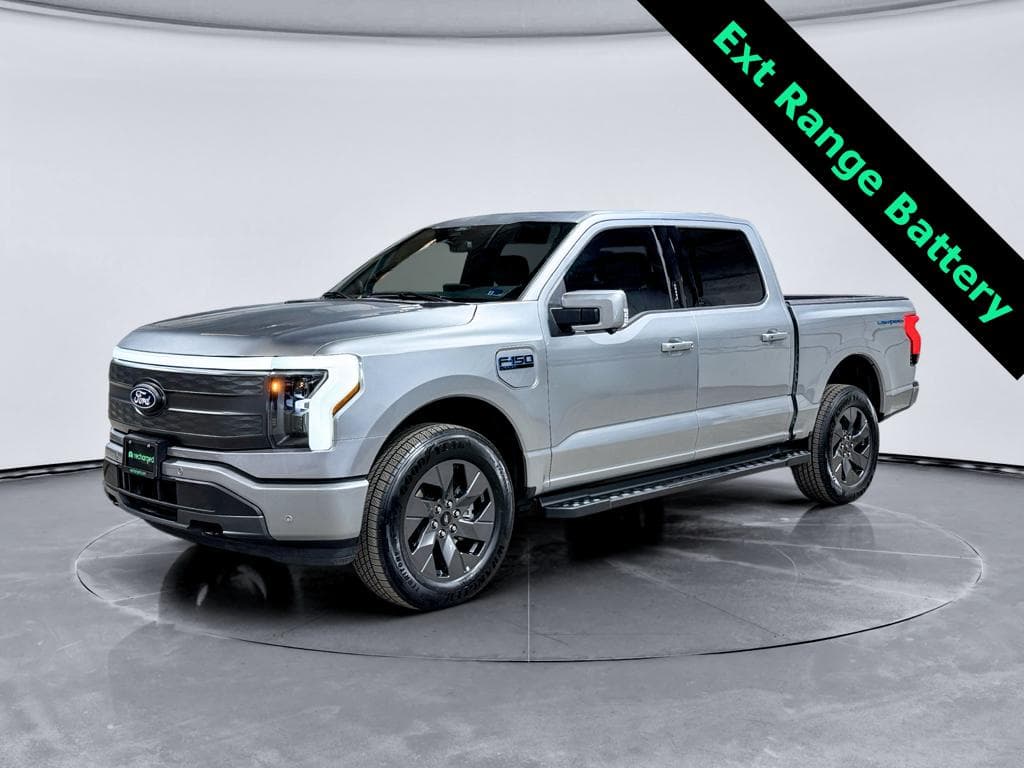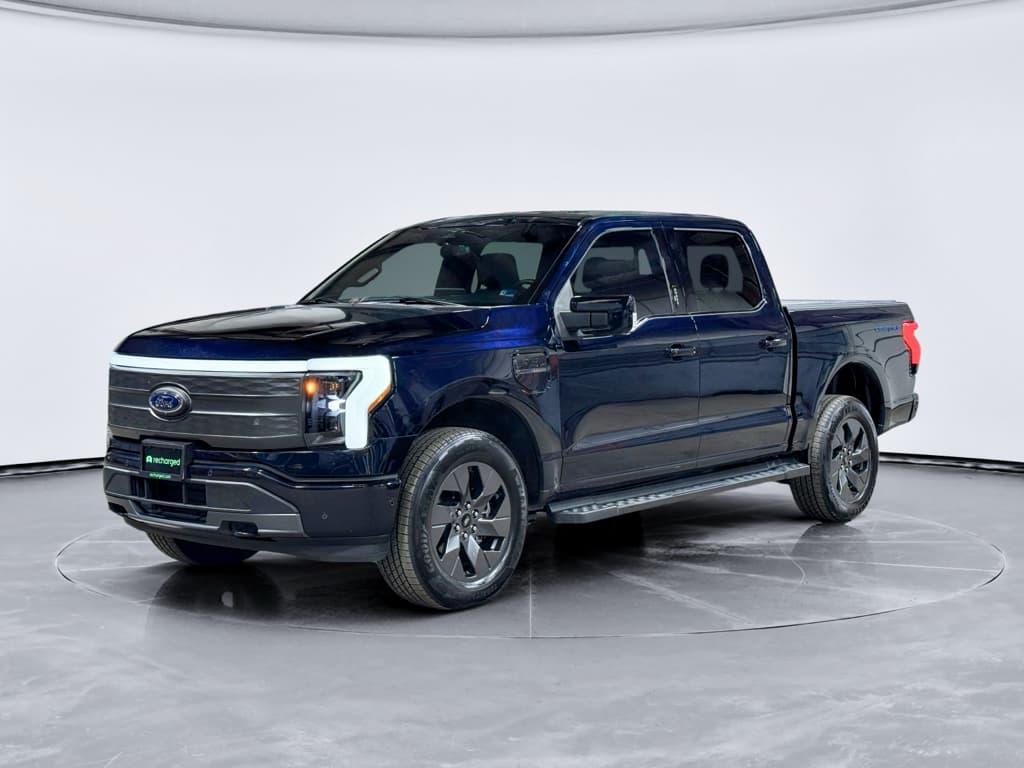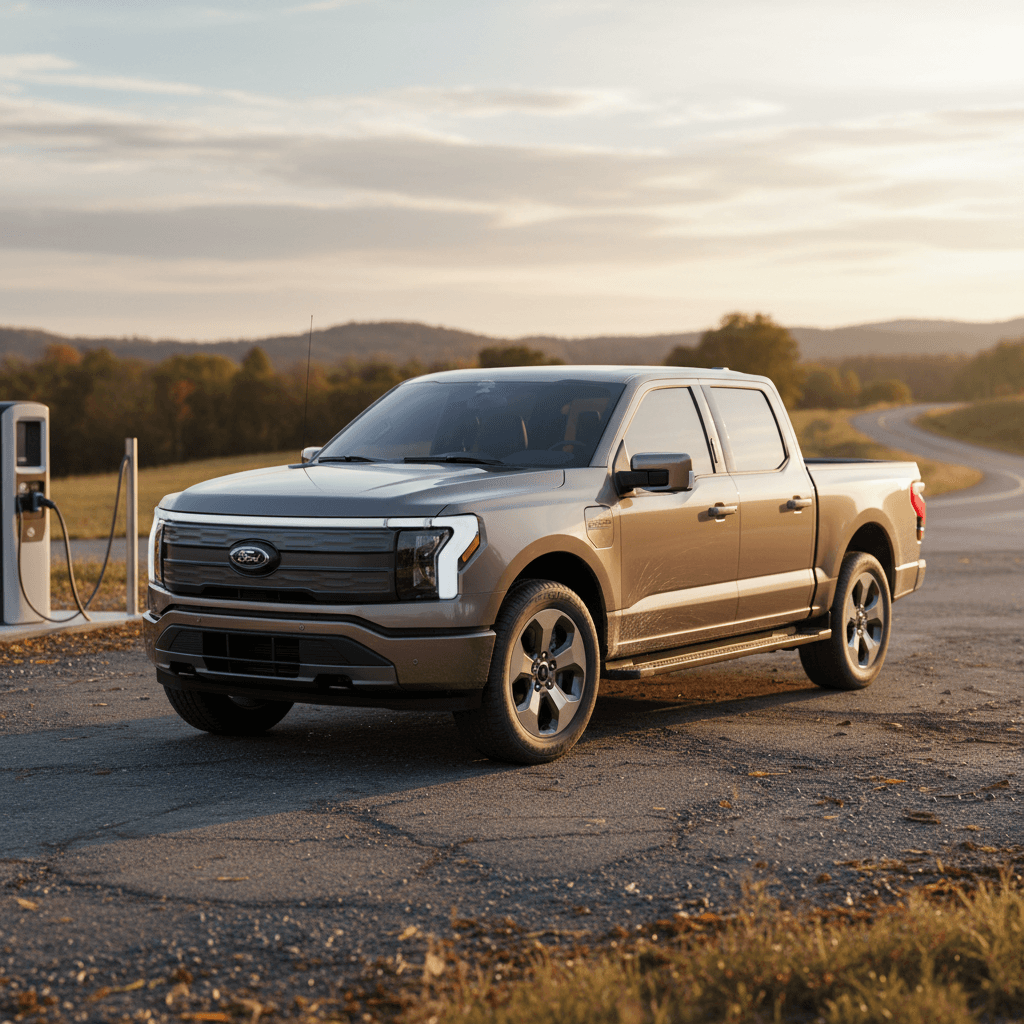
The 2025 Ford F-150 Lightning is no longer a novelty. It’s an electric truck with a timecard to punch: job sites, boat ramps, Costco runs, kid duty. Ford has quietly sharpened the formula, better fast charging, smarter driver assistance, while also trimming content and inching prices upward. The question for you, standing on the lot or browsing listings, is whether the Lightning still earns its price as the go-to electric pickup, or whether you’re better off hunting a well‑priced used one.
Quick verdict
2025 Ford F-150 Lightning overview
2025 F-150 Lightning key numbers
Ford didn’t reinvent the Lightning for 2025. It’s still a full-size, four-door, five‑passenger pickup built on the F‑150 frame, with dual electric motors and standard 4x4. You can configure it as a work truck (XLT/Pro in some markets) or as a leather‑lined tech couch (Lariat and Platinum). The appeal remains simple: it drives like an F‑150, but smoother, quieter, and quicker, with the ability to power tools, campsites, and in some cases your home.
Used vs. new Lightning
What’s new for the 2025 F-150 Lightning
2025 updates: the good, the bad, the deleted
Incremental changes that matter more than they first appear
Quicker DC fast charging
Ford raises maximum DC fast‑charging current from about 450 to 500 amps on many 2025 models. In practice, the extended‑range Lightning can go from roughly 15–80% in about 38 minutes on a strong charger, shaving a few minutes off road‑trip stops.
Smarter BlueCruise
BlueCruise 1.4 brings smoother lane‑keeping and better speed management in curves. You also get more flexible subscription options: a complimentary trial, then monthly, yearly, or a one‑time purchase on some trims.
Quiet feature deletions
2025 dealer order guides show several equipment downgrades: the clever Interior Work Surface gone from some trims, fewer standard bed and towing features, and more items pushed into option packages. Check the fine print before assuming your truck has the gadgets you saw in early reviews.
Watch for missing features
Trims, batteries, and pricing
Ford positions the 2025 F‑150 Lightning lineup a bit like a staircase: each trim climbs in range, luxury, and price. Exact MSRPs vary by region and incentives, but U.S. pricing generally starts around the high‑$50Ks for a work‑focused configuration and climbs into the mid‑$80Ks for a fully loaded Platinum.
2025 Ford F-150 Lightning trims at a glance
Approximate positioning of the main 2025 Lightning trims. Specs and equipment can vary by region and options.
| Trim | Typical starting price | Battery | EPA range | Power | Max towing |
|---|---|---|---|---|---|
| XLT | Low–mid $60Ks | Standard Range (≈98 kWh) | ≈240 mi | 452 hp, 775 lb-ft | Up to 7,700 lbs |
| Flash | Upper $60Ks–low $70Ks | Extended Range (≈122–123 kWh) | Up to 300 mi | 536 hp, 775 lb-ft | Up to 10,000 lbs |
| Lariat | Upper $70Ks | Extended Range (up to 131 kWh on some builds) | Up to 320 mi | Up to 580 hp, 775 lb-ft | Up to 10,000 lbs |
| Platinum | Mid $80Ks+ | Extended Range | ≈300 mi | 580 hp, 775 lb-ft | ≈8,500 lbs |
Always confirm battery size, tow packages, and driver‑assist features on the exact truck you’re buying.
About those batteries
If you’re shopping used, you’ll also see 2022–2024 Pro work trucks and earlier XLT/Lariat/Platinum with a slightly larger 131‑kWh extended battery on more trims. Those earlier trucks can actually have more content for the money, especially once you factor in depreciation.
Real-world range and efficiency
EPA numbers (best case)
- Standard Range: around 240 miles of EPA‑estimated range.
- Extended Range (Flash): roughly 300 miles.
- Extended Range (Lariat): up to about 320 miles in ideal spec.
- Platinum: typically around 300 miles thanks to larger wheels and added weight.
Think of these as lab grades on a good day: moderate temps, no trailer, 65–70 mph on the highway.
What owners actually see
- Mixed driving, mild weather: Many drivers report 2.0–2.4 mi/kWh, roughly matching EPA range.
- Cold weather: Expect a 20–35% hit on the coldest days, especially if you do lots of short trips.
- High‑speed highway: 75–80 mph eats range; plan on 15–25% less than city‑heavy driving.
- Towing or heavy loads: Range can drop by half with a big trailer at highway speeds.
The Lightning’s Intelligent Range software helps by updating estimates based on temperature, load, and driving history, but physics still gets a vote.
Spec your range honestly
Towing, hauling, and work-truck credibility
Ford knows that if this truck can’t tow, it can’t be called an F‑150. Properly equipped 2025 Lightnings, with the extended battery and Max Trailer Tow package, are rated to tow up to 10,000 pounds, with payload figures competitive with other crew‑cab half‑tons. The dual‑motor setup and instant torque mean the truck shrugs off heavy trailers in city driving; the limiting factor is range, not grunt.
- Towing: Up to 7,700 lbs on many standard‑battery trucks; up to 10,000 lbs with extended battery and tow package.
- Payload: Similar to a comparably equipped gas F‑150, plenty for tools, lumber, or a slide‑in camper, especially with the independent rear suspension keeping things composed.
- Pro Power Onboard: The truck doubles as a silent generator with either 2.4 kW standard or up to 9.6 kW of exportable power. That’s enough to run a job site, a tailgate, or critical circuits in your house during an outage.
- Mega Power Frunk: 14.1 cubic feet of lockable, weather‑sealed storage with power outlets and a drain plug, basically a power‑strip ice chest where an engine once lived.
The towing truth
Charging experience: Home, public, and Ford’s DC fast charging
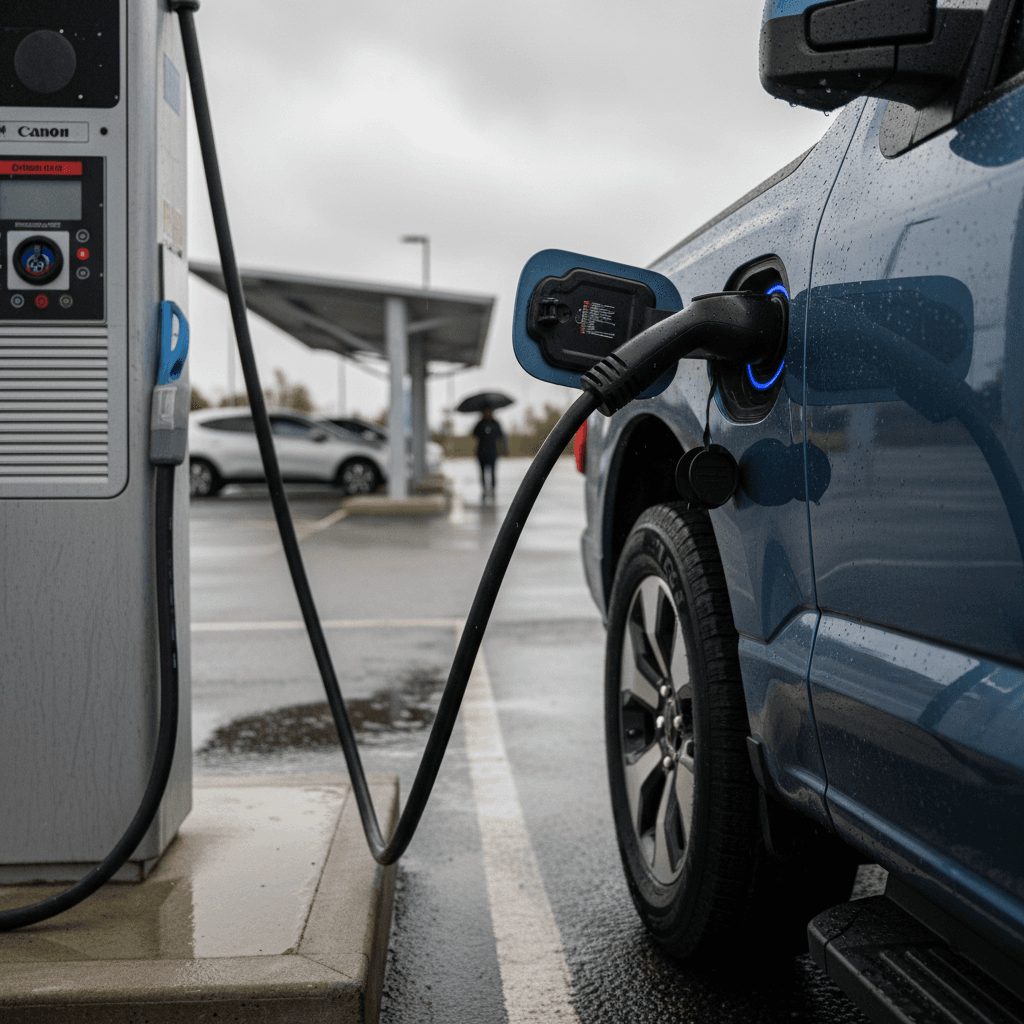
Living happily with a Lightning is mostly about where you plug in. With home Level 2 charging, this truck is blissfully simple. Without it, you’re living at public chargers with everyone else and scheduling your life around kilowatts.
2025 F-150 Lightning charging times (approximate)
Ford’s own guidance and dealer data give a realistic sense of how long the 2025 Lightning takes to charge in common scenarios.
| Charger type | Battery | Charge window | Time (approx.) | Notes |
|---|---|---|---|---|
| DC fast (150 kW) | Standard | 15–80% | ≈32–44 min | Shorter on warm battery, strong charger; longer in cold weather. |
| DC fast (150 kW) | Extended | 15–80% | ≈38–41 min | Higher capacity, similar peak power = slightly longer session. |
| Level 2, 80A (Ford Charge Station Pro) | Standard | 15–100% | ≈10 hrs | Overnight fill from nearly empty. |
| Level 2, 80A | Extended | 15–100% | ≈8–10 hrs | Realistically still an overnight charge for most owners. |
| Level 2, 32A mobile charger | Either | 15–100% | 13–19 hrs | Fine for lower daily mileage if you plug in every night. |
Actual times depend on temperature, state of charge, and the charger’s real output.
Set yourself up for easy Lightning charging
1. Install a 240V Level 2 charger at home
A dedicated 40–80 amp Level 2 circuit turns your Lightning into a “fill every night” appliance instead of a weekly project. This is the single biggest quality‑of‑life upgrade you can buy.
2. Learn your local fast chargers
Scout nearby DC fast chargers along your regular routes, especially if you tow or take frequent road trips. Check reliability in apps like PlugShare before you plan a big drive.
3. Use scheduled charging
The truck and many home stations let you schedule charging for off‑peak hours. That can dramatically cut your electric bill and reduce strain on the grid.
4. Watch state of charge when towing
When you’re towing, treat 10–80% as your usable window. Below 10% and above 80% the charge curve slows, which can turn a quick stop into an afternoon.
Public charging expectations
Interior, tech, and BlueCruise
Climb into a 2025 F‑150 Lightning and it feels reassuringly familiar. It’s classic modern F‑150: big upright dash, big knobs, big storage, and a seating position that says, “I own several YETI coolers.” The difference is the screens. Even mid‑level trims bring a 12‑inch touchscreen and full digital cluster; upper trims swap in a vertical 15.5‑inch display and richer graphics.
Cabin and tech highlights
From cloth‑seat work truck to rolling lounge
Comfort & materials
XLT trims get heated cloth seats and a practical, hard‑wearing cabin. Flash and Lariat upgrade to ActiveX or leather upholstery, power seats for both front passengers, and a much more premium feel.
Screens & infotainment
SYNC 4 with a 12‑inch touchscreen is standard; upper trims add a 15.5‑inch vertical display, Bang & Olufsen audio, wireless phone charging, and a genuinely modern user experience compared with many legacy trucks.
BlueCruise hands‑free driving
Ford’s BlueCruise system can handle steering, speed, and lane‑keeping on mapped divided highways while you keep your eyes up. Version 1.4 in 2025 is smoother and less twitchy than early iterations, and subscription options are more flexible.
BlueCruise fine print
Ride, handling, and performance
If you’ve never driven an electric truck, the first Lightning launch will reset your expectations. There’s no rev‑up, no gear hunting, just a shove. Even standard‑battery trucks deliver 452 hp and 775 lb‑ft of torque. Extended‑range versions hike that to up to 580 hp with the same wall of torque. Official 0–60 mph times dip under four seconds on some trims, which is hilariously quick for a full‑size pickup.
Everyday driving
- Ride quality: The independent rear suspension and battery‑pack mass low in the chassis give the Lightning a planted, almost SUV‑like ride. It’s still a truck, empty beds can bobble over sharp bumps, but it’s calmer than many gas F‑150s.
- Noise: The absence of engine noise turns up the volume on wind and tire roar, but overall the cabin is impressively quiet on the highway.
- One‑pedal driving: You can dial in strong regenerative braking and drive mostly with the accelerator in town, which quickly becomes addictive.
When you drive it hard
- Handling: The low center of gravity helps in corners, but this is still a big, heavy truck. Respect physics and smooth inputs.
- Braking: Regeneration does a lot of the work, but the friction brakes feel linear and confidence‑inspiring.
- Performance vs. range: Repeated hard launches and high‑speed runs will eat into range. The truck is quick enough that you’ll want to show it off, just remember the battery is watching.
Ownership costs and used-market reality
Sticker shock is real: 2025 F‑150 Lightning prices have inched up, while some equipment has gone in the other direction. But total cost of ownership tells a friendlier story. Electricity is typically cheaper than gas on a per‑mile basis, maintenance is lower without oil changes or exhaust systems, and many owners can stack federal or state incentives on top.
Cost picture: new vs. used Lightning
Where Recharged fits in
Ready to find your next EV?
Browse VehiclesChecklist for buying a used F-150 Lightning
Confirm battery state of health
Ask for a recent battery health report, not just range estimates from the dash. With Recharged, this is built into the Recharged Score so you know exactly what you’re buying.
Check fast‑charge history
Frequent DC fast charging isn’t a deal‑breaker, but it can slightly accelerate degradation. Look for a mix of home Level 2 and fast charging if the seller has history.
Inspect tires, brakes, and suspension
EV weight is hard on consumables. Make sure the truck hasn’t chewed through tires and suspension components prematurely from heavy towing or overloading.
Verify towing and Pro Power packages
Not every Lightning has Max Trailer Tow or the full 9.6 kW Pro Power system. Confirm the exact packages and capacities instead of assuming from marketing photos.
2025 F-150 Lightning vs. Cybertruck, Silverado EV & others
Where the Lightning still wins
- Familiarity: It looks and feels like a normal F‑150, which matters if your HOA, job site, or personal taste isn’t ready for sci‑fi geometry.
- Usability: The Mega Power Frunk, Pro Power outlets, and a conventional bed make it easy to integrate into real work.
- Dealer and service network: Ford’s footprint is massive. Love or hate dealerships, support is easier to find than for some EV startups.
- Driving experience: Smooth, quiet, fast enough to giggle without trying to be a spaceship.
Where rivals bite back
- Tesla Cybertruck: Offers impressive range and performance in some trims, plus Tesla’s Supercharger access. But styling, practicality, and build quality are polarizing.
- Chevy Silverado EV / GMC Sierra EV: Strong range and towing claims, clever mid‑gate bed flexibility, and competitive pricing in some trims.
- Ram 1500 REV & plug‑ins: Ram’s upcoming EV and plug‑in hybrids target buyers who tow long distances and want gasoline safety nets.
- Price pressure: New entries and aggressive discounts on rivals mean you can’t assume the Lightning is the automatic value pick anymore.
Who the 2025 F-150 Lightning is (and isn’t) for
The 2025 F‑150 Lightning is a terrific truck, if your life fits its charging and range envelope. For the right owner, it’s quieter, smoother, and more capable day‑to‑day than a gas F‑150, with the party trick of powering your stuff when the lights go out. For the wrong owner, it’s an expensive science project constantly searching for a fast charger.
You’ll love the 2025 Lightning if…
And you may want to look elsewhere if…
Great fit
- You can install Level 2 home charging or have reliable workplace charging.
- Your typical day is under 150 miles, even in winter.
- You tow occasionally, not constantly, and mostly under 7,000 lbs.
- You value quiet, smooth power and modern tech more than V8 noises.
- You like the idea of using your truck as a backup power source.
Think twice
- You tow heavy trailers long distances multiple times a month.
- You can’t install home charging and public infrastructure near you is sparse or unreliable.
- Your budget tops out well below the current new‑truck pricing, even with incentives.
- You need a basic work truck that will live far from major charging corridors.
Viewed coldly, the 2025 Ford F-150 Lightning is not the screaming bargain that early reviewers saw in 2022. Prices are higher, some toys have vanished into option sheets, and rivals have arrived with their own compelling tricks. But if you play to its strengths, home charging, realistic daily mileage, occasional towing, the Lightning remains the most approachable, best‑sorted electric pickup you can buy. If you’re value‑minded, a carefully vetted used Lightning with documented battery health from a marketplace like Recharged may be the sweetest spot of all: less money, more truck, and no surprises hiding in the pack.