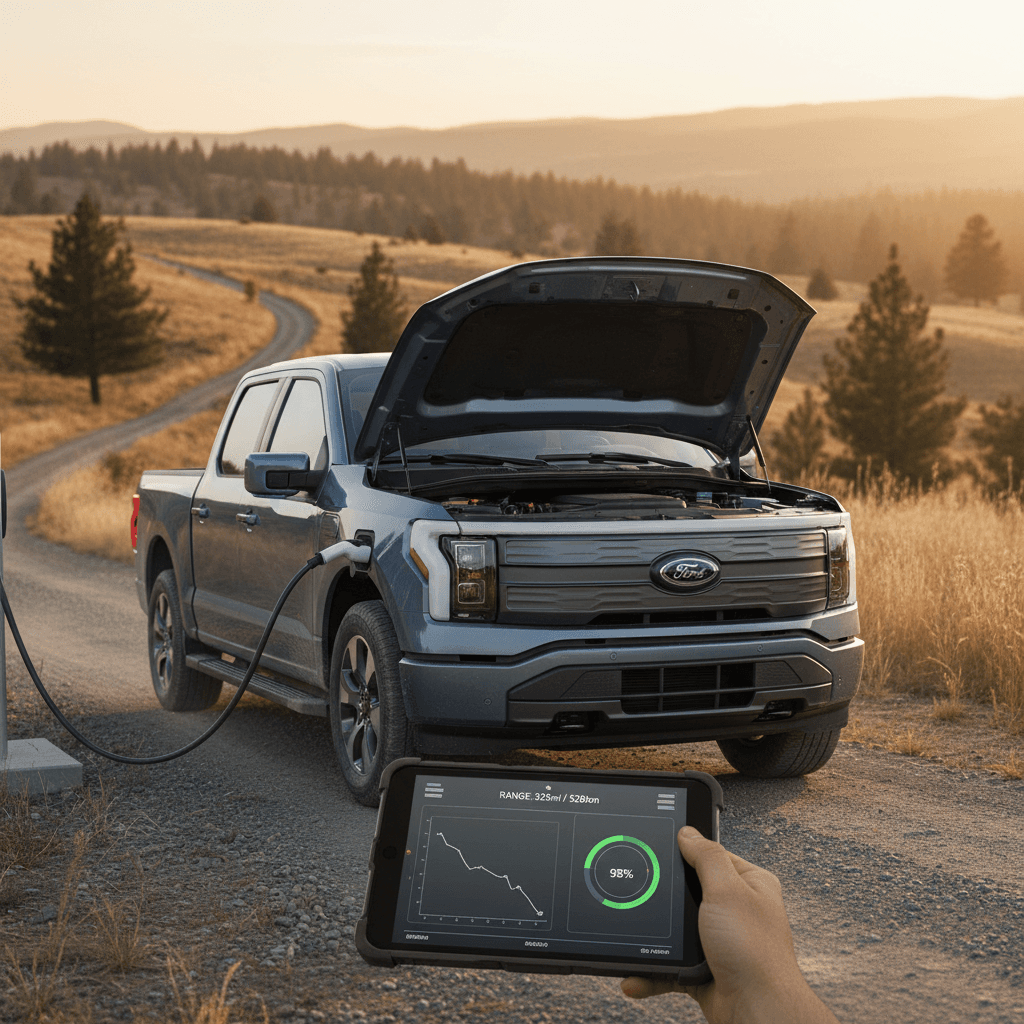
If you’re looking up a 2025 Ford F-150 Lightning range test, you’re probably asking two questions: How far will it really go in the real world, and does that change if you tow, haul, or shop used? With electric pickups, those answers matter far more than a brochure EPA number.
Key takeaway up front
Why 2025 F-150 Lightning range tests matter more than ever
The 2025 model year sits in an interesting spot for the F-150 Lightning. Ford has tightened the trim mix, focused on higher-content trucks, and kept the headline EPA range figures, up to 320 miles on the Extended Range battery and about 240 miles on the Standard Range pack. But those official ratings only tell you how the truck performed on a lab cycle. They don’t tell you what happens at 70 mph into a headwind with a camper on the hitch, or what a used Lightning with a few years of fast charging under its belt will do on a February road trip.
This guide pulls together what we know from EPA data, independent media testing of Lightning highway and towing range, and physics that don’t change from one model year to the next. The goal: give you realistic expectations for 2025 Lightning range tests, whether you’re cross‑shopping new trucks or evaluating a used one on Recharged.
2025 F-150 Lightning range at a glance
EPA vs. real-world: How far the 2025 Lightning really goes
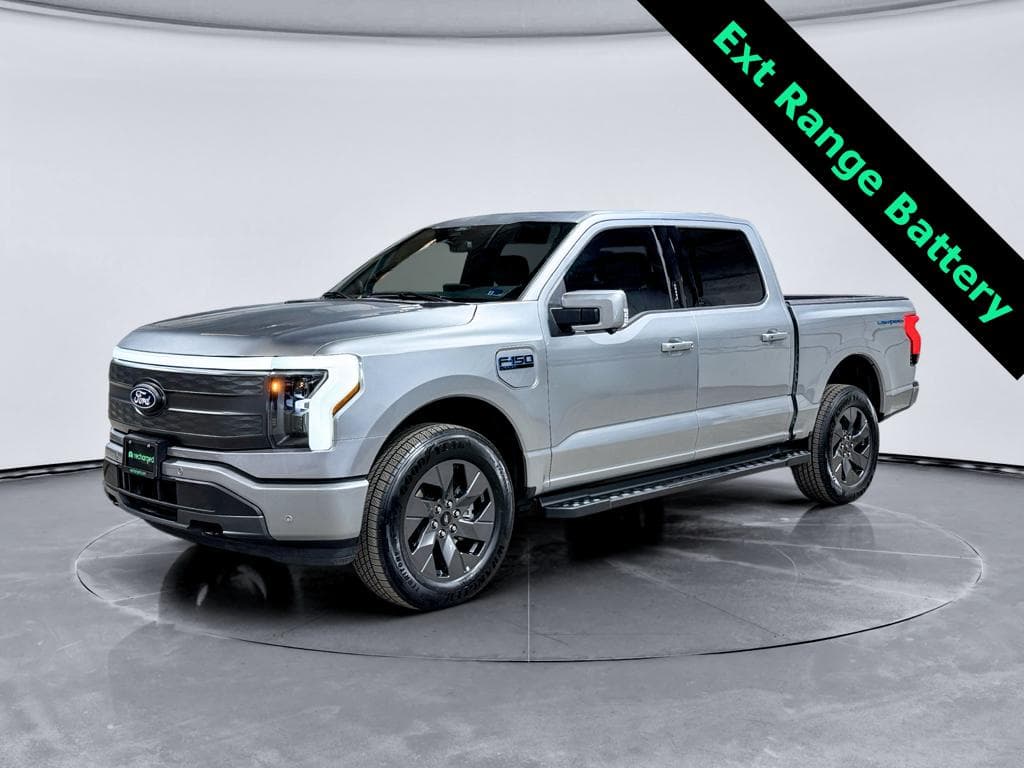
Ford and the EPA rate the 2025 Lightning between 240 and 320 miles of range depending on configuration. Standard Range (roughly a 98 kWh pack) lands around 240 miles, while Extended Range packs (131 kWh usable class) are rated around 300–320 miles on well‑equipped trims like Flash, Lariat and Platinum.
2025 F-150 Lightning EPA-rated range by configuration
Approximate EPA combined range ratings for common 2025 trims. Exact figures vary slightly with wheels, options and region.
| Trim (2025) | Battery | Driven wheels | EPA combined range |
|---|---|---|---|
| XLT / STX / Pro | Standard Range (~98 kWh) | AWD | ≈240 miles |
| Flash | Extended Range (~131 kWh) | AWD | ≈300 miles |
| Lariat ER | Extended Range (~131 kWh) | AWD | ≈320 miles |
| Platinum ER | Extended Range (~131 kWh) | AWD | ≈300 miles |
Use these as best-case numbers. Real-world highway, towing, or winter driving will reduce them.
Independent testers have already shown the pattern: a big, squared‑off truck will almost never match its combined‑cycle rating on the highway. Earlier Lightning Extended Range models rated at 300–320 miles typically delivered about 220–250 miles at a steady 70 mph in media range tests, and sometimes less with big wheels or headwinds.
Don’t benchmark off the best case
Highway range test: 70 mph results and what affects them
When you run a real 2025 Ford F-150 Lightning range test at 70 mph, you’re mostly testing aerodynamics and battery size. The electric powertrain is efficient; it’s pushing a 6,000‑plus‑pound brick through the air that costs energy.
What shapes your 70 mph range
Same truck, same day, very different results depending on how you drive and equip it.
Speed
The single biggest factor. Going from 65 to 75 mph can easily cost you 15–20% of your range. Above 70 mph, aerodynamic drag dominates.
Wind & elevation
Headwinds and long climbs act like invisible trailers. A stiff headwind or sustained grade will move you toward the lower end of your range estimate.
Wheels & tires
Big wheels and aggressive all‑terrain tires look right on a truck but can knock 5–10% off your highway efficiency compared with smaller wheels and street tires.
Translating earlier Lightning highway tests and the latest 2025 EPA numbers into practical guidance, here’s what many owners should expect from a full charge to about 5–10% remaining at a steady 70 mph, not towing:
- Standard Range (≈240‑mile EPA): plan on roughly 150–180 miles at 70 mph in mild temps.
- Extended Range (≈300‑mile EPA): expect around 200–230 miles at 70 mph in mild temps.
- Extended Range high‑trim (≈320‑mile EPA): in the best case you might see 230–250 miles at 70 mph, but 210–230 miles is a safer assumption.
How to run your own honest highway test
Towing & payload: How fast range drops when you work the truck
With the Extended Range battery, the 2025 F-150 Lightning can tow up to 10,000 pounds. On paper, that matches a lot of gas half‑tons. In reality, electric trucks pay for that capability in range. In independent towing tests with earlier Extended Range Lightnings pulling a ~6,100‑lb camper at 70 mph, range fell from about 300 EPA miles to roughly 100 miles between charges, about one‑third of the rated figure.
Towing a trailer
A tall, boxy trailer increases frontal area and drag dramatically. With a 5,000–8,000 lb camper or enclosed trailer, plan on 40–60% of your normal highway range. For many 2025 Lightnings, that means 90–150 miles between fast‑charge stops at 65–70 mph.
For long‑distance towing, it’s critical to map fast chargers that are easy to access with a trailer, or plan to briefly drop the trailer for charging.
Hauling in the bed
Payload, by itself, is less punishing. A few hundred pounds of tools or lumber mostly add weight, not frontal area. You might see 5–15% less range at highway speed with a full bed, depending on how high the load sticks up and how fast you’re driving.
Low, dense loads (bricks, bags of concrete) hurt less than tall, bulky ones (appliances, furniture strapped above the cab).
Serious towing = serious planning
Cold weather, heat and HVAC: Winter range tests explained
Cold weather hits every EV, and trucks are no exception. Battery chemistry slows down, the pack needs to be heated, and you’re moving a lot of cold air underneath and around the truck. Real‑world winter testing of earlier Lightnings and similar‑size EV pickups shows that a bitter‑cold highway trip can trim 25–35% of your range, even without snow on the road.
Why your winter range test looks so different
Three things that punish Lightning range when temperatures drop.
Cold battery
Below freezing, the pack holds and delivers less usable energy. The truck will spend some power warming the battery, especially on short trips.
Cabin heat
EVs use electric resistance or heat‑pump systems to warm the cabin. On highway runs in very cold weather, cabin heat alone can cost 5–10% of your pack.
Snow & slush
Snowy roads add rolling resistance. Combine that with winter tires and you’ll see another 5–10% hit at a given speed.
Precondition whenever you can
Battery packs, trims and range: 240 vs 300 vs 320 miles
For 2025, the Lightning lineup in the U.S. still revolves around two battery sizes: a roughly 98 kWh Standard Range pack and a larger Extended Range pack around 131 kWh. Ford pairs these packs with specific trims, so you’re not just choosing a battery, you’re choosing a whole truck.
2025 Ford F-150 Lightning battery & trim basics
Where the Standard Range and Extended Range batteries typically show up in the 2025 lineup.
| Trim | Battery | EPA range ballpark | Best for |
|---|---|---|---|
| Pro / STX / some XLT | Standard Range | ≈240 miles | Local use, fleets, shorter commutes, regular charging at home or depot |
| Flash | Extended Range | ≈300 miles | Mixed duty with some road trips, lighter towing, daily driving |
| Lariat ER | Extended Range | ≈320 miles | Max range for personal use, frequent long drives, occasional towing |
| Platinum | Extended Range | ≈300 miles | Top luxury but slightly lower range than Lariat due to wheels/features |
Always confirm the exact battery and EPA range for the specific VIN you’re considering, especially on the used market.
Which battery should you target?
4 real-world driving scenarios and what range to expect
Everyday scenarios for a 2025 Lightning Extended Range
1. Suburban commuter
30–50 miles per day of mixed driving, mild weather, mostly empty bed. You’ll rarely use more than <strong>15–25% of the pack</strong> in a day. Even a Standard Range truck is overkill here, and you can charge just a few nights a week.
2. Weekend Home Depot warrior
Short hops with a loaded bed of lumber, tools or landscaping supplies. Expect range to drop <strong>5–15%</strong> versus empty, depending on speed and load height. In practice, you’ll still be operating comfortably within your daily range window.
3. Family road trip
Four people, luggage, 70 mph freeway, mild weather. A 320‑mile Lariat ER might realistically deliver <strong>210–240 highway miles</strong> between 10–80% state of charge. Plan charging stops every 150–190 miles to stay in the fast‑charging sweet spot.
4. Towing a camper
6,000–8,000 lb travel trailer at 65–70 mph. Expect <strong>90–140 miles</strong> between quick‑charge stops, depending on winds and terrain. This is where planning your route around accessible DC fast chargers becomes mission‑critical.
How to maximize F-150 Lightning range in everyday use
The good news: with a few habits, you can shift your personal range test results much closer to the top of the realistic band. You can’t fix physics, but you can work with it.
Seven practical ways to stretch your Lightning’s range
None of these require babying the truck, you’ll just be driving smarter.
Moderate your speed
Keeping highway speeds to 65–70 mph instead of 75–80 mph is huge. On a boxy pickup, that alone can be worth an extra 20–40 miles of range.
Use preconditioning
Set departure times and preheat while plugged in so the battery and cabin are warm before you roll, especially in winter.
Smart climate control
Use seat and wheel heaters instead of cranking cabin heat. In summer, avoid extreme AC settings; use recirculate once the cabin is cooled.
Stay in the sweet spot
On road trips, think in terms of 10–80% charging windows. Shorter, more frequent fast‑charge stops are faster overall than deep charges to 100%.
Choose Eco/Normal wisely
Eco or Normal modes soften throttle response and can reduce power draw. Use Sport sparingly unless you truly need that instant shove.
Plan charging with the trailer in mind
When towing, favor chargers with pull‑through access or plenty of space to maneuver, even if they’re a few miles off the most direct route.
Fast charging and battery health
Range and used F-150 Lightnings: What shoppers should know
By 2026, a lot of early F-150 Lightnings, 2022 through 2025 model years, are already making their way into the used market. That’s good news if you want a capable electric truck without a new‑truck price, but it also raises the question: how much range has the battery lost?
Battery health & degradation
Modern EV packs, including the Lightning’s, generally age better than most shoppers fear. Many early trucks show only modest capacity loss in their first 3–5 years, assuming reasonable charging habits.
That said, hard use, constant fast charging, extremely high mileage, heavy towing in hot climates, can accelerate degradation. Two identical 2025 Lightnings can have very different remaining range by 2030.
How Recharged helps you see real range
Every used EV on Recharged comes with a Recharged Score Report that includes verified battery health diagnostics, not just an odometer reading and a guess. Our equipment reads the pack’s usable capacity and fast‑charge history so you know how much real‑world range you’re likely to get.
That makes it much easier to compare, say, a 2023 Lightning Lariat ER with 50,000 miles to a newer 2025 Flash with 20,000 miles, on actual battery health, not just model year.
Thinking about a used Lightning?
Ready to find your next EV?
Browse Vehicles2025 F-150 Lightning range test: FAQs
Frequently asked questions about 2025 F-150 Lightning range tests
Bottom line: Is the 2025 F-150 Lightning’s range enough?
Viewed through a spec sheet, the 2025 Ford F-150 Lightning is a 240–320‑mile electric truck. Viewed through real‑world range tests, it’s more honest to think of it as a roughly 170–230‑mile highway truck when empty, and a 100–150‑mile truck when working hard with a trailer. Neither is a flaw; they’re simply the physics of pushing a big pickup through the air with electrons instead of gasoline.
If your life is mostly local driving with occasional road trips, and you’re willing to plan charging on the latter, the Lightning’s range is genuinely workable, especially with the Extended Range pack. If you live at the intersection of heavy towing, long distances and harsh winters, you’ll need to approach it with your eyes open, realistic expectations, and good charging tools.
On the used market, that nuance matters even more. A truck with strong battery health and a transparent history can still deliver excellent real‑world range years after its first owner. That’s exactly why Recharged pairs every used Lightning with a Recharged Score Report, financing options and EV‑savvy support, so you can pick the right truck, understand its true range today, and enjoy the upside of electric torque without guessing what you’re getting.