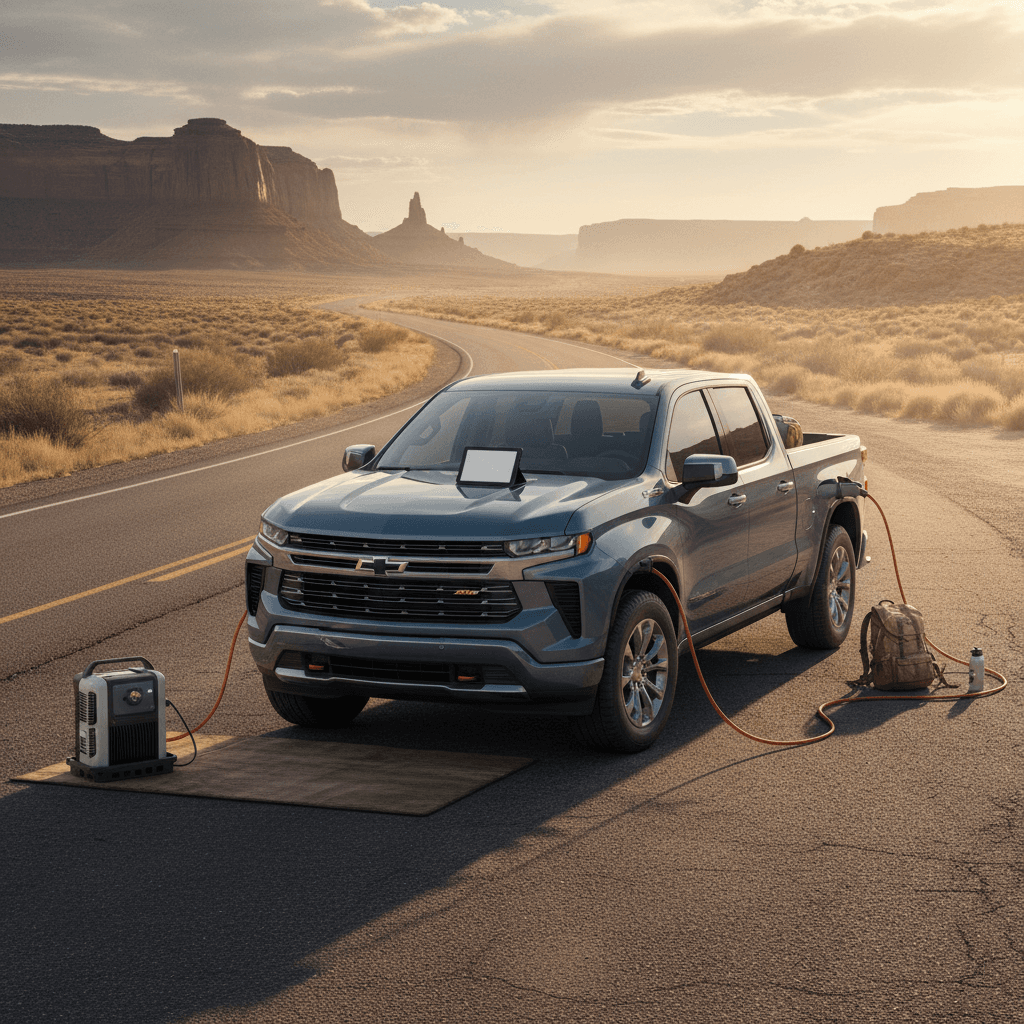
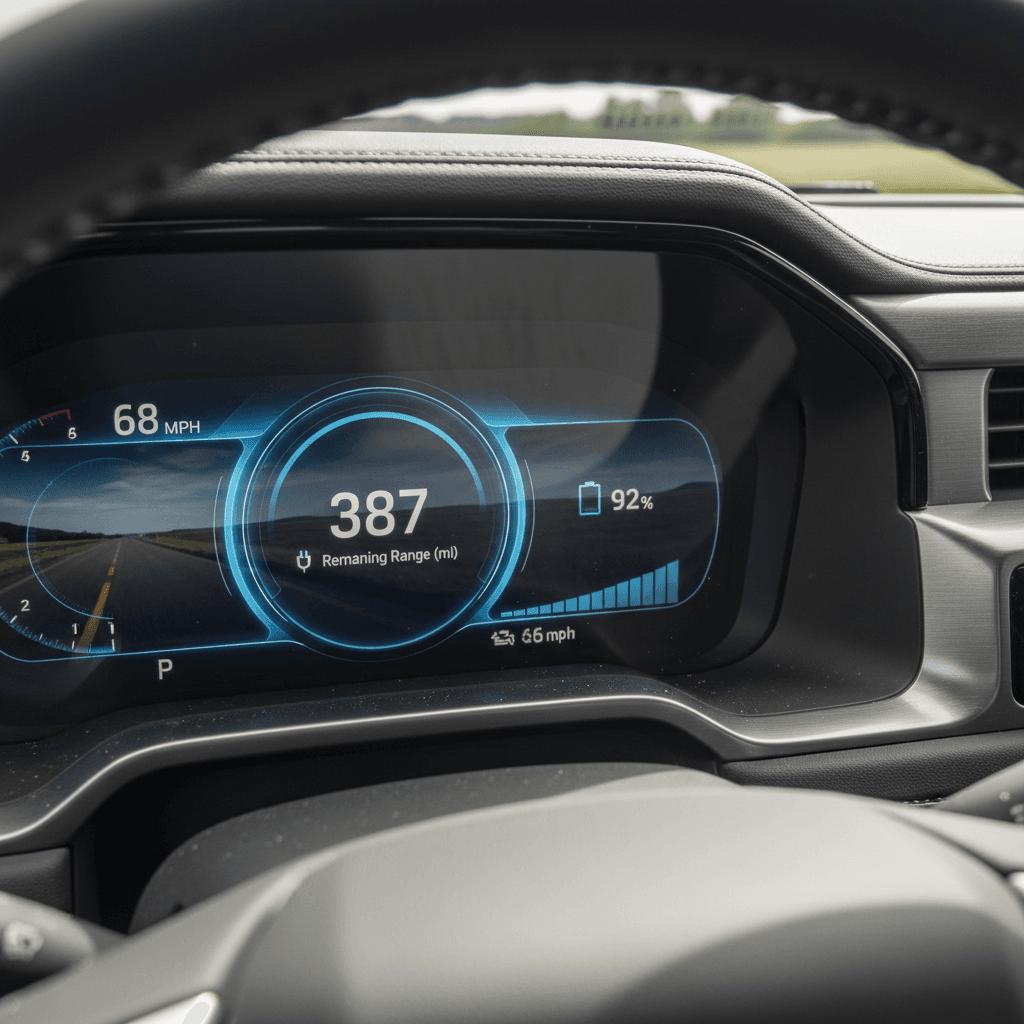
If you’re looking at a 2025 Chevy Silverado EV, you’re probably asking one question before anything else: **how far will it really go on a charge?** On paper, the Silverado EV is a range monster, with some trims cresting 480–490 miles of EPA-estimated range. But real-world range tests tell a more nuanced story, especially once you factor in highway speeds, towing, weather, and payload.
Why this range test matters
2025 Silverado EV range at a glance
Headline Silverado EV range numbers
Those numbers span everything from a relatively affordable **Standard Range Work Truck (WT)** to a long-legged **Max Range** pack aimed at fleets and high-mileage drivers. The important thing for you is not just the biggest headline number, but how **your** likely use case, commuting, jobsite driving, long highway stints, towing, maps onto real-world range.
EPA range ratings for the 2025 Silverado EV
For 2025, Chevrolet expanded the Silverado EV lineup and pushed range higher at the top end. Here’s how the EPA-estimated figures shake out for the main trims and battery packs available in the U.S. market:
2025 Silverado EV EPA-estimated range by trim
Official EPA or GM-estimated range figures for the 2025 Silverado EV lineup (on a full charge, under standardized test conditions).
| Trim | Battery pack | Drive type | EPA / GM-est. range | Notes |
|---|---|---|---|---|
| WT (Work Truck) Standard Range | Standard Range | AWD | 282 mi | New lower-cost battery, fleet + retail availability |
| WT Extended Range | Extended Range | AWD | 422 mi | Higher capacity pack for fleets, strong towing capability |
| WT Max Range | Max Range | AWD | 492 mi | Class-leading range for an electric truck |
| LT Extended Range | Extended Range | AWD | 408 mi | Core retail trim with dual motors |
| LT Extended Range Premium | Extended Range | AWD | 390 mi | Larger wheels, added features reduce range |
| RST Extended Range | Extended Range | AWD | 390 mi | Performance-oriented, big wheels and equipment |
| RST Max Range | Max Range | AWD | 460 mi (GM est.) | GM estimate; final EPA label may vary slightly |
Actual range will vary based on speed, temperature, load, terrain and driving style.
EPA vs GM-estimated
It’s also worth remembering that the Silverado EV is a **big, heavy truck with a huge battery pack**, roughly in the 165–200 kWh usable range depending on trim. That’s how Chevy gets to numbers like 408–492 miles, but it also means you’re moving a lot of mass, and that shows up in energy consumption once you leave the lab cycle.
Real-world range tests: what independent tests show
Independent testers started with the 2024 Silverado EV, and those results give us an excellent preview of what 2025 trucks will do in the real world, since the fundamental battery and aero package are shared.
- A 2024 Silverado EV RST First Edition, rated at ~450 miles, managed **484 miles** on a mixed real-world range test, beating its EPA rating by more than 30 miles.
- In Car and Driver’s 75‑mph highway test, the Silverado EV RST became one of the only EVs to exceed **400 miles at sustained interstate speeds** while also setting a record for fast-charging performance.
- For the 2025 LT Extended Range, early highway testing has come in around **310 miles at a steady 70–75 mph**, versus a 390‑mile EPA label, illustrating how aggressive highway driving clips range on the less aero-optimized trims.
Why the RST overachieves on range tests
When you translate those tests into **miles per kWh**, you’re generally looking at roughly **1.7–2.0 mi/kWh** for the Silverado EV depending on trim and conditions. That’s not efficient compared with a compact crossover EV, but for a nearly 9,000‑pound, full-size pickup, it’s right in line with expectations, and the oversized battery gives you the absolute range that matters if you’re covering serious ground.
Highway vs city driving: how it changes your range
Highway driving (70–75 mph)
- Expect **20–30% less range** than the EPA number on many trims if your driving is mostly fast interstate travel.
- The LT Extended Range’s ~390‑mile EPA range turning into ~310 highway miles is a good rule-of-thumb example.
- Big wheels and all-terrain tires on some packages add drag and rolling resistance, shaving additional miles off a charge.
City & mixed driving
- Stop‑and‑go driving actually helps EVs, because of **regenerative braking** and lower aero drag.
- In moderate temperatures and suburban speeds, seeing something close to the official EPA range, especially on Max Range and Extended Range packs, is realistic.
- Shorter daily drives also mean you’re less likely to run the pack all the way down, which is healthier for battery longevity over time.
Dial in your cruising speed
Temperature matters, too. Like every EV, the Silverado EV will use extra energy heating or cooling the cabin and battery pack. In very cold weather, a 20–30% winter penalty is normal, especially for short trips where the truck never fully warms up. That’s why it’s smart to think about your **worst‑case winter highway range**, not just the best-case EPA figure.
Towing, hauling and bed load: impact on range
If you’re looking at a Silverado EV, chances are you care about what happens when you’re doing real truck work, towing, hauling, or running heavy with tools and equipment. This is where **range test numbers and real-world experience diverge the most**.
How towing and load affect Silverado EV range
Think in scenarios, not single numbers.
Light utility trailer
Example: 1,500–3,000 lb landscaping or utility trailer.
- Expect roughly **25–35% range loss** at 60–65 mph.
- Extended Range WT (422 mi EPA) might see closer to 260–300 real miles.
Mid-size travel trailer
Example: 4,500–7,000 lb camper with decent aero.
- Real-world tests of similar EV trucks show **40–50% range loss** on the highway.
- Plan around **200–230 miles** between charges on the bigger packs.
Max tow / high frontal area
Example: tall box trailer, enclosed car hauler, or near‑max tow.
- Aero drag and weight can cut range by **50% or more**.
- Even a 492‑mile Max Range WT can be effectively a **200‑mile truck** when worked flat‑out at 70 mph.
Don’t plan towing around EPA numbers
On the flip side, the Silverado EV’s **instant torque and low center of gravity** make it an excellent towing platform dynamically. The challenge isn’t whether it can tow, it’s how often you’re willing to stop at DC fast chargers and whether there’s adequate charging near your favorite campgrounds and job sites.
Charging strategy: how to actually use that range
Range on paper is only half the story; the other half is **how quickly you can add range back**. Here, the Silverado EV is a standout. In independent testing, early trucks averaged just under **200 kW from 10–90% state of charge**, making them some of the fastest-charging EVs on sale.
Smart charging habits for Silverado EV owners
1. Live between 10–80% on road trips
The Silverado EV charges quickest when the battery is low. On long drives, it’s usually faster to **charge more often but to a lower state of charge** than to sit and wait for that last 20%.
2. Use DC fast charging strategically
Take advantage of the truck’s strong DC speeds when you’re covering distance, then rely on **Level 2 charging at home or work** to refill cheaply and gently the rest of the time.
3. Precondition before fast charging
If available in your route planner, enable **battery preconditioning** before a DC fast‑charge stop. A warm pack accepts higher power, cutting stop times and improving average speed.
4. Respect the battery at home
For daily use, setting a **charge limit around 70–80%** and avoiding frequent deep discharges will be better for long-term battery health, especially if you plan to keep the truck or eventually sell it used.
5. Plan towing stops conservatively
When towing, assume you’ll arrive with **15–20% remaining**, not 5%. That buffer protects you from detours, weather swings, and closed chargers.
Home charging and used ownership
Ready to find your next EV?
Browse VehiclesSilverado EV vs other electric trucks on range
Range testing doesn’t happen in a vacuum. To understand how good the 2025 Silverado EV really is, you need to stack it up against other full-size electric pickups like the Ford F‑150 Lightning, Rivian R1T, and GMC Hummer EV.
How the Silverado EV’s range compares to other EV trucks
Approximate maximum EPA range figures for major electric pickups available in North America, for context.
| Model | Max EPA / est. range | Battery size (approx.) | Notable range-test takeaways |
|---|---|---|---|
| Chevy Silverado EV WT Max Range (2025) | 492 mi | ~200 kWh | Class-leading EPA range for an electric pickup; designed with fleets and long-haul duty cycles in mind. |
| Chevy Silverado EV RST Max Range (2025, est.) | 460 mi (GM est.) | ~200 kWh | Builds on the strong 2024 RST range performance; likely to deliver 400+ miles in many independent highway tests. |
| Chevy Silverado EV LT Extended Range (2025) | 408 mi | ~170 kWh | High EPA number; early 75‑mph highway results closer to ~310 miles. |
| Rivian R1T Max Pack | ~400 mi | ~149 kWh | Excellent efficiency; some tests show ~370 miles on highway, but smaller pack limits total range vs Silverado. |
| Ford F‑150 Lightning Extended-Range | ~320 mi | ~131 kWh | Solid but clearly behind Silverado EV on outright range, especially when loaded or towing. |
| GMC Hummer EV Pickup | ~381 mi | ~212 kWh | Huge battery, but weight and aero keep efficiency low; real-world highway range often below EPA. |
Exact figures vary by battery, wheels, and options; always check the specific truck you’re considering.
Range vs efficiency
Range tips if you’re considering a new or used Silverado EV
Whether you’re eyeing a **new 2025 Silverado EV** or planning to shop used once these trucks start hitting marketplaces like Recharged in volume, you want to align your **use case** with the right trim and battery. That’s also where battery-health transparency becomes critical.
Match your Silverado EV to your real range needs
Start with your worst days, not your best days.
Daily-driver / light work
- Mostly commuting, errands, and light jobsite duty.
- LT Extended Range or **WT Standard/Extended** is usually plenty.
- Focus on **home charging** and comfort features more than max range.
Road-trip / high-mileage
- Frequent highway trips of 250+ miles.
- Consider **WT Max Range** or **RST Max Range** if budget allows.
- Plan to lean on DC fast charging when away from home.
Frequent towing
- Regularly pulling campers, boats or equipment.
- Buy as much battery as you can justify, **Extended or Max Range** packs.
- Plan for half the EPA number as a **towing range baseline**.
Shopping used on Recharged
- Look for a detailed **battery health report**, not just miles and age.
- Recharged’s Score Report gives a verified view of remaining capacity and expected range.
- Use that data to sanity-check whether the truck still fits your daily and worst‑case needs.
How Recharged can help
FAQ: 2025 Chevy Silverado EV range questions answered
Common 2025 Silverado EV range questions
Bottom line: is the 2025 Silverado EV’s range enough?
Taken in isolation, the **2025 Chevy Silverado EV’s range test results are impressive**. No other electric pickup combines this much usable range with such strong DC fast‑charging performance, especially in the WT Max Range configuration. But like any EV truck, the real story depends on what you’re asking it to do: relaxed commuting and jobsite duty are easy, long‑distance towing at interstate speeds is still demanding.
If you’re honest about your driving pattern, pick the right battery and trim, and support the truck with **sensible charging, preferably anchored by Level 2 at home or work, the 2025 Silverado EV can feel almost overbuilt on range** for day‑to‑day life. And as these trucks work their way into the used market, tools like Recharged’s **battery-health‑backed listings and Recharged Score Reports** will make it much easier to buy with confidence, knowing exactly how much real‑world range you’re getting for your money.