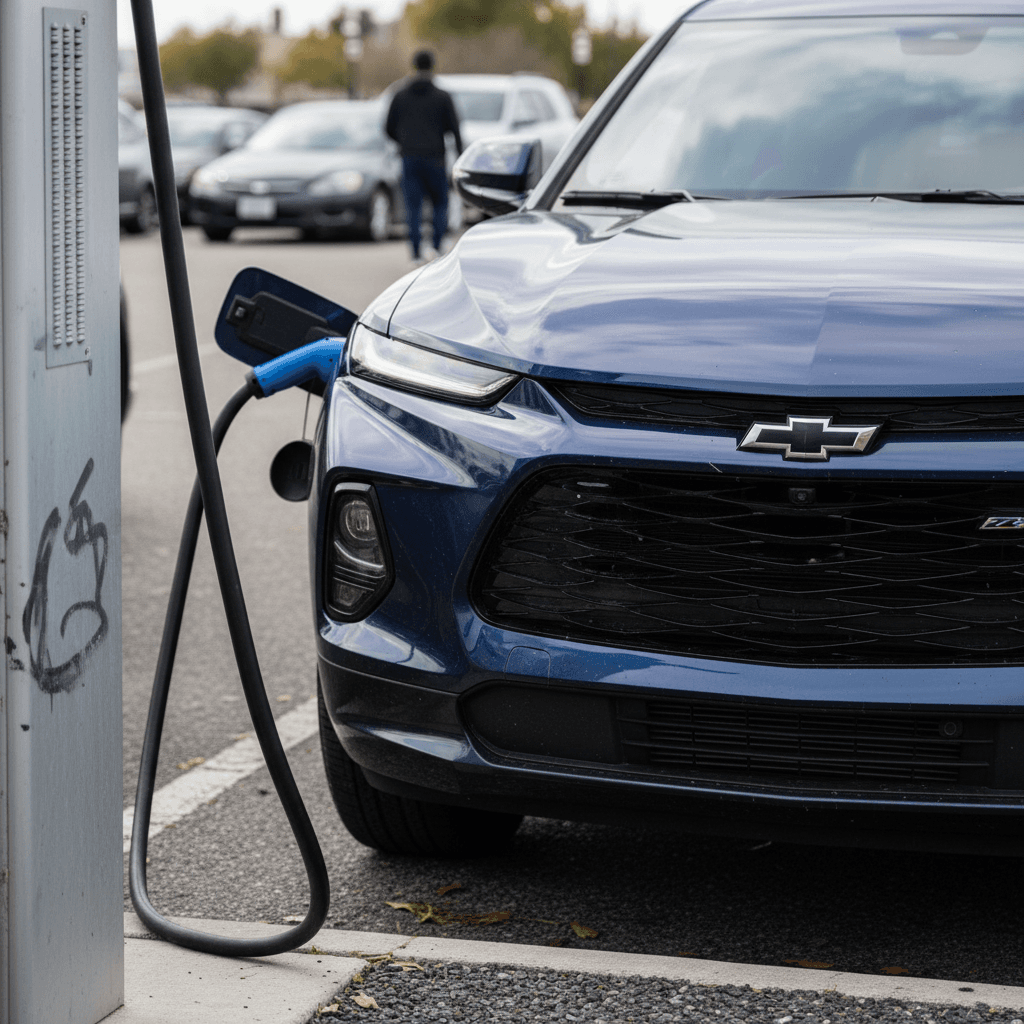
If you’re eyeing a 2025 Chevy Blazer EV, especially on the used market, it’s natural to wonder whether the early software glitches and recalls have been ironed out. The 2024 model had a rocky start, and the 2025 Blazer EV inherits much of that hardware and software. In this guide, we’ll break down real-world reliability data, recalls, owner experiences, and what you should look for before you sign anything.
Why reliability matters more with EVs
Overview: How reliable is the 2025 Chevy Blazer EV?
Early data suggests that the 2025 Chevy Blazer EV is still a work in progress. The 2024 Blazer EV has been rated "much less reliable than average" by at least one major consumer publication, driven largely by software bugs, infotainment glitches, charging issues, and a cluster of recalls. The 2025 model benefits from many of the same fixes and updated software, but it also shares key components, like the Ultium battery pack, drive units, and electronic architecture, so the underlying risk profile is similar.
Blazer EV reliability snapshot (2024–2025)
Key takeaway
Major recalls and safety campaigns affecting 2025 Blazer EVs
Because the 2025 Blazer EV rides on the same basic hardware as 2024 models, it’s swept into several important NHTSA recall campaigns. Before you buy, you’ll want to confirm that all of these have been completed on the specific VIN you’re considering.
Key 2024–2025 Blazer EV recalls
These are some of the most significant campaigns that may include 2025 Blazer EVs. Always run the VIN through the official NHTSA or GM lookup before purchase.
| Issue | Model years affected | Risk | Typical remedy |
|---|---|---|---|
| Parking brake wiring harness | 2024–2025 | Unintended activation or loss of parking brake; potential rollaway or loss of control | Inspect and reroute harness, apply anti‑abrasive tape, and replace if damaged |
| Right front lower control arm | 2024 | Possible fracture leading to loss of control | Inspect and replace lower control arm if defective |
| Rear drive unit electrical fault | 2024 | Loss of drive power while driving | Replace rear drive unit |
| Door striker fracture | 2024 | Door could open while driving | Replace all four door strikers and bolts |
| Various software / infotainment issues | 2024–2025 | No‑start, 12‑volt failures, camera issues, vehicle staying on | Dealer software reprogramming and OTA updates |
Recall status should be verified for every 2025 Blazer EV you consider.
How to check recall status
Common 2024–2025 Blazer EV problems, and what they mean for you
While catastrophic failures are relatively rare, enough owners have documented issues that you should walk into a Blazer EV purchase with your eyes open. Most problems fall into a few buckets: software and infotainment bugs, electronics/12‑volt issues, charging quirks, and a handful of mechanical or body complaints.
Typical Blazer EV trouble spots
What owners and surveys report most often
Infotainment & Google built‑in
Owners report:
- Freezing or flickering main screen
- Disappearing camera guidelines
- Apps rearranging or resetting
- Rear camera randomly blue‑screening
Many of these improve after a full system reflash or later OTA software.
Electrical & 12‑volt issues
On some early builds:
- 12‑volt battery draining or not charging correctly
- Vehicle refusing to go into Drive
- Anti‑theft or high‑voltage warnings
Dealers often replace the 12‑volt battery and update modules.
Charging behavior
Reported issues include:
- Home charging interruptions
- Inconsistent public fast‑charge sessions
- Charge limit slider behaving oddly (e.g., 81% instead of 80%)
Again, many are software‑calibration related, not hardware failures.
Driver‑assistance & braking
Some owners complain about overly aggressive automatic emergency braking at low speeds, enough to feel like a small "whiplash" when pulling into a parking space a bit faster than the system prefers. While that’s not a classic mechanical failure, it can make the vehicle feel unrefined and even uncomfortable in daily use.
Body, trim, and noise
A few owners mention door rattles, trim pieces loosening (like an underbody panel near the rear motor), and a generally hot-running infotainment screen. These are typical first‑generation issues on a new platform but can be annoying if you’re sensitive to squeaks and rattles.
Don’t ignore warning messages
Software updates, TSBs, and how much they’ve helped
The Blazer EV’s story, like many modern EVs, is as much about software as hardware. GM has tackled early issues with a mix of over‑the‑air (OTA) updates, dealer‑installed software, and technical service bulletins (TSBs). One widely discussed bulletin, for example, calls for full "vehicle‑wide module programming" plus an infotainment USB update to clean up many of the worst glitches.
- Owners who receive a full dealer software refresh often report that most day‑to‑day glitches disappear or become rare.
- Some updates are now OTA, but timing is inconsistent; one Blazer EV might see an update months before another identical vehicle.
- A few owners still report lingering quirks, like misbehaving charge limits or occasional camera issues, even after the latest software.
Ask specifically about software history
Owner experiences: a mixed but improving picture
Scan through Blazer EV forums and you’ll see a split personality. Some owners have had a brutal run of warning lights and service visits, while others, especially those who bought later builds or got updates early, report smooth sailing and genuine affection for the vehicle.
"We’ve owned our Blazer EV for months now with zero major issues. After the initial round of software updates, it’s been flawless, and we’d absolutely recommend it."
The good stories
- Owners praising the RS AWD for confident performance and styling.
- Couples running two Blazer EVs in the household with no issues after initial updates.
- Drivers coming from Chevy Volt or Bolt EVs who say this is their favorite GM EV yet.
The frustrating ones
- Repeated "service high‑voltage system" warnings within the first few months.
- Vehicles spending weeks at the dealer while parts or software guidance trickle in.
- Owners feeling like they’re beta‑testing an unfinished product, not driving a fully sorted SUV.
How to read the mixed feedback
How 2025 Blazer EV reliability compares to other EVs
The Blazer EV competes with midsize electric SUVs like the Tesla Model Y, Hyundai Ioniq 5, Kia EV6, and Ford Mustang Mach‑E. All of them have had teething issues, but the Blazer EV has drawn more attention than most for its software stumbles and recall count.
Reliability context: Blazer EV vs. key rivals (early years)
A high‑level look at where the 2025 Blazer EV lands on the reliability spectrum compared with similar EVs in their first few model years.
| Model | Early‑years reputation | Typical pain points | Current outlook (2024–2025) |
|---|---|---|---|
| Chevy Blazer EV | Rough start; below‑average reliability ratings | Software bugs, charging quirks, multiple recalls | Improving with updates, but trust is still being rebuilt |
| Tesla Model Y | Average to slightly below average | Panel gaps, rattles, infotainment reboots | Hardware improved; software generally strong |
| Hyundai Ioniq 5 | Better‑than‑average overall | 12‑volt battery issues, some charging hiccups | Most early issues addressed; aging well |
| Kia EV6 | Similar to Ioniq 5 | Occasional software and charging issues | Generally solid after updates |
| Ford Mustang Mach‑E | Mixed; multiple recalls | Battery contactors, OTA hiccups | Now much more stable, but early cars had headaches |
Remember that all early EVs evolve quickly with updates, today’s reliability may differ from early impressions.
Blazer EV vs. the field
Buying a used Blazer EV? Reliability checklist
If you’re shopping a 2025 Blazer EV used, the difference between a smart buy and a rolling headache often comes down to documentation and inspection. Here’s a focused checklist to use before you commit, whether you’re buying locally or online.
Pre‑purchase reliability checklist for a used Blazer EV
1. Run a full recall and campaign check
Use the VIN to confirm all open recalls have been completed. Ask for proof on dealer or service invoices, not just a verbal "it’s all good."
2. Verify software and module updates
Ask specifically whether the vehicle has had a complete module reprogram and infotainment update. If not, budget time for a dealer visit right after purchase.
3. Review warranty and service history
Look for repeated visits for the same electrical or high‑voltage issue. A one‑time fix that never returns is far less concerning than a pattern of unresolved problems.
4. Inspect for warning lights or messages
On a test drive, watch closely for any "service high‑voltage system" or stability/traction warnings. If they appear, walk away or negotiate only after a dealer has fixed and documented the root cause.
5. Test charging at home and DC fast chargers
If possible, plug into both Level 2 and a DC fast‑charging station. Confirm that charging initiates quickly, maintains a stable rate, and stops cleanly at your chosen limit.
6. Listen for rattles and feel for harsh braking
Drive on a rough road and through a parking lot. Note any excessive interior rattles and whether low‑speed automatic braking feels overly abrupt or unpredictable.
7. Get a third‑party EV health report
Traditional used‑car inspections don’t go deep on EV systems. At Recharged, every vehicle comes with a <strong>Recharged Score Report</strong> that includes verified battery health, charging performance, and a structured reliability review.
Battery health, range, and long-term outlook
One area where the Blazer EV shows promise is its Ultium battery system. So far, the highest‑profile issues have centered more on electronics and software than outright battery pack failures. That’s encouraging, because pack degradation or replacement costs can make or break the long‑term economics of any EV.
Blazer EV battery & range reliability factors
What matters most if you plan to keep it long term
Pack durability
There are relatively few reports of Ultium packs themselves failing in the Blazer EV. That doesn’t mean it can’t happen, but current evidence points more toward control and cooling components, not the cells, as weak spots.
Real‑world range
Owners typically report range close to EPA estimates in mild weather, with the usual drop in cold conditions. Software glitches can temporarily affect state‑of‑charge (SOC) displays, but that’s different from true degradation.
Thermal management
A faulty valve in the battery cooling system has been reported in at least a few cases, requiring part replacement. Once fixed, owners generally report normal operation and no repeat failures.
How Recharged evaluates Blazer EV batteries
Is the 2025 Chevy Blazer EV a good reliability bet?
Viewed strictly through a reliability lens, the 2025 Chevy Blazer EV is a calculated bet, not a sure thing. The underlying Ultium hardware appears fundamentally sound, and many early‑life headaches have been softened by recalls and software updates. At the same time, the model’s record, especially for 2024 builds, shows more than its share of software bugs, electrical quirks, and dealer learning curves.
If you prioritize a completely drama‑free experience, you may be more comfortable in a rival with a cleaner reliability record to date. But if you love the Blazer EV’s design, driving feel, and feature set, a well‑vetted 2025 example, with complete recalls, documented software updates, and a clean service history, can still be a reasonable choice, especially at the right price on the used market.
Where Recharged fits in
Ready to find your next EV?
Browse Vehicles