The 2025 BMW i7 is BMW’s flagship electric sedan: big, quiet, devastatingly quick when you want it to be, and packed with tech that can wow everyone from your kids to your clients. If you’re cross‑shopping a Mercedes‑Benz EQS, Tesla Model S, or Lucid Air, this 2025 BMW i7 review will walk you through what actually matters: range, charging, comfort, costs, and whether this ultra‑lux EV makes sense new or used.
Where the 2025 i7 fits
2025 BMW i7 overview
2025 BMW i7 quick specs
For 2025, the BMW i7 comes in three main flavors in the U.S.: the rear‑drive eDrive50, all‑wheel‑drive xDrive60, and high‑performance M70. All ride on the long‑wheelbase 7 Series body with a large under‑floor battery and an opulent, tech‑heavy cabin. Prices start around the low $100,000s for an eDrive50 and climb toward the mid‑$160,000s for a loaded M70, before options and destination charges.
- Body style: full‑size, long‑wheelbase luxury sedan (5 seats)
- Drivetrains: single‑motor RWD (eDrive50) or dual‑motor AWD (xDrive60, M70)
- Battery: ~105.7 kWh usable, shared across trims
- Charging: up to roughly 195 kW DC fast charging via CCS, 11 kW AC onboard charger
- EPA‑estimated range: roughly 285–321 miles depending on trim and wheel size
Trim sweet spot
Powertrains and performance: eDrive50 vs xDrive60 vs M70
2025 BMW i7 trims at a glance
All fast. Which flavor of fast do you want?
i7 eDrive50 (RWD)
Approx. 449 hp, single rear motor, rear‑wheel drive.
- 0–60 mph around 5.3 seconds
- Most efficient i7 trim
- Smooth, relaxed character, still very quick in everyday driving
i7 xDrive60 (AWD)
536 hp, dual‑motor AWD.
- 0–60 mph in the low‑to‑mid 4‑second range
- Standard air suspension and rear‑axle steering
- Feels effortlessly fast, even at highway speeds
i7 M70 (AWD, performance)
Up to 650 hp, dual‑motor AWD.
- 0–60 mph in about 3.5 seconds
- More aggressive tuning and sound profiles
- Trading some range for serious punch
On paper, every 2025 i7 is dramatically quicker than a traditional gas‑powered 7 Series of just a few years ago. In practice, the difference between the trims comes down to how often you need neck‑snapping acceleration versus how much you value range and price. The eDrive50 is calmer and more efficient, the xDrive60 is the all‑rounder, and the M70 is the autobahn hammer with a slightly smaller real‑world range window.
Everyday driving
In city and suburban use, even the eDrive50 feels overqualified. Instant torque means you dart through gaps in traffic with a toe‑flex, and the air suspension cushions manhole covers and expansion joints. Unless you live for launch‑control videos, you won’t find the base car slow.
Spirited driving
Step up to the xDrive60 or M70 and the i7 shrinks around you more than a 5,000‑plus‑pound sedan should. Rear‑wheel steering helps it feel tidy on a twisty back road, and BMW’s tuning keeps body motions controlled without turning the ride harsh, especially on the right wheels and tires.
Wheel choice matters
Range and battery: how far the 2025 i7 really goes
2025 BMW i7 estimated EPA range by trim
Exact ratings vary slightly with wheel size and options, but this gives you the right ballpark.
| Trim | Drivetrain | Approx. EPA range |
|---|---|---|
| eDrive50 | RWD | Up to ~321 miles |
| xDrive60 | AWD | Roughly 298–314 miles |
| M70 | AWD | Roughly 285–291 miles |
Range estimates are for ideal conditions; expect lower numbers in cold weather or at high speeds.
In independent testing, an xDrive60 has managed just about to match its EPA estimate on the highway, impressive for a big, powerful EV. Think of a real‑world comfort zone of 240–280 miles between charges for most trims if you’re mixing highway and city driving and not hyper‑miling. Drive 80 mph in winter on big wheels, and you’ll see less. Take it easy in mild weather, and 300 miles on a charge is achievable.
Cold‑weather reality check
Charging the 2025 BMW i7: times, networks, and real life
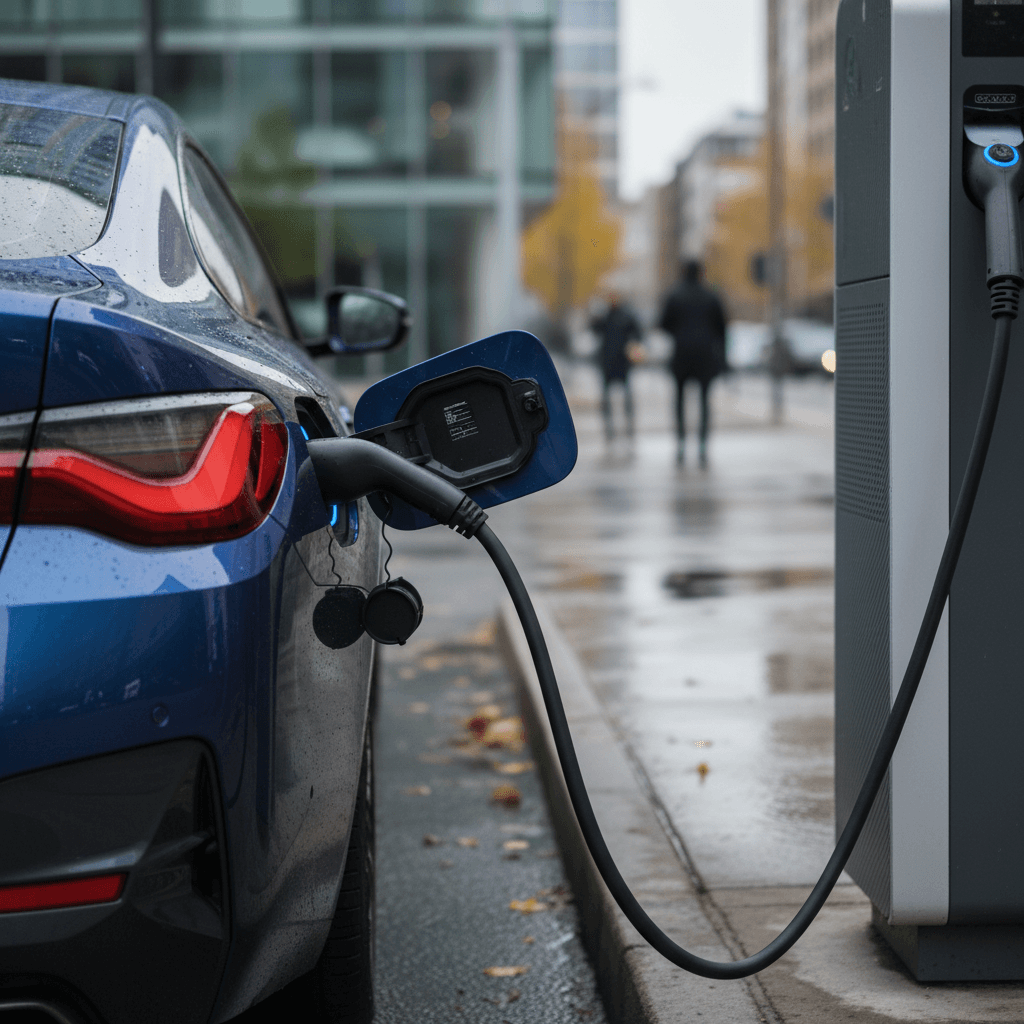
On the numbers, the 2025 i7 is competitive with other big luxury EVs. It supports up to roughly 195 kW DC fast charging on a CCS connector and has an 11 kW onboard AC charger for home or workplace use. BMW’s own estimates and independent testing suggest you can go from about 10% to 80% in roughly 35–40 minutes on a strong DC fast charger, or add around 80–100 miles in about 10–15 minutes when conditions are ideal.
Typical 2025 BMW i7 charging times
Approximate times for planning; actual results depend on temperature, state of charge, and charger quality.
| Charging type | Power | Typical use | Approx. time |
|---|---|---|---|
| Level 1 (120V home outlet) | 1–2 kW | Emergency top‑ups only | 60–70 hours 0–100% (not practical) |
| Level 2 (240V, 32–48A) | 7–11 kW | Home / workplace | ~9–12 hours 0–100% |
| DC fast (public) | Up to ~195 kW | Road trips | ≈35–40 min 10–80%; ~30 min for ~180–200 miles added |
Always prioritize reliable, well‑maintained stations over chasing the biggest kW number on the map.
Complimentary fast charging for 2025 i7 buyers
Dialing in a smart i7 charging strategy
1. Prioritize a solid home Level 2 setup
If you can install a 240‑volt outlet or wallbox, do it. Overnight Level 2 charging turns the i7 into a ‘full tank’ car every morning and minimizes how often you rely on public infrastructure.
2. Learn your local DC networks
BMW partners with Electrify America, but other CCS networks may be more reliable or better located in your area. Spend an evening on PlugShare or similar apps to see what’s nearby and how well it’s maintained.
3. Charge in the middle, not the extremes
The i7, like most EVs, charges quickest between roughly 10% and 60–70% state of charge. On road trips, it’s often faster to do more short stops in that window than sit for a full 0–100% session.
4. Plan for winter and towing
If you’ll regularly carry heavy loads, drive in very cold climates, or tow, build extra time and range buffer into your charging plan. Those conditions can shave significant miles from the estimate.
What about Tesla Superchargers and NACS?
Interior, comfort, and tech: rolling private lounge
This is where the i7 stops being “just another EV” and turns into a lounge on wheels. Up front, you get BMW’s curved dual‑screen setup, one display for instruments, one for infotainment, under a single piece of glass, plus an illuminated Interaction Bar that runs across the dash. Materials are top‑shelf: open‑pore woods, metal trims, and available cashmere‑blend upholstery that feels more boutique hotel than car seat.
Cabin highlights that stand out
Luxury first, tech a very close second.
Executive‑class rear seats
A long wheelbase only makes sense if you use it. Available Executive Lounge seats recline, add leg rests, and can turn the right‑rear spot into your favorite way to fly under 120 mph.
31.3" Theatre Screen
An optional 31.3‑inch 8K‑capable screen drops from the roof for rear passengers, with built‑in streaming and surround sound. Add privacy shades, and charging stops start to feel too short.
Comfort features everywhere
Heated, ventilated, and massaging seats, four‑zone climate control, a panoramic roof, and available Bowers & Wilkins sound options make even sloggy commutes feel special.
iDrive and screens: better than the specs sheet
Driving impressions: what the i7 feels like on the road
The headline: the i7 feels every inch the modern 7 Series, just powered by electrons instead of premium unleaded. It’s whisper‑quiet at highway speeds, and the dual‑chamber air suspension with adaptive dampers soaks up battered pavement without floating. Rear‑axle steering makes parking lots and tight city streets much less intimidating than a 17‑foot luxury barge has any right to be.
Ride and refinement
In Comfort mode, the i7 glides. Road and wind noise are hushed, the powertrain is almost completely silent, and the car isolates you from the worst of the outside world. It’s tuned for long‑distance, low‑stress driving rather than overt sportiness.
Handling and confidence
Flick into Sport and the body tightens up, steering gains weight, and the i7 takes on winding roads with more enthusiasm than its size suggests. It’s not a track toy like some Taycan variants, but it never feels sloppy or overwhelmed.
Watch the curb weight
Ownership costs, incentives, and long-term considerations
Sticker shock is real. A 2025 BMW i7 easily crosses $120,000 once you add the packages that make it special. Over five years, Kelley Blue Book pegs the i7’s cost to own well into six‑figure territory when you factor in depreciation, insurance, maintenance, and financing. This isn’t the EV you buy to save money, it’s the one you buy instead of an S‑Class or long‑range Model S.
i7 ownership cost snapshot (2025 model year)
Incentives and credits
2025 BMW i7 vs EQS, Model S, and Lucid Air
If you’re shopping the 2025 i7, you’re almost certainly eyeballing at least one of these: Mercedes‑Benz EQS, Tesla Model S, and Lucid Air. They all do the luxury EV thing differently.
How the 2025 BMW i7 stacks up against key rivals
Generalized comparison; exact specs and pricing vary by trim and options.
| Model | Strengths | Potential drawbacks |
|---|---|---|
| BMW i7 | Superb comfort, rich cabin, real back‑seat luxury, excellent NVH | Heavier, less efficient than some rivals, eye‑wateringly expensive when loaded |
| Mercedes‑Benz EQS | Very quiet, smooth ride, distinctive design, big trunk (hatchback) | User interface can be polarizing, rear seat not as special as i7’s |
| Tesla Model S | Strong Supercharger access, excellent efficiency, quick performance | Interior fit & finish trails BMW, fewer physical controls, simpler rear seat |
| Lucid Air | Segment‑leading range, sharp handling, airy cabin | Younger brand, smaller dealer/service footprint than BMW |
Choose based on where you spend your time: back seat, driver’s seat, or at the charger.
Who should pick which?
Should you buy a used BMW i7?
Given how quickly high‑end luxury sedans depreciate, a lightly used i7 can be incredibly compelling, especially if you’re more value‑conscious than badge‑conscious. Early‑build 2023–2024 cars share the core hardware with 2025 models, and many spent their early lives as executive demos or lightly used leases with low miles and meticulous servicing.
Key checks before you buy a used BMW i7
1. Battery health and DC fast‑charge history
Ask for a detailed battery health report and how often the car has been fast‑charged. Frequent 100% DC fast charges aren’t an automatic deal‑breaker, but you want to understand how the previous owner used the car.
2. Software, recalls, and service records
Over‑the‑air updates can change everything from charging behavior to driver‑assist features. Verify that all campaigns and recalls have been completed and that scheduled maintenance is up to date.
3. Wheel, tire, and suspension condition
The i7 is heavy and often rides on big wheels. Inspect for wheel rash, uneven tire wear, and any clunks or vibrations over rough roads that could hint at bent wheels or suspension issues.
4. Charging equipment and perks
Confirm which charging cables, adapters, and promotional charging plans transfer to you. Some Electrify America freebies are for the first owner only; others may still apply by VIN or time window.
How Recharged can help with a used i7
Ready to find your next EV?
Browse Vehicles2025 BMW i7 FAQ
Frequently asked questions about the 2025 BMW i7
Bottom line: who the 2025 BMW i7 is for
The 2025 BMW i7 is not the rational choice if you’re simply trying to get into an EV; it’s the rational choice if you want a modern S‑Class experience without ever stopping at a gas pump. It delivers the serenity, space, and technology you expect in a flagship sedan, wrapped around a battery and motor package that can credibly handle long‑haul duty with the right charging plan.
If you care most about outright range and easy access to Tesla’s charging network, a Lucid Air or Model S might edge ahead. But if you value the way a car feels carved from a single block, the way the back seat makes time disappear, and the way the tech mostly supports rather than shouts at you, the 2025 BMW i7 belongs at the top of your test‑drive list, especially as a lightly used example where the steep first‑owner depreciation is already in the rearview. When you’re ready to explore used i7s with verified battery health and expert guidance, Recharged can help you compare options, arrange financing, and have your next flagship EV delivered right to your driveway.