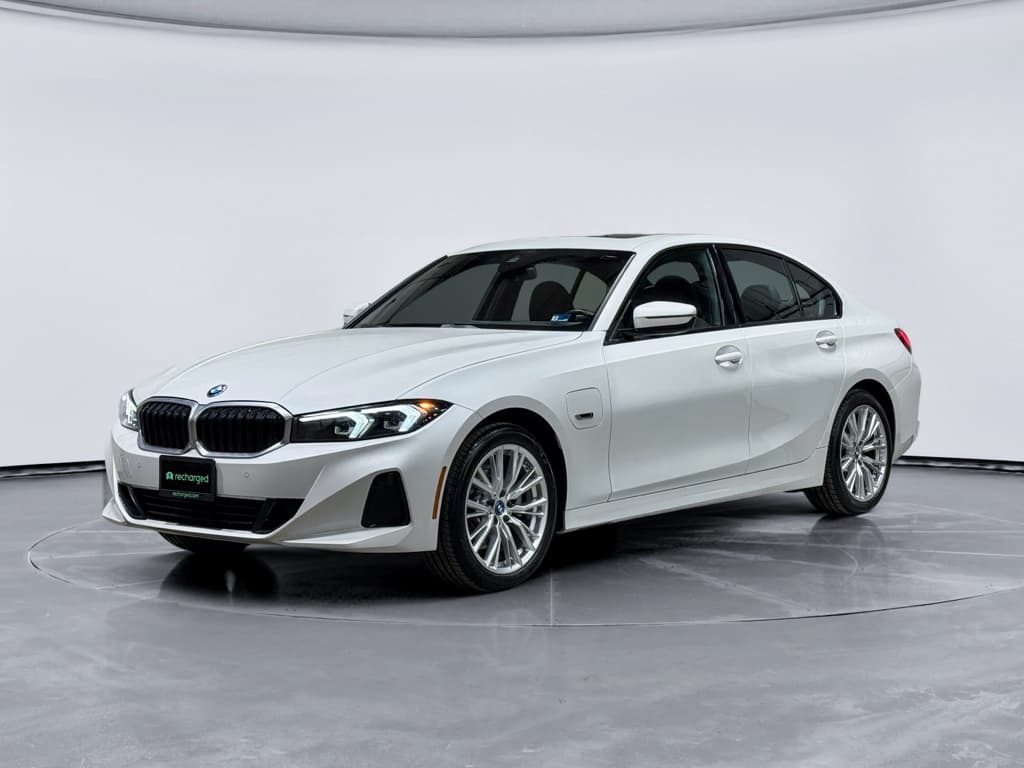
The 2025 BMW i5 is BMW’s second model year of its all-electric 5 Series sedan, and it’s already one of the most well-rounded luxury EVs on sale. With three trims (eDrive40, new xDrive40, and M60), competitive range, and familiar 5 Series manners, the electric i5 feels less like a science experiment and more like a normal BMW that happens to run on electrons.
Quick take
2025 BMW i5 overview
2025 BMW i5 key numbers at a glance
BMW launched the i5 for the 2024 model year as the electric counterpart to the latest 5 Series. For 2025, the lineup is largely carried over, but BMW adds the i5 xDrive40, an all-wheel-drive trim that slots between the rear-drive eDrive40 and the high-performance M60. All versions ride on the same platform as the gas 5 Series, so you get a traditional sedan shape, a spacious cabin, and the kind of quiet, composed ride you expect from a 5.
Model-year change to know
Trims, power, and performance
2025 BMW i5 trims and performance
How the eDrive40, xDrive40, and M60 compare on power, drivetrain, and acceleration.
| Trim | Drivetrain | Horsepower | 0–60 mph (approx.) | Top speed |
|---|---|---|---|---|
| i5 eDrive40 | RWD, single motor | 335 hp | ~5.7 seconds | 120–130 mph (limited) |
| i5 xDrive40 | AWD, dual motor | 389 hp | ~5.2 seconds | 130 mph (limited) |
| i5 M60 xDrive | AWD, dual motor | 593 hp | ~3.7–3.8 seconds | 143 mph (with performance package) |
All trims share the same 84.3 kWh battery but deliver very different personalities.
Even the base i5 eDrive40 is no slouch. With 335 hp going to the rear wheels, it feels properly quick for a midsize luxury sedan, and the instant torque makes passing effortless. The new xDrive40 adds a front motor for 389 hp and all-wheel drive, trimming a few tenths off the 0–60 mph sprint and providing more confident traction in bad weather.
At the top sits the M60 xDrive, which turns the i5 into a genuine performance sedan. Close to 600 hp and a sub‑4‑second 0–60 mph time put it in the same conversation as an M5, just with a hushed whir instead of a V8 bark. You pay for that speed in both dollars and range, but if you want an EV that still feels like an M car, the M60 delivers.
Ride and handling
On the road, the i5 feels like a traditional 5 Series: composed, quiet, and confidence-inspiring. Adaptive suspension and rear-wheel steering (on some trims/options) help mask the EV’s extra weight, and body control is excellent on highway sweepers and back roads alike.
Daily drivability
BMW tuned the i5 to be easy to live with. Steering is light at parking speeds, visibility is solid for a modern sedan, and one-pedal driving is available but not mandatory. If you’re coming from a gas 5 Series, the learning curve is short.
Performance vs. efficiency trade-off
Real-world range and efficiency
EPA-rated range by 2025 BMW i5 trim
Wheel size and options can move these numbers a bit, but this is the general picture.
i5 eDrive40
Estimated EPA range: about 271–295 miles depending on wheels and spec.
In independent testing, the eDrive40 has comfortably exceeded its official rating, with real-world results cresting 300 miles when driven reasonably.
i5 xDrive40
Estimated EPA range: roughly 248–266 miles.
You lose a bit of range versus the eDrive40, but gain year-round all-wheel-drive confidence.
i5 M60 xDrive
Estimated EPA range: about 239–256 miles.
Plenty for most daily driving, but you’ll plan more frequent fast-charge stops on long trips.
On paper, the i5’s range doesn’t smash records the way a Lucid Air or Tesla Model S might, but that’s only part of the story. In independent testing, the i5 eDrive40 has outperformed its EPA rating by a healthy margin, with some reviewers seeing just under 300 miles with charge to spare after mixed driving. That efficiency edge matters if you’re planning highway-heavy commutes or road trips.
Battery details
- Expect the most range from an i5 eDrive40 with smaller wheels and efficient tires.
- The xDrive40 and M60 trade some range for extra motors and performance hardware.
- BMW’s integrated heat pump helps winter range hold up better than older EVs, though cold weather will still trim mileage.
Charging experience: home and public
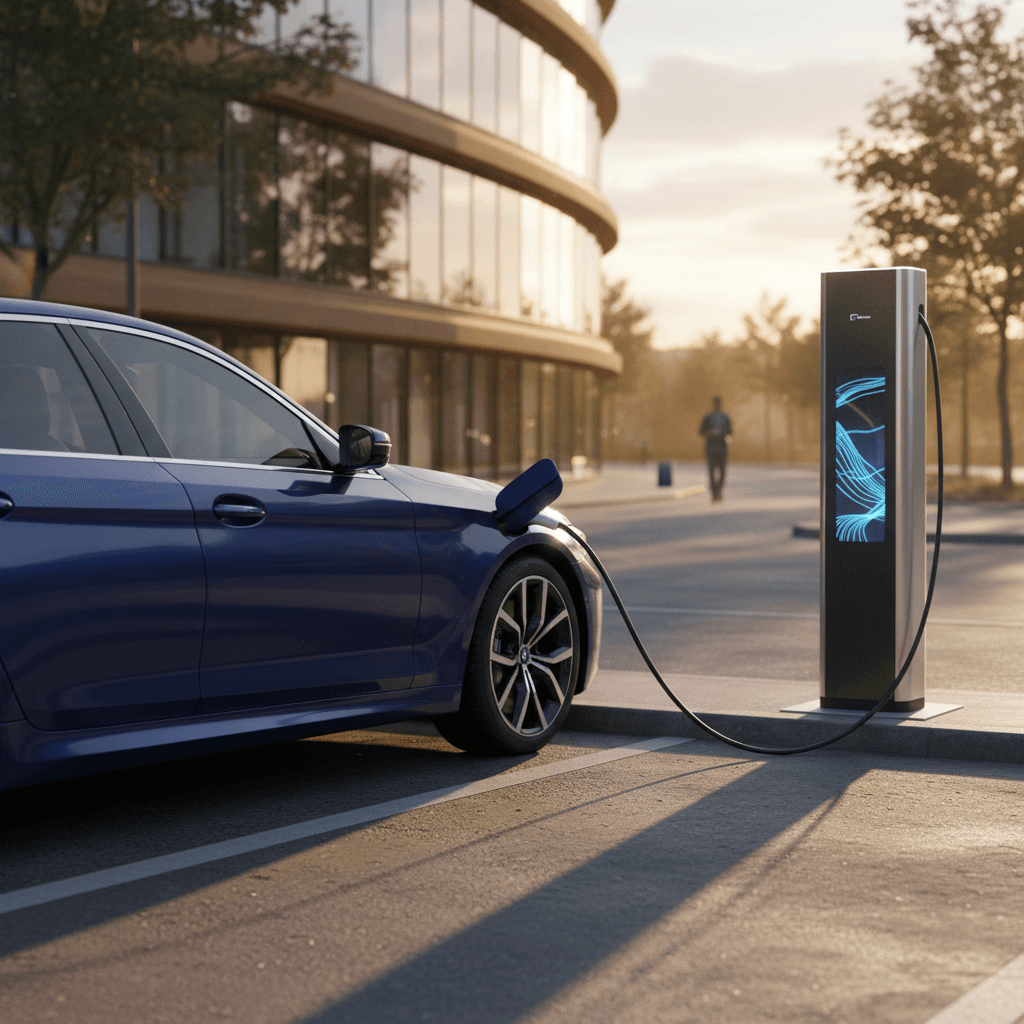
Charging is one of the 2025 BMW i5’s strongest suits. On DC fast chargers, the car can accept up to 205 kW, allowing a 10–80% top-up in roughly 30 minutes under ideal conditions. More importantly, independent testing shows the i5 sustaining over 200 kW for a meaningful chunk of the session before tapering, which keeps road-trip stops reasonable even with a 400‑volt architecture.
BMW i5 charging options explained
How long it actually takes to charge your 2025 i5 in the real world.
Level 1 (120V outlet)
Use case: Emergencies or occasional top-ups.
- Roughly 3–4 miles of range per hour.
- Well over 24 hours for a full charge from empty.
Fine if you only drive a few miles a day, but most owners will want more.
Level 2 (240V home or public)
Use case: Primary at-home charging.
- Up to 11 kW on a typical 48-amp home charger.
- 0–100% in about 8–10 hours, or overnight.
- Add ~25–35 miles of range per hour depending on trim and charger size.
DC fast charging (Level 3)
Use case: Road trips and quick top-ups.
- Peak rate ~205 kW on compatible stations.
- 10–80% in about 30 minutes.
- About 90–100 miles added in ~10 minutes under good conditions.
Home charging tip
Public charging is handled through BMW’s partner networks, with access managed in the My BMW app. In North America, that means easy roaming across big third‑party networks including Electrify America and others, and newer cars benefit from Plug & Charge functionality on select stations so billing is automatic once you plug in.
Plan for charging network quality, not just speed
Interior, tech, and comfort
Design and materials
Inside, the 2025 BMW i5 feels like a modern 5 Series, not a spaceship. Materials are high quality, with available leather, open-pore wood or metal trims, and subtle ambient lighting. The EV packaging means there’s no driveshaft tunnel eating into rear legroom, so adults fit comfortably in both rows.
Infotainment and driver tech
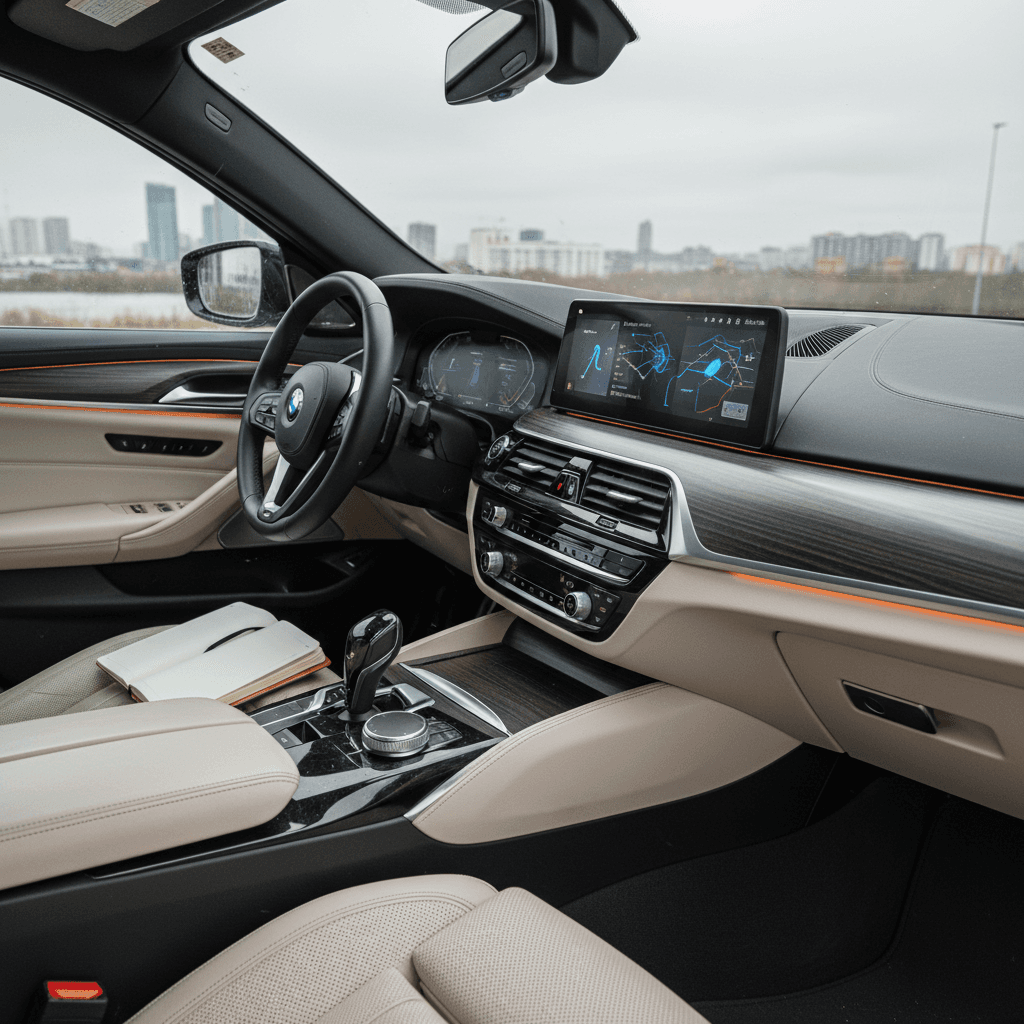
The curved display combines a digital gauge cluster with a large central touchscreen running BMW’s latest iDrive software. Wireless Apple CarPlay and Android Auto are standard, and most cars on dealer lots will have a long options list: head-up display, premium audio, and advanced driver-assistance features such as adaptive cruise and lane-centering.
- Driving position is classic BMW: low, supportive, and adjustable enough for tall and short drivers alike.
- Noise suppression is excellent; at highway speeds, road and wind noise are very well controlled for a luxury sedan.
- Rear-seat comfort is strong, and the trunk remains usefully sized even with batteries under the floor.
Daily comfort win
How the 2025 BMW i5 compares to rivals
BMW i5 vs. key electric luxury sedan rivals
Where the 2025 i5 stands on range, character, and positioning versus the competition.
| Model | Character | Max range (approx.) | Standout trait |
|---|---|---|---|
| BMW i5 | Balanced luxury sedan feel, understated | Up to ~295 miles EPA | Real-world efficiency and familiar 5 Series manners |
| Mercedes‑EQ EQE Sedan | Soft, comfort-first feel | Around 298 miles | Plush ride and distinctive styling |
| Genesis Electrified G80 | Luxury-first, limited availability | Around 282 miles | Gorgeous interior and strong value |
| Tesla Model S | Techy, minimalist, performance-oriented | Over 370 miles | Very high range and Supercharger access |
| Porsche Taycan | Sportiest of the bunch | Up to mid‑200s miles | Sharp handling and Porsche badge |
Exact specs vary by trim; this table focuses on the most directly comparable versions.
If you’re coming out of a traditional luxury sedan, the BMW i5 will feel the most “normal” of this group. It doesn’t have the longest range or the wildest styling, but it nails the fundamentals: comfort, build quality, and predictable driving dynamics. If you prioritize outright range above everything else, a Model S or Lucid Air still win. If you want a car that feels like a 5 Series that happens to be electric, the i5 is the benchmark right now.
Ownership costs and resale outlook
MSRP for the 2025 BMW i5 slots into familiar 5 Series territory: the eDrive40 opens the lineup, the xDrive40 sits in the low‑to‑mid‑$70,000s, and the M60 climbs toward six figures when well equipped. As with any new luxury EV, you’ll want to factor in available federal and state incentives, plus employer or utility rebates for home charging if you’re eligible.
Key ownership considerations for the 2025 BMW i5
Warranty coverage
BMW backs the i5 with a 4‑year/50,000‑mile basic and powertrain warranty, plus 8 years/100,000 miles for the high-voltage battery. That’s in line with other German luxury brands.
Energy vs. fuel savings
Depending on your local electricity rates, home charging can cut your per‑mile energy cost significantly versus premium gasoline. If you drive 12,000–15,000 miles a year, the savings add up over a typical ownership cycle.
Maintenance profile
Like most EVs, the i5 eliminates oil changes and many engine-related services, but you’ll still budget for tires, brakes (less often thanks to regen), cabin filters, and routine inspections.
Insurance and taxes
Luxury EVs can carry higher insurance premiums and registration costs in some states. Get quotes with your ZIP code before you sign anything so there are no surprises.
What about depreciation?
Is the BMW i5 a good used EV candidate?
Because the i5 launched for 2024, we’re still early in its lifecycle, but the fundamentals make it promising as a future used EV. BMW has experience with electric drivetrains going back to the i3, and the i5’s battery and motors are shared across multiple trims rather than being one‑off experiments. That usually bodes well for long-term parts availability and service knowledge.
Battery health matters more than ever
This is where a platform like Recharged changes the equation for used-vehicle shoppers. Every EV on Recharged comes with a Recharged Score Report that includes verified battery diagnostics, real-world range estimates, and a look at how the car’s pack has aged. That kind of transparency is especially valuable with a higher-dollar vehicle like the i5, where you want confidence that the big battery under the floor still has plenty of life left.
Checklist for evaluating a used BMW i5
Confirm battery state of health
Request a recent battery diagnostic or third-party health report. Look for clear state‑of‑health figures and any notes on fast‑charging history.
Review charging history
Ask how the previous owner charged: mostly home Level 2, or constant DC fast charging? Frequent high‑power sessions can add wear over time.
Inspect tires and brakes
The i5 is heavy and powerful, so tires and suspension components do real work. Uneven wear can hint at alignment issues or harder driving.
Test driver-assistance features
On a test drive, verify that adaptive cruise, lane-keeping, and parking assists work smoothly. Software glitches can sometimes be fixed by updates, but they’re worth catching early.
Check for warranty balance
Confirm remaining factory warranty and battery coverage by VIN and in‑service date. That coverage can significantly reduce your risk on a used purchase.
Who the 2025 BMW i5 is best for
Is the 2025 BMW i5 the right EV for you?
Luxury-sedan commuters
You want a quiet, comfortable, prestige-brand sedan for daily driving.
Your round-trip commute plus errands fits easily within 200–230 miles.
Overnight home charging is available or feasible to install.
You’d rather have a familiar 5 Series feel than a radical EV interior.
Performance-minded drivers
You’re eyeing the i5 M60 for its near‑M5 acceleration.
You value instant torque and AWD traction in all seasons.
You’re comfortable trading some range and efficiency for extra power.
Frequent long‑distance road trips aren’t your top priority.
Early planners for the used market
You’re not in a rush and prefer to let the first owner take the depreciation hit.
You want to buy an i5 with a verified battery report and known history.
You’re watching certified pre-owned and specialty marketplaces like Recharged for off-lease examples.
You’re comfortable that luxury EVs will adjust in price as tech evolves.
How Recharged can help
Ready to find your next EV?
Browse Vehicles2025 BMW i5 FAQ
Frequently asked questions about the 2025 BMW i5
Bottom line: Should you buy a 2025 BMW i5?
If you’re looking for a midsize luxury sedan that convincingly bridges BMW’s past and electric future, the 2025 BMW i5 belongs on your shortlist. It offers a comfortable, familiar 5 Series driving experience, strong real-world efficiency, and charging hardware that keeps road trips practical, even if its range numbers don’t grab the biggest headlines.
For most buyers, the eDrive40 or xDrive40 trims hit the best balance of price, performance, and range. The M60 is compelling if you want an electric sedan with serious pace and don’t mind charging a bit more often. And if you’re patient, the i5’s early depreciation will likely create attractive opportunities in the used market, especially when you pair a well-optioned example with a verified battery-health report from a platform like Recharged.
Whether you’re planning to order a new i5 or wait for the first wave of used cars, take time to understand your daily range needs, home-charging options, and budget. Then, when you’re ready to shop used, Recharged can help you compare i5s alongside other luxury EVs, line up financing, and have a Recharged Score Report in hand so your next 5 Series, electric this time, fits your life as well as your driveway.