If you still picture BMWs as straight‑six sedans and rowdy M cars, the 2025 BMW i4 is your wake‑up call. It’s a fully electric Gran Coupe that tries to deliver the classic BMW mix of long‑distance comfort, sharp handling, and real‑world usability, just without gasoline. In this 2025 BMW i4 review, we’ll walk through trims, range, charging, comfort, and how it stacks up as both a new and used EV.
Quick take
2025 BMW i4 overview: what’s new and who it’s for
BMW launched the i4 in the U.S. for 2022; by 2025 it’s a polished, mid‑cycle update rather than an all‑new car. You still get the same sleek 4‑door Gran Coupe body, but the 2025 model brings thinner headlights, new taillights with available Laserlight tech, fresh paint colors, and a more refined version of BMW’s curved dual‑screen cockpit and iDrive 8.5 software. Underneath, the basic formula stays the same: rear‑drive efficiency models and all‑wheel‑drive performance trims built around BMW’s tried‑and‑true CLAR platform rather than a clean‑sheet EV skateboard.
- Body style: 4‑door Gran Coupe (liftback) with a hatch-style trunk opening
- Seats: 5 (rear bench is best for two adults plus a kid in the middle)
- Drivetrains: Rear‑wheel drive (eDrive35, eDrive40) or dual‑motor all‑wheel drive (xDrive40, M50)
- Use case: Daily commuting, long‑range road trips, and spirited back‑road drives rather than off‑road adventures or three‑row family duty
Who the i4 really suits
2025 BMW i4 trims and key specs
For 2025, the BMW i4 lineup in North America centers on three main trims, eDrive40, xDrive40, and M50. Many shopping tools and dealer sites still reference the entry‑level eDrive35, and it remains available in some markets, but availability in the U.S. is limited and timing has been inconsistent. We’ll focus on the trims you’re most likely to find on lots and in the used market.
2025 BMW i4 trims at a glance
Approximate U.S. specs and pricing for the 2025 BMW i4 lineup. Exact numbers vary slightly by wheel size and options.
| Trim | Drivetrain | Approx. power (hp) | 0–60 mph (sec) | EPA range window* | Battery (usable, approx.) | 2025 MSRP (incl. dest.) |
|---|---|---|---|---|---|---|
| eDrive40 | RWD | ~335 | 5.5 | 295–318 mi | ~81.5 kWh | ≈ $58,900 |
| xDrive40 | AWD | ~396 | 4.9 | 268–287 mi | ~80.7–83.9 kWh | ≈ $63,500 |
| M50 xDrive | AWD | ~536 | 3.7 | 227–267 mi | ~81.5 kWh | ≈ $71,900 |
2025 BMW i4 power, range, and pricing overview
About the numbers
Headline figures that define the 2025 i4
Range, battery, and charging experience
Range is where the 2025 BMW i4 quietly got better. The eDrive40 now tops out around 318 miles of EPA range on 18‑inch wheels, while the dual‑motor xDrive40 lands in the high‑200s. The M50 is the thirsty one, figure mid‑200s at best and under 230 miles if you choose the biggest wheels and stick to highway speeds. For most U.S. drivers, any of these will comfortably cover a week of commuting and a weekend road trip with one well‑planned DC fast‑charge stop.
Battery and range by trim
How far you’ll realistically go between charges
eDrive40: the distance king
If range is your priority, this is the sweet spot. Owners routinely see high‑200s in mixed driving, and careful drivers on 18‑inch wheels can flirt with 300+ miles on a full charge.
xDrive40: all-weather balance
Dual motors add traction and punch but trim some range, especially with bigger wheels. Count on 260–280 miles in normal use, still strong for a quick AWD EV.
M50: performance first
The M50 trades miles for smiles. Highway blasts and frequent launches will bring effective range closer to 200–230 miles between charges.
Plan around 80–90%, not 100%
Home charging
All i4 trims support 11 kW Level 2 AC charging. With a properly installed 240‑volt circuit and a 40–48 amp home EVSE, you’re looking at roughly 8 hours for a 0–100% charge on the larger pack, effectively an overnight refill.
If you mostly charge at home, you’ll rarely think about it: plug in at night, wake up with a full “tank” in the morning.
Don’t have a charger yet? A portable Level 2 charger can be a smart starter option.
Public fast charging
On DC fast chargers, the i4 can accept up to 180–200 kW, which translates to roughly 10–80% in 30–33 minutes when you find a healthy, high‑power station.
- Best results: Arrive with 10–20% charge and precondition the battery via the nav.
- Real‑world stop: Expect 25–40 minutes to add 150–200 miles, depending on trim and conditions.
- Networks: Any CCS fast charger will do, Electrify America, EVgo, ChargePoint, and others.
Watch your fast‑charging expectations
Driving impressions: how the 2025 i4 feels on the road
The i4 doesn’t scream “EV futurism” from behind the wheel, and that’s exactly its charm. It feels like a well‑sorted 4‑Series Gran Coupe that happens to be electric: planted, quiet, and eager to hustle when you are. That said, each trim has a distinct personality.
How each 2025 i4 trim drives
Same body, very different moods
eDrive40: classic BMW balance
Rear‑wheel drive, a strong single motor, and a big battery make the eDrive40 feel like a modern 3‑Series that traded its inline‑six for instant torque. It’s quick enough (mid‑5‑second 0–60), and the steering is accurate if not overflowing with feedback.
xDrive40: the all‑weather weapon
The xDrive40 adds a front motor for all‑wheel‑drive traction and a healthy bump in power. It’s noticeably quicker off the line and in passing, yet still calm and composed on the highway. If you deal with snow, this is the no‑drama choice.
M50: the sleeper sports sedan
With 500‑plus horsepower and sub‑4‑second sprints, the M50 feels more like an electric M3 Gran Coupe. It’s heavy, every i4 is, but the low center of gravity and adaptive suspension help it stay tidy when you drive it like BMW intended.
Ride and noise
Interior, comfort, and tech: classic BMW meets big screens
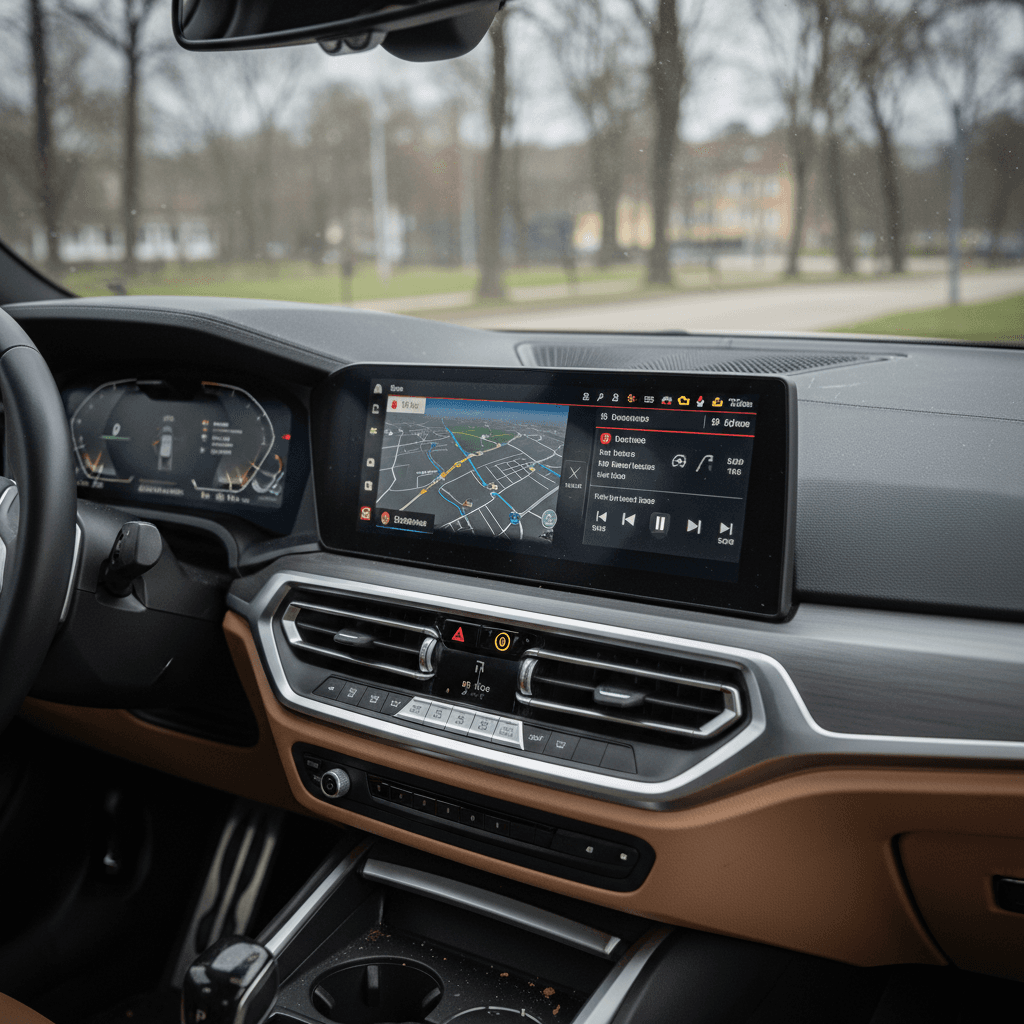
If you’re used to BMW’s gasoline Gran Coupes, the i4’s cabin will feel familiar: solid switchgear, supportive seats, and that slightly cocooned driving position BMW has been refining for decades. The main difference is the curved dual‑screen setup running BMW’s latest iDrive 8.5 software, which handles navigation, media, vehicle settings, and EV‑specific info like charging and route planning.
Space and comfort
- Front seats: Comfortable even for long days, with plenty of adjustment and available ventilation.
- Rear seats: Adequate for adults up to average height; taller passengers may brush the sloping roofline.
- Cargo: The hatchback opening makes the i4 more practical than a traditional sedan. Think weekend‑trip easy, Costco run capable.
If you routinely carry four tall adults and their luggage, you may want to compare with taller‑roof EVs or crossovers, but for singles, couples, and small families the packaging works well.
Tech and UX
The 2025 update brings BMW Operating System 8.5, which improves menu structure and adds cleaner graphics. You still have the iDrive controller on the console, handy when you don’t want to tap a screen on the move.
- Wireless Apple CarPlay and Android Auto are standard.
- EV‑specific route planning can automatically add charging stops.
- Driver‑assist features include adaptive cruise control, lane‑keeping assist, and available hands‑free functions on certain roads.
Software gremlins to watch for
Living with a BMW i4: practicality and ownership
The real test of any EV isn’t the spec sheet, it’s how easy it is to live with on a Wednesday night when you’re tired and just want to get home. The i4 largely passes that test, especially if you can charge at home. But there are a few ownership nuances worth calling out.
Day‑to‑day realities of i4 ownership
Charging habits matter more than with a gas BMW
Plan on installing a dedicated Level 2 charger or using a robust 240‑volt solution. Trickle‑charging on 120V will work in a pinch but feels painfully slow on a big‑battery EV like the i4.
Weight shows up at the tire shop
The i4 is heavy, especially performance trims. That weight plus instant torque means you’ll want to budget for relatively frequent tire replacements if you drive it enthusiastically.
Trunk practicality beats a traditional sedan
The liftback makes loading bulky items far easier than in a 3‑Series sedan. With the seats folded, you get a genuinely useful cargo area for home‑improvement runs or sports gear.
Cold‑weather range drops, but remains usable
Like any EV, the i4 will lose range in winter, especially on short trips. Preconditioning while plugged in and using seat/steering‑wheel heaters instead of cranking the cabin heat help preserve miles.
Service intervals are simple
No oil changes, spark plugs, or exhaust work. Most visits will be software updates, brake fluid, cabin filters, and tire rotations, though you still want a shop that understands EV‑specific checks.
Leasing vs. buying
2025 BMW i4 vs. rivals: Model 3, Polestar 2, and others
On paper, the 2025 i4 swims in the same pool as the Tesla Model 3, Polestar 2, Hyundai Ioniq 6, and even some compact luxury crossovers like the Mercedes‑Benz EQE SUV or Audi Q4 e‑tron. In practice, the i4 feels a bit more old‑school, heavier, more substantial, and more focused on quiet, confident progress than slippery efficiency.
How the 2025 BMW i4 stacks up
High‑level comparison of the 2025 i4 against key electric rivals for U.S. shoppers.
| Model | Strengths | Weak spots for i4 shoppers |
|---|---|---|
| BMW i4 (2025) | Premium cabin, strong range, familiar BMW driving feel, hatchback practicality | Heavier and less efficient than some rivals; charging network relies on third‑party CCS (for now) |
| Tesla Model 3 | Class‑leading efficiency, massive Supercharger network, frequent OTA updates | More minimalist interior, firmer ride, build‑quality variance; some shoppers prefer a more traditional cabin |
| Polestar 2 | Scandinavian design, Google‑based infotainment, solid driving manners | Can get pricey, rear seat and trunk feel tighter than i4 |
| Hyundai Ioniq 6 | Excellent efficiency, ultra‑fast 800‑V charging on the right stations, strong value | Less premium badge, more sedan than Gran Coupe in feel |
BMW i4 vs. Tesla Model 3, Polestar 2, and Hyundai Ioniq 6
Where the i4 really shines
New vs. used BMW i4: which makes more sense?
By 2026, the used market is full of 2022–2024 i4s and the first wave of 2025 cars. That gives you real choice: pay more to order a 2025 with your perfect spec, or hunt down a used i4 that’s already taken its biggest depreciation hit.
Reasons to buy new (2025)
- You want the latest styling tweaks and iDrive 8.5 software from day one.
- You care about getting the exact color, interior, and wheel combo you want.
- You plan to keep the car long‑term and want a full factory warranty window.
- You may be able to stack lease incentives or financing deals that narrow the gap vs. used.
Reasons to buy used
- 2022–2024 i4s often list well below a comparable new 2025, even with relatively low miles.
- Most real‑world battery‑health reports show only modest early degradation when the car is cared for.
- You can step up to a better‑equipped trim (like moving from a new eDrive40 budget to a used xDrive40 or M50) for similar money.
- You’ll have more real‑world data on reliability and software behavior.
If you’re weighing used, a detailed battery and charging‑system check, like what’s baked into the Recharged Score on every car sold through Recharged, is worth its weight in electrons.
Used i4 shopper checklist
Who the 2025 i4 is perfect for, and who should skip it
No EV is right for everyone, and the 2025 BMW i4 is no exception. It hits a very specific bullseye: people who want an electric car that still feels like a German luxury sedan more than a science project.
Is the 2025 BMW i4 right for you?
Match your priorities to the right trim, or a different EV
Great fit if…
- You’re coming from a BMW 3‑ or 4‑Series and want an EV that feels familiar.
- You value range and refinement over eye‑catching design experiments.
- You can charge at home or work most of the time.
- You like the idea of a hatchback but don’t want a full SUV.
Maybe look elsewhere if…
- You need maximum interior space, especially rear headroom, for tall passengers.
- You spend most of your time in areas with limited CCS fast‑charging options and no home charging.
- You want the absolute quickest DC charging and longest range for cross‑country road‑trips, some 800‑V EVs now edge the i4 there.
- You’re extremely sensitive to ride firmness on broken pavement and plan to spec big wheels.
2025 BMW i4 FAQ
Frequently asked questions about the 2025 BMW i4
Bottom line: is the 2025 BMW i4 a good buy?
If you’re hunting for a compact premium EV that still feels like a car, not a gadget, the 2025 BMW i4 belongs on your short list. It delivers strong range, serious performance in the xDrive40 and M50, and a cabin that feels genuinely upscale without going full spaceship. The flip side is weight, slightly slower DC charging than the newest 800‑volt EVs, and the usual modern‑BMW complexity on the software side.
For many shoppers, the smart move is a lightly used i4, especially an eDrive40 or xDrive40, that’s already absorbed its steepest depreciation. That’s where a transparent battery‑health report and pricing analysis matter. Every i4 sold through Recharged includes a Recharged Score, expert EV inspection, and support from specialists who know both EV tech and BMW quirks, so you can enjoy the good stuff, the quiet, the torque, the long‑legged range, without guessing what’s happening inside the battery pack.