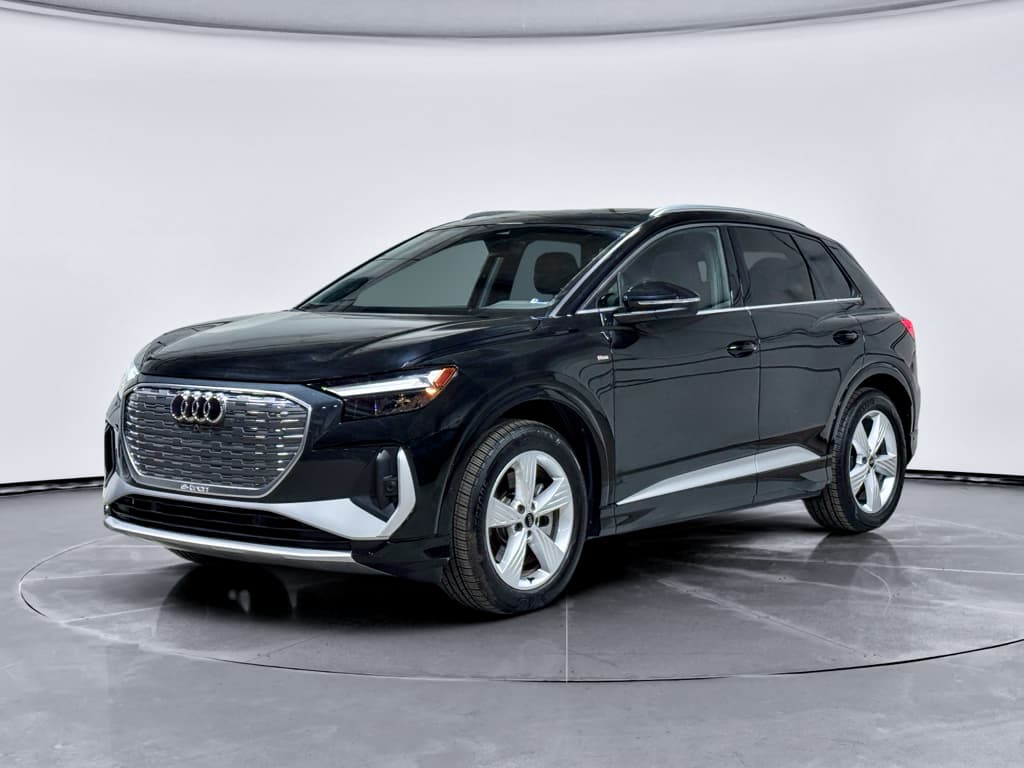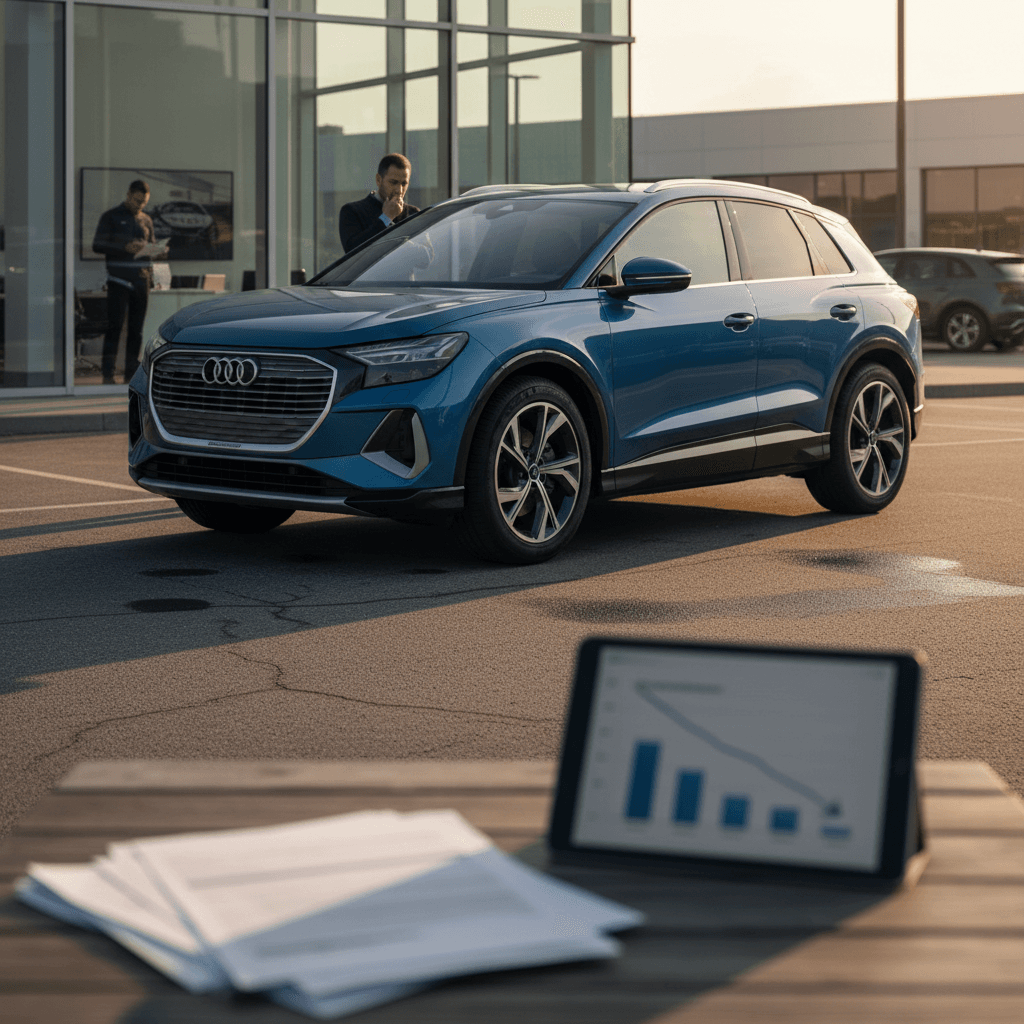
If you’re driving a 2025 Audi Q4 e-tron and thinking about trading it in, you’re in a tricky corner of today’s used-EV market. Luxury compact electric SUVs have seen sharper-than-expected depreciation, but strong equipment, low miles, and verified battery health can still translate into a solid 2025 Audi Q4 e-tron trade in value. This guide walks through what your Q4 e-tron is realistically worth, what moves that number, and how to avoid leaving thousands of dollars on the table.
Context: 2025–2026 is a buyer’s market for used EVs
Overview: 2025 Audi Q4 e-tron trade-in value in 2025–2026
Audi Q4 e-tron value snapshot
The 2025 Audi Q4 e-tron slots into the compact luxury EV SUV segment, with MSRP typically in the low-to-mid $50,000s and well-optioned trims stretching into the low $60,000s. In today’s environment, a 5‑year-old Q4 e-tron is often worth roughly 45–55% of its original MSRP, based on a mix of public depreciation calculators and real-world auction data for earlier Q4 model years and similar Audi EVs.
For you as an owner, that translates to a reality where a clean, average-mileage Q4 e-tron might be worth in the mid-to-high $30,000s as a trade-in after 3 years, and drop into the mid-$20,000s to low-$30,000s by years 5–6, depending on trim, miles, battery health, and regional demand.
Don’t anchor on the payoff amount
How much is a 2025 Audi Q4 e-tron worth right now?
Because 2025 Q4 e-trons are still relatively new, most are either less than 2 years old or still on their first lease term. That means many examples are low mileage and in excellent cosmetic shape, which helps, but you’re still swimming against the broader tide of fast EV depreciation.
Rough 2025 Audi Q4 e-tron value bands (United States, 2026)
These are broad, directional bands for typical private-party and trade-in value ranges, assuming normal market conditions. Your actual offer will depend heavily on your specific configuration and location.
| Usage profile | Condition & miles | Likely trade-in range | Likely direct-sale range |
|---|---|---|---|
| Very low miles, top trim (55 Prestige) | Like-new, under 10,000 miles | $38,000–$44,000 | $41,000–$47,000 |
| Typical commuter Q4 (45 or 55) | Clean, ~12,000–15,000 miles/year | $33,000–$40,000 | $36,000–$43,000 |
| High-mileage or base trim | Over 20,000 miles/year or sparse options | $28,000–$34,000 | $31,000–$38,000 |
| Needs reconditioning or has issues | Cosmetic damage, worn tires, Carfax stories | $24,000–$30,000 | $26,000–$34,000 |
Use these ranges as a starting point, then refine with live quotes and a battery health report.
Why these are ranges, not promises
7 key factors that move Q4 e-tron trade-in value up or down
What buyers and appraisers really care about
Seven levers that most strongly influence 2025 Audi Q4 e-tron trade-in value.
1. Miles and use pattern
Luxury EV buyers are still mileage-sensitive. A 2025 Q4 e-tron with 6,000 miles priced next to one with 24,000 miles will usually pull a higher offer, even if both are under warranty.
2. Battery health & DC fast charging
Frequent DC fast charging and lots of high-speed road-trip use can accelerate degradation. A verified battery health report can reassure buyers and help you defend a higher price.
3. Service history & recalls
Documented maintenance at Audi or reputable EV shops, completed software updates, and no open recalls all support stronger offers.
4. Trim & option mix
Quattro, larger wheels, premium audio, and driver-assistance packages all help, but niche options don’t always get full credit on trade. Desirable color combos often sell faster.
5. Cosmetic condition
Clean bodywork, fewer curb-rash scars on those aero wheels, fresh tires, and a tidy interior reduce the reconditioning bill, and increase the number a dealer can justify.
6. Region & local incentives
Demand for used EVs is uneven. Coastal metros with strong home-charging adoption and higher gas prices tend to support better resale than areas where charging is sparse.
7. New-car incentives & lease deals
Deep discounts or subvented leases on new Q4 e-trons can quietly crush used values. If a shopper can lease new for not much more than your payment, your resale ceiling drops.
Use multiple valuation sources, then sanity-check
Q4 e-tron depreciation: 3–7 year outlook
The uncomfortable truth is that luxury EVs have been among the fastest-depreciating vehicles on the road. The original Audi e-tron SUV and Q8 e-tron showed 70%‑plus depreciation in some analyses, and the Q4 e-tron appears to follow the broader pattern of compact luxury EVs losing value quickly when new incentives hit or when fresher tech arrives.
Illustrative depreciation curve for a $55,000 Audi Q4 e-tron
Approximate retained-value milestones assuming typical use and market conditions. This is directional, not a prediction for your specific VIN.
| Time since new | Approx. mileage | Estimated market value | % of original MSRP |
|---|---|---|---|
| 1 year | 12,000–15,000 miles | $40,000–$44,000 | 73–80% |
| 3 years | 36,000–45,000 miles | $27,000–$34,000 | 49–62% |
| 5 years | 60,000–75,000 miles | $23,000–$30,000 | 42–55% |
| 7 years | 90,000+ miles | $17,000–$24,000 | 31–44% |
Actual values will vary with incentives, interest rates, and how quickly EV technology and demand shift.
Notice how most of the drop happens in the first 3–4 years. That’s exactly why your timing matters so much as a 2025 Q4 e-tron owner: trading in too early hands the next owner a discount you’ve already paid for, while waiting too long can put you in a bracket where buyers start to worry about out-of-warranty repairs and long-term battery life.
Luxury EVs are more volatile than gas SUVs
Realistic 2025 Q4 e-tron trade-in scenarios
Scenario A: 18‑month-old 2025 Q4 55 quattro Premium Plus
Purchase price: $59,000 out the door
Mileage: 18,000
Condition: Clean, no accidents, good tires, all services done
Battery health: Verified strong with a recent diagnostic
Expected trade-in band: $37,000–$42,000
Expected direct sale band: $40,000–$45,000
Here, dealers are balancing a desirable spec and clean history against a market that’s flooded with subsidized leases. A strong battery health report and clean Carfax help push you toward the top of the range.
Scenario B: 3‑year-old 2025 Q4 45 RWD with higher miles
Purchase price: $52,000 out the door
Mileage: 45,000
Condition: Light cosmetic wear, two owners, normal service history
Battery health: Some degradation from heavy DC fast charging
Expected trade-in band: $28,000–$32,000
Expected direct sale band: $31,000–$36,000
Extra miles, an ownership change, and a battery that shows more wear than average drag this example toward the middle or lower part of the range, especially if the car will need tires and reconditioning.
Where Recharged fits in
Ready to find your next EV?
Browse Vehicles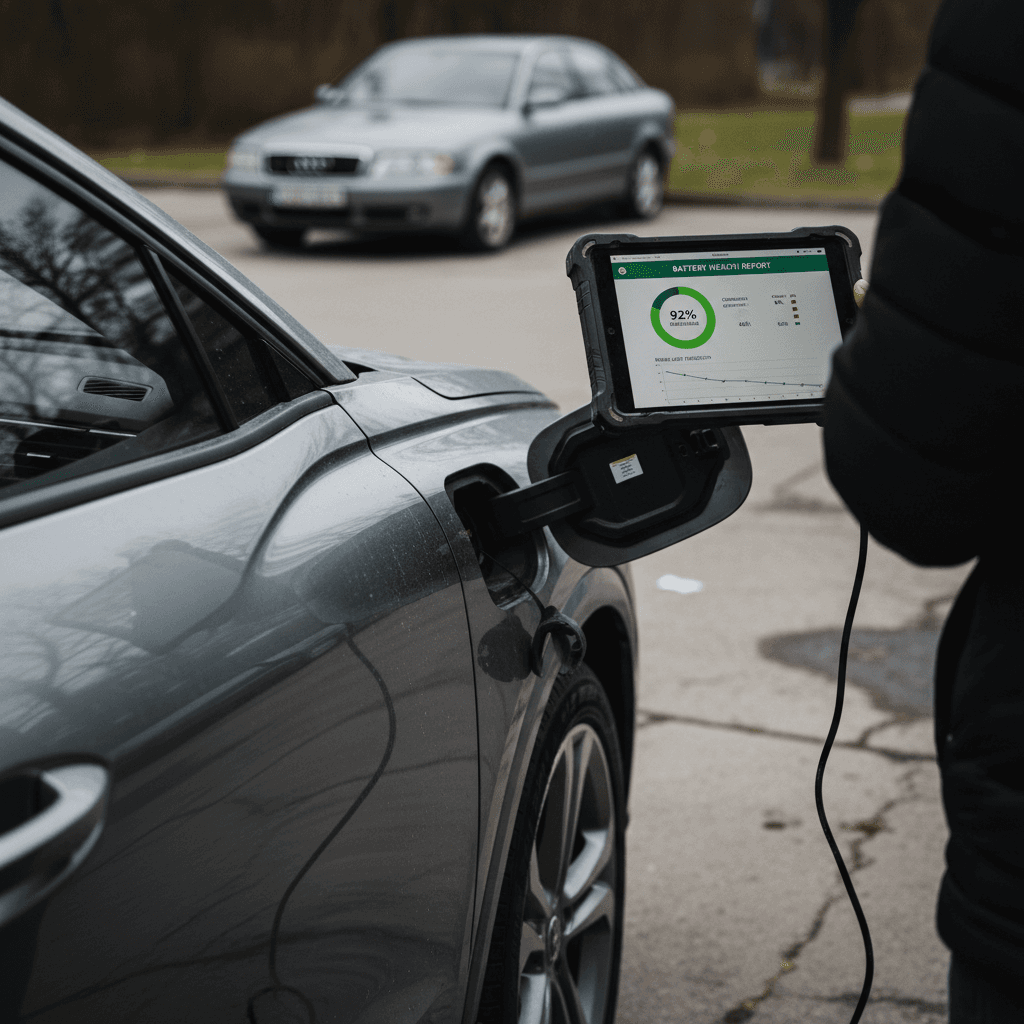
How battery health affects your Q4 e-tron offer
For a gas Q5, shoppers obsess over options and mileage. For a Q4 e-tron, battery health quietly eclipses both. Buyers know that a degraded pack means less range, slower DC fast charging, and potentially expensive out-of-warranty repairs down the line, even if they can’t see those risks in the photos.
- Heavier reliance on DC fast charging instead of home or workplace Level 2 can accelerate degradation.
- Regularly charging to 100% and storing the car at full charge in hot climates is harder on the pack.
- Software updates and thermal management improvements can help, but they don’t erase years of abuse.
- Two Q4 e-trons with identical mileage can have meaningfully different remaining battery capacity.
That’s why a detailed battery health diagnostic, like the Recharged Score report included with every Recharged EV, is increasingly powerful leverage. When you can hand a buyer or appraiser a third-party, data-driven snapshot of pack health, you’re not just selling a car, you’re selling certainty.
Turn battery data into real dollars
Maximizing your Audi Q4 e-tron trade-in offer
Pre-trade checklist for your 2025 Q4 e-tron
1. Document everything
Gather service records, tire receipts, charging equipment, and both key fobs. A tidy paper trail signals that the car has been cared for and reduces perceived risk for the buyer or appraiser.
2. Get a battery health report
Before seeking offers, have the pack evaluated. A Recharged Score battery health diagnostic translates raw data into an easy-to-understand grade and range estimate that’s simple to share with buyers.
3. Fix high-ROI cosmetic issues
Paying for a deep detail, paintless dent repair on obvious dings, and touch-up on curbed wheels can easily cost less than the hit you’ll take if a dealer has to do that work themselves.
4. Price against real listings, not just guides
Look at what comparable 2023–2025 Q4 e-trons are actually listed for on major marketplaces, then back into what a dealer would need as a margin. That’s your sanity-check on trade-in numbers.
5. Cast a wide net for offers
Get quotes from at least one local Audi dealer, a used-car chain, and an EV-focused buyer like Recharged. You’ll quickly see who’s truly competitive in today’s EV market and who’s still using outdated assumptions.
6. Time your sale around incentives
If Audi or other brands are blasting new-EV incentives, used values may soften. Conversely, when incentives cool or inventory tightens, trade offers can tick up. If you’re flexible, watch the incentives cycle.
What not to spend money on before trading in
Dealer trade-in vs. selling your Q4 e-tron to Recharged
Traditional franchised dealers are optimized to sell new cars and certified pre-owned inventory, not to price complex, fast-moving EV assets. That’s why appraisal experiences can feel all over the map, especially with a model like the Q4 e-tron that sits at the intersection of luxury, EV tech, and lease-heavy demand.
Trading in at a traditional dealer
- Pros: One-transaction convenience when you’re buying something else; possibly extra loyalty incentives if you’re staying with the brand.
- Cons: Appraisals often built around generic book values and a conservative view of EVs; limited appetite for taking battery risk; numbers can change when they send the car to auction.
- Best for: Owners prioritizing speed and simplicity over squeezing out every last dollar.
Selling to Recharged
- Pros: EV-specific pricing, nationwide buyer base, and offers grounded in the Recharged Score battery health report, not just mileage. Transparent, digital-first process with optional nationwide pickup.
- Cons: Not every region is fully covered yet; you’ll handle your next purchase separately instead of bundling everything at one dealership.
- Best for: Owners who want a fair, data-driven offer on a Q4 e-tron without having to become EV remarketing experts themselves.
Use your equity strategically
FAQ: 2025 Audi Q4 e-tron trade-in value
Common questions about 2025 Audi Q4 e-tron trade-ins
Bottom line: When does trading your 2025 Q4 e-tron make sense?
The 2025 Audi Q4 e-tron is a refined, comfortable compact luxury EV, but in resale terms, it lives in a segment where values move quickly and often painfully. Understanding your 2025 Audi Q4 e-tron trade in value means looking beyond generic book numbers to the specifics of your trim, miles, battery health, and local demand.
If the Q4 e-tron still fits your life, keeping it longer and driving it well beyond the steep initial depreciation curve can be smart. If you’re ready to move on, or simply want to quantify your position, getting a data-backed offer is the best next step. With Recharged, that means pairing real-time market pricing with a Recharged Score battery health report so you can decide whether to trade, sell, or stay put with clear eyes.