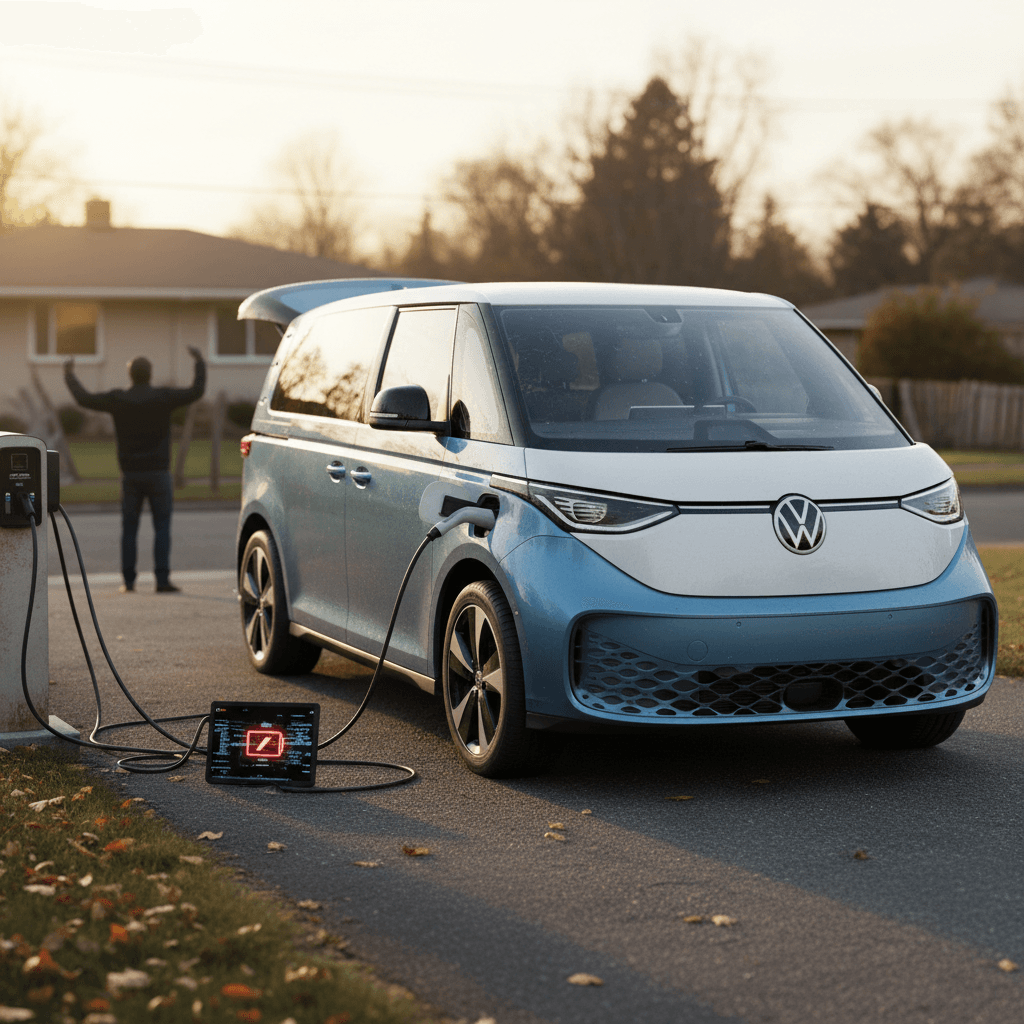
The 2024 VW ID. Buzz is one of the most charming electric vehicles on the road, a modern reboot of the classic Microbus. But if you’re eyeing one new or used, you’ve probably heard about 2024 VW ID Buzz problems, from quirky software to charging gremlins. Let’s separate real issues from internet noise so you can decide if this big electric van fits your life.
Context: 2024 vs 2025+ ID. Buzz
Overview: How Serious Are 2024 VW ID. Buzz Problems?
2024–2025 VW ID. Buzz Problem Snapshot
Overall, the ID. Buzz doesn’t show a pattern of catastrophic failures, no widespread battery defects or structural problems so far. Instead, most 2024 VW ID Buzz problems fall into three buckets: software annoyances, charging behavior (especially with scheduled or DC fast charging), and everyday livability issues like brake feel, ride comfort, and cabin noise.
Quick Take: Should You Worry About ID. Buzz Reliability?
Pros and Cons of Early ID. Buzz Ownership
How the big electric VW van really behaves in the wild
Where the ID. Buzz Looks Solid
- Battery tech is proven on VW’s MEB platform, with no pattern of pack failures so far.
- Drivetrain hardware (motors, inverters) has been generally robust across VW’s ID family.
- Crash protection and safety tech are up to modern standards, with strong active safety feature coverage.
- Interior quality is better than early ID.4s, with fewer squeaks and rattles reported.
Where Owners Raise Red Flags
- Infotainment and charging software can be flaky, particularly scheduled home charging and profiles.
- Public DC fast charging sometimes triggers error messages or cuts sessions short on certain CCS stations.
- Brake feel and body motion draw criticism from reviewers, especially in stop‑and‑go driving.
- Price and range feel mismatched for some shoppers, especially in U.S. markets with long drives.
Tip for Shoppers
Software and Infotainment: The Most Talked‑About Problems
If there’s one headline for 2024 VW ID Buzz problems, it’s software. VW has been working through software growing pains across its ID family, and the Buzz inherits a lot of that code. Owners’ complaints range from mildly annoying to truly inconvenient, especially when it comes to charging and daily routines.
- Unreliable scheduled charging: Several owners report setting up home locations and off‑peak charging schedules that work for a few days, then randomly fail, either the van charges immediately at full price, or doesn’t charge at all overnight.
- Home location “forgetfulness”: Some Buzz vans have dropped saved home locations or charging profiles, forcing owners to re‑enter them before the next charge.
- Glitchy app integration: The VW app may show outdated charge status, miss push notifications, or disagree with the car’s own displays.
- Infotainment lag and restarts: The central screen can be slow to boot, hiccup when switching between apps, or occasionally reboot while driving.
- Menu complexity: Important settings like charge limits, current limits, and driver assistance tweaks are buried in multi‑layer menus, which is frustrating when something isn’t working as expected.
Why Software Issues Matter More on an EV
What You Can Do as an Owner
- Make sure your Buzz is always running the latest software update, VW is actively patching bugs.
- If you use time‑of‑use electricity rates, consider scheduling on the wallbox or smart charger instead of the car; many owners find that more reliable.
- Keep screenshots and logs of any repeated failures. That documentation helps dealers escalate to VW when something isn’t right.
What to Check on a Test Drive
- Set up a simple departure schedule and watch how the car behaves while you’re with the salesperson.
- Pair your phone, launch navigation, stream audio, and use voice commands, note any lag or glitches.
- Ask the dealer to confirm the software version and whether all open campaigns and updates have been applied.
Charging and Range Quirks Owners Report
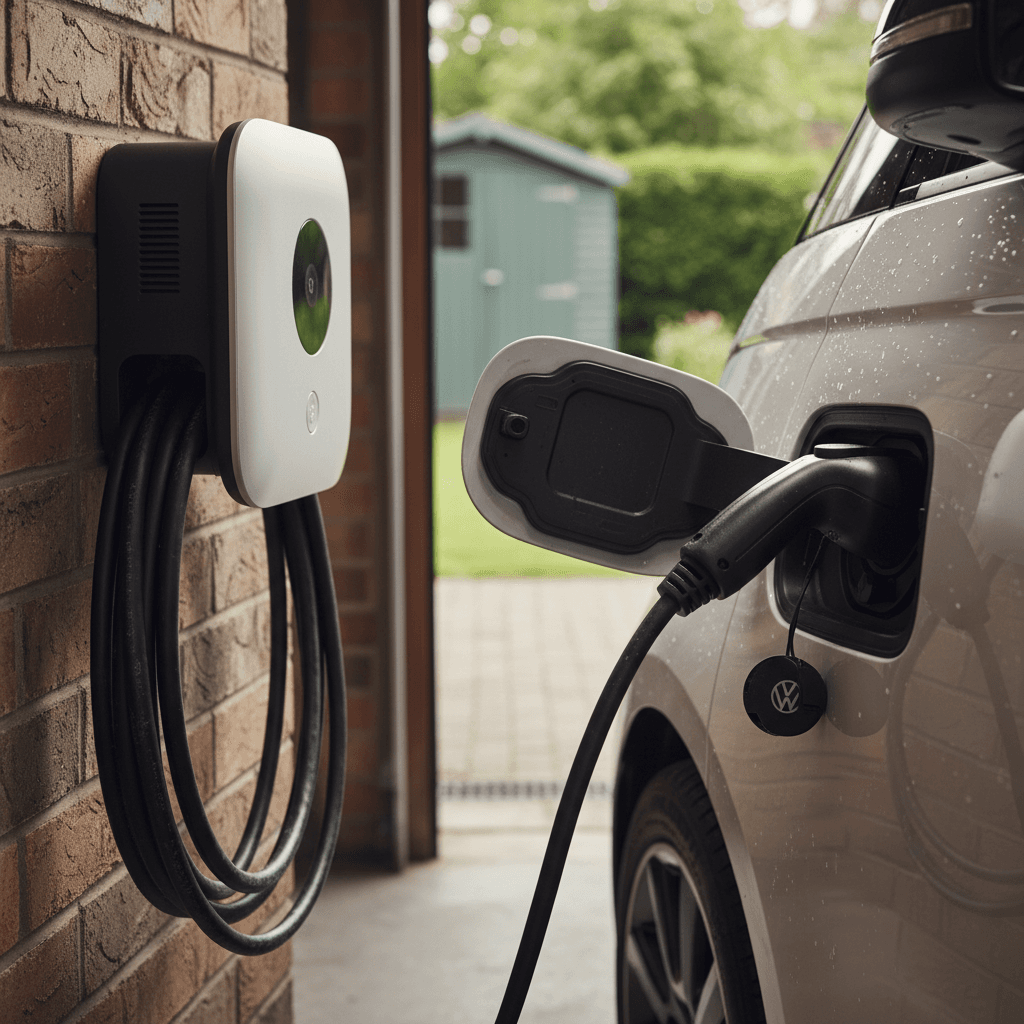
The ID. Buzz shares its battery and charging hardware with other VW MEB models, so its basic tech is familiar. That’s good news for long‑term durability, but early owners have uncovered some real‑world charging quirks you’ll want to understand before you buy.
- Scheduled charging that doesn’t start: A common story goes like this, plug in at night with a midnight start time, wake up to find the battery at the same state of charge. For households on off‑peak rates, that’s more than inconvenient; it’s money left on the table.
- DC fast charging sessions that cut out: A small but vocal group of owners describe public CCS fast‑charge sessions that begin normally, then throw warnings like “Charging Socket Not Working” or “Electrical System Not Working Correctly” and shut down after 30–60 seconds. Some have needed charging modules or ports replaced under warranty.
- Sensitive to specific stations: In a few cases, the Buzz has failed to pull more than a trickle from a particular DC fast charger, only to charge normally at the next station over. That suggests a finicky handshake between the car and certain networks rather than a total failure of the vehicle hardware.
- Modest fast‑charge speed: Even when everything works, the Buzz’s peak DC rate around 200 kW is just decent for a big, aero‑unfriendly van. You can expect good but not class‑leading road‑trip times.
- Real‑world range: Owners report highway range in the low‑200‑mile ballpark when loaded with people and gear, which feels tight for long American road trips but manageable for suburban family duty.
Red‑Flag Charging Symptoms on a Used ID. Buzz
Ride, Handling, and Noise Complaints
On paper the ID. Buzz looks like a magic carpet: low center of gravity, long wheelbase, and silent electric power. In reality, reviews and owners say the ride and refinement are more mixed, and that’s something a short test drive doesn’t always reveal.
How the ID. Buzz Feels on the Road
Common praise and complaints from early owners and road‑test reports.
| Aspect | What Owners Like | Common Complaints |
|---|---|---|
| Ride comfort | Soft over small bumps, good primary ride on smooth roads. | Can feel bouncy and pitchy over wavy pavement; some passengers report motion sickness in the back rows. |
| Handling | Surprisingly agile for its size; easy to maneuver in town. | Tall body and weight are obvious in tight corners; not a “fun to drive” EV in the sporty sense. |
| Brakes | Stopping distances in instrumented tests are competitive for the class. | Pedal feel can be spongy and artificial, especially in the transition from regen to friction braking. |
| Noise | Electric motor is quiet; city driving is pleasantly hushed. | At highway speeds, wind rush around the upright body and mirrors can be louder than in sleek EV crossovers. |
Test the ID. Buzz on your worst local roads and at 70+ mph before you sign anything.
Highway Test Tip
Interior Ergonomics & Practicality Surprises
Packaging is the ID. Buzz’s party trick: huge glass area, tons of legroom, and that lovable bus‑like view out front. But living with one every day reveals a few ergonomic and practicality problems that don’t show up in promo photos.
- Control layout and haptics: Like other recent VWs, the Buzz relies heavily on touch sliders and screen‑based climate controls. Many drivers wish for more physical knobs and buttons, especially when driving on rough roads.
- Seat comfort over distance: Short hops are fine, but some taller drivers and long‑trip families complain that front seats lack enough thigh support and adjustability for all‑day comfort.
- Third‑row access and flexibility: The long‑wheelbase layout is roomy, but the mechanisms for sliding and folding the rear seats can feel fussy. If you haul car seats or grandparents regularly, you’ll want to practice your loading dance before you buy.
- Cargo floor height: With the battery under the floor, load height is higher than in some minivans. That matters when you’re lifting strollers, coolers, or camping gear in and out.
- Visibility and mirrors: Big windows are great, but thick pillars and the Buzz’s bulk mean you’ll rely heavily on cameras and sensors. Make sure the surround‑view system and parking aids are working correctly on a used example.
Recalls, Build Quality, and Safety Notes
As of early 2026, the ID. Buzz has seen a handful of recalls and service campaigns globally, typical for a brand‑new platform in its first years. Some have involved seat‑related safety compliance and software updates. The U.S. market has also dealt with trade‑policy drama that temporarily affected shipments, which sometimes gets conflated with safety problems in headlines.
Recall & Build‑Quality Checks for a Used ID. Buzz
1. Ask for a recall printout
Have the seller or dealer print a <strong>full recall and service campaign history</strong> by VIN. Everything should show as “completed,” not “open.”
2. Inspect doors and seals
Walk around the van, checking that <strong>all sliding and rear doors open smoothly</strong> and that rubber seals sit flat with no wind whistles at speed.
3. Look for water leaks
Lift floor mats and check in the rear cargo well for damp carpet or musty smells after rain or a car wash.
4. Test all safety tech
Verify that <strong>lane‑keeping, adaptive cruise, blind‑spot monitoring, parking sensors, and cameras</strong> all work without warning lights or odd behavior.
5. Scan for warning messages
On startup and shutdown, look for any <strong>persistent warnings</strong> about the electrical system, charging system, or driver‑assist hardware.
Good News on Safety
What These Problems Mean If You’re Buying Used
When you roll all of this together, the 2024 VW ID Buzz problems picture looks less like “doomed to fail” and more like “quirky but livable, if you shop carefully.” The biggest risk for used buyers isn’t that the Buzz will suddenly die; it’s that you end up with an example that hasn’t had its software sorted or its charging issues resolved under warranty.
Who the ID. Buzz Suits Best
- Families who mostly drive local and want maximum space and character.
- Owners with reliable Level 2 home charging who can work around the occasional schedule glitch.
- Drivers who care more about vibe and practicality than razor‑sharp handling or tomb‑silent cabins.
Who Should Probably Skip It
- Frequent long‑distance highway road‑trippers who need 300+ miles of easy range.
- Buyers who are intolerant of software weirdness and menu‑driven controls.
- Shoppers who can get a newer‑tech, longer‑range EV at a similar used price.
Used Market Opportunity
Inspection Checklist for a Used 2024 VW ID. Buzz
Here’s a focused checklist you can bring to a dealer or private sale. It’s geared specifically to 2024 VW ID Buzz problems and early‑production quirks, not just generic used‑car advice.
Hands‑On Checks Before You Buy an ID. Buzz
1. Confirm software version and updates
Ask the seller to show the <strong>software version screen</strong> and verify that all updates and campaigns have been applied. If the dealer can’t answer basic software questions, that’s a red flag.
2. Test Level 2 home‑style charging
If possible, plug into a Level 2 station and set a simple <strong>start/stop schedule</strong>. Let it run long enough to see whether the Buzz respects the schedule or randomly charges immediately.
3. Try at least one DC fast charge
Visit a public DC fast charger and start a session from a mid‑level state of charge. Watch for <strong>error messages</strong> or sudden power cutouts within the first minute.
4. Listen and feel during braking
On a mixed test route, pay attention to <strong>brake pedal feel</strong>. It may feel different from a gas car, but it shouldn’t feel scary, inconsistent, or accompanied by grinding noises.
5. Load people and cargo
Bring family members or friends, fold and slide the seats, and <strong>simulate your real use case</strong>. Make sure the ergonomics and ride work for everyone, not just the driver.
6. Review charging and service history
Ideally, you’ll see documented visits for <strong>any past charging or electrical warnings</strong>, with clear notes that parts were replaced or software was updated to fix the issue.
How Recharged Helps You Shop an ID. Buzz Smarter
Shopping a used electric van is more complicated than flipping through old minivans on a lot. With a model like the ID. Buzz, new platform, evolving software, and real‑world quirks, you want more than a Carfax and a handshake. That’s where a marketplace built for EVs makes a difference.
What You Get With a Recharged ID. Buzz
Transparent battery health, fair pricing, and EV‑savvy support
Recharged Score Battery Health
Fair Market Pricing
EV‑Specialist Support
Ready to find your next EV?
Browse VehiclesFlexible Ways to Buy or Sell
- Financing options tailored to used EVs, including ID. Buzz vans that might not qualify for new‑car incentives.
- Trade‑in or instant offer if you’re moving out of a gas van or an older EV.
- Consignment if you already own an ID. Buzz and want help reaching the right buyers.
Nationwide, Mostly Digital
- Shop and complete most steps fully online, with transparent vehicle reports.
- Have your EV delivered nationwide, or visit our Experience Center in Richmond, VA if you prefer an in‑person look.
FAQ: 2024 VW ID. Buzz Problems & Ownership Questions
Frequently Asked Questions About ID. Buzz Problems
Bottom Line: Should You Buy a 2024 ID. Buzz?
If you’ve fallen for the 2024 VW ID. Buzz, you’re not alone. It’s one of the few EVs that still makes people smile at a stoplight. But you should go in knowing that the most common 2024 VW ID Buzz problems aren’t dramatic mechanical failures, they’re software quirks, charging behavior oddities, and comfort compromises that may or may not bother you.
Take a long, honest test drive. Try both home‑style and DC fast charging. Sit in every seat, listen at highway speeds, and poke through the menus until you’re confident you can live with them. If the Buzz still makes sense after that, and especially if you can find one with clean history, updated software, and verified battery health, it can be a deeply satisfying electric family hauler.
And if you’d like help finding a used ID. Buzz that’s already been vetted for the very issues we’ve just walked through, start your search with Recharged. Our Recharged Score battery health diagnostics, fair‑market pricing tools, and EV‑specialist support are built to make sure you know exactly what you’re buying, before you plug in for the first time.