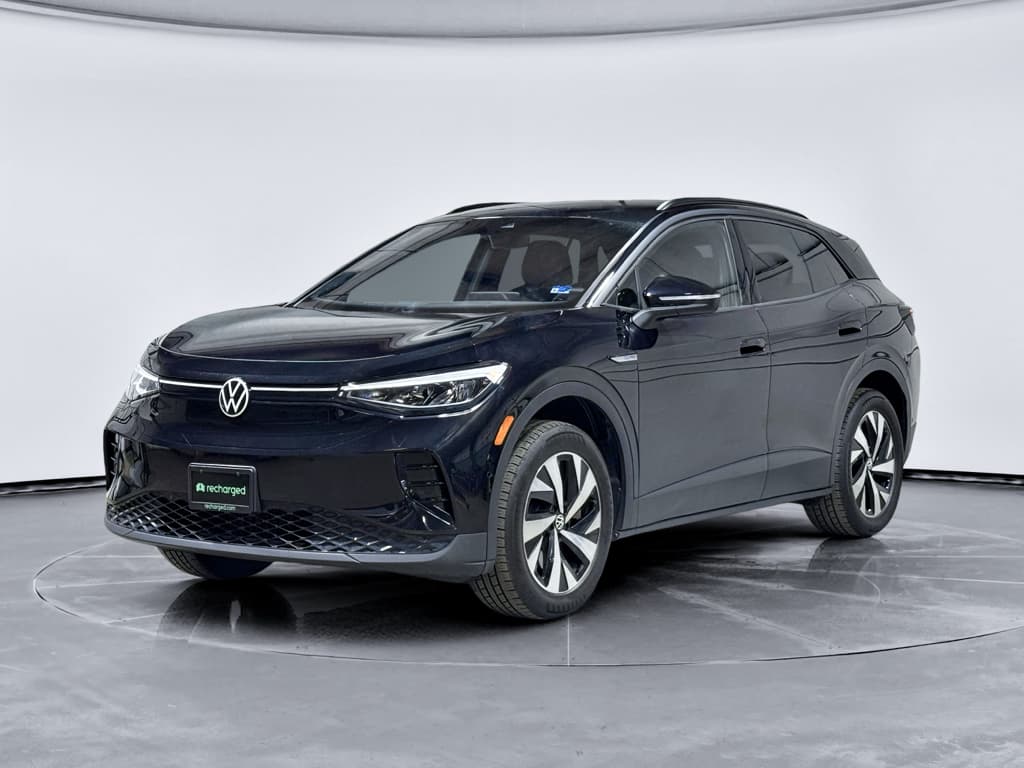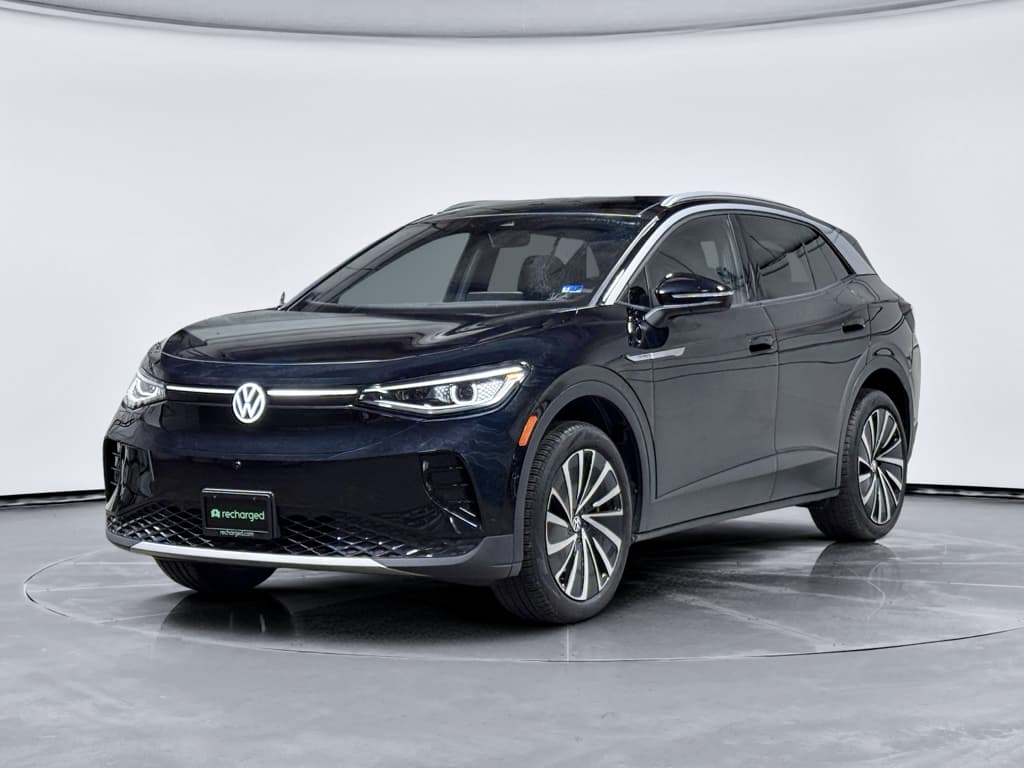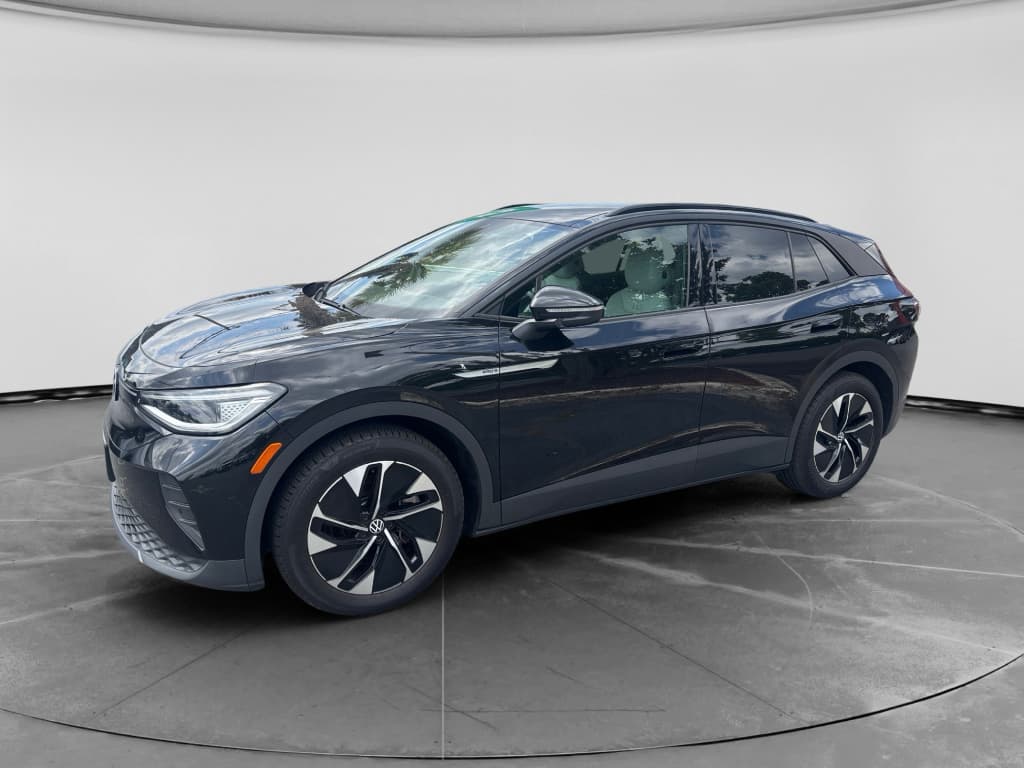
If you own a 2024 Volkswagen ID.4, you’re in a strange little corner of the EV universe. It’s new enough to feel modern, but the market has moved fast, incentives have shifted, and early EV resale values have taken some bruises. That makes 2024 Volkswagen ID.4 trade in value a surprisingly complicated question in 2026, and exactly why you’re right to do your homework before you hand over the keys.
Context: why this guide matters in 2026
2024 ID.4 trade‑in value in 2026: the quick view
2024 Volkswagen ID.4 value snapshot (early 2026)
Those numbers are broad ranges, not promises. A base ID.4 Standard with higher miles and a hard life might sink into the low‑$20,000s at trade‑in; a loaded AWD Pro S with low miles and paper‑clean history can still pull more than $30,000 from the right buyer. The rest of this guide is about understanding where your car falls on that spectrum, and how to push it upward.
How much is a 2024 Volkswagen ID.4 worth right now?
Let’s start with what the market is saying, in broad strokes, as of spring 2026:
Typical 2024 ID.4 value ranges in 2026 (U.S.)
High‑level U.S. ranges assuming clean title, no major damage, and roughly 20,000–30,000 miles. Your ZIP code and trim will move these numbers up or down.
| 2024 ID.4 trim | Original MSRP (approx.) | Likely dealer retail now | Likely trade‑in range |
|---|---|---|---|
| Standard / S (RWD, smaller battery) | $40,000–$42,000 | $28,000–$31,000 | $24,000–$27,000 |
| Pro / Pro S (RWD, larger battery) | $44,000–$48,000 | $30,000–$34,000 | $25,000–$29,000 |
| AWD Pro / AWD Pro S | $49,000–$53,000 | $32,000–$37,000 | $27,000–$31,000 |
Use this as orientation, then sanity‑check against live appraisals from multiple sources.
About those ranges…
If you want an instant sanity check, it’s worth plugging your VIN into a couple of appraisal tools and comparing offers from a franchise VW dealer, a national "instant‑offer" buyer, and an EV‑focused retailer like Recharged. You’ll quickly see where the real floor and ceiling are for your particular 2024 ID.4.
Why 2024 ID.4 values are a little weird
The 2024 ID.4 has not had a normal childhood. Production pauses, recall headlines, shifting tax rules, and aggressive discounts on new EVs have all tugged on resale value. In plain English: the spreadsheet says one number, the vibes in the market say another.
- Production and recall drama: 2024 ID.4 output in the U.S. was interrupted by quality and recall issues, which means fewer 2024s on the road than you’d expect, and a slightly thinner used market.
- EV price cuts across the board: Tesla’s repeated price cuts and heavy discounts from legacy brands have pushed new‑EV transaction prices down, which drags used values with them.
- Tax‑credit whiplash: Federal and state EV incentives have changed form more than once. Depending on when and how your ID.4 was purchased, its effective "real" cost to the first owner may have been much lower than the window sticker, which softens today’s resale value.
- Consumer anxiety about EV depreciation: Media stories about EVs "falling off a cliff" in value have made some buyers more cautious, which in turn makes dealers more conservative on trade‑ins.
How the ID.4 compares to other EVs
7 factors that shape your 2024 ID.4 trade‑in offer
When a dealer or online buyer looks at your 2024 ID.4, they’re not feeling things in their heart; they’re looking at a stack of data feeds and risk multipliers. Here’s what actually moves the number.
What buyers look at on your 2024 ID.4
The levers that quietly move your trade‑in offer up or down.
1. Mileage & usage
2. Accidents & repairs
3. Condition & tires
4. Trim & options
5. Battery health
6. Your ZIP code
7. Market timing
Battery health: the invisible line item in your offer
With a nearly new EV like a 2024 ID.4, battery health is the thing everyone talks about and almost nobody can see clearly. Range estimates on the dash are noisy, and casual test drives tell you nothing about cell balance or long‑term degradation. But on the buying side of the desk, this is where the adults are doing math.
Why battery health matters more than leather seats
How dealers usually handle batteries
Most traditional dealers don’t have deep EV diagnostic tools. They lean on:
- Basic health checks from scan tools or auction reports
- Test drives and customer complaints about range
- Conservative assumptions built into their pricing models
Translation: if they can’t confidently read your pack’s health, they’ll price in the worst‑case scenario to protect themselves.
How Recharged approaches it
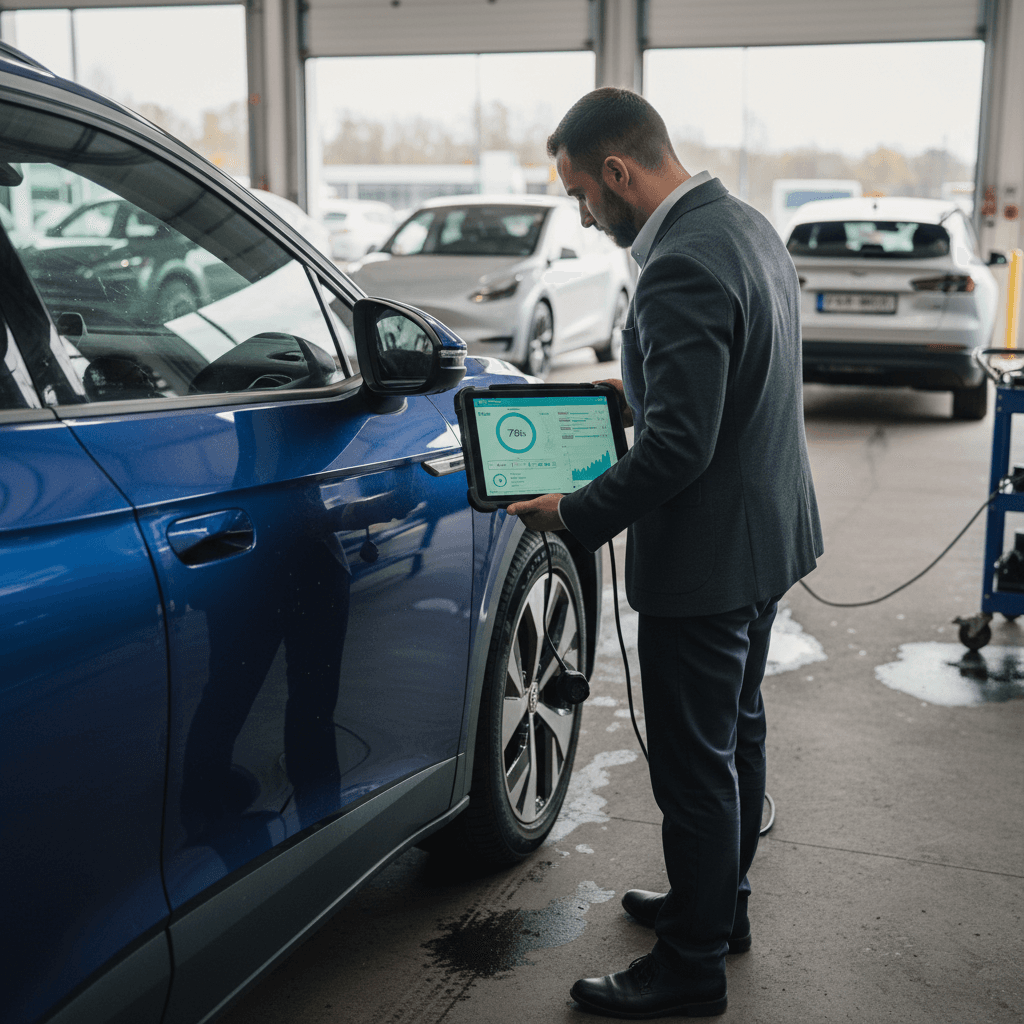
Every vehicle on Recharged comes with a Recharged Score and verified battery health diagnostics. Instead of guessing, we measure:
- Estimated remaining capacity vs. original
- Charge behavior across Level 2 and DC fast charging
- Error codes and thermal‑management performance
If your 2024 ID.4’s pack is aging better than average, that can be reflected in what we’re willing to pay, because we can prove it to the next buyer.
Dealer trade‑in vs instant‑offer vs EV marketplace
You have three broad ways to turn your 2024 ID.4 into cash or equity for your next car. Each comes with its own math, its own level of hassle, and its own appetite for risk.
Three common paths for your 2024 ID.4
Same car, three very different experiences.
Franchise dealer trade‑in
Pros: One‑stop transaction, easy to roll equity into a new VW or another brand, sometimes sweetened with loyalty bonuses.
Cons: Often the lowest raw dollar offer. Many stores are still wary of EVs on their used lots, especially if they don’t sell many ID.4s new.
Good if you value convenience and are already buying from that dealer.
Instant‑offer sites
Pros: Fast online quotes, often higher than a generic dealer, especially if they’re hungry for late‑model EVs in your area.
Cons: Online numbers can shrink after in‑person inspection. Battery health is rarely evaluated in a nuanced way.
Good if you just want out of the car with minimal friction.
EV‑focused retailer/marketplace
Pros: Understands EVs, can value battery health and options correctly, and has buyers specifically looking for used ID.4s.
Cons: Not every market has a strong EV‑only player yet.
At Recharged, we can buy your ID.4 outright, take it on consignment, or apply it as a trade toward another used EV, with nationwide delivery.
When Recharged makes the most sense
Ready to find your next EV?
Browse Vehicles9 steps to maximize your 2024 ID.4 trade‑in value
You can’t rewrite the depreciation curve, but you can absolutely control where you land on it. Think of this as pre‑production for your trade‑in: you’re staging the car and the paperwork so an appraiser sees the best version of your ID.4, not the worst.
Pre‑trade checklist for your 2024 ID.4
1. Document your charging habits
If you mostly charged at home on Level 2 and used DC fast charging sparingly, say so, and show it. Screenshots from your charging app or utility portal help tell a low‑stress battery story.
2. Get a battery health report
If possible, have a third‑party or EV‑specialist shop pull a detailed battery report. When you sell or trade to Recharged, our Recharged Score battery health diagnostics can turn that data into real resale value.
3. Fix the easy cosmetic stuff
Professional detailing, paintless dent repair on obvious dings, and repairing curb rash on wheels can cost a few hundred dollars and add more than that back to your offer, especially on a nearly new 2024 model.
4. Replace obviously worn tires
Bald or mismatched tires are an easy excuse to knock down your trade‑in. If tread is low, pricing a mid‑range set of EV‑appropriate tires can net out in your favor at appraisal time.
5. Gather every key and accessory
Second key fobs, cargo covers, original charging cable, owner’s manuals, missing items cost real money, because the next seller has to replace them. Show up with the full kit.
6. Print your service and recall history
A clean, well‑documented history, especially any completed recall work, builds confidence that your ID.4 has had its software and hardware issues addressed. That reduces risk and supports a stronger offer.
7. Time your trade around incentives
If local dealers are blowing out new ID.4s with hefty discounts, your trade‑in will suffer. When incentives calm down or shift to other models, used prices often perk back up.
8. Get at least three real offers
Use a VW dealer, a national buying service, and an EV‑focused buyer like Recharged. Don’t just compare online estimates, push each source to a firm, written offer you can actually transact on.
9. Consider selling on consignment
If you’re not in a rush and want closer‑to‑retail money without handling showings yourself, consignment with an EV specialist like Recharged can bridge the gap between low trade‑in and high private‑party pricing.
Should you trade in your 2024 ID.4 or keep it?
This is the part where math meets emotion. The 2024 ID.4 is a perfectly competent electric crossover: comfortable, quiet, and, once the updates are in, much less glitchy than the early builds. The question is whether swapping out now, at roughly the 2‑year mark, makes sense for you.
Reasons to keep your 2024 ID.4
- You like how it drives. If it fits your life and you’re not chasing the latest screen layout, keeping it a few more years lets you amortize that early depreciation.
- Battery health looks strong. If range remains solid and you’ve treated the pack kindly, the car may age better than the market fears.
- Your payment is comfortable. In a higher‑rate environment, replacing a manageable payment with a bigger one can be a downgrade, even in a nicer car.
Reasons to trade your 2024 ID.4 now
- Software and quality fatigue. If you’re tired of chasing updates or minor issues, it’s reasonable to let someone else love this car next.
- You want more range or faster charging. Newer EVs are quietly pulling away in both areas. If you road‑trip a lot, the upgrade might be worth it.
- You’re upside‑right. If your loan balance is at or below realistic trade‑in value, you have flexibility today that you may not have if values soften further.
Be careful with negative equity
In the end, the 2024 Volkswagen ID.4 is neither a gold mine nor a write‑off. It’s a solid electric crossover living through a noisy moment in the EV market. Your job is to strip away the noise: know roughly what similar ID.4s are selling for, understand how your mileage and battery health compare, and get competing offers from buyers who actually understand electric vehicles. If you want a second opinion, or a concrete number, Recharged can appraise your 2024 ID.4, share a transparent Recharged Score report, and help you decide whether trading, consigning, or simply keeping the car is the smartest move for you right now.
FAQ: 2024 Volkswagen ID.4 trade‑in value
Frequently asked questions about 2024 ID.4 trade‑ins
Ready to see where your 2024 ID.4 actually lands? Start by gathering your VIN, mileage, and a few photos, then request offers from a local VW dealer, an instant‑offer site, and Recharged. Numbers, not vibes, will tell you whether now is the right moment to move on, or to enjoy a few more quiet, electric years with the car you already have.