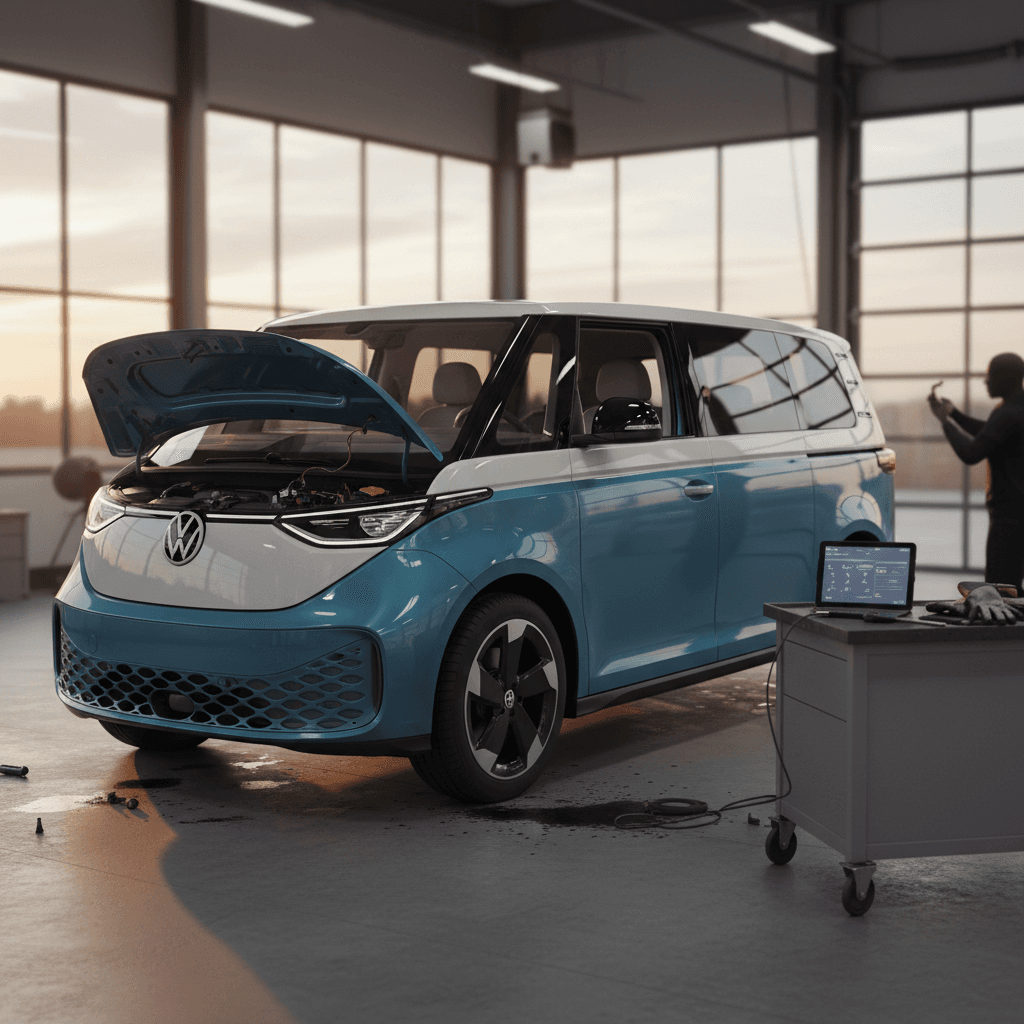
If you’ve been eyeing the retro‑cool Volkswagen ID. Buzz or you already own one of the first U.S. vans, you’ve probably heard about recalls and even a temporary stop‑sale. This guide pulls together the complete 2024 Volkswagen ID. Buzz recalls list for the U.S. market, explains what actually went wrong, and shows you what to check before you buy or sell an ID. Buzz, especially on the used market.
Quick context: model years vs. calendar years
Overview: 2024 ID. Buzz recalls at a glance
Early U.S. ID. Buzz recall snapshot
Two main issues have driven most of the headlines around the ID. Buzz in the U.S.: a rear bench seat that was too wide for U.S. regulations, and a brake system warning light that could display incorrectly. Both triggered recalls and, for a time, a stop‑sale while Volkswagen engineered and rolled out repairs.
Timeline: When recalls hit the U.S. ID. Buzz
Late 2024: Launch and early production
- First U.S. ID. Buzz vans arrive in late 2024 as 2025 model‑year vehicles.
- Production for U.S. models runs through early 2025 from Volkswagen’s Hannover plant.
- These early builds make up the bulk of vans later caught up in recalls.
2025–early 2026: Recalls and recovery
- Rear seat width recall hits roughly the first 5,000+ U.S. vans, prompting a stop‑sale and even a pause in exports while VW reworks hardware.
- Brake warning light software recall covers a similar build window, again focused on 2025 MY vans built from September 2024 through February 2025.
- By mid‑2025, dealers resume sales as fixes roll out; by early 2026, most active owners have been contacted to complete repairs.
Important for used shoppers
Recall 1: Rear bench seat width (too-wide third row)
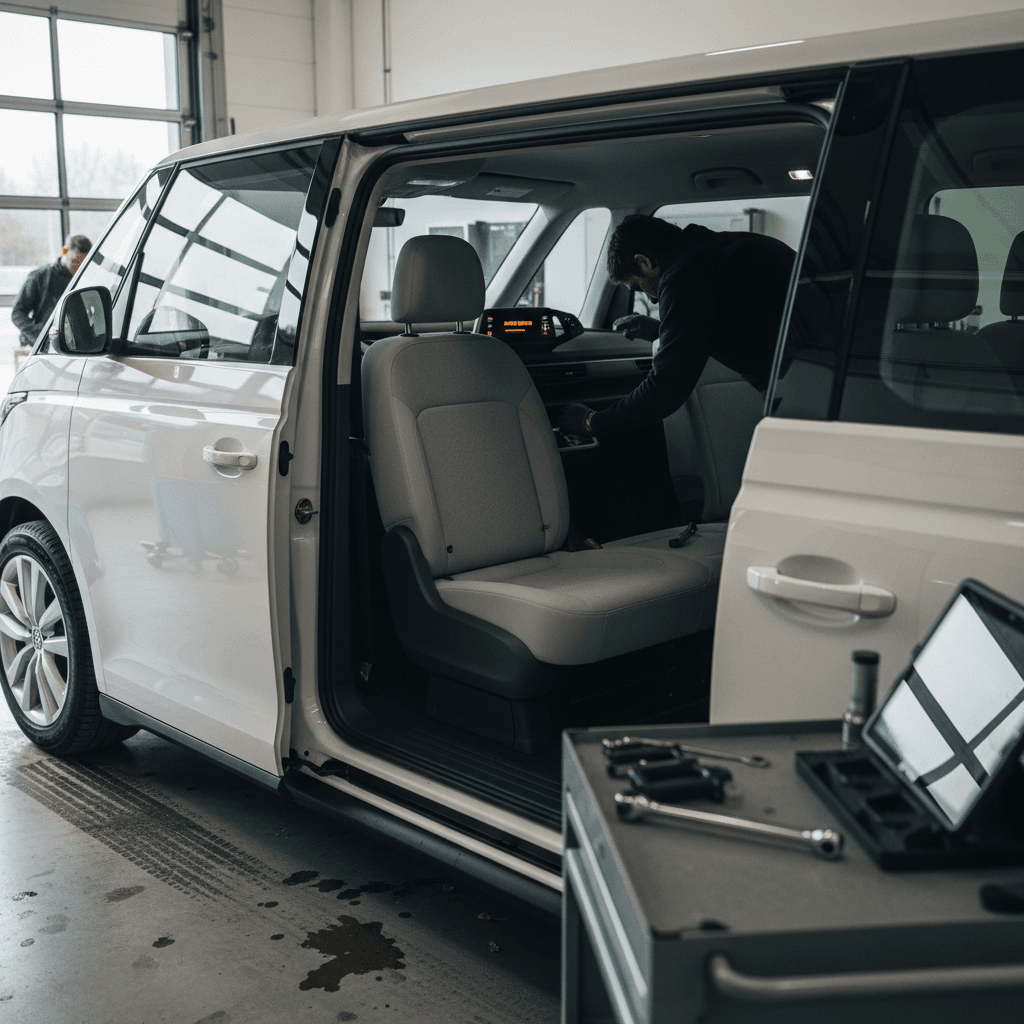
The first major recall to hit the U.S. ID. Buzz involved the third‑row bench seat. Regulators found that the rear bench was too wide and didn’t meet specific U.S. safety requirements for seating geometry and restraint performance. In plain English: the back seat didn’t fit the rulebook, and that can affect how occupants are protected in a crash.
Rear bench seat width recall – quick reference
Key details for the ID. Buzz rear seat recall affecting early U.S. vans.
| Item | Details |
|---|---|
| Issue | Third-row rear bench seat too wide for U.S. safety standards |
| Typical affected vehicles | 2025 model year ID. Buzz built from mid‑September 2024 through February 2025 |
| Symptoms | None in everyday driving; issue found in testing and certification work |
| Safety risk | Potentially altered crash performance and restraint behavior for rear passengers |
| Remedy | Dealer installs revised trim/seat hardware to bring the bench into compliance |
| Owner cost | $0 (performed as a safety recall) |
| Time in shop | Often a half‑day to a full day, depending on dealer scheduling |
Exact dates and VIN ranges vary by individual vehicle, always confirm with a VIN search before relying on this table.
What owners experienced
For U.S. shoppers, the most important takeaway is that any early ID. Buzz with a third row should already have this fix completed. Dealers cannot legally sell a new vehicle with an open safety recall, so any unsold inventory should be repaired before delivery. On the used market, however, it’s still on you to confirm the status before you sign paperwork.
Recall 2: Incorrect brake system warning light
The second key issue centers on the ID. Buzz’s brake warning light. On some vehicles, a software bug could cause the wrong dashboard warning symbol to illuminate for a specific kind of brake system fault. In a worst‑case scenario, that might delay a driver from recognizing a serious brake issue, even though the brakes themselves aren’t inherently defective.
Brake warning light software recall – quick reference
Summary of the brake warning light recall affecting U.S. ID. Buzz vans.
| Item | Details |
|---|---|
| Issue | Incorrect brake system warning indicator for a specific fault condition |
| Typical affected vehicles | Early U.S. ID. Buzz builds (2025 MY) produced from September 9, 2024 through February 11, 2025 |
| Symptoms | Possible mismatch between the type of brake fault and the cluster warning shown |
| Safety risk | Driver may misinterpret a critical brake warning, delaying service |
| Remedy | Dealer installs updated software and performs system checks; no hardware replacement for most vehicles |
| Owner cost | $0 (safety recall) |
| Time in shop | Usually less than a day; actual programming time is often under an hour |
Exact dates and VIN ranges are defined in the official recall notice; treat this as a high‑level guide.
How to know if yours is fixed
Stop-sales, delivery pauses and what they mean
Both the seat and brake‑warning recalls were serious enough that Volkswagen put the ID. Buzz under a stop‑sale in the U.S. for a time. That meant dealers couldn’t sell new ID. Buzz vans sitting on the lot until the fixes were available and applied. Exports from Europe to North America were also paused temporarily while Volkswagen reworked rear seating and updated software before shipping additional units.
- If you bought new from a franchised VW dealer, your van should have had both recalls completed before you took delivery.
- If you reserved a Buzz and your delivery date slipped in 2025, the stop‑sale and recall work were likely part of the reason.
- If you’re seeing a brand‑new 2025 ID. Buzz advertised today, verify in writing that all recalls were completed before you take delivery.
Stop-sale vs. recall: know the difference
How to check if your ID. Buzz has an open recall
Whether you already own an ID. Buzz or you’re shopping for one used, you don’t need to guess about recalls. You can confirm them in a few minutes with the VIN (vehicle identification number).
5-step process to verify recall status
1. Locate the VIN
You’ll find the 17‑digit VIN at the base of the windshield on the driver’s side, on the driver’s doorjamb label, and on your registration or insurance documents.
2. Run a VIN check on NHTSA or VW
Go to the NHTSA recall lookup site or Volkswagen’s own recall checker and enter the VIN. These tools show <strong>open (unrepaired)</strong> safety recalls tied to that vehicle.
3. Ask the dealer for a printout
If you’re at a dealership, request a service history or recall summary showing any completed campaigns. This is standard practice and should be free.
4. Confirm both key campaigns
Specifically ask whether the <strong>rear seat width</strong> and the <strong>brake warning light software</strong> campaigns were done. Dealers know these bulletins well thanks to the early ID. Buzz launch issues.
5. Keep documentation
For your records, and future resale, keep copies of recall repair orders. They prove work was completed and can reassure the next buyer.
Good news for owners
Ownership impact: cost, time and resale value
No one loves getting a recall notice, but in the ID. Buzz’s case, the long‑term ownership impact is more about time and paperwork than about permanent flaws. Here’s how these campaigns typically affect owners.
How ID. Buzz recalls affect real-world ownership
From shop time to trade‑in value, here’s what to expect.
Out-of-pocket cost
Safety recalls, like the seat and brake‑warning fixes, are performed at no charge to you. You may lose some time, but not cash.
Time without your van
Most owners report needing to leave the van for a half‑day to a couple of days, depending on dealer scheduling and parts availability.
Effect on resale
Once all campaigns are closed, recalls generally don’t crush resale values, especially when the fixes are straightforward and well-documented.
Where you might feel more impact is in dealer availability and confidence. Some early ID. Buzz shoppers saw deliveries delayed or units pulled back for repairs, and that hangover can make buyers more cautious. In today’s EV market, though, a fully repaired van with documentation can actually stand out versus one with unknown history.
Buying a used ID. Buzz? Checklist for recalls
Because the ID. Buzz launched here only recently and in relatively small numbers, every used example tells a story. Recalls and stop‑sales are a big part of that story. Here’s how to protect yourself when you’re looking at a pre‑owned Buzz.
Used Volkswagen ID. Buzz recall & safety checklist
1. Verify model year and build date
Confirm whether you’re looking at a <strong>2025 model‑year</strong> van built in late 2024 or early 2025. Those early builds are the ones most likely touched by recalls.
2. Run a fresh VIN recall search
Before you talk price, plug the VIN into a recall lookup site. Treat any <strong>open safety recall</strong> as a must‑fix item, ideally before you complete the purchase.
3. Ask for recall repair orders
Request documentation showing the seat and brake warning campaigns were completed. If the seller can’t produce it, factor the uncertainty into your offer, or walk away.
4. Inspect rear seats and belts
Visually confirm that the third‑row bench and belts look properly installed, with no loose trim or obviously mismatched parts from a rushed repair.
5. Test-drive and watch the cluster
On a test drive, pay attention to the instrument cluster at startup and under braking. You shouldn’t see persistent brake warnings or odd error messages. Anything unusual deserves a dealer inspection.
6. Get an EV‑savvy inspection
Beyond recalls, have an <strong>EV specialist</strong> check battery health, charging behavior and software status. That’s where tools like a Recharged Score Report add real transparency.
Use recalls as leverage, not fear fuel
Where Recharged fits into the ID. Buzz story
With any first‑wave EV, especially one as high‑profile as the ID. Buzz, the key question isn’t just, “Were there recalls?” It’s, “Did someone verify what’s been fixed and what hasn’t?” That’s exactly where Recharged focuses its energy for used‑EV shoppers.
How Recharged helps ID. Buzz buyers and sellers
Transparency around battery health, pricing and recall history.
Recharged Score Report
Every vehicle sold through Recharged includes a Recharged Score Report with verified battery health, charging behavior and key service history, so you’re not guessing about the invisible stuff.
Recall & safety review
Recharged’s EV‑specialist team reviews title, history and service documentation, including evidence of recall completion, before a used EV is listed on the marketplace.
Financing & delivery support
From financing and trade‑ins to nationwide delivery and an Experience Center in Richmond, VA, Recharged is built to make buying or selling a used EV like the ID. Buzz simpler and more transparent.
Ready to find your next EV?
Browse VehiclesFAQ: 2024 Volkswagen ID. Buzz recalls
Frequently asked questions about 2024–2025 ID. Buzz recalls
Bottom line: Are ID. Buzz recalls a deal-breaker?
If you’re looking at the 2024–2025 Volkswagen ID. Buzz, the recall headlines can sound scary, but taken in context they’re manageable. Early U.S. vans were caught by two main issues, rear seat geometry and brake warning software, that Volkswagen has now addressed with hardware tweaks and software updates.
From an ownership and used‑market perspective, what matters most is verification. Has each van had its recall campaigns completed? Can the seller prove it? And has anyone independently assessed the battery and charging health? If you can say yes to those questions, recalls become part of the ID. Buzz’s launch story, not a reason to cross it off your list.
That’s also where Recharged is designed to help. By pairing a Recharged Score Report with expert EV guidance, financing options, trade‑in support and nationwide delivery, we aim to make buying or selling a used ID. Buzz as transparent as possible, so you can focus on whether the electric microbus lifestyle really fits yours.