If you’re shopping the used EV market, the 2024 Toyota bZ4X is starting to appear on lots with eye-catching discounts. Strong early depreciation and Toyota’s conservative battery strategy make the 2024 bZ4X one of the more intriguing used electric SUVs, provided you understand its range and fast‑charging limits before you buy.
Used bZ4X in a nutshell
Overview: Where the 2024 Toyota bZ4X Fits as a Used EV
The 2024 Toyota bZ4X is Toyota’s first mass‑market battery EV in the U.S., a compact crossover roughly the size of a RAV4. It shares its platform with the Subaru Solterra and competes with the Volkswagen ID.4, Hyundai Ioniq 5, Kia EV6, Tesla Model Y and Nissan Ariya. In the new‑car market, the bZ4X has flown under the radar; in the used market, it’s suddenly interesting because prices have softened faster than many rivals while Toyota’s reputation for durability remains a powerful draw.
Why shoppers consider a used 2024 bZ4X
- Aggressive depreciation creates relatively low prices for a 1‑ to 2‑year-old EV.
- Comfortable, quiet ride and familiar Toyota ergonomics.
- Reasonable real‑world range for daily commuting.
- Conservative battery management aimed at long‑term health.
Where it trails rivals
- Slower DC fast charging than most direct competitors.
- Interior and tech feel more "normal Toyota" than cutting‑edge EV.
- Early reputation hit from the 2022 wheel‑hub recall, even though it’s been addressed.
- Less cargo and rear‑seat room than some larger EV SUVs.
Key Specs for the 2024 Toyota bZ4X (Used Snapshot)
2024 Toyota bZ4X Fast Facts (U.S. Models)
2024 Toyota bZ4X Key Used‑Buyer Specs
Approximate EPA range and charging capability by configuration (U.S. 2024 model year).
| Trim / Drivetrain | EPA Range (mi) | Driveline | Battery chemistry | Max DC fast charge (claim) |
|---|---|---|---|---|
| XLE FWD | ~252 | Single motor FWD | LG‑supplied pack | Up to 150 kW |
| Limited FWD | ~236–242 | Single motor FWD | LG‑supplied pack | Up to 150 kW |
| XLE AWD | ~228 | Dual motor AWD | CATL‑supplied pack | Up to 150 kW |
| Limited AWD | ~222 | Dual motor AWD | CATL‑supplied pack | Up to 150 kW |
Always verify exact specs for the trim you’re considering, wheels, drivetrain and weather all affect real‑world results.
Spec sheet vs. reality
Driving Range: What You’ll Really See in a Used 2024 bZ4X
On the EPA cycle, a 2024 bZ4X tops out around 252 miles of range in XLE FWD form, with AWD trims closer to the low‑220s. In real‑world mixed driving, most owners see something in the 210–240‑mile window on FWD models and roughly 190–210 miles on AWD, depending heavily on temperature, speed and wheel size.
- In mild weather at suburban speeds, FWD versions can come close to their EPA rating if you drive gently.
- At 70–75 mph highway speeds, expect 15–25% less than EPA range, typical for today’s EVs.
- Cold weather has an outsized impact if your trips are short and the battery never fully warms up.
Range tip for used shoppers
Charging Performance: The bZ4X’s Biggest Compromise
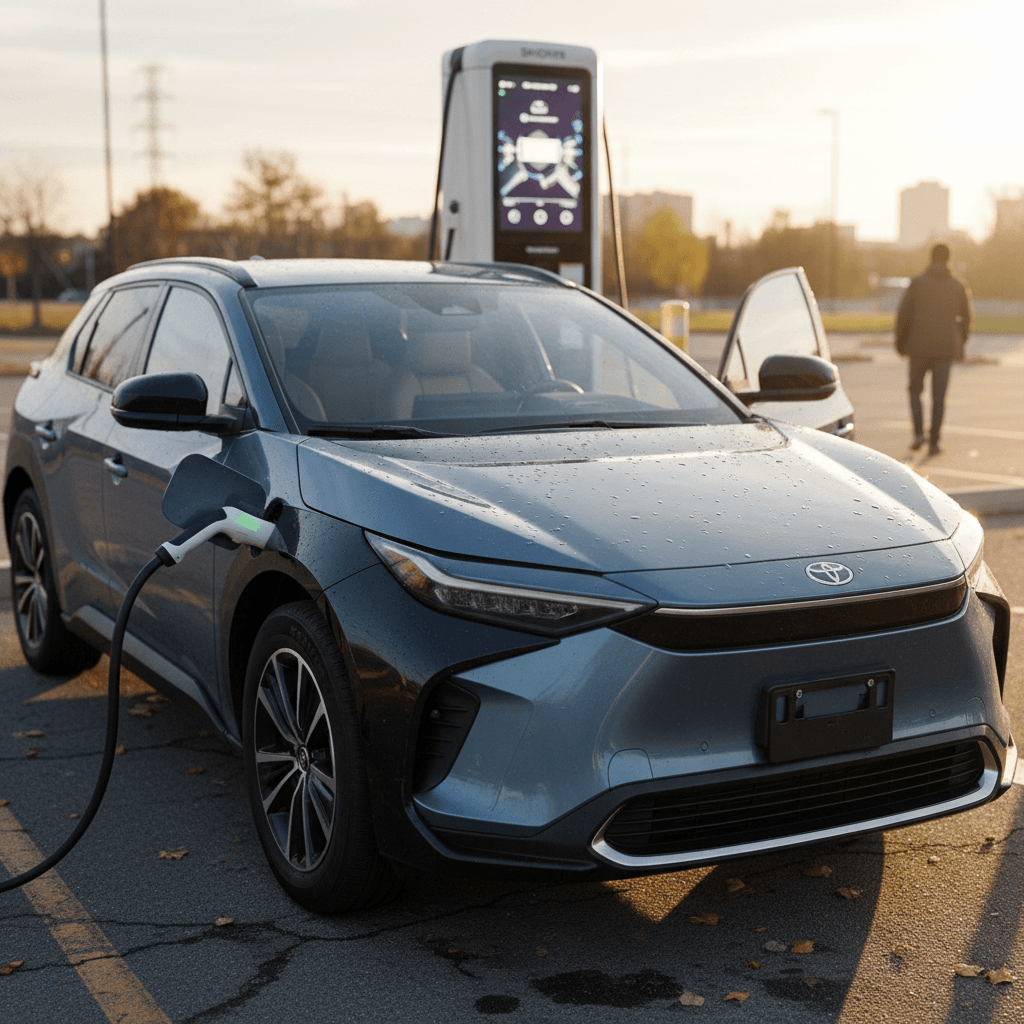
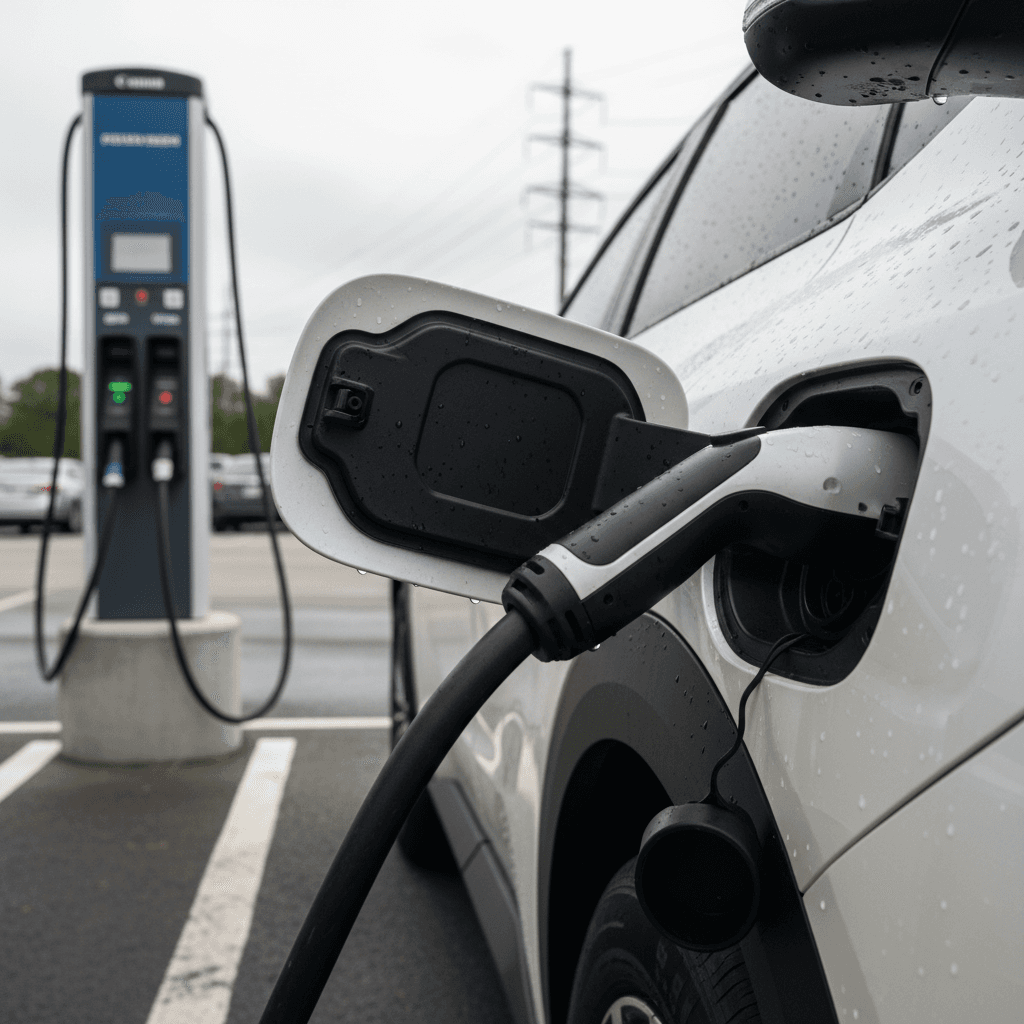
Charging is where a used 2024 bZ4X demands the most scrutiny. Toyota quotes peak DC fast‑charge rates up to 150 kW for 2024 models, but in practice, many owners report that the car briefly touches high power and then quickly settles into much lower rates, especially on dual‑motor AWD versions and in cold weather. That means longer stops on road trips compared with many rival EVs.
How the 2024 bZ4X Charges in the Real World
What you can expect from Level 2 and DC fast charging on a used example.
Home Level 2 (240V)
With a 32–40A Level 2 charger, most 2024 bZ4X models will go from low state of charge to full in roughly 8–11 hours, making overnight charging straightforward for typical commuters.
Public DC Fast Charging
On a healthy battery at a capable station, you might see brief peaks near 120–150 kW, but average power over a 10–80% session often lands in the 70–90 kW range, and even lower if the pack is cold or you’re stacking multiple sessions in a day.
Cold‑Weather Impact
Because the bZ4X has limited battery pre‑conditioning, winter DC charging can be particularly slow. If you live in a cold climate and depend on fast chargers, assume longer stops than in many competing EVs.
Frequent road‑trip warning
Battery Health & Warranty Coverage on a Used 2024 bZ4X
The upside to Toyota’s cautious charging strategy is battery longevity. The 2024 bZ4X uses a pack in the low‑70‑kWh usable range with a generous software buffer and conservative thermal management aimed at keeping degradation low over many years. Toyota backs that with a 8‑year/100,000‑mile (or longer in some states) battery warranty on U.S. vehicles, which transfers to subsequent owners.
What this means on the used market
- A 2024 bZ4X that’s only 1–2 years old should show minimal loss in indicated range if it’s been reasonably cared for.
- The built‑in battery buffer means that even when the display shows 0%, there’s a small reserve to protect the pack (not for you to rely on).
- Toyota’s warranty support on hybrid batteries historically has been strong, which helps buyer confidence for this first‑generation EV pack.
How Recharged evaluates bZ4X battery health
Every used EV listed on Recharged gets a Recharged Score Report that includes third‑party battery diagnostics. We look at usable capacity, charge history and error codes to spot early issues you won’t see on a basic test drive.
If you’re trading in or selling your 2024 bZ4X, that transparency also helps you capture fair market value based on verified battery health rather than assumptions.
Good news for second owners
Reliability, Recalls & Day-to-Day Ownership
Early bZ4X models launched in 2022 suffered a high‑profile recall for loose wheel‑hub bolts that could allow a wheel to detach. That issue has been addressed, and 2024 models rolled off the line with the fix baked in. So while Google search results still surface that recall story, it’s not a live concern for a properly maintained 2024 example.
- Owner reports generally praise the bZ4X for being quiet, composed and easy to drive, feeling much like a conventional Toyota crossover with electric torque.
- Some complaints focus on the infotainment learning curve and the steering‑wheel/cluster relationship for taller drivers.
- A small number of owners mention HVAC issues or occasional software quirks, but there’s no widespread pattern of catastrophic failures so far for the 2024 model year.
- Because this is a relatively low‑volume EV, you may not have as many aftermarket parts or independent‑shop specialists as you would for a RAV4 Hybrid, but Toyota dealer support is extensive.
Service history still matters
Used Market Pricing & Depreciation for 2024 bZ4X
Because the bZ4X has been overshadowed by flashier rivals and early lease deals were aggressive, 2023–2024 examples have depreciated quickly. Some public valuation tools show a drop of more than 50% from original MSRP in the first two years for certain 2024 trims, with resale values in the low‑ to mid‑$20,000s depending on mileage and condition.
Where 2024 bZ4X Used Prices Tend to Land
Exact numbers vary by region, options and mileage, but these are common ballparks in early 2026.
Lower‑mileage FWD XLE
Often advertised in the mid‑$20,000s range with under 20,000 miles, especially off‑lease units in EV‑heavy markets.
Loaded AWD Limited
Still typically under original MSRP by a wide margin, often in the mid‑ to upper‑$20,000s depending on miles and condition.
High‑mileage or rougher examples
Former rentals or ride‑hail vehicles with higher mileage can dip closer to the high‑teens to low‑$20,000s, but you’ll want battery and cosmetic condition carefully documented.
Leverage depreciation to your advantage
How a Used 2024 bZ4X Compares to Rival EV SUVs
To decide if a used 2024 bZ4X is right for you, it helps to see where it stands next to popular alternatives. Think of it as a conservative, comfort‑focused choice in a segment full of flashier, faster‑charging options.
Used 2024 bZ4X vs. Key Electric SUV Rivals (High‑Level)
General comparison for typical trims in the used market around the same price band.
| Model | Typical used price (early 2026) | EPA range (approx.) | DC fast‑charge strength | Standout trait |
|---|---|---|---|---|
| Toyota bZ4X (2024) | Low‑ to mid‑$20Ks | ~220–250 mi | Below average | Comfortable, conservative, Toyota badge |
| VW ID.4 (2023–2024) | Similar or slightly higher | ~210–291 mi | Average | Roomy, familiar interior, improving software |
| Hyundai Ioniq 5 (2023–2024) | Often higher | ~220–303 mi | Excellent | Ultra‑fast 800V charging, bold styling |
| Kia EV6 (2023–2024) | Often higher | ~225–310 mi | Excellent | Sporty feel, fast charging |
| Tesla Model Y (2023–2024) | Generally higher | ~260–330 mi | Very strong | Range, charging network, software ecosystem |
Exact specs and pricing vary by trim, battery size and regional incentives.
How to think about the bZ4X vs. rivals
Inspection Checklist: What to Look for on a Used 2024 bZ4X
Every used EV deserves a careful pre‑purchase inspection, but the 2024 bZ4X has a few model‑specific items worth adding to your checklist. Whether you’re buying from a dealer, private seller or an online marketplace like Recharged, try to verify as many of these as possible.
Used 2024 bZ4X Buyer’s Checklist
1. Confirm software updates and recall status
Ask a Toyota dealer to pull the VIN and confirm that all campaigns, recalls and firmware updates have been completed, including any charging‑related TSBs.
2. Review fast‑charging history
If possible, get a sense of how often the car was DC fast‑charged. Occasional road‑trip use is fine; heavy DC use on an early bZ4X might warrant a closer look at battery health data.
3. Check real‑world range estimate
With the battery near 100%, look at the indicated range. If it’s dramatically below EPA numbers in mild weather, ask for an independent battery health report, something Recharged includes in every Recharged Score.
4. Inspect tires and suspension
The bZ4X’s instant torque can be hard on tires. Uneven wear can hint at alignment or suspension issues, especially on vehicles that have seen rough roads or curb impacts.
5. Test all charging scenarios you’ll use
If you plan to rely on a specific local DC fast‑charger or Level 2 setup, arrange a test session before you sign. Confirm that the car charges reliably and at reasonable speeds.
6. Evaluate interior electronics
Cycle through the infotainment, driver‑assist features, cameras and climate controls. Confirm that the steering‑wheel and gauge cluster position works for your height and driving style.
Don’t skip a professional EV inspection
Who Should (and Shouldn’t) Buy a 2024 bZ4X Used
Great fit for these drivers
- Suburban commuters with home Level 2 charging who drive 30–70 miles most days.
- Shoppers who value ride comfort and simplicity over cutting‑edge performance or wild styling.
- Buyers who want a lower price point on a relatively new EV from a mainstream brand.
- Households with another gas or hybrid vehicle for long road trips.
Consider other EVs if…
- You frequently drive several hundred highway miles in a day and rely on DC fast‑charging.
- You want the very latest in in‑car tech, over‑the‑air features and app integration.
- You need maximum cargo or third‑row seating, where larger EVs or plug‑in hybrids might fit better.
- You live in a very cold climate and depend on public fast‑charging all winter.
How Recharged can help you decide
Ready to find your next EV?
Browse VehiclesFAQ: Used 2024 Toyota bZ4X
Common Questions About the 2024 bZ4X as a Used EV
Bottom Line: Is a Used 2024 Toyota bZ4X Worth It?
As a used EV, the 2024 Toyota bZ4X is a classic trade‑off play. You’re getting a comfortable, unflashy electric crossover from a brand known for long‑lasting hybrids, at a price that undercuts many rivals after early depreciation. In return, you accept slower DC fast‑charging and a driving experience that prioritizes calm competence over wow‑factor tech.
If you have home charging, mostly drive locally, and like the idea of a conservatively engineered pack backed by a long warranty, a well‑vetted used 2024 bZ4X can be a smart buy, especially when it comes with a Recharged Score Report that confirms battery health and fair pricing. If your life revolves around long highway runs and rapid turnarounds at fast‑chargers, you’ll be happier spending a bit more on a quicker‑charging EV.