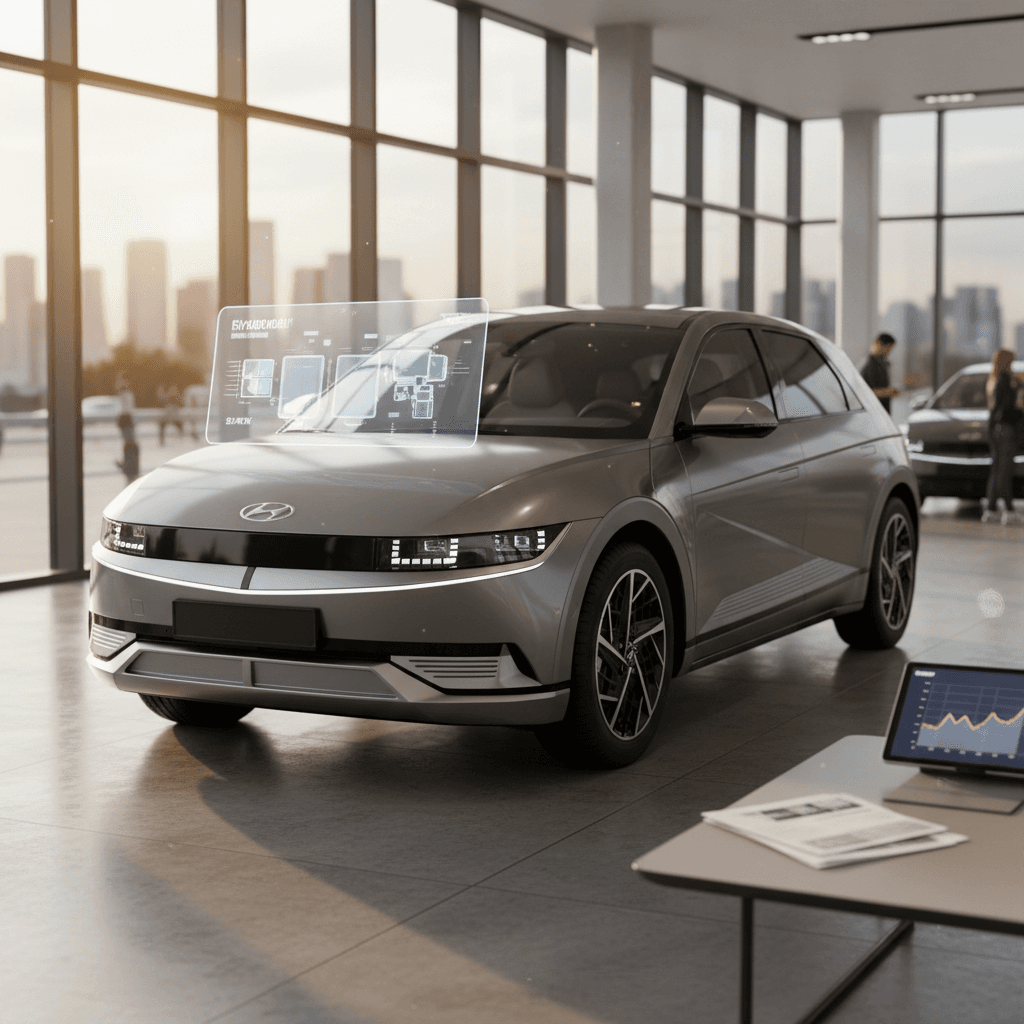
The 2026 Hyundai IONIQ 5 doesn’t look radically different, yet the **refresh changes** are big where it counts: price, charging access, and long‑term value. After a substantial facelift and tech upgrade for 2025, Hyundai is using the 2026 model year to slash prices and solidify the IONIQ 5 as one of the most attainable long‑range EV crossovers in the U.S. market.
Quick context
2026 IONIQ 5 refresh: the short version
2026 Hyundai IONIQ 5 at a glance
If you’re trying to understand **what changed for the 2026 Hyundai IONIQ 5**, think of it this way: the big mechanical and tech upgrades arrived for 2025 (battery, styling, NACS port). For 2026, Hyundai doubles down by making the same package **thousands of dollars cheaper**, while keeping the refreshed design and longer‑range batteries in place.
- Large price reductions across most trims as federal tax credits phase out for many buyers.
- Carry‑over powertrain, battery options, and major tech from the 2025 facelift, including the 63 kWh and 84 kWh packs.
- Standard dual‑amperage portable charger (Level 1/Level 2 capable) added to the equipment list.
- Color‑palette tweaks, including a new Sage Silver Matte finish and wider availability of some existing colors.
- Performance‑focused IONIQ 5 N continues largely unchanged, with pricing details typically announced separately.
Shopping tip
How we got here: 2025 facelift vs. 2026 refresh
To make sense of the **2026 IONIQ 5 refresh changes**, you need to separate the heavy lift in 2025 from the fine‑tuning in 2026. Hyundai treated the 2025 model year as a mid‑cycle facelift and product enhancement, then rolled that package forward while adjusting pricing and equipment for 2026.
What changed in 2025 (major facelift)
- Larger batteries: standard pack grew to around 63 kWh, long‑range to 84 kWh, improving real‑world range.
- Native NACS port: U.S. IONIQ 5 switched from CCS to the Tesla‑style North American Charging Standard for DC fast charging.
- Exterior tweaks: revised front and rear bumpers, updated spoiler and wheel designs for a slightly sharper, more aerodynamic look.
- Interior updates: revised center console and climate controls, a new steering wheel design, and additional driver‑assist refinements.
- Feature updates: wireless Apple CarPlay/Android Auto on all trims and expanded active‑safety tech.
What changed in 2026 (pricing & packaging)
- Carry‑over platform: same E‑GMP architecture, battery sizes, and overall performance as 2025.
- Big MSRP cuts: base SE Standard Range drops into the mid‑$30Ks, with some trims seeing nearly $10,000 off versus 2025 stickers.
- Standard dual‑amperage charger: bundled Level 1/Level 2 portable EVSE now standard, making it easier to plug in at home or on the road.
- Color and trim tweaks: Sage Silver Matte joins the palette; select colors become available across more trims.
- Positioning shift: Hyundai leans on price instead of federal credits to keep the IONIQ 5 competitive in a tougher EV market.
Don’t confuse “carry‑over” with “unchanged”
Pricing: 2026 IONIQ 5 gets major price cuts
The headline story for the **2026 Hyundai IONIQ 5 refresh** is money. With federal EV tax credits shifting and competition heating up, Hyundai chose to lower sticker prices instead of relying on incentives to drive volume.
Indicative 2025 vs. 2026 IONIQ 5 pricing (U.S.)
Approximate starting MSRPs for key trims before destination and incentives. Exact figures vary by region and equipment, but the direction of the price cuts is clear.
| Trim | 2025 MSRP (approx.) | 2026 MSRP (approx.) | Change |
|---|---|---|---|
| SE Standard Range RWD | ~$44,200 | ~$36,600 | About -$7,600 |
| SE Long Range RWD | Low $40Ks (w/ larger pack) | ~$39,100 | Down roughly -$4,000 |
| SE Long Range AWD | Low‑mid $50Ks | ~$42,600 | Down more than -$9,000 |
| SEL Long Range RWD | Low‑mid $50Ks | ~$41,400 | Up to -$9,800 |
| Limited Long Range AWD | Just over $50K | Just over $50K | Smaller reduction or similar pricing |
For many shoppers, the 2026 IONIQ 5 is thousands less than the equivalent 2025 trim.
Why the price cuts now?
For you, that means the **2026 IONIQ 5 occupies a very different value position** than the 2022–2024 launch‑year models or even the refreshed 2025 lineup. A well‑equipped long‑range SEL or Limited that once pushed comfortably into the $50Ks is now more likely to land in the low‑to‑mid‑$40Ks before dealer discounts. That shift also puts immediate pressure on lightly used 2022–2024 examples in the used‑EV market.
Battery, range, and charging: what actually changed
Under the skin, the **2026 Hyundai IONIQ 5** carries forward the substantial battery and charging upgrades introduced for 2025. There’s no brand‑new pack or motor this year, but if you’re coming from an early‑build IONIQ 5 or cross‑shopping other compact EV crossovers, the current specs are still highly competitive.
2026 IONIQ 5 powertrain and charging highlights
What you can expect from the carry‑over hardware
Two battery sizes
Most 2026 trims use the 84 kWh long‑range pack introduced for 2025. Entry models retain a smaller pack in the low‑60 kWh range, replacing the original 58 kWh unit from early years.
Competitive range
Depending on wheels, drivetrain, and pack, you’re generally looking at an EPA rating in the mid‑200s to low‑300s miles, with rear‑drive long‑range models at the top.
800V fast charging
The IONIQ 5’s 800V E‑GMP platform remains a standout, allowing 10–80% fast‑charge sessions in roughly 20–30 minutes on a capable DC fast‑charger.
NACS as standard on 2026 IONIQ 5
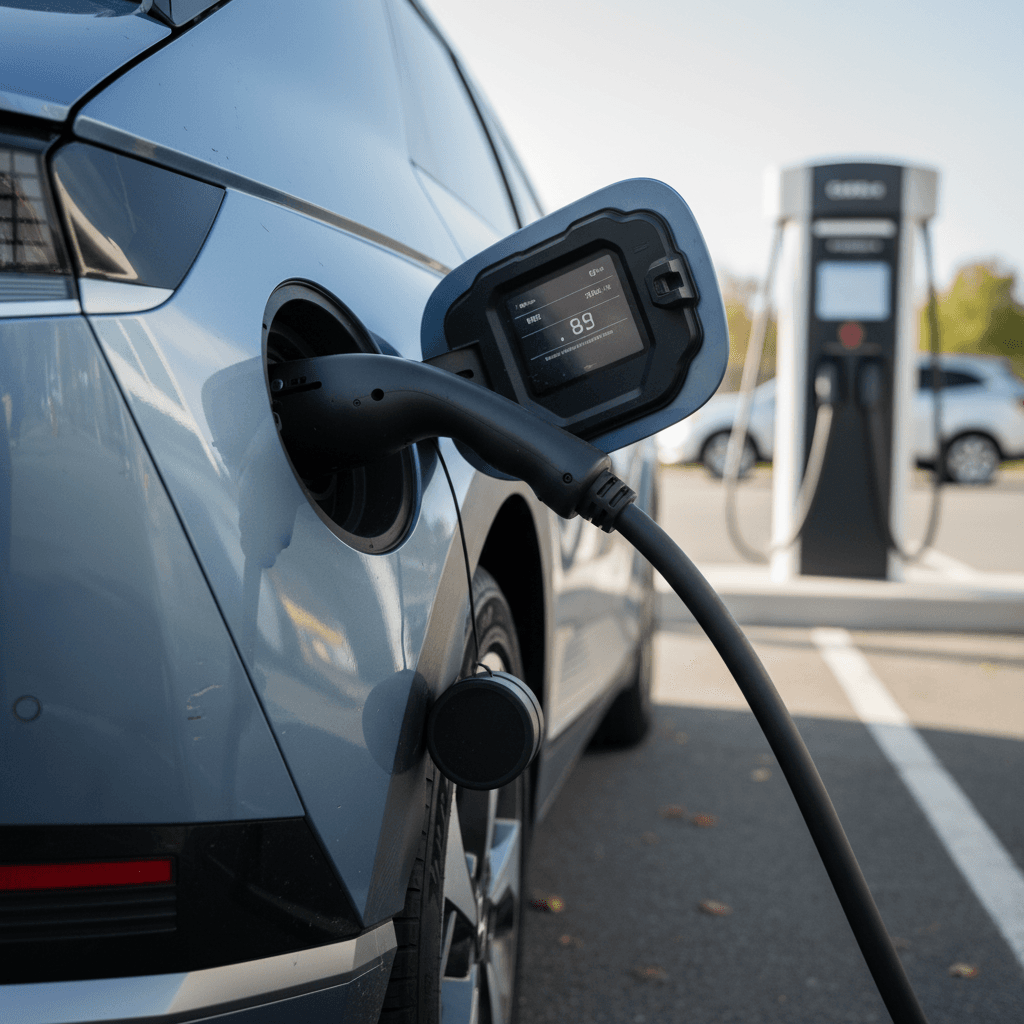
By 2025, Hyundai had already committed to the North American Charging Standard (NACS) for the U.S. IONIQ 5, and 2026 continues that transition. New IONIQ 5s plug directly into Tesla Superchargers and other NACS‑equipped stations without a separate adapter, opening up thousands more DC fast‑charging options.
For older CCS‑only infrastructure, Hyundai offers a CCS adapter so you can still use legacy DC fast‑chargers when Superchargers or other NACS sites aren’t convenient.
New dual‑amperage portable charger
A subtle but useful **2026 refresh change** is the standard dual‑amperage Level 1/Level 2 portable charger. Instead of a basic 120V trickle charger, you get an EVSE that can operate on standard household outlets and 240V circuits (with the right receptacle), giving you more flexibility if you don’t yet own a wallbox.
For many households, that’s enough to cover overnight charging without immediately calling an electrician, though a hard‑wired Level 2 setup is still the most convenient long‑term play.
Used‑buyer angle
Features & trims: what’s new, what carried over
The **2026 IONIQ 5** lineup looks familiar if you’ve studied the 2025 order guide. Core SE, SEL, and Limited trims return, along with the off‑road‑styled XRT and the high‑performance IONIQ 5 N. The heavy lifting on tech and safety happened last year; 2026 is more about preserving that content while changing the pricing math.
2026 IONIQ 5 trims in plain English
How the lineup shakes out for most U.S. buyers
SE / SE Standard Range
The value play. Cloth seats, full suite of active‑safety tech, wireless smartphone integration, native NACS fast‑charging, and the smaller battery on SE Standard Range.
Best for commuters who prioritize price over maximum range or features.
SEL
The sweet spot. Long‑range battery is typically standard, with added comfort and convenience features versus SE. Often where the biggest 2026 price cuts hit compared with 2025.
Popular choice for families who want range and value in balance.
Limited
The fully loaded option. Leather seating, more advanced driver‑assistance features, and the most tech and luxury touches Hyundai offers on the IONIQ 5.
Worth it if you want the IONIQ 5 at its most premium and plan to keep it long‑term.
XRT & IONIQ 5 N
XRT adds rugged styling, higher‑riding suspension, and off‑road‑flavored design cues; IONIQ 5 N is the 600+ hp performance halo, mostly carried over for 2026 with track‑focused hardware and software.
N is niche but important for enthusiasts; XRT chases adventure‑oriented shoppers.
Good news for safety and tech
2026 IONIQ 5 vs. 2025: which should you target?
From a product standpoint, a late‑build 2025 and a 2026 **Hyundai IONIQ 5** are virtual twins. The differentiator is pricing, and how your local dealer or used‑EV marketplace responds.
Reasons to favor a 2026 IONIQ 5
- Lower MSRP baked in: Big price cuts reduce your need to chase incentives or one‑off rebates.
- Simpler decision‑making: The 2026 lineup is tuned to current market demand, with trims and equipment aimed squarely at value.
- Full new‑car warranty: 10‑year/100,000‑mile powertrain and long battery warranty coverage start at zero miles.
- Latest build date: Beneficial for long‑term ownership and potential resale value.
Reasons to consider a leftover 2025
- Dealer discounts: Some stores may cut 2025 inventory more aggressively to make room for 2026s.
- Equipment quirks: A specific color/trim combo may only be sitting on a 2025 lot near you.
- Lease programs: Automakers sometimes support leases more heavily on prior‑model‑year stock.
- Used‑adjacent pricing: A demo or low‑miles 2025 could blur the line between new and used pricing.
How Recharged can help compare
How the 2026 refresh impacts used IONIQ 5 values
Whenever an automaker cuts new‑car prices as aggressively as Hyundai is doing with the **2026 IONIQ 5**, the used market has to recalibrate. That’s already happening for early‑build IONIQ 5s, especially 2022 and 2023 models that lack the bigger batteries and NACS port.
Key ripple effects in the used IONIQ 5 market
Earlier model years must discount more
If a 2026 SE Long Range RWD now stickers around the high‑$30Ks, 2022–2023 SE and SEL models need to be meaningfully cheaper to remain attractive, especially if they use the smaller 77.4 kWh pack and CCS‑only charging.
Battery size and charging standard matter
Shoppers increasingly ask whether a used IONIQ 5 has the 84 kWh pack and a native NACS port. Those features make later cars easier to live with and more resilient as the charging landscape evolves.
Mileage and degradation are under the microscope
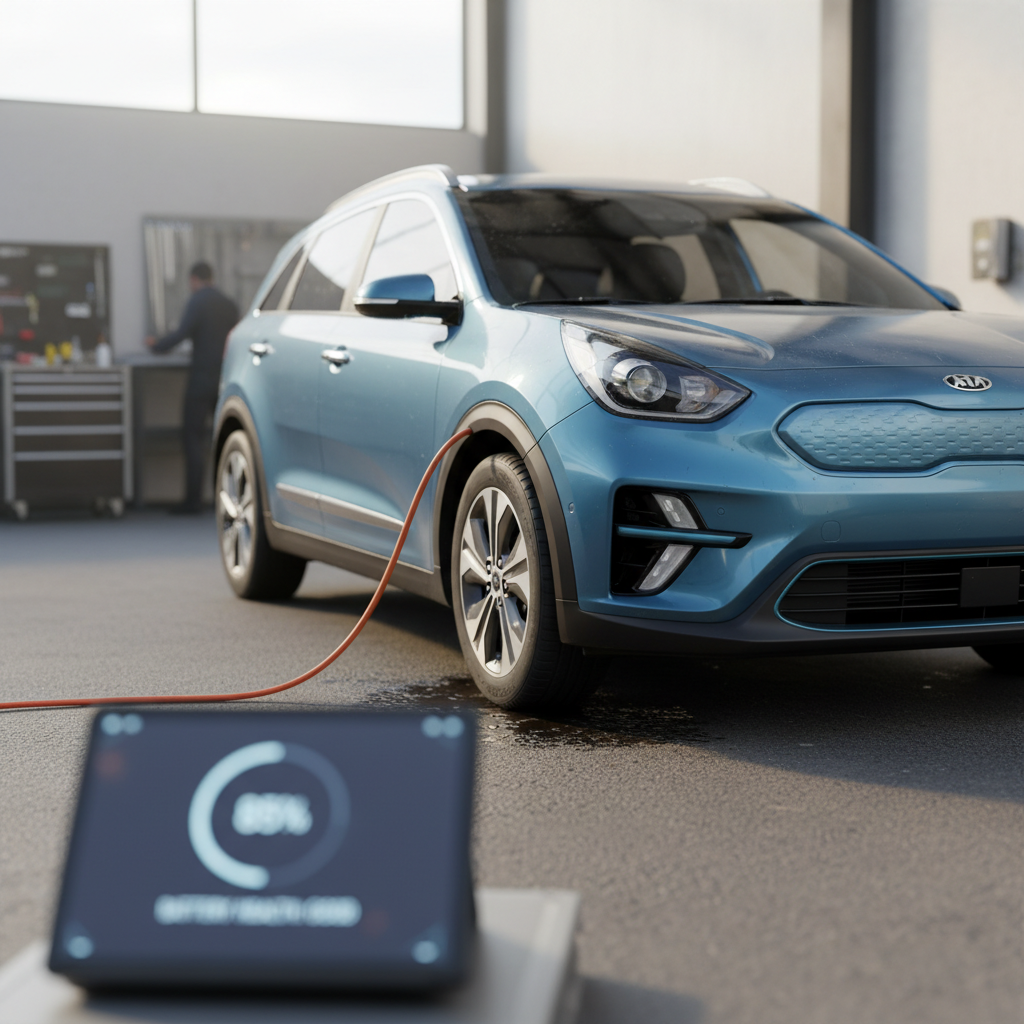
Two IONIQ 5s can look identical on paper but have very different real‑world range if one has high mileage or a stressed battery. That’s where a third‑party battery‑health view, like the Recharged Score, helps separate strong cars from compromised ones.
Price gaps between trims are compressing
As new‑car MSRPs fall, used Limited and SEL examples have to match reality. In some markets, that’s already narrowing the spread between trims and pushing shoppers to aim higher‑spec if the price jump is modest.
Watch for mispriced used inventory
Buying checklist: new or used IONIQ 5
Whether you’re eyeing a **2026 Hyundai IONIQ 5** or a used example from earlier years, a structured checklist keeps you from missing crucial details, especially around battery health, charging, and pricing.
Essential checklist for IONIQ 5 shoppers
1. Confirm model year and battery size
Ask specifically which battery the car has (early 58/77.4 kWh vs. later ~63/84 kWh). More capacity means more usable range and often better resale value.
2. Verify charging port and adapter situation
On 2025–2026 cars, confirm native NACS support and whether a CCS adapter is included. On earlier CCS‑only cars, factor the cost and availability of a NACS adapter into your budget.
3. Check real‑world range and driving profile
Think in terms of your actual daily mileage, climate, and charging habits. A Standard Range pack may be fine for urban commuters with home charging, while long‑range makes more sense for frequent highway trips.
4. Review warranty coverage
For new 2026 models, confirm Hyundai’s battery and powertrain warranty details. For used cars, note how many years and miles remain and whether they transfer to you as a second owner.
5. Get objective battery‑health data
Don’t rely on a dashboard guess. At Recharged, every IONIQ 5 listing includes a **Recharged Score battery‑health report** so you can see degradation, fast‑charging history, and projected remaining life before you commit.
6. Stress‑test pricing against today’s market
Compare any quote, new or used, against updated 2026 MSRPs, local incentives, and what similar IONIQ 5s are actually selling for, not just listing for.
FAQ: 2026 Hyundai IONIQ 5 refresh changes
Frequently asked questions about the 2026 IONIQ 5
Bottom line: should you wait or buy now?
From a reporter’s vantage point, the **2026 Hyundai IONIQ 5 refresh changes** look less like a cosmetic tweak and more like a strategic price reset. Hyundai took the substantial upgrades it rolled out for 2025, bigger batteries, NACS charging, updated styling and tech, and simply made them cheaper to access.
If you’re shopping new, the math is straightforward: a **2026 IONIQ 5** delivers nearly everything that made the 2025 facelift appealing, with thousands shaved off the window sticker. If you’re shopping used, those same price cuts are your leverage. Early‑build IONIQ 5s now have to be discounted enough to offset their smaller batteries, older charging standard, and shorter remaining warranty.
Either way, you’re buying into one of the most balanced EV crossovers on the market: roomy, quick‑charging, and now more realistically priced. And if you decide a used IONIQ 5 is the smarter move, Recharged can help you compare options with **verified battery health, fair market pricing, and EV‑specialist support** from your first search to final delivery.