If you own, or are thinking about buying, a 2024 Tesla Model Y, you’ve probably heard that Tesla shows up in recall headlines a lot. The reality behind the noise is more nuanced: many Tesla “recalls” are quick software fixes delivered over the air, while a smaller number require physical work on the car. This guide pulls together the most important information into a clear 2024 Tesla Model Y recalls list and explains what each item actually means for you.
First things first
Overview: Are 2024 Tesla Model Y SUVs heavily recalled?
Tesla recalls in context
Two truths can exist at once: Tesla leads the industry in the number of vehicles touched by recalls, and the 2024 Model Y is still one of the safest EVs on sale. Most of the volume comes from broad software campaigns, think UI font sizes or driver monitoring logic, pushed to millions of cars at once. For a 2024 Model Y owner, what matters is less the raw recall count and more whether your individual VIN still has open work, and whether that work is software or hardware.
Quick 2024 Tesla Model Y recalls list
Here’s a high‑level list of the most relevant recall campaigns and safety actions that can impact a 2024 Model Y. Exact applicability depends on production date, equipment, software version, and VIN, so you’ll still want to run a recall check (we’ll show you how below).
Key 2024 Model Y recall and safety actions
This table summarizes major U.S. safety actions that can affect some 2024 Model Y vehicles. Not every VIN is included in every campaign.
| Recall / Action | Rough Timing | Type | Main Issue | Typical Fix |
|---|---|---|---|---|
| Rearview camera display may not appear | Early 2024 | Official NHTSA recall | Backup camera image can fail to display when in reverse due to a software/computer interaction on certain builds. | Over‑the‑air (OTA) software update; no hardware replacement in most cases. |
| Instrument panel font-size / telltale visibility | 2024–2025 | Official NHTSA recall | Some warning lights and instrument symbols may be too small or faint, making them harder to read. | OTA software update to adjust display elements. |
| FSD / Autopilot behavior in reduced visibility | 2024 onward (investigation, with potential recall) | Safety investigation / recall query | Full Self‑Driving (FSD) behavior in sun glare, fog, dust and other low‑visibility conditions. | Software revisions to driver monitoring and object detection, delivered OTA if converted into a recall. |
| Seat-back fastener torque (small batch) | Mid‑2024 | Physical recall (limited VIN range) | Improperly torqued fasteners in front seats could affect seat performance in a crash. | Service‑center inspection and re‑torque or replacement of fasteners. |
| Legacy 2023–2024 camera and Autopilot‑related campaigns | Late 2023–2024 | Software recall, carries over to 2024 MY | Driver attention / Autopilot user-interface issues that also apply to early‑build 2024 Ys. | OTA software update; may have already been applied before delivery on many 2024 vehicles. |
Always verify recall status for your specific VIN with NHTSA or Tesla before you assume your 2024 Model Y is fully up to date.
Not every 2024 Model Y is affected
Major 2024 Model Y recalls explained
1. Rearview camera display recall
One of the most visible 2024 Tesla campaigns involves the rearview camera display. In certain Model 3, Model X, Model S and Model Y vehicles, spanning model years 2023–2025, the camera image may fail to appear when you select Reverse. On a 2024 Model Y, this usually comes down to a specific combination of car computer hardware and earlier software builds.
- Risk: you may begin reversing without the legally required rearview image, which can increase the chance of backing into a pedestrian, cyclist, or obstacle.
- Scope: not all 2024 Model Y VINs, only those built with affected computer hardware and running pre‑fix software versions.
- Fix: Tesla issues an over‑the‑air software update that corrects the way the car computer launches and prioritizes the camera feed. No camera module swap in most cases.
- Owner cost: $0. As with all safety recalls, the repair is free of charge.
Quick owner check
2. Instrument‑panel font and warning telltales
Another multi‑model Tesla recall touches some 2024 Model Y vehicles equipped with the latest interior layout. Regulators flagged that certain warning icons and text in the instrument cluster could appear too small or faint, making them harder to read at a glance. On paper that sounds nit‑picky, but U.S. regulations specify minimum sizes for certain safety telltales, like airbag and brake warnings.
- Risk: in edge cases, a driver might miss or misread an important warning lamp, delaying their response to a fault.
- Scope: select Model 3, Model S, Model X, and Model Y vehicles with specific display configurations.
- Fix: a software update that restyles and re‑scales telltales to meet federal visibility requirements.
- Real‑world experience: most drivers simply wake up to a UI tweak after an update and never realize a formal recall was the trigger.
3. Seat fastener torque on a limited build range
In mid‑2024, Tesla issued a more traditional, hardware‑driven recall affecting a relatively small batch of Model 3 and Model Y vehicles built during a tight production window. Some front‑seat fasteners may not have been torqued to spec at the factory. That’s the kind of real, mechanical detail you actually want checked.
- Risk: inadequately torqued seat fasteners could compromise how the seat behaves in a severe crash, potentially increasing injury risk.
- Scope: specific VIN ranges noted in the recall bulletin; it’s not all 2024 Model Y SUVs.
- Fix: a Tesla Service Center or mobile technician inspects the seat mounts, then re‑torques or replaces hardware as needed.
- Owner impact: you schedule a short appointment; the work is free and parts are included. Unlike the UI‑style recalls, this one does require someone with tools.
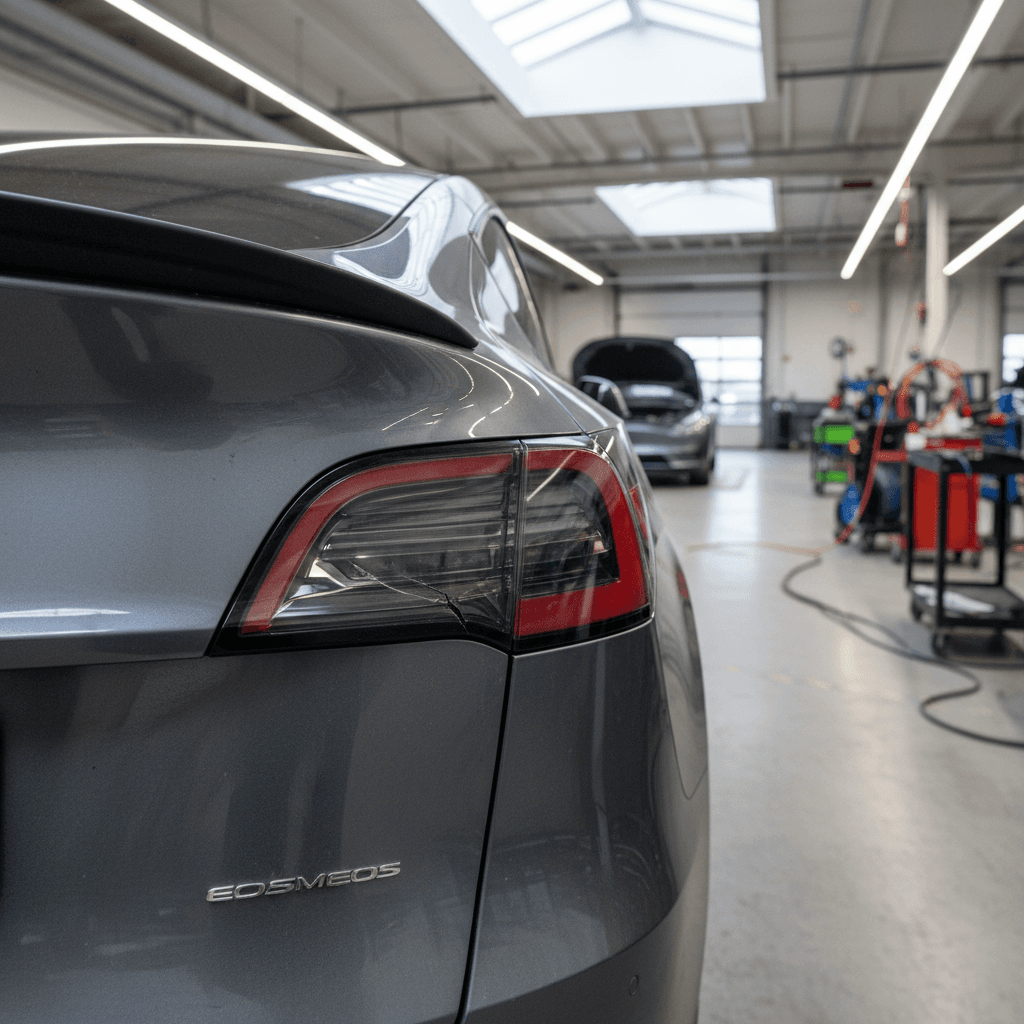
4. Autopilot / FSD behavior in poor visibility (investigation leading to software changes)
Separate from traditional hardware issues, the National Highway Traffic Safety Administration (NHTSA) has spent several years circling Tesla’s driver‑assistance stack, Autopilot and Full Self‑Driving (FSD). One specific thread involves crashes where Teslas with FSD engaged entered areas of reduced visibility (fog, sun glare, dust) and failed to react properly. Those probes cover 2016–2024 Model S/X, 2017–2024 Model 3, 2020–2024 Model Y, and Cybertruck.
Regulators first pushed Tesla into a broad Autopilot‑related recall in late 2023, and in 2024 and 2025 they opened follow‑up actions, called recall queries, to judge whether those fixes really solved the problem. For a 2024 Model Y owner, the practical upshot is simple: driver‑assistance behavior is a moving target. Your car may have received multiple OTA updates specifically to tweak when it nags you to hold the wheel, how quickly it gives up in bad conditions, and how it responds to lane‑keeping challenges.
Don’t treat FSD as self‑driving
Investigations vs. recalls on the Model Y
What a recall means
- NHTSA or Tesla identifies a safety defect or non‑compliance.
- Tesla files a formal recall with a description of the issue and remedy.
- Owners of affected VINs must be notified and the fix provided free of charge.
- For Tesla, the “repair” is often a software update, not a trip to the shop.
What an investigation or query means
- NHTSA is still gathering data on a safety concern, no mandatory fix yet.
- It might lead to a future recall, or it might be closed with no action.
- For FSD and Autopilot, regulators are analyzing real‑world crashes and software logs.
- As an owner, you may see behavior changes via OTA updates even before a formal recall exists.
Many headlines about the 2024 Tesla Model Y blur these categories together. When you’re evaluating your own car, or a used one, it’s crucial to distinguish between **active recalls that still need to be completed on that VIN**, and **ongoing investigations that are more about Tesla’s software philosophy than your particular vehicle’s hardware condition**.
How Tesla handles recalls (and why “OTA” matters)
Two paths to fixing a recall on your Model Y
Most 2024 Tesla Model Y issues are software; a minority require wrenches.
Over‑the‑air (OTA) software recalls
The majority of Tesla’s recent recalls fall into this bucket.
- Car downloads a new firmware version over Wi‑Fi or LTE.
- Fix is applied in the background, often overnight.
- You might see a vague "improves system reliability" note in the release log.
- No service visit, no physical parts, no disruption beyond a reboot.
Physical inspections & hardware swaps
Traditional recalls still exist, just in smaller numbers.
- Seat fasteners, suspension components, or wiring harness routing.
- Service Center or mobile tech appointment required.
- Work generally takes under a couple of hours.
- Parts and labor are free; you just invest some time.
Good news for 2024 shoppers
How to check your 2024 Model Y for open recalls
Don’t rely on headlines or even a generic recall list to know where you stand. You should always confirm **by VIN and by software version**. Here’s how to do that in a couple of minutes.
Step‑by‑step: confirm recall status on a 2024 Model Y
1. Pull your VIN
On the Model Y, you’ll find the VIN at the base of the windshield on the driver’s side, on the doorjamb sticker, and inside the Tesla app under your vehicle details. For a used car, compare that VIN to the title or bill of sale.
2. Use NHTSA’s VIN lookup tool
Go to the NHTSA recall lookup site and enter the full 17‑character VIN. This search will show any <strong>unrepaired safety recalls</strong> on that specific vehicle, regardless of how many general Tesla campaigns are in the news.
3. Check the Tesla app & in‑car messages
Open the Tesla app and look for any service alerts or recall notices. In the car, tap through to the Service or Notifications menu. Tesla will usually flag outstanding work and allow you to schedule a visit if needed.
4. Verify your software version
In the car, open the Software screen and jot down the version. If you’re more than a couple of releases behind what other owners are reporting publicly, connect to Wi‑Fi and prompt an update before assuming a recall fix is missing.
5. Ask for service records on a used car
If you’re buying from a dealer or private seller, request documentation of completed recall work. Tesla’s digital records are good, but a paper or PDF trail makes financing and resale easier.
6. Re‑check twice a year
New campaigns can launch at any time. Set a reminder to run your VIN through NHTSA’s tool every six months, or any time you hear news about new Tesla recalls or FSD investigations.
Shopping a used 2024 Model Y? What to look for
If you’re eyeing a used 2024 Model Y, recall history is one more data point to weigh alongside battery health, cosmetic condition, and price. Because software‑based recalls are so common, the more meaningful question is: has this particular car had its important safety fixes applied, and is it otherwise healthy?
Key recall‑related checks for used buyers
Look past the headline count and into this specific VIN.
Open recalls by VIN
Run the VIN through NHTSA and confirm there are no outstanding safety recalls, especially any physical campaigns like seat fasteners.
Software & FSD status
Check that the car is on a reasonably current software version and ask whether major Autopilot/FSD updates have been consistently installed.
Battery & high‑voltage health
Recalls rarely speak to battery degradation or fast‑charge history. That’s where an independent battery health report becomes critical when comparing Model Y listings.
Where Recharged fits in
How Recharged helps you navigate recall risk
Recalls and software campaigns are simply part of modern EV life, especially with a fast‑moving company like Tesla. The trick is separating harmless UI tweaks from meaningful safety work, and then making sure that work is actually done on the car you’re about to live with.
- VIN‑level history review: Recharged checks for open safety recalls before listing a vehicle and flags anything that still needs attention.
- Battery and charging transparency: Our Recharged Score digs into pack health, DC‑fast‑charge exposure, and other factors that recalls don’t touch.
- Expert EV guidance: If you’re unsure whether a specific 2024 Model Y campaign is a big deal, an EV specialist can walk you through the risk and likely fix.
- Nationwide, digital‑first buying: You can shop, finance, arrange trade‑in, and schedule delivery of a used Model Y without setting foot in a showroom, while still getting clear information on recall status.
Turn recalls into leverage, not fear
FAQ: 2024 Tesla Model Y recalls
Frequently asked questions about 2024 Tesla Model Y recalls
Owning a 2024 Tesla Model Y means living at the bleeding edge of software‑defined cars. That brings more notifications and formal “recalls” than you might see from an old‑school crossover, but it also means many fixes arrive while you sleep. If you keep your VIN checked, your software updated, and your hardware inspections documented, recalls become what they were always meant to be: a safety net, not a source of anxiety. And if you’d rather not navigate all that alone, shopping a used Model Y through Recharged gives you a verified battery‑health report and recall check baked into the process.