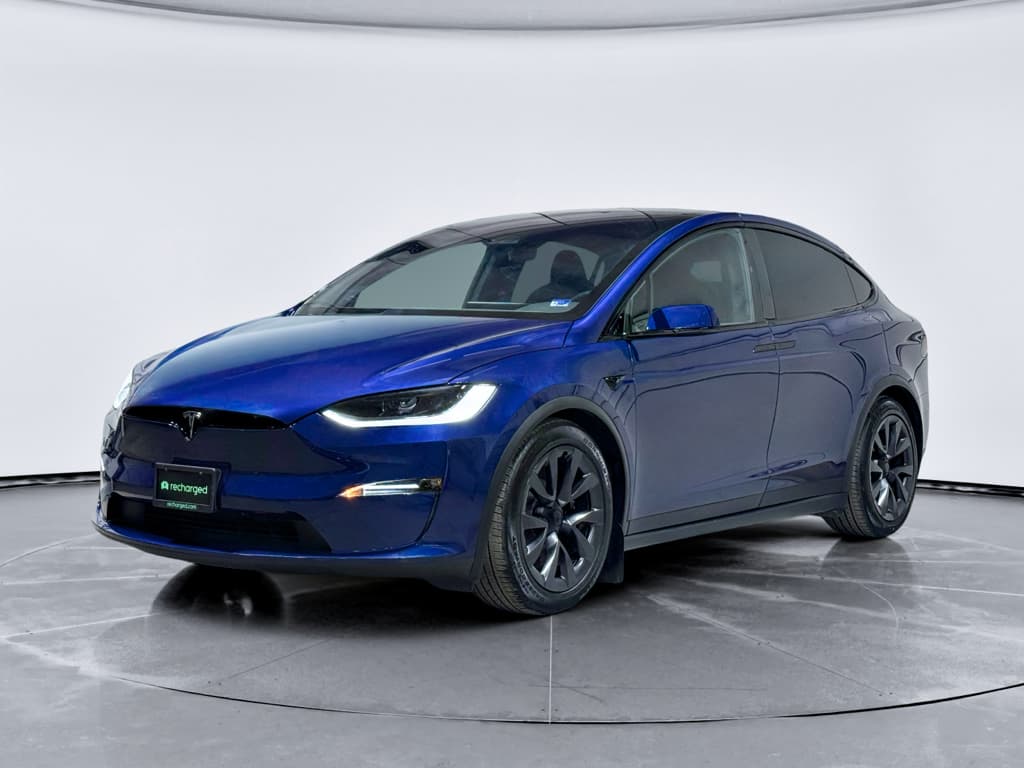
If you’re looking at a used 2024 Tesla Model X, you’re probably wondering whether the futuristic doors, massive screen, and long range come with hidden headaches. The short answer: the 2024 Model X is no disaster, but it still carries some of Tesla’s signature quirks, especially around software, electronics, and build quality, that you should understand before you buy.
Big picture
Overview: How Problematic Is the 2024 Tesla Model X?
2024 Tesla Model X at a glance
On paper, the 2024 Model X is compelling: three rows, strong performance, and access to Tesla’s Supercharger network. In practice, owners report that the main 2024 Tesla Model X problems are not catastrophic drivetrain failures, but a steady drumbeat of software bugs, electronic gremlins, and the occasional hardware recall. The drivetrain and battery are proving robust; the weak spots are everything wrapped around them.
Where a used‑focused retailer fits in
Reliability data: how the 2024 Model X is trending
Modern Tesla reliability is a moving target because so much is controlled by software and over‑the‑air (OTA) updates. Even so, some patterns are clear when you zoom out beyond individual anecdotes.
- Independent surveys describe the 2024 Model X as less reliable than the average new car, with particular trouble spots in body hardware and in‑car electronics.
- Battery packs and drive units, which are big‑ticket items, have relatively low failure rates in newer Model X years compared with early production runs.
- Repair data and owner forums suggest that many issues are not immobilizing, but they can be time‑consuming and frustrating to resolve, especially if your nearest Tesla Service Center is far away.
Watch the gap between “drivetrain reliable” and “owner experience”
Most common 2024 Tesla Model X problems
Let’s break down the most common 2024 Tesla Model X problems into categories you can actually inspect or at least test‑drive around: body hardware, electronics and software, driver‑assist features, and “classic Tesla” build‑quality issues like panel gaps and paint.
1. Body hardware and Falcon Wing doors
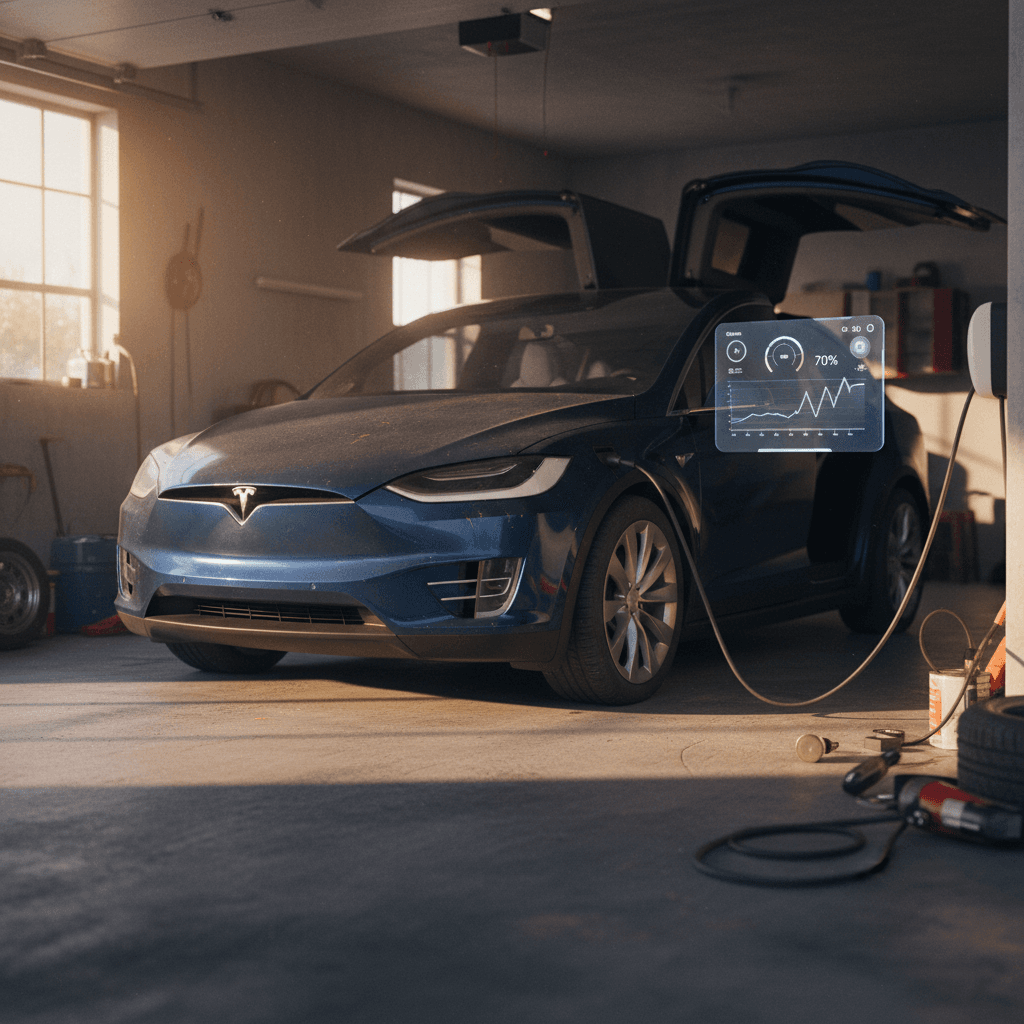
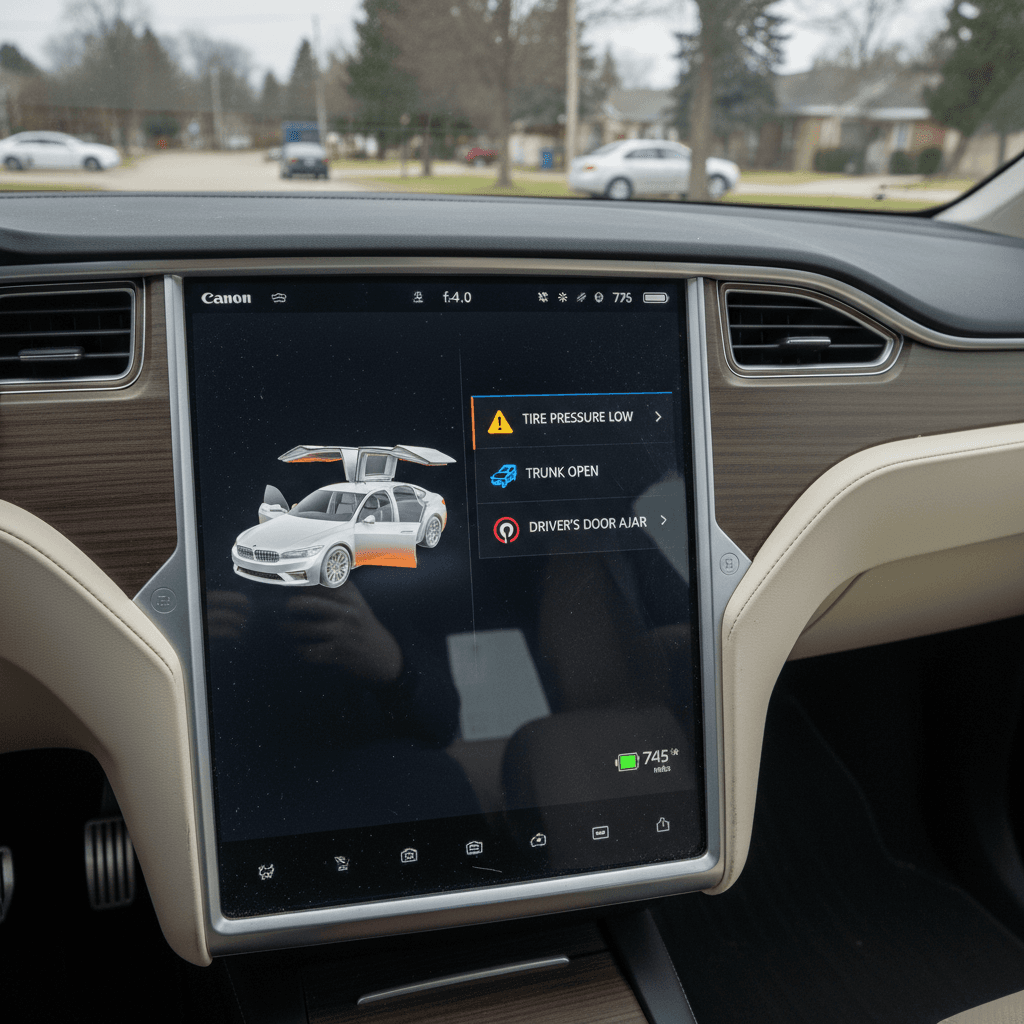
Falcon Wing doors are the Model X party trick, and also one of its most persistent headache sources since 2016. Tesla has improved the hardware and calibration over the years, but even on late‑build vehicles, owners still report intermittent glitches.
- Doors stopping mid‑cycle or reversing for no obvious reason.
- Sensors falsely detecting obstacles in tight garages or near curbs, preventing the door from fully opening.
- Occasional alignment issues that lead to wind noise or water ingress around seals.
- Front doors that don’t latch consistently on the first try, especially on inclines.
How to test the doors on a test‑drive
2. In‑car electronics and infotainment glitches
The 17‑inch center screen and digital cluster are the nerve center of the Model X. They control everything from HVAC and suspension height to navigation and Autopilot. That integration is powerful, but it also means that infotainment bugs become drivability problems.
- Random screen reboots while driving, temporarily hiding navigation or camera feeds.
- Bluetooth key or phone‑as‑key failures, forcing owners to use the key card or app to unlock/start.
- Laggy or frozen UI after major software updates until the system is rebooted.
- Occasional glitches with climate controls, seat heaters, or audio that resolve only after a reset.
Why this matters for safety
3. Advanced driver‑assistance: Autopilot and FSD behavior
A large share of complaints tied to the Model X, regardless of year, relate to Autopilot and Full Self‑Driving (FSD). Many 2024 Xs are delivered with the latest hardware and software stacks, which can be impressive on the right road and unnerving on the wrong one.
- Phantom braking on highways when the system misinterprets shadows, overhead signs, or stationary vehicles.
- Inconsistent lane selection and unexpected late lane changes on FSD in complex interchanges.
- Over‑confidence from drivers who treat these systems as autonomous, despite Tesla’s requirement to keep hands on the wheel and eyes on the road.
- Occasional nags, beeps, or steering wheel torque detection bugs that disengage Autopilot unexpectedly.
Treat it as driver assistance, not a robotaxi
4. Build quality: panel gaps, trim and paint
Earlier Model X years were infamous for uneven panel gaps, misaligned doors, and paint defects. By 2024, Tesla has tightened up quality control, but cosmetic issues haven’t disappeared, especially on high‑volume build months or vehicles that have seen rushed repairs.
- Inconsistent panel gaps around the hood, tailgate, and Falcon Wing doors.
- Minor paint blemishes, thin clearcoat, or mismatched touch‑ups on repainted panels.
- Rattles from trim, interior panels, or the cargo area over broken pavement.
- Wind noise around mirrors and door seals at highway speed.
Use the “90‑second walkaround” test
5. Suspension wear and ride quality
Like other heavy EVs on air suspension, the Model X can be hard on control arms, bushings, and ball joints, especially on rough roads. While much of the horror‑story data comes from earlier years, the basic physics haven’t changed for 2024.
- Clunks or knocks over speed bumps or sharp edges.
- Vague steering feel or tendency to wander in its lane at highway speeds.
- Uneven tire wear patterns, especially on the inner shoulders.
- Error messages related to the adaptive air suspension height or compressor.
Test‑drive tip
Software and OTA updates: blessing and curse
Because Tesla can change core vehicle behavior via over‑the‑air updates, the “same” 2024 Model X can feel very different from month to month. Many updates genuinely improve functionality or address safety defects, but they also introduce new variables into the used‑car equation.
How OTA updates impact 2024 Model X ownership
Why updates solve problems, and sometimes create new ones
Upsides of OTA updates
- Fixes without service visits: Many recalls and bugs are resolved while the car sits in your driveway.
- Feature growth over time: Updated interfaces, navigation improvements, and new driver‑assist behaviors.
- Resale value bump: A well‑updated car can feel more modern than its model year suggests.
Downsides you should expect
- New bugs after updates: A stable car can suddenly develop glitches after a major release.
- Inconsistent experiences: Two 2024 Xs on different software builds may behave differently.
- Range and charging tweaks: Software‑driven changes to battery management can subtly alter range or charging behavior.
Ask about the car’s software history
Recalls affecting the 2024 Model X
Tesla has had a busy recall calendar, and the 2024 Model X has been swept up in several fleet‑wide campaigns that mostly revolve around software behavior and alerting, rather than physical component failures.
Key recall themes that touch the 2024 Model X
Exact campaigns change over time, but these categories give you a feel for what’s been addressed on 2024 vehicles.
| Recall type | What went wrong | How it’s usually fixed | What you should check |
|---|---|---|---|
| Warning chimes / alerts | Seat‑belt or other warning chimes and icons not activating as required. | Over‑the‑air software update. | Confirm the car is on a current software build and that alerts behave normally during your test‑drive. |
| Lighting and visibility | Headlights or parking lights flickering, or instrument cluster font size not meeting regulations. | Software update adjusting controls or display settings. | With the car running, test all exterior lights and make sure the gauge cluster is easy to read. |
| Autosteer / driver‑assist behavior | Autosteer not adequately ensuring driver supervision or behaving inconsistently. | Software changes to engagement rules, alerts, and operating limits. | Engage Autopilot briefly on a clear road and confirm it engages/disengages smoothly and gives clear prompts. |
| Pedestrian warning sounds | External noisemaker muted or misconfigured after factory reset. | OTA update to restore the required sound behavior. | At low speeds in Drive and Reverse, listen for the external pedestrian warning sounds. |
Most recalls on late‑model Teslas are remedied via software; verify completion on any used vehicle you’re considering.
The good news about recalls
Cost and warranty: what fails and who pays?
By 2026, many 2024 Model Xs will still be within their basic vehicle warranty, and virtually all will still be under Tesla’s battery and drive‑unit coverage. That’s helpful because the handful of components that do fail can be expensive.
Repairs that can get pricey out of warranty
- Falcon Wing door repairs: Sensor or actuator issues can run into the low four figures depending on parts and labor.
- Air suspension work: Control arms, bushings, or air‑spring components often cost hundreds per corner, plus alignment.
- MCU or screen replacement: If the central screen fails completely, replacement can be a major expense without warranty coverage.
- Body and paint correction: Fixing panel gaps or paint defects properly is body‑shop money, not quick‑detailer money.
What Tesla’s warranty usually covers
- Battery and drive unit: Long‑term coverage (measured in years and miles) against defects; degradation beyond normal is rare on new‑generation packs.
- Basic vehicle warranty: Bumper‑to‑bumper coverage for many electronics, suspension, and trim issues in the early years.
- Recall fixes: Safety and compliance recalls performed free of charge, often via OTA updates.
For a used buyer, the question is less “are there problems?” and more “who pays when something goes wrong?” That depends heavily on remaining warranty and the quality of the car’s prior care.
How Recharged handles high‑ticket risk
Used 2024 Model X pre‑purchase checklist
If you’re serious about a 2024 Model X, you don’t need a PhD in EV engineering, but you do need a systematic inspection strategy. Use this checklist to smoke out the most common issues before you sign anything.
Hands‑on checks for 2024 Model X shoppers
1. Verify software, recalls, and service history
From the main screen, check the software tab for current version and recall status. Ask for service records or screenshots from the Tesla app showing completed campaigns and major repairs, especially anything related to doors, suspension, or electronics.
2. Exercise every door, window, and seat
Open and close both Falcon Wing doors, front doors, and the hatch multiple times. Fold and unfold all seats, test window switches, and try the power liftgate at different heights. Any stutters, loud noises, or failures are red flags.
3. Stress‑test the screens and cameras
With the car in Park and Drive, cycle through navigation, cameras, climate, and audio. Confirm the backup camera appears instantly when you shift into Reverse and that there are no flickers, reboots, or laggy responses.
4. Drive over bumps and up to highway speed
Listen for clunks, squeaks, or rattles over speed bumps and rough pavement. At highway speeds, the steering should be rock‑steady with reasonable wind noise and no vibrations through the wheel or seat.
5. Try Autopilot briefly (if equipped)
On a straight, lightly traveled road, engage Autopilot to see how smoothly it centers the car, reacts to traffic, and disengages. If it behaves erratically or throws frequent alerts, budget time for a software check or alignment at minimum.
6. Inspect exterior fit, finish, and glass
Look for mismatched paint, uneven gaps, or signs of respray or body filler around the nose, tailgate, and doors. Check all glass panels, including the huge windshield, for chips, cracks, or excessive distortion.
7. Confirm charging behavior
If possible, plug into a Level 2 charger or Supercharger to confirm the car wakes up properly, negotiates charging, and doesn’t throw DC or AC charging errors. Slow or unreliable charging can be a sign of software or hardware issues.
Is a 2024 Tesla Model X a good used buy?
When a 2024 Model X makes sense
- You need three rows of seating and like the open, minimalist Tesla cabin.
- You’ll benefit from the Supercharger network, especially on road trips.
- You’re comfortable with a car that behaves more like a connected gadget than a traditional SUV.
- You’re shopping a car with clean history, remaining warranty, and documented recall completion.
When you might want to pass
- You live far from a Tesla Service Center and don’t want to rely on mobile service visits.
- You value set‑and‑forget simplicity over bleeding‑edge software features.
- You’re highly sensitive to creaks, rattles, or cosmetic imperfections.
- You can get a more conventional luxury EV SUV, with fewer electronic quirks, at a similar total cost of ownership.
Framed correctly, the 2024 Model X is less a ticking time bomb and more a high‑tech SUV with a few very specific weak spots. Go in with open eyes about 2024 Tesla Model X problems, doors, electronics, build quality, and recall‑driven software changes, and you can find examples that deliver a genuinely impressive mix of range, space, and performance. Partnering with an EV‑focused retailer like Recharged, and insisting on clear diagnostics and history, tilts the odds further in your favor.