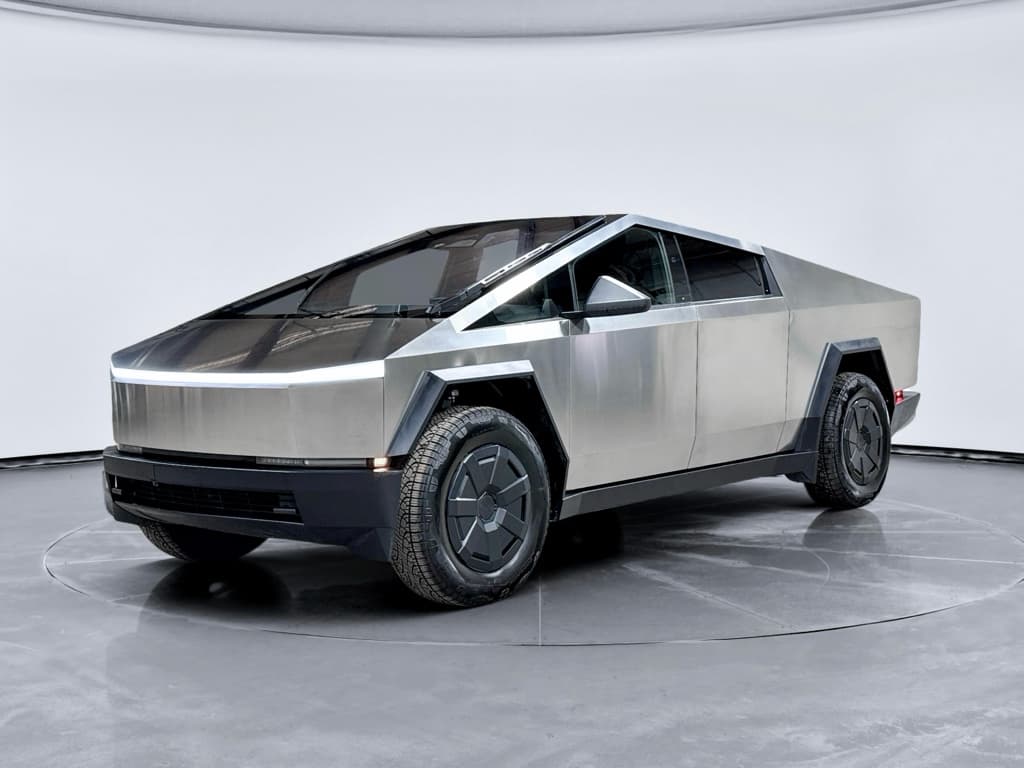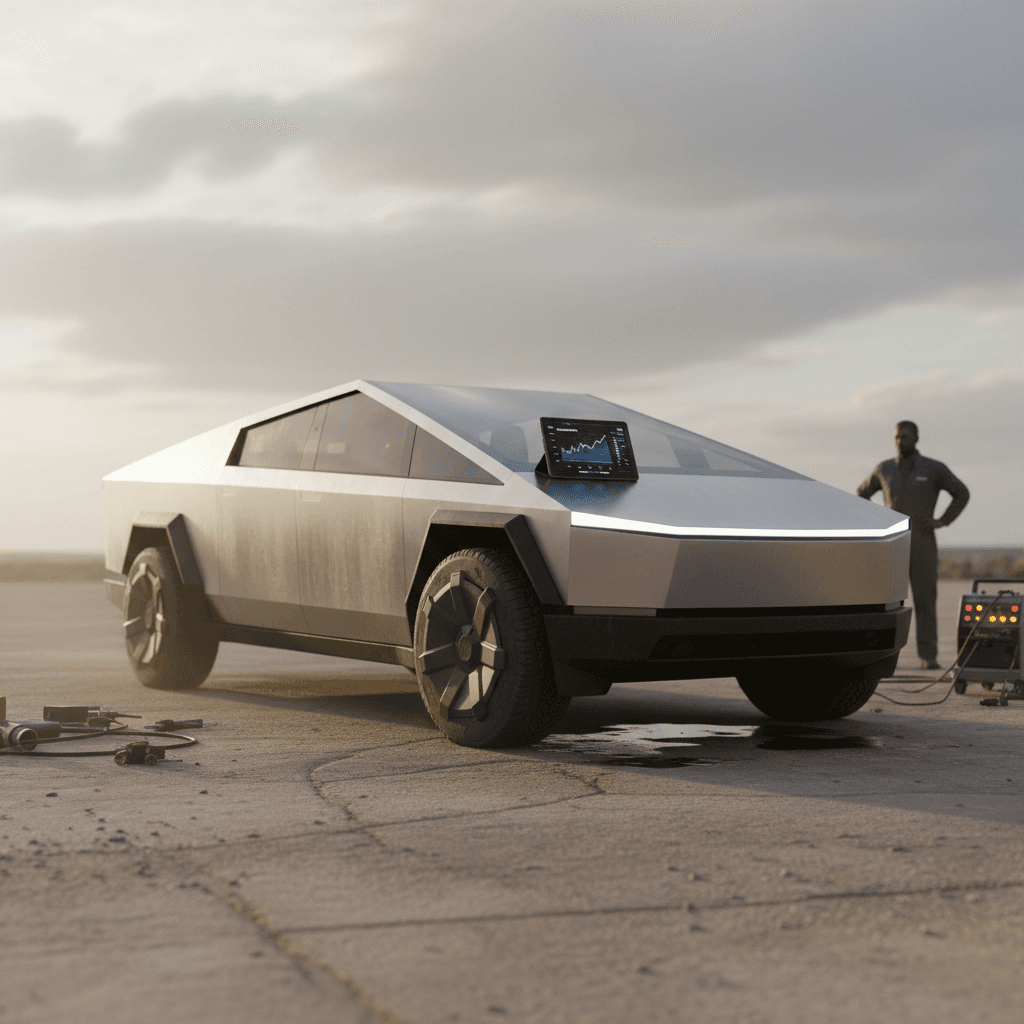
If you’re looking at a 2024 Tesla Cybertruck, you’ve probably seen two very different stories: on one hand, impressive crash-test scores; on the other, headlines about recalls, panel gaps, and stainless-steel quirks. So where does that leave the **2024 Tesla Cybertruck reliability rating** today, especially if you’re thinking about buying one used?
Quick takeaway
Overview: How reliable is the 2024 Cybertruck?
Because the 2024 Cybertruck is still a very new vehicle, no major third‑party group (like J.D. Power or Consumer Reports) has a long‑term reliability score yet. Instead, we have to build a picture from what *is* available: factory recalls, safety ratings, early owner complaints, and how Tesla typically behaves with first‑year models.
Snapshot: 2024 Cybertruck’s first-year reliability story
Put simply, the Cybertruck is **proving safe but not yet predictably reliable**. It has already gone through more recalls in its first year than some rivals see in several, but many of those issues are being corrected with software updates or hardware campaigns. If you’re shopping for a used 2024 Cybertruck, you should treat it as a high‑tech, high‑risk early adopter vehicle, not a set‑and‑forget work truck.
Safety vs. reliability: Two very different “ratings”
A lot of shoppers mix up **safety rating** with **reliability rating**. They’re related, but they measure very different things, and the Cybertruck is a textbook case of why that matters.
Safety rating
- Measured by crash-test agencies like NHTSA and IIHS.
- Focuses on how well the truck protects people in a crash and how it avoids crashes.
- Cybertruck does very well here, with a 5‑star NHTSA overall rating and strong IIHS results for later builds.
Reliability rating
- Measured over time by complaints, repair frequency and severity, and recall history.
- Focuses on how often the truck breaks and how expensive/inconvenient it is to fix.
- For the 2024 Cybertruck, early recall counts and build issues point to below‑average first‑year reliability.
Don’t confuse “5‑star safety” with “5‑star reliability”
2024 Cybertruck safety scores (IIHS & NHTSA)
The biggest bright spot in the Cybertruck’s report card is crash safety. Tesla’s stainless‑steel exoskeleton and massive crumple structure have translated into extremely strong lab results once the truck reached full testing.
Cybertruck crash-test and safety ratings
How the Cybertruck fares with major U.S. safety organizations, and what that means for you.
| Organization | Model / Build | Overall Rating | Key Notes |
|---|---|---|---|
| NHTSA | Cybertruck 2025+ (incl. many late-2024 builds with updates) | 5★ overall | Excellent occupant protection; concerns remain about weight vs. smaller vehicles. |
| IIHS | 2025 Cybertruck crew cab, built after April 2025 | Top Safety Pick+ | Strong structure and restraints; good crash-avoidance tech when updated. |
| EU/UK regulators | 2024–2025 Cybertruck | No type approval | As of 2025, not type-approved for general sale in EU/UK due to pedestrian-safety concerns. |
Note: Some top scores apply only to trucks built after specific 2025 production changes; a used 2024 Cybertruck may not include every later safety update.
How this should influence your decision
Every major 2024 Cybertruck recall so far
Where the 2024 Cybertruck stumbles is **recall history**. In its first year on sale (from late 2023 through 2024), the truck triggered a steady drumbeat of NHTSA campaigns, more than ten by late 2025, covering everything from cosmetic trim to potential crash‑risk issues.
Key Cybertruck recalls affecting 2024 model-year trucks
This is not a complete recall list, but it highlights the campaigns that matter most to used‑truck shoppers.
| Approx. Date | Issue | What Could Happen | Typical Fix |
|---|---|---|---|
| Apr 2024 | Accelerator pedal pad can slip off | Pedal can stick, leading to unintended acceleration risk | Dealer replaces or reworks pedal assembly. |
| Mid-2024 | Exterior trim / stainless panels may detach | Falling trim could create a road hazard, damage truck, or in rare cases increase crash risk | Inspect and re‑secure or replace affected trim and fasteners. |
| Late 2024 | Rearview camera display delay | Delayed camera feed when shifting to reverse reduces visibility | Over‑the‑air (OTA) software update to fix display timing. |
| Dec 2024 | Tire-pressure warning logic | Incorrect TPMS warning behavior could mask real low‑pressure conditions | OTA software update to recalibrate TPMS warnings. |
| Mar 2025 (covers 2024 builds) | Stainless trim/underbody attachment issues | Panels or trim could separate at speed, increasing crash hazard | Inspection and hardware replacement at service center. |
| Oct 2025 (covers 2024–2026 builds) | Front parking/marker lights too bright | Glare can distract or partially blind other drivers | OTA update or software flash to reduce light intensity. |
Always use the NHTSA VIN lookup and Tesla account portal to confirm every recall has been completed on the specific truck you’re considering.
Why recall count matters for reliability
For a 2024 Cybertruck on the used market, your job is less about memorizing every campaign and more about **verifying that all of them have been addressed**. That’s where a third‑party seller that specializes in EVs, and actually checks, can be worth its weight in stainless steel.
Common 2024 Cybertruck owner complaints
Beyond official recalls, early owners have been vocal about everyday quality issues. Some are cosmetic; others hint at deeper questions about **manufacturing repeatability** on such an unconventional truck.
Most talked‑about 2024 Cybertruck issues
What current owners say, and how seriously you should take it as a used buyer.
Panel gaps & misalignment
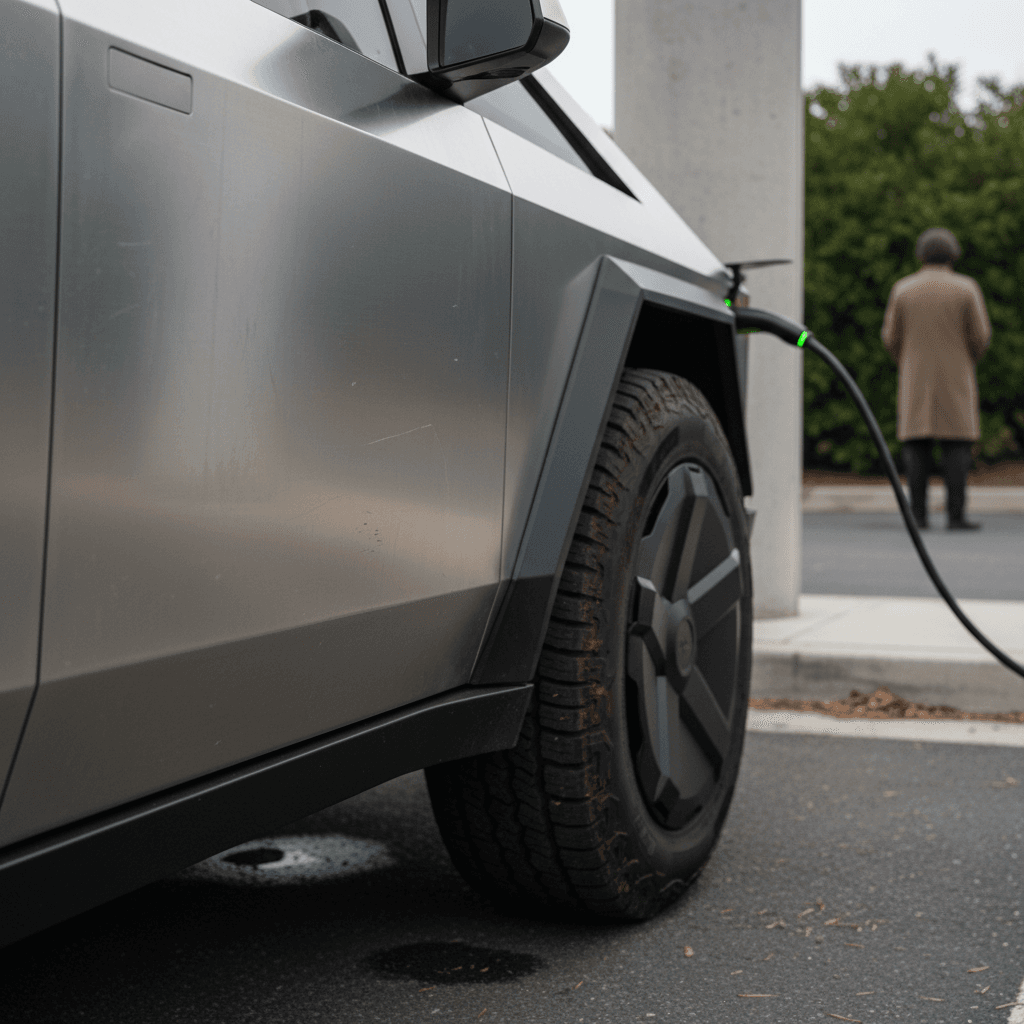
Stainless panels are notoriously hard to shape and adjust, and some early trucks left the factory with uneven gaps or slightly warped panels.
Impact: Mostly cosmetic, but a badly aligned panel can affect wind noise, corrosion protection, and even whether trim stays attached at speed.
Surface corrosion & staining
Photos of “rusty” Cybertrucks circulated early on. In most cases, this turned out to be surface contamination (rail dust, iron particles) that discolored the stainless, not structural rust.
Impact: Appearance problem more than safety concern, but keeping the finish clean and sealed takes more effort than a painted truck.
Wind noise & rattles
Some owners report wind whistles, squeaks, and cabin rattles, especially around the roofline and tonneau cover.
Impact: Annoying rather than dangerous, but chasing noises on a stainless exoskeleton can be labor‑intensive for body shops.
Steer‑by‑wire feel
Cybertruck uses a steer‑by‑wire system with no mechanical link. Software updates have adjusted steering effort and feel over time.
Impact: Mostly a subjective comfort and confidence issue, but any alerts or faults in this system demand immediate service.
Software glitches
Like other Teslas, the Cybertruck relies heavily on software. Owners have reported infotainment freezes, camera quirks, and ADAS bugs that are usually resolved with OTA updates.
Impact: Inconvenience today, but long‑term reliability depends on Tesla continuing to support the platform aggressively.
Repair complexity
Stainless body panels and unique components mean fewer independent body shops are comfortable repairing serious damage.
Impact: Repairs can be slower and more expensive than on conventional aluminum or steel trucks.
What Recharged looks for on incoming Cybertrucks
Battery, drivetrain and electronics reliability
Underneath the exoskeleton, the Cybertruck is still a Tesla: big battery, dual‑ or tri‑motor electric drive, and a dense network of control electronics. The good news so far is that **its core EV hardware hasn’t triggered the same level of headache as its body and trim**, at least not yet.
- As of early 2026, there have been **no high‑voltage battery pack recalls** specific to Cybertruck. That doesn’t guarantee perfection, but it’s a positive early signal.
- The dual‑ and tri‑motor drive units share a lot of hardware philosophy with Model X and Model Y performance variants, which have generally solid long‑term records once early bugs are addressed.
- Where owners see more day‑to‑day frustration is in **software‑controlled systems**, driver‑assist features, camera behavior, and occasional phantom warnings that require reboots or updates rather than physical parts.
How to judge a Cybertruck’s battery health
How the 2024 Cybertruck compares to other EV trucks
If reliability is your top concern, it’s smart to put the 2024 Cybertruck next to rivals like the Ford F‑150 Lightning, Rivian R1T, and GMC Hummer EV. None of these are simple, low‑risk vehicles, but some have a steadier track record than others.
Early reliability picture: Cybertruck vs. other electric pickups
A high‑level look at recalls and complexity. Exact reliability scores will evolve as more years and miles accumulate.
| Model | Launch / First Model Year | Recall & issue pattern | Overall early reliability impression |
|---|---|---|---|
| Tesla Cybertruck | Late 2023 / 2024 MY | Double‑digit recalls in first two years; lots of attention on trim, panels, and pedal issues; heavy software dependence. | High safety, but below‑average first‑year reliability and complex body construction. |
| Ford F-150 Lightning | 2022 | Several recalls (battery fire risk campaign, tire load labeling, etc.), but based on a long‑running F‑150 platform and broad dealer network. | Average to slightly below average; easier body repair and bigger service footprint. |
| Rivian R1T | 2022 | A handful of recalls (seatbelt anchors, airbag, suspension hardware) and some fit‑and‑finish complaints early on. | Typical first‑generation EV truck issues, trending toward average as updates roll out. |
| GMC Hummer EV | 2022 | Limited production but multiple recalls for electrical connections, software and some drive‑system concerns. | Very low‑volume halo truck; expensive and complex to fix, data set still small. |
This table is meant as directional guidance, not a final verdict. Always check the latest recall and complaint data for any specific VIN you’re considering.
What this comparison really tells you
Used 2024 Cybertruck buyer’s reliability checklist
If you like what the Cybertruck offers but don’t want to play beta tester, you need to buy with your eyes wide open. Here’s a practical, reliability‑focused checklist to work through before you commit to any 2024 Cybertruck.
Essential reliability checks for a used 2024 Cybertruck
1. Run the VIN through NHTSA and Tesla
Use the NHTSA VIN lookup and Tesla’s own recall portal to confirm that <strong>every open campaign is completed</strong>. Get documentation, screen grabs or service invoices, not just verbal assurances.
2. Inspect stainless panels up close
Look along the sides in good light for <strong>waves, creases, and uneven gaps</strong>. Check that doors open and close smoothly and that there’s no sign of reworked stainless or poorly aligned repairs.
3. Check for corrosion and staining
Examine lower panels, wheel arches, and seams for discoloration or pitting. Light tea‑colored spots can often be cleaned; deep pitting or bubbling around joints is more concerning.
4. Road‑test for noises and warnings
On your test drive, listen for wind whistles, rattles, or knocks. Watch the cluster for **steering, stability‑control, or drive‑unit alerts**, even brief ones are reasons to ask for a deeper inspection.
5. Verify software and safety updates
From the central screen, confirm that the truck is on a <strong>current firmware version</strong>. Ask the seller to show history of major OTA updates, especially those tied to recalls or safety campaigns.
6. Get battery and charging diagnostics
Range shown at 100% charge is only part of the story. A proper EV inspection, like the <strong>Recharged Score battery health test</strong>, can reveal hidden degradation or DC fast‑charging abuse.
7. Confirm repairability and insurance costs
Talk to your insurer and at least one local body shop about **Cybertruck repair costs and lead times**. Stainless exoskeleton work can be pricier and more specialized than you’re used to.
How Recharged de‑risks a used Cybertruck
Ready to find your next EV?
Browse VehiclesShould you buy a used 2024 Cybertruck?
So where does that leave the 2024 Cybertruck’s reliability rating in plain English? If we step back from the noise, the pattern looks like this: **excellent crash safety, inventive engineering, and a first‑year reliability record that’s rougher than most mainstream trucks, but not wildly out of line with other ultra‑complex EV flagships.**
Who a used 2024 Cybertruck fits
- You value standout design and performance more than perfect panel alignment.
- Some trips to the service center, and OTA quirks, don’t scare you.
- You’re prepared for potentially higher repair costs and are comfortable buying from a seller who has already done the hard vetting.
Who should probably skip it, for now
- You want a truck that behaves like a known quantity for 10+ years of hard work.
- You live far from Tesla service and reputable EV‑savvy body shops.
- You’d lose sleep over recalls, rattles, or cosmetic imperfections in the stainless skin.
If the Cybertruck speaks to you, the smarter move is not to wait for some mythical moment when it has “no problems at all.” Instead, focus on finding an individual truck with a clean repair history, completed recalls, documented battery health, and a seller willing to be transparent. That’s exactly the niche Recharged was built for: demystifying used EVs so you can decide, with your eyes open, whether this stainless‑steel spaceship of a truck fits your life, or whether a more conventional used EV pickup might suit you better.