Shopping for a 2024 Tesla Cybertruck in 2026 is very different from putting down a deposit back when it was a concept. We now have real pricing, range data, towing feedback, and, importantly, several recalls and quality reports to study. This buying guide walks you through trims, costs, pros, cons, and whether a new or used Cybertruck actually fits your needs.
What this guide covers
Is the 2024 Cybertruck Right for You?
Who the Cybertruck fits best
- Tech-forward truck shoppers who value over-the-air updates, advanced driver assistance, and Tesla’s software experience as much as capability.
- Urban and suburban owners who want a distinctive vehicle for light towing, weekend projects, and road trips more than heavy commercial work.
- Existing Tesla owners who already use the Supercharger network and are comfortable with Tesla’s ownership model and service process.
Who should think twice
- Hard‑use contractors or ranchers who need maximum payload, simple repairability, and a dealer/service network in every small town.
- Buyers allergic to early‑production quirks; Cybertruck has seen repeated recalls and quality issues since late 2023.
- Shoppers on a strict budget; even used 2024 trucks are still priced at a premium versus some rival electric and gas pickups.
Early-production reality check
2024 Tesla Cybertruck Trims and Key Specs
By spring 2024, the U.S. Cybertruck lineup effectively centered on two mainstream trims for most buyers: the All‑Wheel Drive (AWD) and the higher‑performance Cyberbeast. A briefly offered lower‑priced rear‑wheel‑drive version was short‑lived and is rare in the used market.
2024 Cybertruck Trims at a Glance
Approximate factory specs for core 2024 Tesla Cybertruck trims. Always confirm final equipment on the specific truck you’re considering.
| Trim | Drive | 0–60 mph (approx.) | Estimated Range* | Max Towing (lbs) | Notable Highlights |
|---|---|---|---|---|---|
| All‑Wheel Drive | Dual‑motor AWD | ~4.1 sec | up to ~340 miles | up to ~11,000 | Strong all‑around performance, air suspension, good balance of price, range, and capability. |
| Cyberbeast | Tri‑motor AWD | ~2.6–2.7 sec | lower than AWD (roughly 300+ miles depending on wheels) | similar ballpark to AWD | Very quick, more power and performance‑oriented tuning, often heavier options and larger wheels. |
| Rear‑Wheel Drive (limited) | Single‑motor RWD | slower, mid‑6s+ | targeted ~250+ miles | lower than AWD/Cyberbeast | Simpler layout, lower towing and performance; relatively uncommon by 2026. |
Specifications can vary slightly by build date and options; verify details in the individual listing.
About those range numbers
2024 Cybertruck: Snapshot Specs
Pricing: MSRP and Real-World Market Prices
Tesla has adjusted Cybertruck pricing more than once since launch. Early "Foundation Series" 2024 trucks carried very high MSRPs, while later builds and today’s used prices are more grounded. As of early 2026, you’ll typically see a noticeable spread between original window stickers and resale values.
How 2024 Cybertruck Pricing Breaks Down
Think in terms of original MSRP vs. what you’re likely to pay now.
Original new MSRP (2024)
Early 2024 Foundation Series trucks often stickered in the high-$80,000s to over $100,000, especially Cyberbeast models with options.
Even non‑Foundation AWDs were priced well above early promises from Tesla’s 2019 reveal.
Typical used asking prices (2026)
By 2026, depreciation plus quality concerns mean many 2024 AWD trucks list well below their original MSRP, often in line with other premium EV pickups.
Cyberbeast models still command a premium but can be relative bargains versus their original six‑figure stickers.
How it stacks up
Depending on spec and mileage, a 2024 Cybertruck often competes on price with a similarly equipped Rivian R1T or Ford F‑150 Lightning, but it’s rarely the cheapest choice once you add options.
Smart way to compare prices
Range, Towing, and Real-World Utility
The Cybertruck was pitched as a go‑anywhere, do‑anything electric pickup. In practice, it delivers strong performance and solid work capability, but range while towing and the realities of charging with a trailer can surprise first‑time EV truck owners.
- Unloaded highway commuting: Owners typically report comfortable daily range for 40–80 mile round‑trips with plenty of buffer, even in winter, assuming home charging is available.
- Towing impact: Like all EV trucks, the Cybertruck can lose roughly half its usable range when pulling a large, boxy trailer at highway speeds.
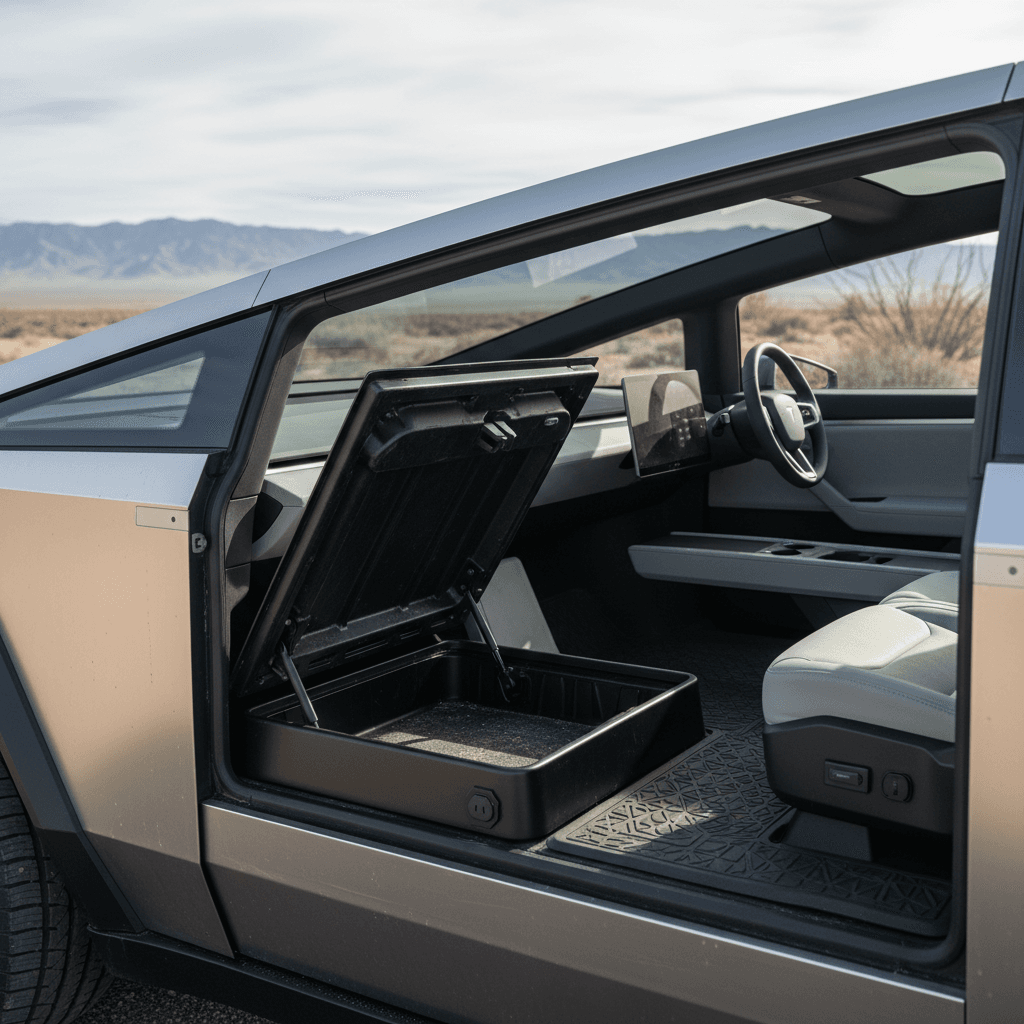
- Payload and bed use: The 4' x 6' bed with lockable cover, under‑floor storage, and onboard power outlets makes it excellent for tools, camping gear, and DIY runs.
- Off‑road capability: Adaptive air suspension and underbody protection give serious ground clearance, but wheel choices and tire type make a noticeable difference.
Towing and charging reality
Charging Experience: Home, Public, and Supercharging
If you’re already familiar with Tesla’s ecosystem, owning a Cybertruck is straightforward. If this is your first EV, or your first Tesla, understanding where and how you’ll charge is critical before you sign anything.
Where the Cybertruck Gets Its Energy
Think in terms of three main charging buckets.
Home charging (Level 2)
For most owners, a 240‑volt Level 2 charger at home is non‑negotiable. With a large battery, you’ll want a 40–60‑amp circuit so you can add meaningful range overnight.
If you can’t charge at home, run the numbers carefully, public fast charging alone can be inconvenient and costly.
Tesla Supercharger network
One of Cybertruck’s biggest advantages is full access to V3 and newer V4 Superchargers, many of which now support faster charging and easier cable reach for trucks.
Highway charging is generally predictable and well‑documented in the Tesla app and navigation.
Other public charging
Tesla has begun opening select Superchargers to non‑Tesla EVs, and the broader industry is moving toward the NACS connector, but Cybertruck owners still enjoy the smoothest experience at Tesla‑branded sites.
You can use some non‑Tesla DC fast chargers with the right adapters, but reliability varies by network.
Test your real charging pattern
Cybertruck Reliability and Recalls: What Buyers Should Know
No 2024 Cybertruck buying guide is complete without a frank look at reliability. Since first deliveries in late 2023, the truck has been subject to multiple recalls covering issues from accelerator pedal pads to trim pieces and lighting. That doesn’t automatically make it a bad buy, but you need to go in with eyes open.
- Multiple recalls in first 15 months: U.S. safety regulators have issued recalls covering accelerator pedals that could stick, windshield wiper issues, exterior panels that might detach, laggy rearview cameras, and overly bright front lights, among others.
- Software vs. physical fixes: Some recalls are addressed with over‑the‑air software updates, while others require a visit to a Tesla service center for physical repair work.
- Service capacity: Because Tesla handles almost all service in‑house, major campaigns can strain appointment availability in some regions.
- Quality variation: Early reports point to inconsistent panel gaps, trim fitment, and occasional water leaks on some early builds, though later 2024 trucks tend to show gradual improvement.
Non‑negotiable for used buyers
Early adopters pay twice: once at the showroom, and again in time and patience as the manufacturer works through first‑generation issues. With the Cybertruck, that trade‑off is very real.
Daily Driving, Comfort, and Practicality
From behind the wheel, the Cybertruck feels more like a futuristic crossover than a traditional pickup. Instant torque, a quiet cabin, and a commanding view make it an easy daily driver, if you’re comfortable with its size and styling.
Strengths in everyday use
- Smooth, quick acceleration in both AWD and Cyberbeast trims makes merging and passing effortless.
- Spacious cabin with seating for five, plenty of headroom, and good rear‑seat legroom for adults.
- High‑tech interface with a large central screen and over‑the‑air updates that add features over time.
- Quiet ride compared with many gas pickups, especially around town.
Compromises to consider
- Cabin ergonomics are polarizing. Nearly everything runs through the central screen, with minimal physical controls.
- Size and visibility can make tight parking lots and older garages stressful until you adjust.
- Exterior styling attracts attention, positive and negative. If you prefer to fly under the radar, this isn’t your truck.
Take a long test drive
Ownership Costs: Insurance, Maintenance, and Depreciation
Total cost of ownership on a 2024 Cybertruck is a mixed bag. Electricity is usually cheaper than gasoline per mile, and EVs avoid oil changes and many traditional maintenance items. On the other hand, high purchase prices, elevated insurance premiums, and still‑developing repair networks can offset part of those savings.
Where Cybertruck Ownership Dollars Go
Look beyond the monthly payment.
Energy costs
Electricity vs. gas: For many U.S. owners, home charging costs per mile undercut comparable gas pickups, especially with off‑peak utility rates.
Frequent DC fast charging on road trips is pricier but still competitive with many gasoline trucks.
Insurance and repairs
Insurance: New, high‑value EV trucks with expensive bodywork and advanced sensors often carry higher premiums than mainstream pickups.
Repairs: Body and glass repairs on the Cybertruck’s stainless exoskeleton can be specialized and costly, and not every shop is ready for it yet.
Depreciation and resale
After an initial hype phase, resale values for early Cybertrucks have come back to earth. By 2026, they generally depreciate more like other high‑end EVs: relatively steep in the first few years, then leveling off.
Use total-cost tools, not guesses
Buying New vs. Used Cybertruck in 2026
By April 2026, you have a genuine choice between new‑build Cybertrucks and a growing supply of 2024 trucks on the used market. Each path has trade‑offs.
Reasons to buy new
- Latest production fixes: Newer trucks are more likely to incorporate running changes that address early build issues.
- Full factory warranty: You start with the clock at zero on Tesla’s bumper‑to‑bumper and battery warranties.
- Build it your way: You can choose your preferred trim, wheels, and options instead of inheriting someone else’s spec.
Reasons to buy used
- Save on depreciation: Early 2024 owners already absorbed the steepest drop from initial hype pricing.
- Known history: A well‑documented 2024 truck shows which recalls have been done and how it’s behaved in the real world.
- Faster availability: Instead of waiting for a factory slot, you can often find a used Cybertruck that’s ready to ship.
How Recharged can help on the used side
Ready to find your next EV?
Browse Vehicles2024 Cybertruck Buying Checklist
Key Steps Before You Commit to a 2024 Cybertruck
1. Clarify how you’ll really use the truck
Be honest about your mix of commuting, towing, off‑road use, and family duty. If you rarely tow and mostly drive in town, the Cybertruck’s strengths play well. If you tow heavy and far, carefully consider range and charging logistics.
2. Confirm your charging plan
Make sure you have, or can install, Level 2 home charging on a suitable 240‑volt circuit. Then map your regular routes against Supercharger locations to avoid surprises.
3. Choose the right trim and wheels
AWD suits most buyers. Cyberbeast is fun but often overkill unless you truly value maximum acceleration. Larger wheels look great but usually reduce range; decide if the trade‑off is worth it.
4. Review recall and service history
For used trucks, insist on documentation showing that all applicable recalls and service campaigns have been completed. For new trucks, ask the seller to confirm there are no outstanding campaigns at delivery.
5. Evaluate battery health and software version
Battery degradation should be modest on 2024 trucks, but it still pays to verify state‑of‑health and recent software levels. A platform like Recharged can surface that data and highlight anomalies.
6. Compare total cost with alternatives
Stack the Cybertruck against rivals like the Ford F‑150 Lightning and Rivian R1T. Compare payment, range, towing, charging access, and resale, then decide whether Cybertruck’s unique design and Tesla ecosystem justify the numbers for you.
Frequently Asked Questions About the 2024 Tesla Cybertruck
2024 Cybertruck FAQ
Bottom Line: Should You Buy a 2024 Cybertruck?
The 2024 Tesla Cybertruck is one of the most polarizing vehicles you can buy, and that’s exactly its appeal for many shoppers. It delivers head‑turning design, strong performance, useful onboard power, and native access to Tesla’s Supercharger network. At the same time, it comes with early‑production baggage: multiple recalls, uneven build quality on some examples, and a learning curve around towing range and charging.
If you’re a tech‑savvy buyer who understands EV ownership and values the Tesla ecosystem, a carefully chosen 2024 Cybertruck, especially one with documented service history and verified battery health, can be a compelling truck. If you prioritize simple ownership, small‑town service access, and minimal drama, a more conventional EV or gas pickup may serve you better. Either way, approaching the Cybertruck with solid information, a clear use case, and objective condition data from a source like Recharged will help you make a choice you’ll be happy to live with every day.