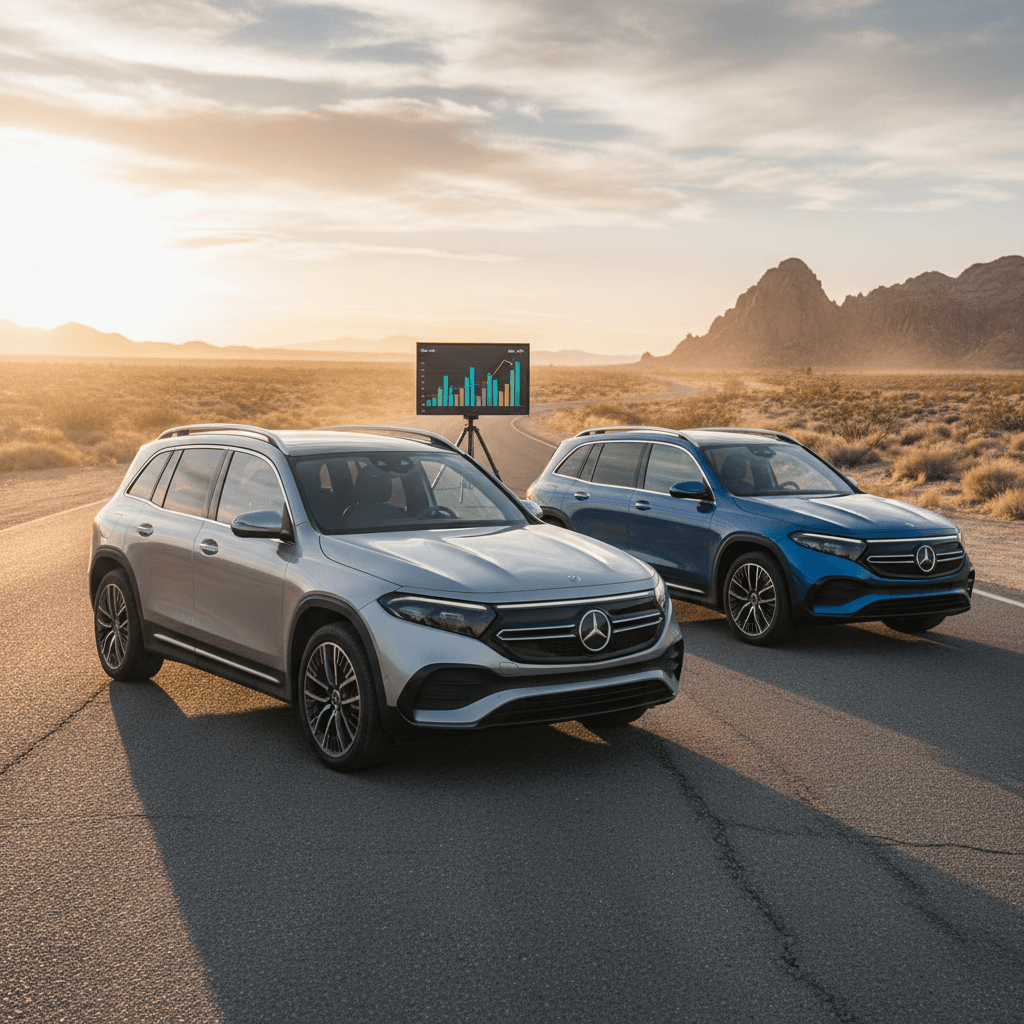
If you’re considering a 2024 Mercedes‑Benz EQB, or eyeing one used, your first question is usually simple: **how far will it really go on a charge?** Official EPA numbers only tell part of the story. In this 2024 Mercedes EQB range test deep dive, we’ll translate those lab ratings into real‑world expectations for city commuting, highway road trips, winter driving, and long‑term ownership.
Quick takeaway
2024 Mercedes EQB range ratings at a glance
2024 Mercedes EQB EPA range and efficiency
Official EPA and manufacturer‑quoted figures for the main 2024 EQB trims. Real‑world results will vary with driving conditions.
| Model (2024) | Drive | Battery (usable est.) | EPA combined range | City / Highway MPGe | Energy use (EPA) |
|---|---|---|---|---|---|
| EQB 250+ | FWD | ≈66.5 kWh | ~245–251 mi | 114 / 100 | Low 30s kWh/100 mi |
| EQB 300 4MATIC | AWD | ≈66.5 kWh | ~205–232 mi | Lower than 250+ | Mid 30s kWh/100 mi |
| EQB 350 4MATIC | AWD | 66.5–70.5 kWh | 207–227 mi | 89 / 85 | 39 kWh/100 mi |
Use this as the starting point for any 2024 Mercedes EQB range test, then adjust down based on how and where you drive.
Read the fine print on ratings
How to interpret EQB range tests
You’ll find a lot of “range tests” online, everything from steady 70‑mph loops to city‑only stop‑and‑go drives. Each one is useful, but only if you understand the context. When we talk about the 2024 Mercedes EQB’s range, we’re really talking about **energy use** (kilowatt‑hours per 100 miles) and how driving conditions change that number.
- On a **steady highway loop** at 70–75 mph, boxy SUVs like the EQB use more energy than smaller crossovers, so range falls fastest here.
- In **suburban and city driving** at 25–50 mph, the EQB’s regenerative braking helps, and you may get close to, or even beat, EPA numbers in mild weather.
- Real‑world mixed driving usually ends up between those extremes, which is why owner reports often cluster around **70–85% of EPA range**.
Don’t chase 0%
Real‑world range in the EQB 350 4MATIC
The **EQB 350 4MATIC** is the punchiest version of the SUV and the one many U.S. buyers gravitate toward. It uses a battery around **66.5–70.5 kWh** with EPA combined consumption of about **39 kWh/100 miles** and an official range just over **200 miles**. That’s the headline number. Here’s how it tends to play out in the real world.
Typical real‑world EQB 350 range scenarios
Approximate usable range from 100% to near empty, assuming a healthy battery
City & suburban mix (mild weather)
Estimated range: 180–200 miles
- Speeds mostly 25–55 mph
- Plenty of regen in stop‑and‑go
- Moderate use of HVAC
70–75 mph highway (mild weather)
Estimated range: 150–175 miles
- Boxy shape = more aero drag
- Less opportunity for regen
- Crosswinds and elevation changes hurt range
Cold weather mix (below freezing)
Estimated range: 130–160 miles
- Cabin heating is energy‑intensive
- Battery less efficient when cold
- Short trips are hardest on range
How this compares to rivals
EQB 250+ and 300: trading speed for distance
If range is a top priority, the **EQB 250+** is the pick of the lineup. It sacrifices all‑wheel drive and some acceleration for better efficiency and a higher EPA rating, roughly **245–251 miles** depending on wheel and tire choice. The **EQB 300 4MATIC** sits in the middle, with more power than the 250+ but better efficiency than the 350.
EQB 250+: maximized efficiency
- Front‑wheel drive, single motor
- EPA range roughly 245–251 miles
- Best choice if you prioritize distance over acceleration
- In gentle mixed driving, many owners see real‑world ranges in the 200+ mile band from full to low state of charge.
EQB 300 4MATIC: middle ground
- All‑wheel drive, dual motor
- EPA range around 205–232 miles depending on spec
- Good compromise of grip, performance, and usable range
- Expect real‑world range similar to the 350 if you drive aggressively, or closer to the 250+ if you’re gentle on the throttle.
Which EQB trim suits your range needs?
Highway vs city: where the EQB does best
Like most EVs, the EQB is more efficient at lower speeds. Its upright, SUV‑like shape isn’t as slippery as a low sedan or a coupe‑ish crossover, so **aerodynamic drag ramps up quickly** once you’re above about 65 mph. That shows up clearly in any serious 2024 Mercedes EQB range test that includes a sustained highway leg.
How conditions change EQB range
Watch out for wind and elevation
Weather, speed and driving style: what really cuts EQB range
The 2024 EQB’s battery and motors are efficient, but they still obey the laws of physics. Three factors dominate any real‑world range test: **temperature, speed, and how you use climate control**.
Practical ways to protect your EQB’s range
1. Precondition while plugged in
Use the Mercedes me app or in‑car settings to warm or cool the cabin while the EQB is still charging. This shifts energy use to the charger instead of the battery and preserves range, especially in winter.
2. Stick closer to 65 mph on highways
Dropping your cruising speed from ~75 mph to ~65 mph can add double‑digit miles of range without changing your route, especially noticeable in a boxier SUV like the EQB.
3. Use heated seats and wheel first
In cold weather, seat and steering‑wheel heaters use less energy than blasting cabin heat. You’ll still be comfortable while leaving more energy for propulsion.
4. Pick Eco or Comfort, not Sport
Sport mode wakes up the EQB’s dual motors but also encourages inefficient driving. For everyday use, Eco or Comfort will still feel quick while stretching each kWh.
5. Check tire pressures often
Under‑inflated tires increase rolling resistance. On an EV with already modest range like the EQB 350, that can shave off noticeable miles over a week of driving.
6. Travel light when you can
Roof boxes, bike racks, and heavy cargo all hurt efficiency. Remove them when you’re not using them, and pack the cabin rather than the roof whenever possible.
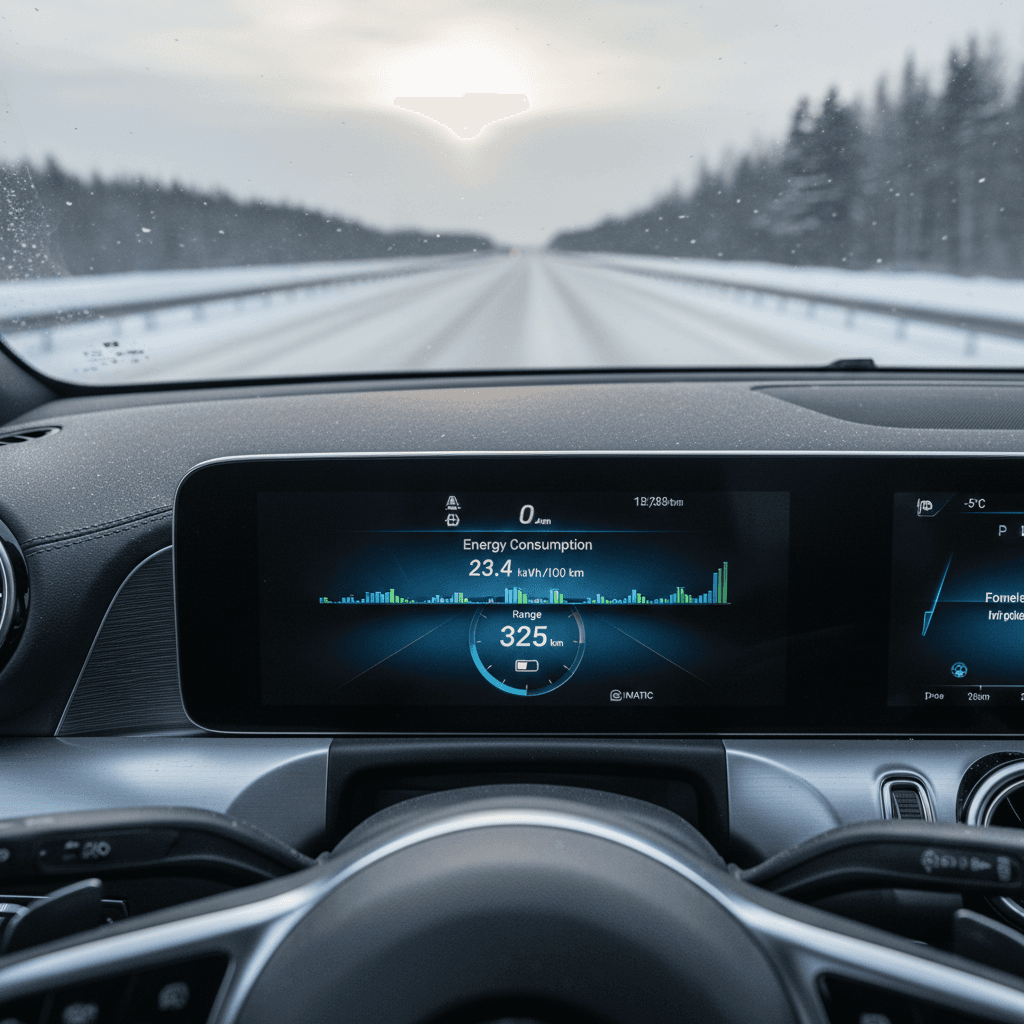
Charging speeds and planning road trips in an EQB
Range is only half the story. The other half is how quickly the EQB can **add miles back**. All 2024 EQB models accept up to **9.6 kW on Level 2** AC charging and around **100 kW on DC fast charging** under ideal conditions. In practice, that means a **10–80% DC fast‑charge in roughly 30–35 minutes** when the battery is preconditioned and the charger can deliver full power.
At home (Level 2, 240V)
- On a 40‑amp circuit, plan on roughly 8 hours for a full charge from low state of charge.
- Overnight top‑ups of 20–60% are easy and put far less stress on the pack than daily DC fast charging.
- Most commuters will wake up every morning with the EQB back at their preferred 70–90% charge level.
On the road (DC fast charging)
- 100‑kW peak is modest vs the latest 800‑volt EVs, so plan slightly longer stops.
- The EQB charges fastest between ~10–60% state of charge; speeds taper as you approach 80–90%.
- For long trips, it’s more efficient to make a few **shorter 10–60% sessions** than to sit to 100% each time.
Trip‑planning rule of thumb
What EQB range looks like on the used market
If you’re shopping a **used Mercedes EQB**, especially a 2022–2024 model, your big questions are usually: How much range has it lost, and will it still cover my daily needs? The good news is that most modern EVs, including the EQB, tend to show **gradual, not catastrophic, battery degradation** when they’ve been charged and stored reasonably well.
Range questions to ask when buying a used EQB
These will tell you more than the odometer alone
Charging history
Ask how the SUV was charged:
- Mostly home Level 2? That’s ideal.
- Daily DC fast charging on road trips? Expect slightly more wear.
- Long periods at 100%? Not great for battery health.
Climate and storage
Hot climates and outdoor storage can accelerate aging:
- Garaged EQBs in temperate regions often retain more range.
- Look for patterns of extreme heat and lack of shade.
Current usable range
On a test drive, note:
- Displayed range at a known state of charge
- How quickly the percentage drops over 10–20 miles
- Any warnings or inconsistent readings
How Recharged can help
Ready to find your next EV?
Browse VehiclesBattery health, recalls and what to ask about
Battery condition matters for both range and safety. Mercedes has issued recalls on certain EQB model years related to the high‑voltage battery pack. As of early 2026, some 2022–2024 EQB SUVs are scheduled for replacement battery packs due to a fire‑risk issue affecting specific cells. Until fixed, affected owners are being advised to **limit charge levels and park outside**.
- If you’re considering a used EQB, ask for documentation showing whether any **battery‑related recalls** have been performed.
- Confirm whether the vehicle has any open recalls using the VIN on official recall‑lookup tools before you buy.
- If a replacement pack has been installed, that can actually be a **positive for long‑term range**, since you’re starting with effectively “fresher” hardware.
Don’t ignore recall notices
2024 Mercedes EQB range test FAQ
Frequently asked EQB range questions
Bottom line: should you worry about EQB range?
If you’re looking at a 2024 Mercedes EQB, new or used, the real story is that **range is adequate rather than class‑leading**, but predictable if you understand the variables. In most real‑world scenarios, you’ll see somewhere between **150 and a bit over 200 miles** from a full charge, with the 250+ stretching that number the farthest and the 350 trading a few miles for stronger acceleration.
Where the EQB shines is as an all‑weather, compact luxury SUV that fits easily into daily life: home charging overnight, realistic regional road trips with planned DC fast‑charge stops, and comfortable margins for typical U.S. commutes. If you pair that with a **verified battery‑health report** and up‑to‑date recall work, as you’d get when buying through Recharged, you can treat range as a known quantity rather than a gamble, and focus on whether the EQB’s size, layout, and driving feel match your needs.