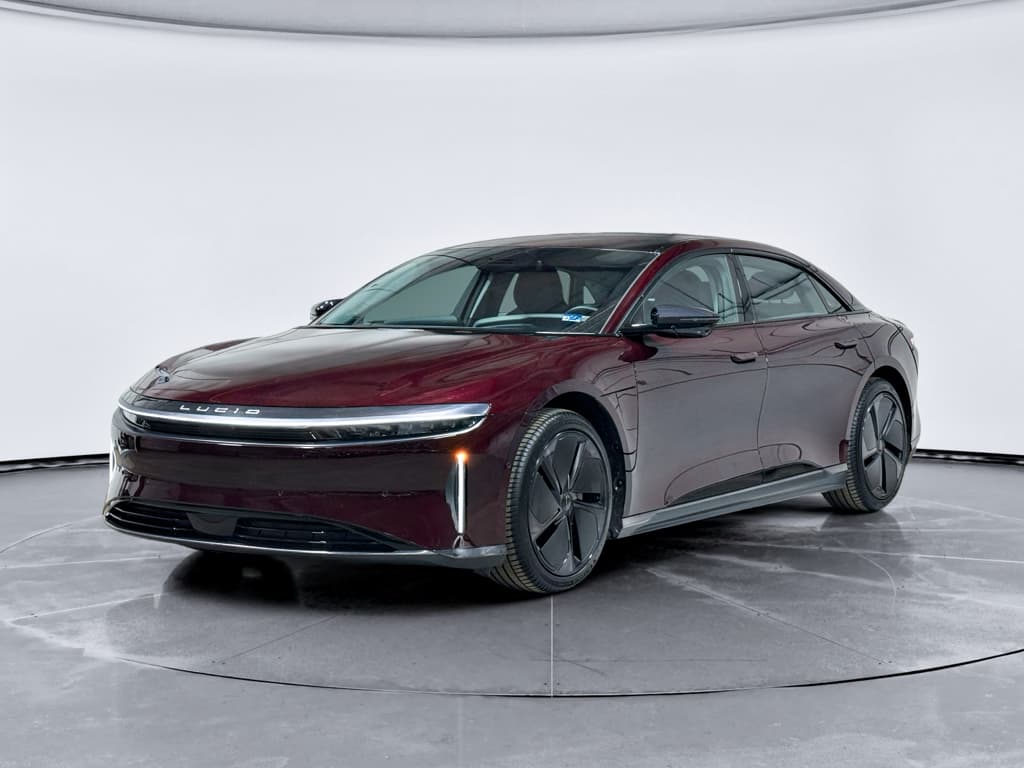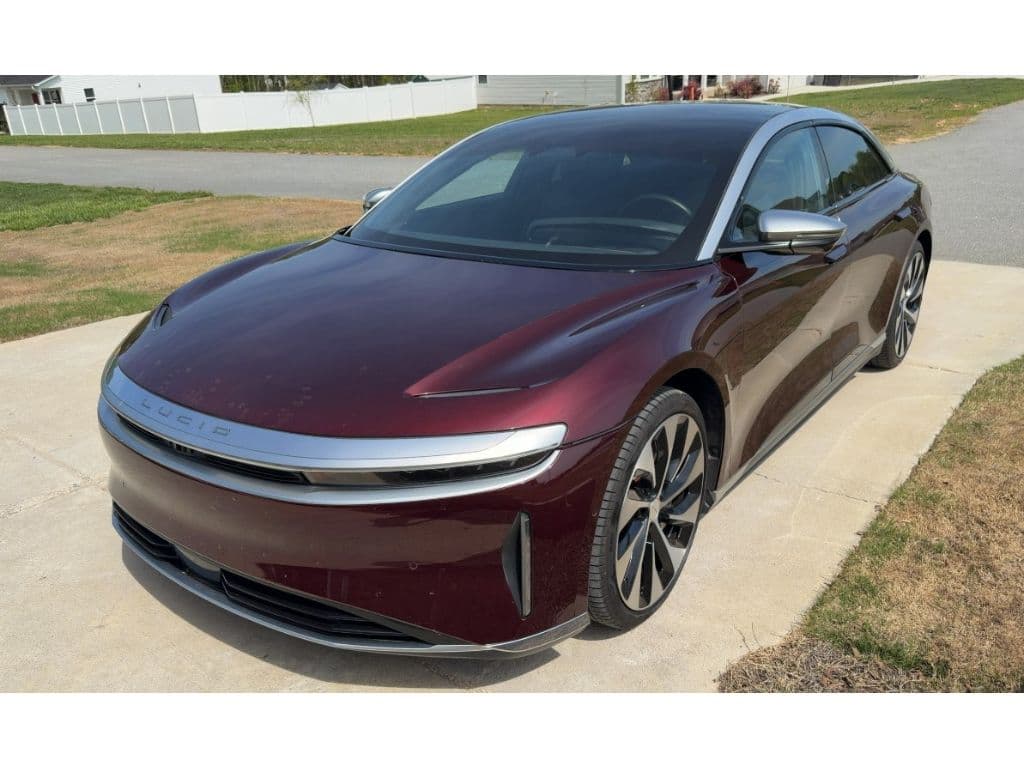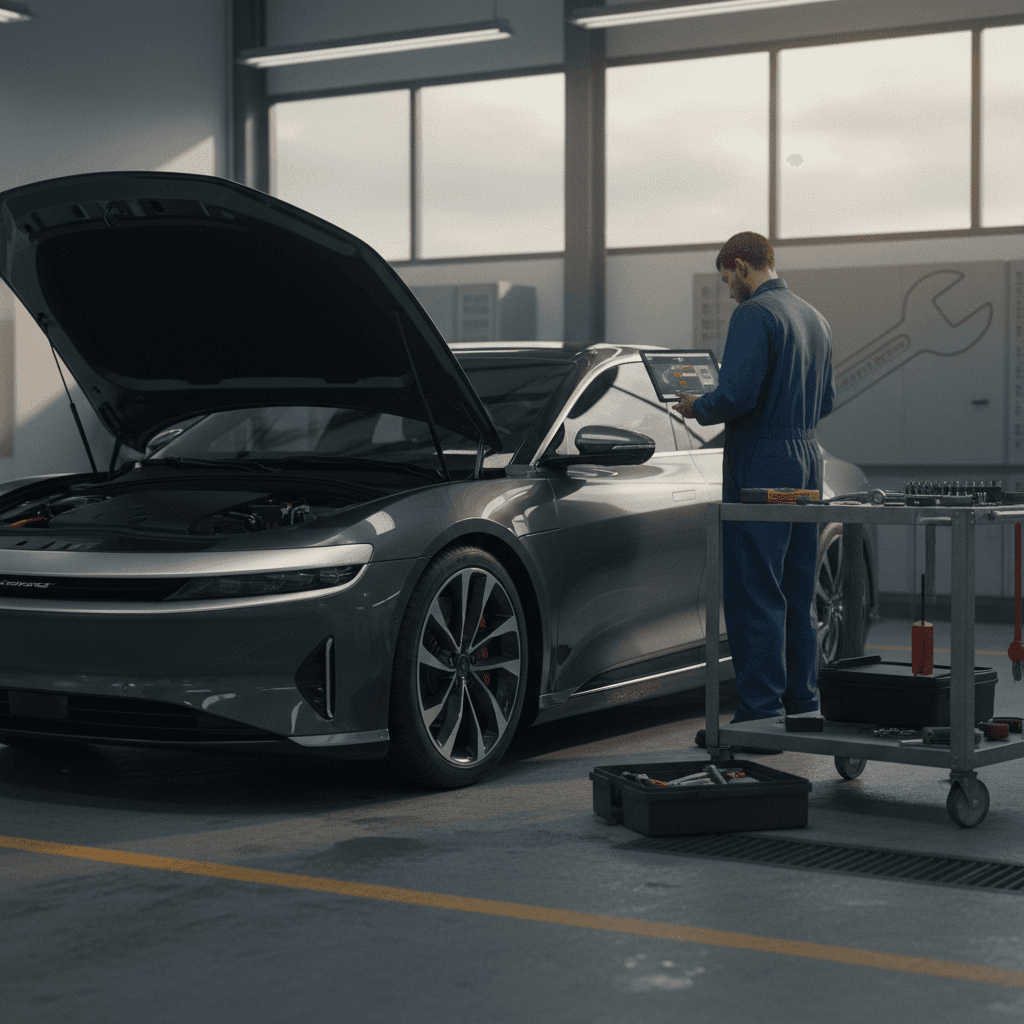
If you own, or are eyeing, a used Lucid Air, you’ve probably heard about the recalls. In 2024 alone, Lucid shows up in federal data with multiple recall campaigns, most of them software‑heavy and often fixed over the air. This 2024 Lucid Air recalls list pulls those campaigns into one place, explains what actually went wrong, and, crucially, what it means for you as an owner or shopper.
First, a quick reality check
Overview: 2024 Lucid Air recalls at a glance
Lucid Air recall picture by late 2024
The key takeaway: 2024 was not a quiet year for Lucid, but that’s partly because the brand is tiny and heavily software‑defined. A single logic error in the high‑voltage system can trigger a nationwide recall, even if the fix is nothing more than an update that downloads while the car sleeps in your garage.
Quick 2024 Lucid Air recalls list
Here’s a simplified 2024 Lucid Air recalls list focused on campaigns initiated or actively in play during calendar year 2024 that involve the Air in the U.S. market. Names below are descriptive, not the official NHTSA titles:
Primary Lucid Air recalls touching 2024
High‑level, owner‑friendly summary of key Lucid Air recall campaigns that were active or initiated in 2024. Always confirm exact details against your VIN.
| Recall theme (plain‑English) | Approx. NHTSA campaign | Likely affected model years | Fix type | Main risk if not fixed |
|---|---|---|---|---|
| High‑voltage interlock logic may cut drive power | 2024 campaign covering HVIL safety logic | 2022–2023 Air (some 2024 builds referenced in owner reports) | Over‑the‑air (software update) | Unexpected loss of drive power while in gear |
| Windshield defroster / HVAC performance issue | Pre‑2024 campaign with investigation reopened in 2024 | 2022–2023 Air, some 2024s by build date | Mostly over‑the‑air, with hardware inspection in some cases | Windshield fogging and reduced visibility |
| High‑voltage coolant heater failures (HVCH) | Pre‑2024 campaign under continued monitoring | 2022–2023 Air | Service visit, parts replacement as needed | Loss of cabin heat and defrost function, possible safety risk in cold climates |
| Software errors causing warning messages / drive system faults | Multiple software‑centric campaigns spanning 2023–2024 | Primarily 2022–2024 Air | Over‑the‑air (software update) | Unexpected warnings or limp‑home behavior; in rare cases, shutdown |
| Floor mats interfering with accelerator pedal | Late‑2024 campaign on all‑weather mats | 2022–2024 Air using Lucid all‑weather mats | Dealer / service center to inspect or replace mats | Pedal may not fully return, increasing risk of unintended acceleration |
This table is a guide, not a substitute for checking your specific VIN on NHTSA.gov or with Lucid.
Use this list as a guide, not a VIN check
Major 2024 Lucid Air recalls explained
1. High‑voltage interlock (HVIL) logic and loss of power
One of the more serious‑sounding 2024 Lucid Air recalls involves the High‑Voltage Interlock (HVIL) system. This is the nervous watchdog of the battery pack. Its job is to shut down high voltage if it thinks someone has disturbed the system, like opening a service connector or damaging a harness. In early‑build Airs, Lucid found that HVIL logic could in rare cases remove high‑voltage power while the car was still in Drive or Reverse.
In plain English: you’re rolling along, the HVIL thinks something’s wrong, and, bang, the car quietly kills propulsion. The 12‑volt side stays awake, the screens may stay lit, but motive power is gone. That’s the sort of scenario that makes federal regulators sit up straight, and it’s why the company pushed out an over‑the‑air software update in 2024 to change when and how the HVIL is allowed to drop the big contactors.
How this HVIL recall is fixed
2. Windshield defroster and HVAC performance
Another Lucid Air campaign that bled into 2024 is the windshield defroster / HVAC recall. Owners reported instances where the climate‑control system didn’t send enough warm air to the windshield, leaving fog or frost that compromised visibility. Lucid’s initial fix leaned heavily on a software update to re‑map how the HVAC system prioritizes the glass.
In early 2024, regulators went back to look at whether that software‑only fix goes far enough. That doesn’t mean your car is dangerous; it means the feds want hard evidence that the defroster works in ugly, real‑world conditions, not just in a lab on a Tuesday afternoon in Arizona.
What you should do as an owner
3. High‑voltage coolant heater (HVCH) concerns
Closely related to the defroster story is the high‑voltage coolant heater (HVCH). When the HVCH misbehaves, you can end up with weak cabin heat and a lazy defroster. That’s annoying in California and a genuine safety issue in Minnesota in January. Earlier campaigns flagged suspect HVCH components on 2022–2023 cars; monitoring and remedial work were still playing out through 2024.
In practice, owners see this not as a dramatic dashboard alert, but as a car that suddenly can’t keep its windows clear or its occupants warm. Lucid’s remedies have combined software updates (for heater control logic) with physical replacement of heaters that fail tests or fall into bad batches.
4. Software errors, warnings, and drive system faults
Like Tesla, Rivian, and the rest of the Class of Silicon Valley, Lucid builds cars around software. When that software hiccups, you get warning storms: drive system alerts, power‑reduced messages, or brief loss of responsiveness that eventually trace back to coding rather than failed hardware. Several such campaigns straddling 2023–2024 aimed to clean up logic around contactors, power delivery, and system monitoring.
The public‑facing story sounds ominous, "loss of drive power," "drive system fault", but when you read the engineering notes, most of it boils down to: The car panicked when it saw noise in a sensor signal and went into self‑preservation mode too quickly. Lucid has tended to attack these with OTA updates, pushing new logic to thousands of cars at once.
5. Floor mats and accelerator pedal interference
Late in 2024, Lucid landed in the old‑school corner of the recall world: floor mats interfering with the accelerator pedal. Certain all‑weather mats could shift and ride up near the pedal, making it harder for the pedal to fully return. This is the kind of painfully avoidable issue that has haunted luxury brands for years.
The fix here is charmingly low‑tech by Lucid standards: inspect, secure, or replace the mats so they can’t trap the pedal. It’s a straightforward service visit, but one you shouldn’t ignore. An accelerator that doesn’t spring back cleanly is not something to negotiate with.
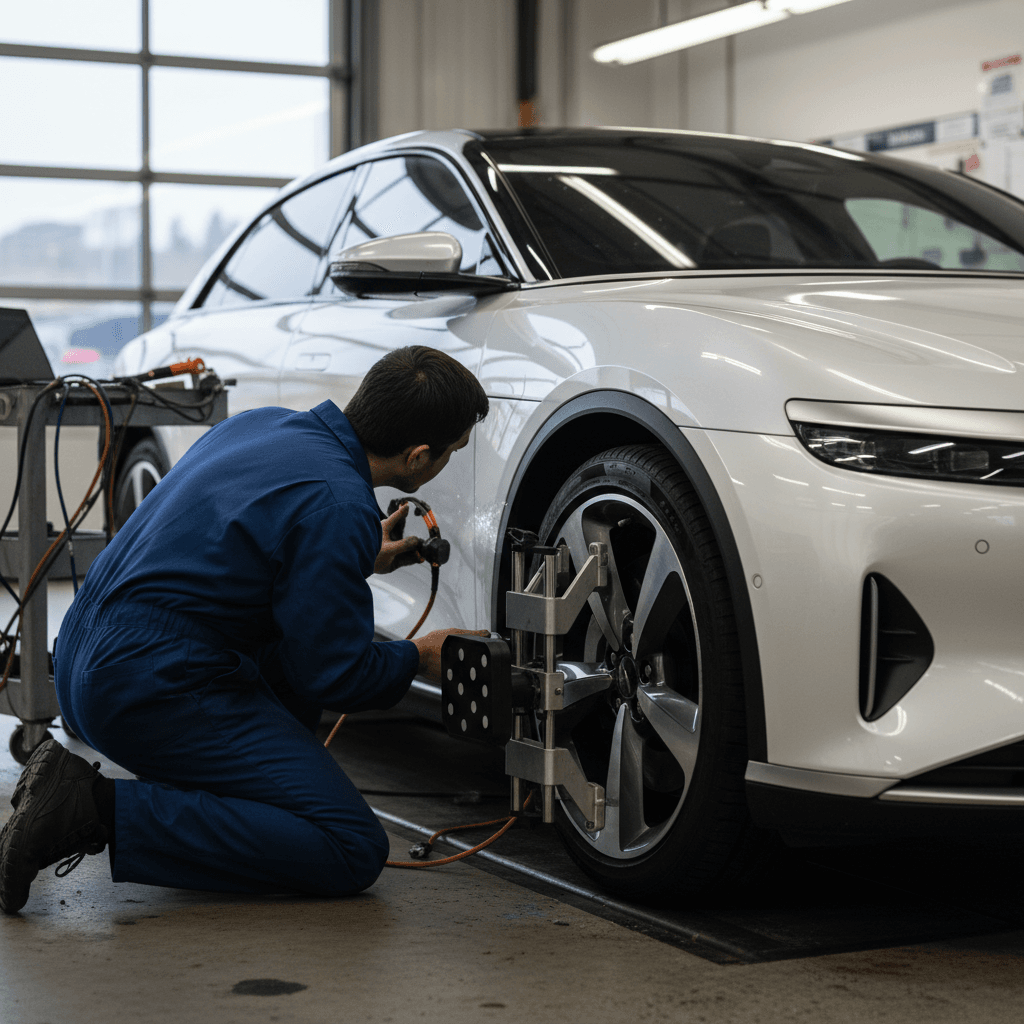
How Lucid fixes recalls: OTA vs service visits
Over‑the‑air (OTA) recall fixes
Lucid leans hard on software. When a recall is fundamentally about logic, HVIL thresholds, defroster behavior, warning strategies, the remedy can be an OTA update that arrives silently over Wi‑Fi or LTE.
- No appointment needed in many cases
- Update can run while the car is parked at home
- Lucid can monitor completion rates centrally
Traditional service‑center fixes
When a recall involves physical parts, coolant heaters, wiring, floor mats, you’re looking at a service visit. For a young brand with few locations, that can mean travel and logistics.
- Appointment required; loaner availability varies
- Good chance to take care of other campaigns at once
- Repairs are free when tied to an official recall
Stack your repairs
What the 2024 recalls really say about Lucid Air safety
Reading between the lines on Lucid Air safety
Recalls tell a story, but not always the story you think.
Strong crash performance
The Lucid Air earned a five‑star overall safety rating from NHTSA, which is the part of the test you can’t fix with a software patch. The underlying crash structure is solid.
Software‑heavy architecture
Lucid’s architecture means many problems show up as software defects: nuisance warnings, overly conservative shutdowns, logic errors. These are scary on paper but often easy to correct remotely.
Growing‑pains engineering
On the flip side, a string of recalls across 2022–2024 is a sign of a young automaker still burning down its bug list. If you want the drama‑free experience of a Camry, this isn’t it.
Combine those three facts and you get a more nuanced picture. Structurally, the Air is excellent. The powertrain is wildly capable. But the car is also an ambitious rolling software experiment from a company that’s still building its playbook. If you’re shopping a used Lucid Air, the question isn’t "Has this car ever been recalled?" but "Have all the important recalls been done, and does this car behave consistently now?"
Take loss‑of‑power recalls seriously
Buying a used Lucid Air? Recalls checklist
If you’re evaluating a pre‑owned Lucid Air, especially a 2022–2024 build, recall history should sit right next to battery health and price on your list of talking points. Here’s a practical checklist you can work through in 10–15 minutes.
Used Lucid Air recall & safety checklist
1. Run the VIN through NHTSA
Before you fall in love, plug the VIN into the federal recall lookup tool and confirm there are <strong>no open safety recalls</strong>. If there are, ask the seller for proof of repair or factor the fix into your timing.
2. Ask for service and OTA history
Request a printout or screenshots showing completed <strong>recall repairs and software updates</strong>. With a young EV, you’re buying not just the car, but its update history.
3. Test for drive‑system glitches
On the test drive, watch for <strong>drive system warnings, sudden power drops, or screen outages</strong>. A single warning after a bad DC fast‑charge session isn’t a deal‑breaker; a pattern is.
4. Check HVAC and defroster performance
From a cold start, test the <strong>defroster, cabin heat, and window clearing</strong>. Weak or uneven airflow can hint at unresolved HVAC or heater‑related campaigns.
5. Inspect floor mats and pedal feel
Look at the driver’s floor mat, especially Lucid all‑weather mats. Make sure they’re properly clipped, not bunched near the pedal, and that the accelerator snaps back smoothly every time.
6. Confirm battery and high‑voltage health
Ask for a recent <strong>battery health report</strong> or third‑party diagnostic. At Recharged, every used EV gets a Recharged Score Report with verified battery health and recall status, so you’re not guessing.
How Recharged helps with Lucid Air shopping
Ready to find your next EV?
Browse VehiclesHow to check your Lucid Air for open recalls
You don’t need to be a lawyer, engineer, or masochist to stay on top of recalls. Set aside a few minutes and walk through these simple steps once or twice a year, or any time you hear about a new campaign.
- Find your full 17‑character VIN on the lower driver‑side windshield, your registration, or the Lucid app.
- Go to the official federal recall lookup site (search for "NHTSA recall VIN lookup" in your browser).
- Enter the VIN exactly and review the results for open recalls; closed or completed recalls usually appear separately.
- Cross‑check in the Lucid app or by calling a Lucid service center to confirm whether the fixes were done via OTA or in person.
- If an open recall appears, schedule the repair promptly, recall work is performed at no charge.
- Set a calendar reminder to re‑check in 6–12 months, especially if new software campaigns are announced.
Why you should still check, even with OTA updates
FAQ: Common owner questions about Lucid Air recalls
Frequently asked questions about 2024 Lucid Air recalls
Bottom line: Should 2024 Lucid Air recalls scare you off?
The 2024 Lucid Air recalls list reads dramatic at first glance: loss‑of‑power language, HVAC issues, floor mats doing their best impersonation of a villain. But when you zoom out, what you see is a new automaker maturing in public. The Air’s crash structure and fundamental engineering are strong; the car’s struggles live at the intersection of aggressive software and the realities of building a luxury EV at scale.
If you already own a Lucid Air, the assignment is simple: stay current on OTA updates, check your VIN for recalls twice a year, and don’t procrastinate on safety campaigns. If you’re shopping used, judge the car not by whether it has ever been recalled, but by how completely and cleanly its recall history has been resolved.
And if you’d rather not play detective, consider working with a specialist. At Recharged, every used electric vehicle comes with a Recharged Score battery‑health report, fair‑market pricing, and expert guidance on recalls and ownership costs. That way, when you slide behind the wheel of a Lucid Air, the only surprises are the good kind, the way it accelerates like a maglev train and shrinks the miles under you without raising your heart rate.