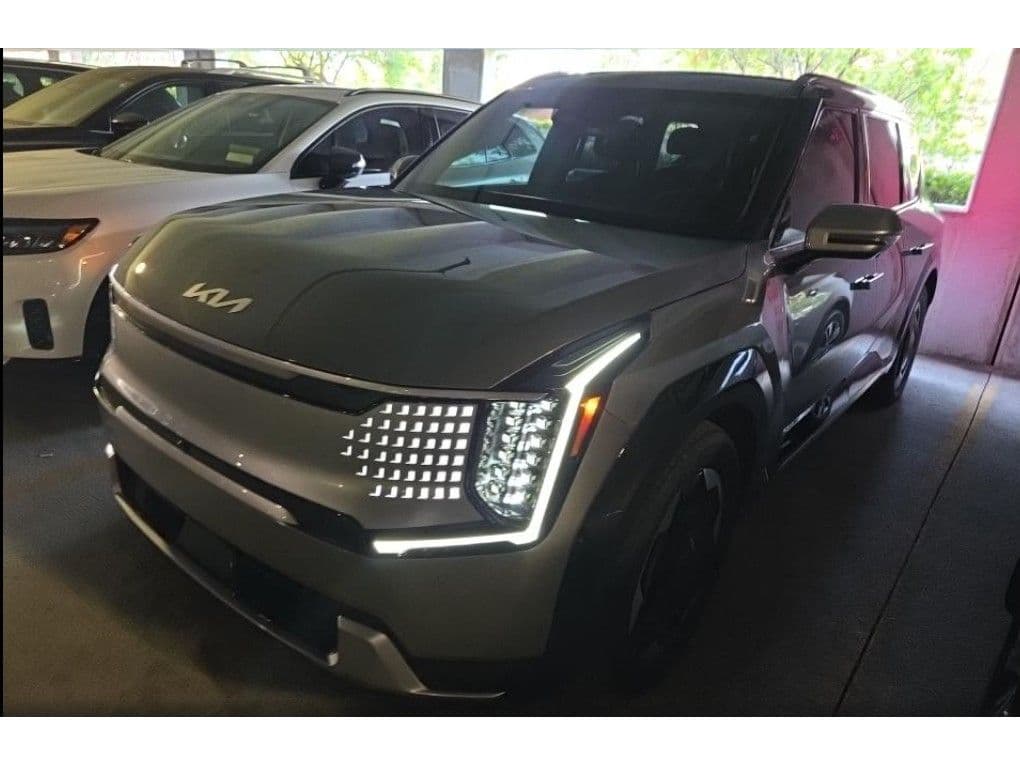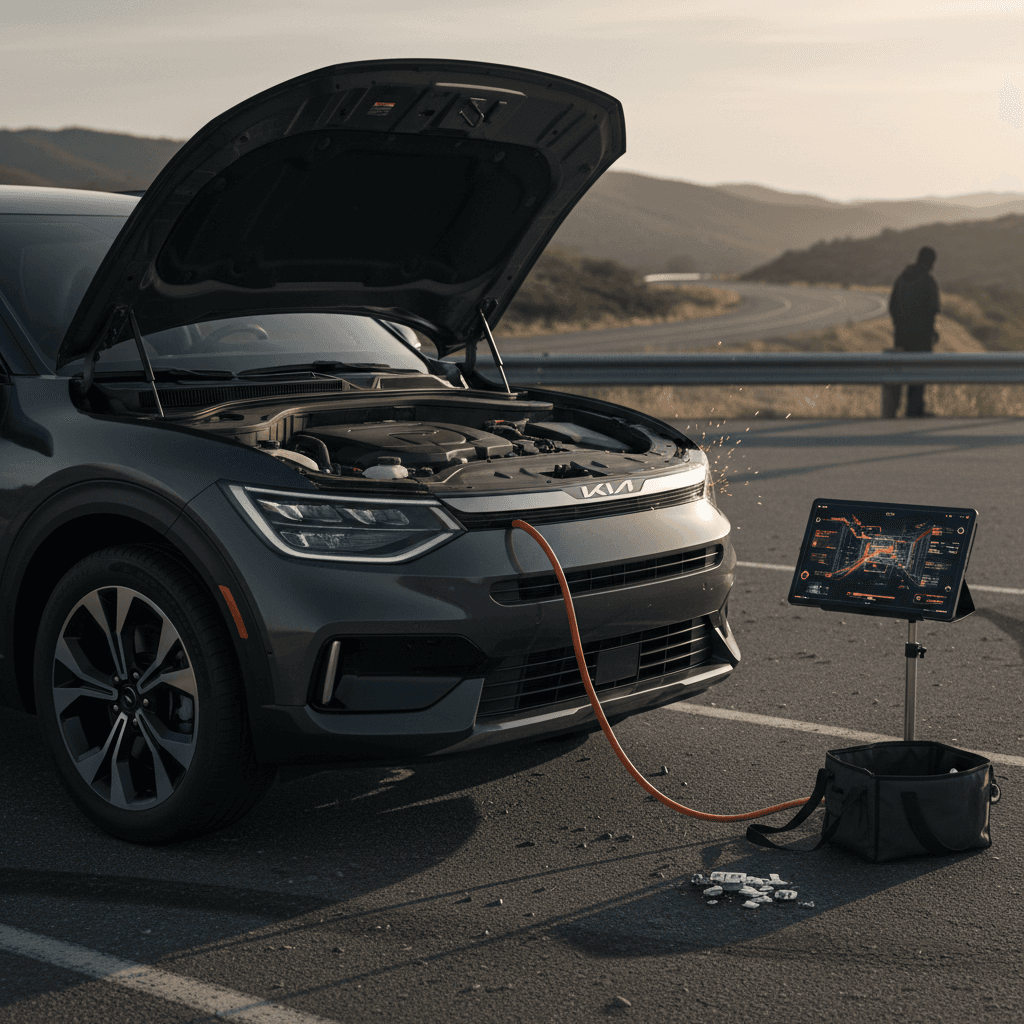
If you’re eyeing a three-row electric SUV, the 2024 Kia EV9 is probably on your short list. It’s stylish, spacious, and packed with tech, but how does 2024 Kia EV9 reliability look now that real owners have some miles on the clock? With multiple recalls already on the books and mixed early owner feedback, it’s smart to go in with your eyes open.
Quick takeaway
2024 Kia EV9 reliability: overview so far
The EV9 launched in the U.S. as a 2024 model, and that means we now have more than a year of owner data, recall history, and service experience to look at. Independent testing has flagged the 2024 EV9 as less reliable than the average new vehicle, largely due to a cluster of early recalls and trouble spots with body hardware and in‑car electronics rather than catastrophic drivetrain failures.
Key 2024 Kia EV9 reliability signals
So far, the pattern looks like this: lots of small and medium‑sized problems, missing seat bolts, software glitches, some 12‑volt battery and charge‑port issues, but very few instances of complete drive unit or traction battery failure. That’s frustrating if you own one, but it’s different from a car that strands people with blown motors or failing packs.
How to read early reliability
Recall history: how many recalls does the EV9 have?
The 2024 Kia EV9 has had an unusually busy recall history for such a new model. By early 2026, there are roughly six separate NHTSA recalls tied to 2024–2025 EV9s, affecting tens of thousands of vehicles. Here are the most important ones to understand:
Major U.S. recalls affecting 2024–2025 Kia EV9
Always run a VIN search on NHTSA.gov or with a dealer to confirm open recalls on any EV9 you’re considering.
| Issue | Model years | Risk | Approx. vehicles | Typical fix |
|---|---|---|---|---|
| Missing 2nd/3rd-row seat bolts (SC329) | 2024–2025 | Seats may not hold occupants properly in a crash | ≈22,800 | Inspect and install seat mounting bolts |
| Digital instrument cluster failure (SC326) | 2024–2025 | Loss of speedometer/warning lights; FMVSS non‑compliance | ≈14,000+ | Instrument cluster software update (dealer or OTA) |
| Rear gear drive unit weld defect (SC337) | 2025 (some late ’24 builds) | Possible loss of drive power on some dual‑motor AWD EV9s | ≈300–400 | Replace rear gear drive unit |
| Other software/electrical campaigns | 2024–2025 | Various driveability and display bugs | Thousands (smaller batches) | OTA or dealer software updates |
Kia dealers will repair recall items free of charge, but you’ll want proof that the work is done before you buy.
Why seat and cluster recalls matter
The good news is that all of these recalls have defined fixes, and most are one‑time repairs or software updates. For shoppers, the real risk isn’t that the EV9 can’t be fixed, it’s taking home a vehicle that hasn’t had the work done yet, or buying from a seller who can’t document what was repaired and when.
Common 2024 Kia EV9 problems owners report
Survey data and early owner reports tend to cluster around a few trouble spots on the 2024 Kia EV9. Think of these as patterns, not guarantees, many owners have largely trouble‑free experiences, while a minority have spent too much time at the dealer.
Most frequent owner‑reported trouble areas
Where early 2024 EV9 owners say they’ve had headaches
Body & seat hardware
Some owners report loose or unstable driver’s seats, rattles from the second and third rows, or doors/hatches that need adjustment. In at least one case, a wobbly driver’s seat required multiple parts shipments from Korea before it was properly repaired.
In‑car electronics
Glitches with the infotainment system, cameras, and instrument cluster are common complaints. Issues range from freezing screens to warning lights, many of which are addressed by software updates but can still be frustrating.
12‑volt & accessory systems
A handful of owners describe 12‑volt battery or keyless entry failures triggering warning messages or no‑start conditions. In some cases, dealers struggled to reproduce the issue, which can drag out diagnosis.
Charging‑related annoyances
There are scattered reports of the EV9 being picky about certain public DC fast chargers, failing to initiate a session, or stopping unexpectedly. These kinds of issues are common across many modern EVs and are often as much about charger networks and software handshakes as the car itself.
Noise, squeaks, and rattles
Like many large SUVs, the EV9 can develop interior noises and wind leaks over time, especially in the third row and cargo area. On a quiet EV powertrain, those sounds are easier to notice than they would be in a gasoline SUV.
Perspective on problems
Battery and charging reliability on the Kia EV9
For any EV, the big fear is a failing traction battery or chronic charging problems. So far, the EV9’s high‑voltage battery has not shown a pattern of widespread failure. The early reliability dings are mostly about seats and software, not packs and motors.
- The EV9 uses Kia’s 800‑volt E‑GMP architecture, shared with models like the EV6 and Hyundai Ioniq 5/7, which already have several years of real‑world data behind them.
- Fast‑charging performance is generally strong, when the charging network cooperates, with the EV9 able to add substantial range in roughly 20–30 minutes on a healthy high‑power DC fast charger.
- A small number of EV9 owners report vehicles refusing to charge at specific public stations or dropping sessions unexpectedly, but those complaints are not unique to Kia; they’re part of the broader DC fast‑charging ecosystem in 2024–2026.
Supercharger and V2H reliability angle
As for long‑term battery degradation, there simply isn’t enough 8–10‑year data on the EV9 yet. What we can say is that E‑GMP‑based Kia and Hyundai EVs have generally held up reasonably well so far when owners avoid constant DC fast‑charging and keep state of charge between roughly 20% and 80% for daily use.
How the EV9’s reliability compares to other three-row EVs
If you’re cross‑shopping the EV9, you’re probably looking at alternatives like the Tesla Model X, Rivian R1S, Mercedes‑Benz EQS SUV, or Volvo EX90. None of these are exactly paragons of bulletproof reliability, they’re all complex, expensive EVs packed with new tech.
Reliability snapshot: 3‑row electric SUV segment
High‑level look at how the EV9 stacks up against key three‑row EV rivals on reliability expectations.
| Model | Launch timing | Early reliability reputation | Typical pain points | Warranty highlight |
|---|---|---|---|---|
| Kia EV9 | 2024 MY | Below average (so far) | Recalls, seat hardware, software/cluster glitches | 10yr/100k‑mile battery warranty |
| Rivian R1S | 2022 MY | Below average | Software bugs, water leaks, trim issues, parts delays | 8yr battery & drivetrain coverage |
| Tesla Model X | Redesign 2015+, updates ongoing | Historically below average | Doors, electronics, rattles, HVAC, alignment | 8yr battery & drive unit warranty |
| Mercedes EQS SUV | 2023 MY | Too new / limited data | Electronics, infotainment complexity | 4yr/50k basic, 10yr/155k battery (U.S.) |
All of these vehicles are early in their life cycles, so treat these as directional trends, not final verdicts.
Where the EV9 shines
Warranty, software updates, and long-term peace of mind
Kia backs the EV9 with one of the stronger warranty packages among mainstream brands. That doesn’t guarantee perfection, but it does shift a lot of risk off your shoulders in the first several years.
Kia EV9 U.S. warranty coverage basics
Always confirm exact terms for your model year and location.
Basic & powertrain coverage
- 5 years/60,000 miles basic bumper‑to‑bumper coverage on most non‑wear items.
- 10 years/100,000 miles powertrain coverage for original owners, which applies to electric motor and related components.
EV‑specific coverage
- 10 years/100,000 miles on the high‑voltage battery pack (defects and, in some cases, excessive capacity loss).
- Coverage for EV‑specific hardware like onboard chargers and inverters varies; read the warranty booklet for fine print.
On top of that, the EV9 is heavily software‑defined. Kia can push over‑the‑air (OTA) updates to address instrument‑cluster bugs, charging logic, driver‑assistance tuning, and more. That’s a double‑edged sword: you may see issues fixed overnight, but you can also wake up to new quirks after a major update.
Don’t skip dealer visits
Shopping a used 2024 Kia EV9: what to check
Because the EV9 is so new, most examples on the used market will be 2024s coming off early leases, MSRP‑plus flips, or buy‑backs from owners who didn’t want to live through recall season. That makes a structured evaluation especially important.
Pre‑purchase checklist for a used 2024 Kia EV9
1. Run the VIN for recalls and campaigns
Use NHTSA’s website and a Kia dealer to confirm <strong>all open recalls are completed</strong>, especially the seat‑bolt (SC329) and instrument‑cluster (SC326) campaigns, plus any drive‑unit or software actions on your specific build.
2. Get a battery and charging health report
Ask for a <strong>detailed battery‑health and charging report</strong>. At Recharged, every EV9 we sell includes a Recharged Score report with verified pack health, DC fast‑charge history indicators where available, and notes on charging behavior.
3. Inspect seats, doors, and interior trim
On a test drive, pay attention to any <strong>seat wobble, rattles, or door misalignment</strong>. Have a passenger ride in the second and third rows to listen for noises over rough pavement.
4. Stress‑test the electronics
Cycle the infotainment system, cameras, HVAC, and driver‑assistance features. Look for slow boots, frozen screens, or unexplained warning lights. A short drive on unfamiliar roads is a good way to test navigation, lane‑keeping, and adaptive cruise.
5. Verify charging on your likely networks
If possible, test the EV9 at a <strong>Level 2 charger and a DC fast charger</strong> from the networks you plan to use. Watch for failed sessions, dropped connections, or unusual error messages.
6. Review service history and any buy‑back paperwork
Ask the seller for a complete service history. If the EV9 was ever subject to a lemon‑law claim or manufacturer buy‑back, you want to know what was fixed and why, sometimes those vehicles are excellent after repairs, other times they’re best avoided.
Why consider a used EV9 from Recharged
2024 Kia EV9 reliability: pros, cons, and who it fits
Reliability strengths
- Drivetrain & battery look solid so far: No widespread traction‑battery failures, and limited instances of serious motor or drive‑unit defects.
- Long battery and powertrain warranty reduces financial risk for the first owner, and often benefits second owners if the car is still within 10 years/100,000 miles.
- OTA updates and active recall campaign show Kia is working through early issues rather than ignoring them.
Reliability weaknesses
- High number of early recalls for a new model, including safety‑critical items like seats and instrument clusters.
- Above‑average complaints about electronics and body hardware, from wobbly seats to glitchy screens.
- Dealer experience can vary, and some owners report slow parts pipelines and inconsistent communication on complex issues.
If you want a three‑row EV that can handle family duty, road trips, and daily commuting, the 2024 Kia EV9 remains one of the most appealing packages on the market. But you should treat it like what it is: an ambitious first‑generation flagship with more than its share of early‑run hiccups. For many shoppers, the trade‑off is worth it, as long as you insist on full recall completion, a clean service history, and solid battery‑health documentation. That’s exactly the kind of homework Recharged builds into every EV9 we list, so you can enjoy the space and tech without constantly wondering what might break next.