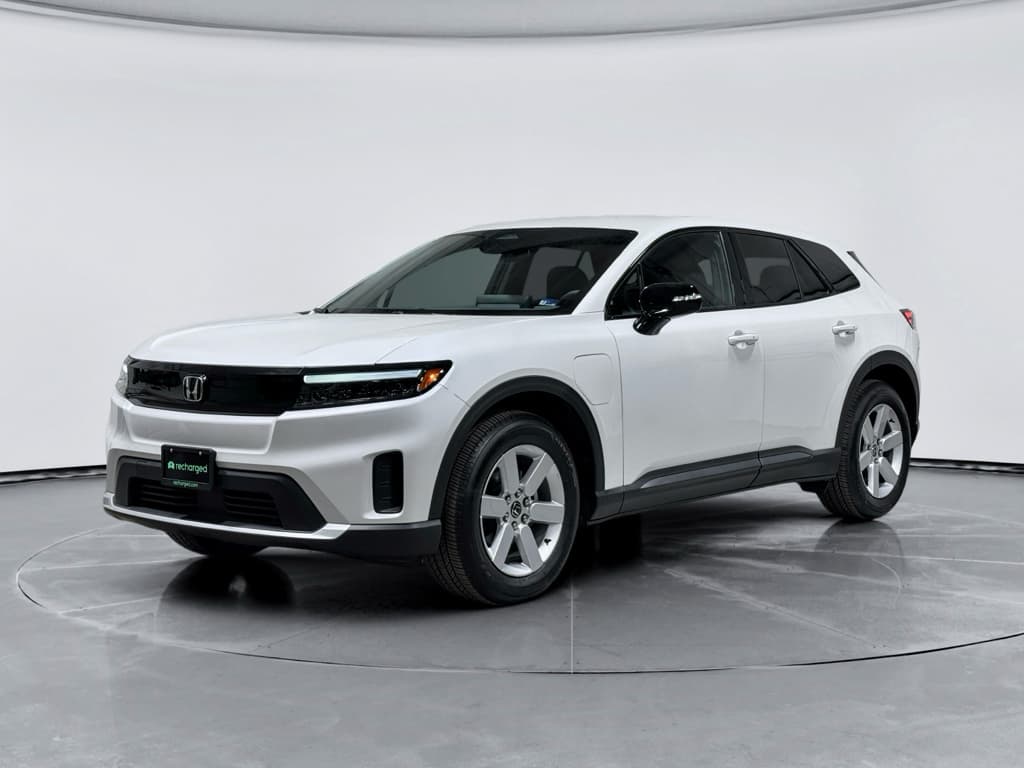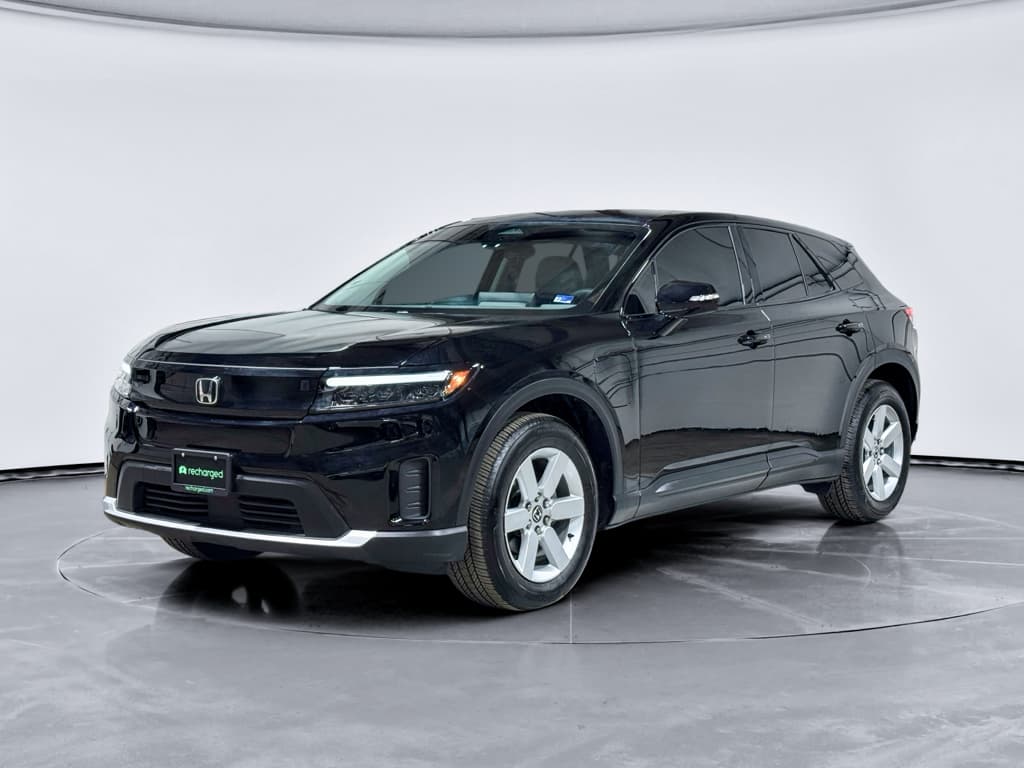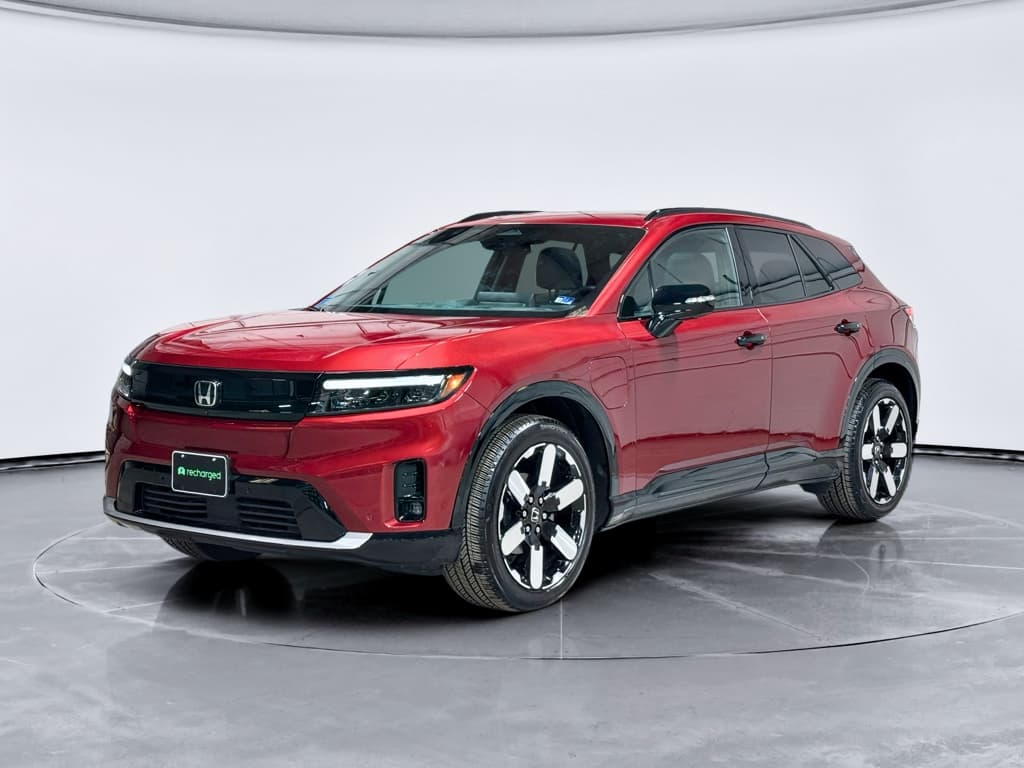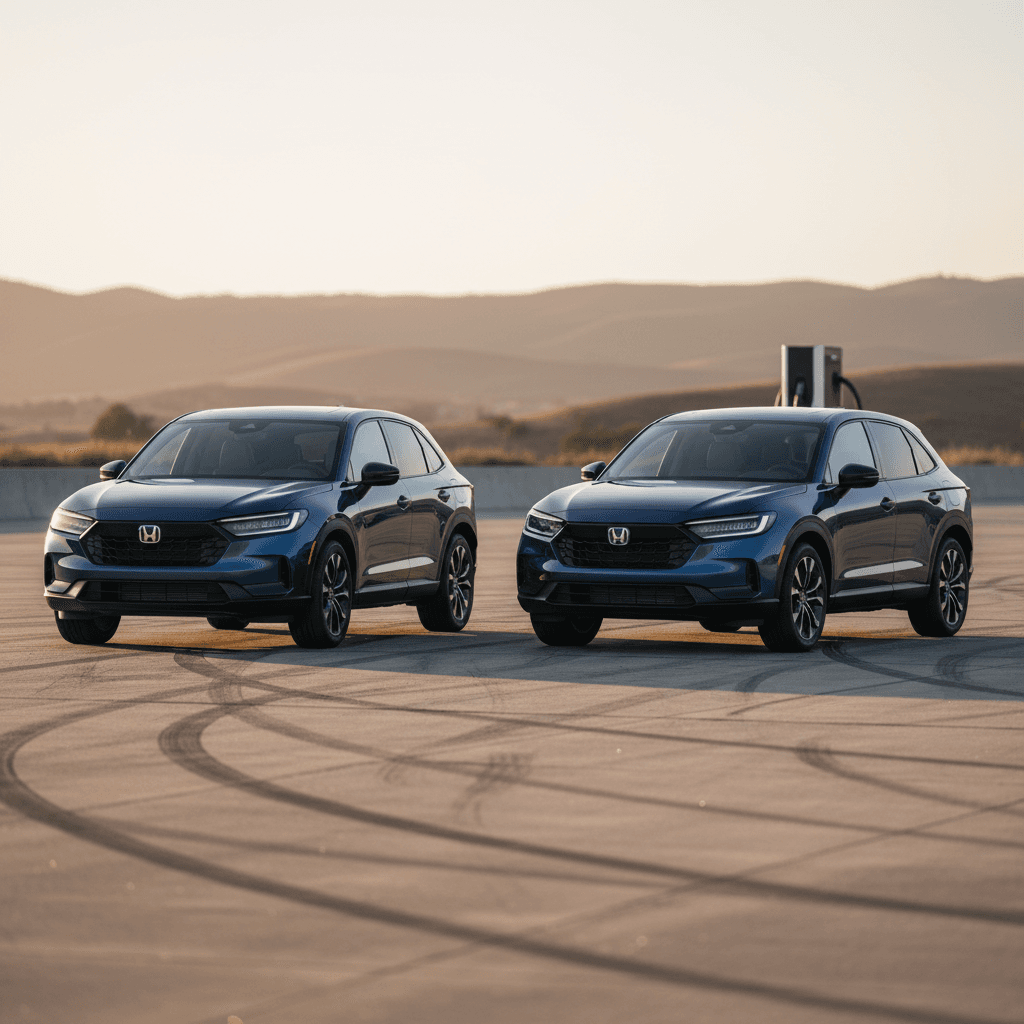
If you’re comparing the 2024 Honda Prologue vs 2025 Honda Prologue changes, you’re already ahead of most EV shoppers. Honda’s first long‑range electric SUV arrived for 2024 and quietly picked up meaningful upgrades for 2025, without a big redesign or a flashy new name. Understanding those subtle changes matters a lot if you’re shopping new leftovers on a dealer lot or hunting for a used Prologue on a marketplace like Recharged.
Big picture
Quick spec comparison: 2024 vs 2025 Honda Prologue
Core specs: 2024 vs 2025 Honda Prologue
Headline differences for power, range, battery, and charging between the 2024 and 2025 model years. US EPA figures shown where available.
| Spec | 2024 Prologue | 2025 Prologue | What it means for you |
|---|---|---|---|
| Battery (usable) | ~85 kWh Ultium | ~85 kWh Ultium | Same pack and voltage; no hardware change here. |
| Drive layouts | FWD (single motor) or AWD (dual motor in some trims) | FWD or AWD, same basic configurations | Layout choice is unchanged; tuning is updated. |
| Horsepower (FWD) | Approx. high‑200s (varies by source) | 220 hp (revised rating and tuning) | Output is standardized and clarified; modest tuning changes. |
| Horsepower (AWD) | 288 hp | 300 hp | Slightly stronger 2025 AWD for better passing and merging. |
| EPA range – FWD | ~296 miles (select trims) | Up to 308 miles | 2025 adds roughly 10–12 miles on paper. |
| EPA range – AWD | ~281 miles (EX/Touring), mid‑270s on some trims | Up to 294 miles (most AWD), 283 miles (Elite) | 2025 gains around 10–15 miles depending on trim. |
| Peak DC fast‑charge rate | Up to ~150 kW | Same hardware, same peak rate | No faster plug‑in time, but software preconditioning can help. |
| Level 2 AC charging | Up to ~11.5 kW (240V home / public) | Same onboard charger | Home charging experience is essentially identical. |
| Towing | 1,500 lbs | 1,500 lbs | No change, light utility only. |
| Starting MSRP (EX FWD) | Around $47,400 at launch, often discounted later | Around $47,400–$48,850 advertised, depending on source | Same ballpark sticker; real‑world transaction prices differ. |
Specs are manufacturer or early‑EPA estimates as of early 2026 and may vary slightly by trim.
How to use this comparison
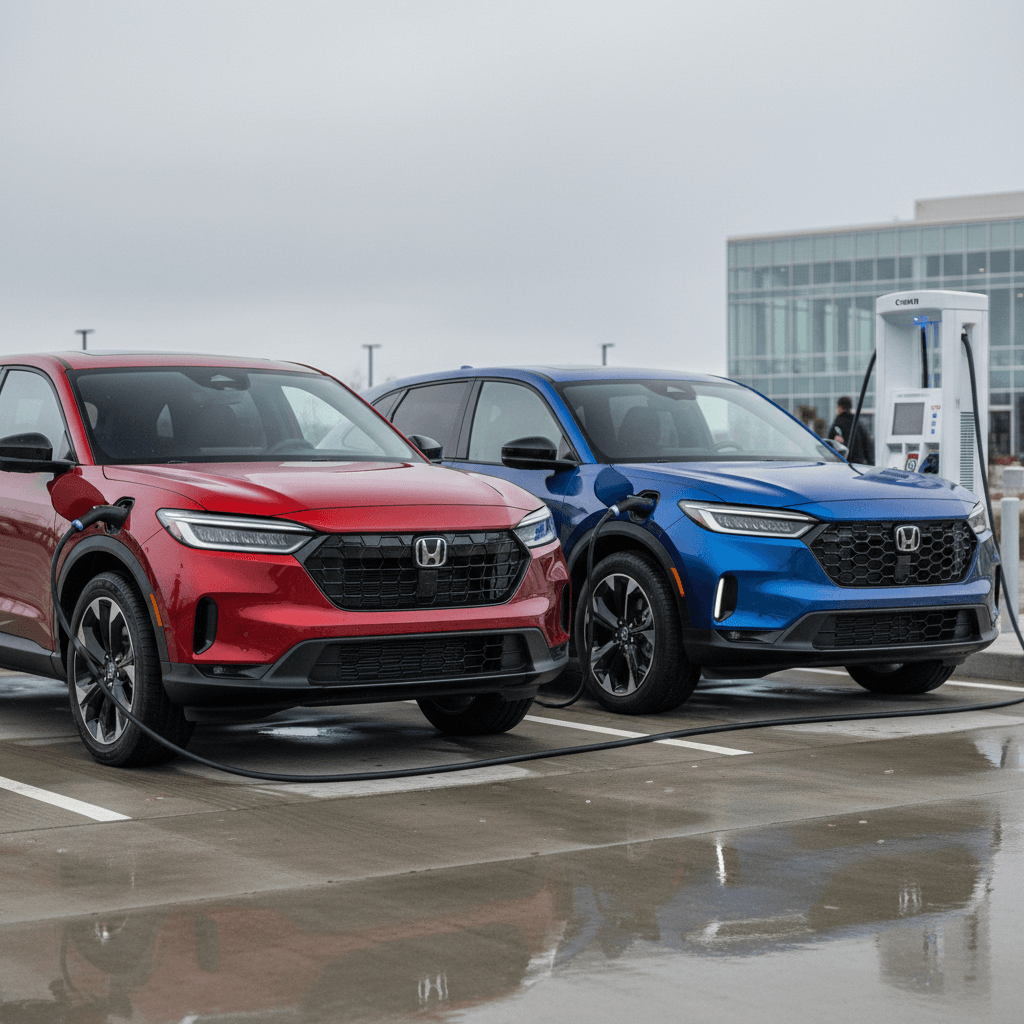
Powertrain changes: more power for 2025
Both model years ride on GM’s Ultium platform and share the same 85‑kWh battery pack, but Honda tweaked the front motor and software calibration for 2025. The result is a cleaner, more transparent power rating and a bit more punch, especially in all‑wheel‑drive models.
Power and driveline: 2024 vs 2025 at a glance
The hardware barely changes; the tuning does.
2024 Prologue powertrain
- Platform: Ultium, shared with Chevy Blazer EV
- Battery: 85‑kWh pack in all trims
- Output (AWD): 288 hp, 333 lb‑ft
- Drive: FWD single‑motor or AWD dual‑motor, depending on trim and market
- Drive feel: Smooth and quiet, but tuned conservatively vs. rivals like Model Y
2025 Prologue powertrain
- Same Ultium hardware, but updated power electronics and calibration
- FWD: 220 hp (standardized rating)
- AWD: 300 hp; modest but noticeable gain over 2024
- Drive feel: Slightly stronger mid‑range acceleration and highway passing
- Towing: Still rated at 1,500 lbs, no extra capability here
Real‑world impact
Range and efficiency: what actually improved
Range is where Honda leaned the hardest for 2025. The 2024 Prologue already launched with competitive numbers for a mid‑size EV SUV. For 2025, Honda squeezed out more range through software optimization and modest efficiency tweaks rather than a new battery.
EPA range estimates: 2024 vs 2025 Prologue
- Both years rely on the same 85‑kWh pack, so battery replacement cost and long‑term degradation expectations are similar.
- 2025’s higher range comes from calibration and efficiency tuning, not a physically larger battery.
- Elite AWD trims in 2025 still trade some range (around 283 miles) for big wheels and extra equipment.
- In cold climates, the extra 10–15 miles of rated range in 2025 can translate into slightly less winter anxiety, but your driving habits and charging access matter more than the model year.
Don’t over‑weight the range bump
Charging hardware and real‑world speeds
On the charging front, 2024 and 2025 Prologue models are essentially twins. Both years use the Ultium pack with a peak DC fast‑charge rate around 150 kW and an onboard AC charger capable of roughly 11.5 kW on a 240‑volt Level 2 circuit. The charge curves and peak numbers put the Prologue near the middle of the EV‑SUV pack, respectable, but not class‑leading.
Charging: what stays the same in 2024 and 2025
Think software refinements, not hardware revolutions.
DC fast charging
- Ultium‑based pack, ~150 kW peak
- Roughly 65 miles in 10 minutes under ideal conditions
- 20–80% typically in about 30–35 minutes when warm
- 2025 doesn’t unlock a higher max kW, expect similar station behavior year to year
Level 2 home/public charging
- Onboard AC charger around 11.5 kW
- Full charge in about 8–9 hours on a 48‑amp home charger
- Identical experience for 2024 and 2025 at home and most public Level 2 chargers
Software & preconditioning
- Integrated Google Maps can plan routes with charging stops
- Battery preconditioning before DC fast charging improves speed when used correctly
- 2025 benefits a bit from Honda’s early software learnings, but core capability is shared
Plan around CCS now, NACS later
Features, trims, and software differences
Trims between 2024 and 2025 line up closely, EX, Touring, and Elite, with equipment packages that will feel familiar to any recent Honda shopper. The real story is that Honda and GM spent the first year ironing out early‑production quirks and refining software, driver‑assist behavior, and infotainment rather than reshuffling the entire trim ladder.
2024 Honda Prologue feature set
- Trims: EX, Touring, Elite (exact names vary slightly by region)
- Standard tech: Dual screens, Google built‑in, wireless smartphone integration
- Safety: Honda Sensing with adaptive cruise, lane keeping, blind‑spot monitoring, rear cross‑traffic alert and more
- Interior: Spacious cabin, CR‑V‑plus cargo feel, Honda‑typical ergonomics
- Quirks: First‑year software bugs and some service campaigns as Honda and GM chased early issues
2025 Honda Prologue feature set
- Same basic trim walk: EX, Touring, Elite
- Power/range updates baked into the full lineup
- Incremental tweaks to driver‑assist alerts and infotainment performance
- Honda and GM dealer networks now have a full year of Ultium Prologue experience
- Some early owners report smoother over‑the‑air update experiences and fewer glitches compared with late‑build 2024s
What’s *not* different
Pricing, incentives, and total cost of ownership
Honda kept the headline pricing for the 2025 Prologue broadly in line with the 2024 launch stickers, even after adding power and range. That’s unusual in today’s EV market, where year‑over‑year price hikes are more common than free upgrades. But the more important story for a shopper in 2026 is how transaction prices and depreciation differ between model years.
Price dynamics for 2024 vs 2025 Prologue
- Used 2024 Prologues priced meaningfully below comparable 2025s, even when mileage is similar.
- Leftover new 2024s (if you can still find one) advertised with stronger dealer discounts, sometimes stacking with Honda incentives.
- 2025s holding a bit more residual value thanks to slightly better specs and being the “refined” year in the eyes of many shoppers.
Leasing vs buying
Which Honda Prologue should you buy in 2026?
So, when it comes to 2024 Honda Prologue vs 2025 Honda Prologue changes, which model year actually makes more sense? It depends less on the spec sheet and more on your risk tolerance, budget, and how long you plan to own the SUV.
Choose the right Prologue for your situation
You prioritize range and refinement
If you want the best version of the Prologue with the least compromise and plan to keep it for a while, the 2025 is the safer bet. You get a bit more power and range plus the benefit of Honda’s first‑year learnings baked in.
You’re hunting for maximum value
If your budget is tight and you’re comfortable being an early adopter, a <strong>used 2024 Prologue</strong> can be an excellent buy, especially when it comes with verified battery health data from a marketplace like <a href="/">Recharged</a>.
You mostly drive short trips
If your daily pattern is under 150 miles, the 2024 vs 2025 range gap is essentially irrelevant. Focus on purchase price, warranty coverage, and charging access instead of chasing the highest EPA number.
You plan frequent road trips
If you’ll be racking up highway miles and pushing the battery often, the 2025’s extra range and slight efficiency gains make it easier to stretch between fast chargers, especially in colder climates.
You worry about first‑year bugs
If software quirks, dealer trips, and early‑production recalls give you pause, a 2025 reduces that risk compared with a 2024, though any Prologue built after early 2024 is likely to have many fixes already baked in.
You want stronger resale value
All else equal, a 2025 Prologue should hold value a bit better because it has better headline specs and isn’t the first model year. If you plan to sell or trade in after 3–5 years, that matters.
Where Recharged fits in
Ready to find your next EV?
Browse VehiclesBuying a used Prologue: what to check
As more Prologues hit the used market in 2026 and beyond, the differences between 2024 and 2025 model years will matter less than the condition, charging history, and software status of any specific vehicle. Here’s what to look at regardless of the badge on the back.
Used Honda Prologue inspection checklist
1. Verify battery health
Ask for a battery health report (or buy from a marketplace like Recharged where it’s included). You want to see minimal capacity loss and no history of repeated deep discharges to near‑zero.
2. Review DC fast‑charging history
Heavy fast‑charging isn’t a deal‑breaker, but it can accelerate degradation. Look for a mix of Level 2 home charging and occasional DC fast sessions rather than daily DC fast‑charging.
3. Confirm software and recalls
Make sure all Prologue‑specific software updates and recalls are complete, especially on 2024s. Ask for dealer service records and confirm the latest firmware is installed.
4. Check charging‑port wear and cables
Inspect the CCS charge port and cables for damage, corrosion, or evidence of forced connections. Plug in at least once during the test drive to confirm charging starts cleanly.
5. Evaluate tires and alignment
The Prologue is a relatively heavy EV SUV. Uneven tire wear on the inside edges can hint at alignment issues or aggressive driving, both of which hurt efficiency and comfort.
6. Compare real‑world range
On a test drive, reset a trip meter and watch consumption over 20–30 miles. Compare the projected range at your driving style with the EPA numbers; large gaps may indicate past abuse or battery issues.
In a market obsessed with headline range and zero‑to‑sixty times, the Prologue is more about being a quiet, unremarkable appliance, that happens to run on electrons instead of gasoline.
That’s not a knock. For many households, the right Prologue, 2024 or 2025, is a calm, predictable bridge from Honda’s gas crossovers into full EV ownership. Once you understand how modest the year‑over‑year hardware changes really are, you can stop chasing specs and start optimizing for what matters: the individual vehicle’s condition, charging fit for your life, and whether the deal in front of you truly pencils out.