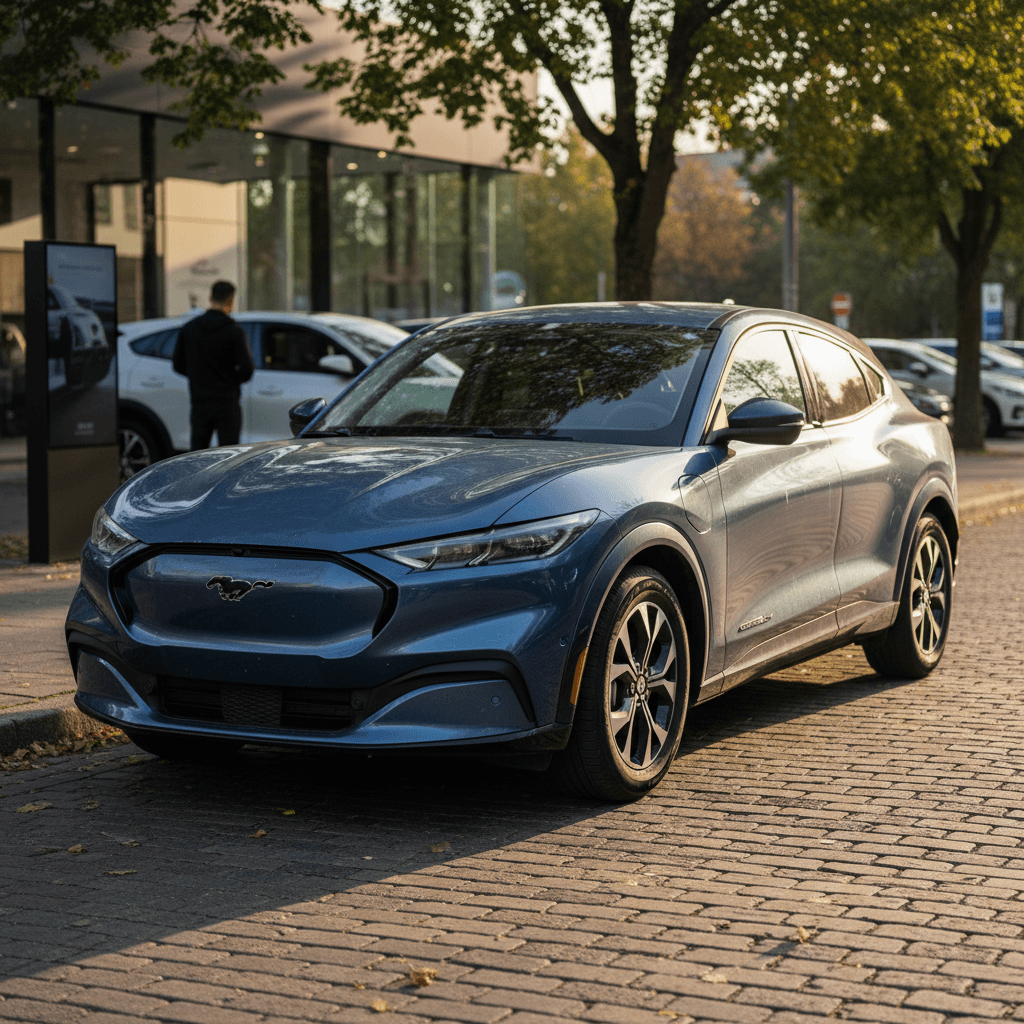
If you’re looking at the 2024 Ford Mustang Mach‑E on the used market, you’re shopping one of the most interesting electric SUVs on sale right now. The 2024 update quietly fixed some early‑run weaknesses, especially in range and DC fast‑charging, making it a smarter used buy than many 2021–2023 examples. This review focuses specifically on the 2024 Ford Mustang Mach‑E review used shoppers need: what’s different for 2024, how it actually drives, typical used pricing, and what to check before you commit.
Quick verdict for used buyers
Who should consider a used 2024 Mustang Mach‑E?
Is the 2024 Mach‑E a good fit for you?
Used‑market strengths and weaknesses at a glance
You’ll probably love it if…
- You want a sporty-feeling electric SUV with quick acceleration, especially in eAWD or GT form.
- You value a distinctive design over anonymous crossovers.
- Your routine fits within 220–300 miles of real-world range between charges.
- You have or plan to install Level 2 home charging.
You may want to think twice if…
- You live far from a Ford dealer comfortable working on EVs.
- You expect Tesla-level charging reliability on every public network.
- You’re extremely sensitive to software glitches or recall notices.
- You need a third row or tow heavy trailers.
Where it shines as a used buy
- 2024 updates brought faster DC charging and more range than early years.
- EV depreciation means meaningful discounts vs. new.
- Plenty of low‑mile lease returns starting to enter the market.
- Ford’s build quality improved versus some 2021–2022 examples.
What’s new on the 2024 Mach‑E, and why it matters used
When you’re cross‑shopping used Mach‑Es, the 2024 model year isn’t just another color and wheel update. Under the skin, Ford revised the powertrain and batteries in ways that directly affect how enjoyable, and how future‑proof, a used 2024 feels.
Key 2024 Mach‑E upgrades that help used buyers
- Faster DC fast‑charging: Ford reworked the battery and thermal controls so 10–80% fast‑charge sessions are roughly 20% quicker than earlier years, cutting a typical road‑trip stop into the 30‑something‑minute range when the station cooperates.
- More performance headroom: The 2024 GT with the optional Performance Upgrade delivers up to about 700 lb‑ft of torque and a 0–60 mph time in the low‑3‑second range, numbers that still embarrass many new performance SUVs.
- Revised battery lineup: Standard‑range models now use an LFP pack. That chemistry is less energy‑dense but more tolerant of frequent 100% charges, an advantage if your charging setup isn’t ideal.
- Trim shuffle: Ford dropped the California Route 1 configuration and added the rally‑inspired Mach‑E Rally, so you’ll see a slightly different trim mix in used listings than in 2021–2023.
Model‑year shortcut
2024 Mach‑E trim levels and configurations to know
Before you get deep into listings, it helps to translate Ford’s trim alphabet soup into real‑world differences. At a high level, you’re choosing among Select, Premium, GT, and Rally models, then between standard‑ or extended‑range batteries and rear‑ or all‑wheel drive.
2024 Mustang Mach‑E trims in plain English
Approximate highlights that matter most when you’re shopping used. Exact specs vary by option package.
| Trim | Battery options | Drivetrain | Character | Who it suits |
|---|---|---|---|---|
| Select | Standard‑range LFP | RWD or eAWD | Value play, still quick | Commuters and first‑time EV buyers focused on price. |
| Premium | Standard‑ or extended‑range | RWD or eAWD | Best all‑rounder | Drivers wanting long range, nicer interior, and features. |
| GT | Extended‑range only | eAWD | Seriously quick | Enthusiasts who want muscle‑car thrust in an SUV body. |
| Rally | Extended‑range | eAWD | Off‑road‑flavored GT | Snow‑belt and dirt‑road drivers who like the look and extra ground clearance. |
Use this as a quick decoder when you’re scrolling used listings.
Watch the options, not just the trim badge
Real‑world range, battery, and charging experience
On paper, the 2024 Mustang Mach‑E covers a wide range of battery and range figures: roughly the 70‑kWh usable standard‑range pack up to a roughly 90‑kWh usable extended‑range pack. In practice, your experience as a used buyer boils down to how you charge and what climate you live in.
Typical real‑world range (rough guide)
- Standard‑range RWD: Plan around 200–230 miles on the highway, more in mild city driving.
- Standard‑range eAWD: Expect closer to 190–215 miles at 70 mph.
- Extended‑range RWD: Many owners comfortably see 260–290 miles in mixed driving.
- Extended‑range eAWD / GT / Rally: Think 230–270 miles depending on how hard you use the power.
Cold weather, high speeds, and rooftop boxes can all shave noticeable range off these ballpark numbers.
Charging behavior to expect
- Home Level 2: With a 40‑ or 48‑amp Level 2 charger, most trims can recharge from 10–80% easily overnight.
- DC fast‑charging: On a healthy station, 10–80% typically takes a bit over half an hour with the 2024 pack tuning.
- Charge curve: The Mach‑E doesn’t match the very fastest Korean EVs on peak kW, but 2024 improvements make it less of a road‑trip liability than early cars.
- Battery chemistry: The LFP standard‑range pack tolerates frequent 100% charges better if you park without home charging.
Range reality check
Used 2024 Mach‑E prices and depreciation in 2026
By mid‑2026, the first wave of 2024 Mach‑Es are already on the used market, often as low‑mile lease returns or early trade‑ins from EV‑curious buyers who are switching brands or moving to newer tech. The punchline: depreciation has been steep enough that the 2024 can be a strong value, if you negotiate based on today’s market instead of yesterday’s MSRP.
Where 2024 Mach‑E prices typically land
Where Recharged fits in
Reliability, recalls, and common owner complaints
Early Mach‑Es took some justified criticism for hardware issues like high‑voltage junction box (HVJB) failures and for fussy software. By 2024, many of those design issues were addressed in production and via recalls, but you’re still buying into a relatively young EV platform with ongoing over‑the‑air updates and the occasional large recall campaign.
What reliability looks like on a used 2024 Mach‑E
Not a disaster, but not a Camry either
The good news
- Most 2024 owners report smooth daily driving once early software bugs are patched.
- Major drivetrain and battery failures are relatively rare compared with some early EVs.
- Ford has used recalls and over‑the‑air updates to address big systemic issues at no charge.
The frustrating parts
- Dealer EV expertise is inconsistent; some owners face long waits for parts or diagnostics.
- Sync 4A infotainment can be laggy or glitchy, and over‑the‑air updates are not always seamless.
- Occasional quirks with phone‑as‑a‑key, charge‑port doors, and random warning messages still crop up.
Recent recall themes
- Door‑latch software updates to prevent doors from opening or failing to open properly.
- Camera and visibility software fixes affecting the backup camera display.
- Parking system and roll‑away risk recalls on some 2024–2026 Ford EVs, including the Mach‑E.
Not every recall hits every VIN, always check by VIN, not just model year.
Never skip the recall check
How to inspect a used 2024 Mach‑E before you buy
A 2024 Mach‑E is packed with software, high‑voltage hardware, and fast‑charging capability, so you need to test more than just the paint and tire tread. Here’s a structured way to evaluate a specific car, whether you’re buying from a dealer, marketplace, or private seller.
Used 2024 Mustang Mach‑E inspection checklist
1. Pull the digital history first
Ask for a full service history, recall completion printout, and any DC fast‑charging logs the owner can share. Multiple resolved recalls aren’t necessarily bad; unresolved ones are.
2. Verify battery and range behavior
Start at 50–70% charge, drive at highway speed for 20–30 minutes, and note energy use in mi/kWh. Huge consumption or fast‑dropping state‑of‑charge can hint at tire, alignment, or battery issues.
3. Test home‑style charging
If possible, plug into a Level 2 charger and confirm the car ramps up to the expected amperage and stays there without random disconnects or error messages.
4. Try at least one DC fast charge
On a public fast charger, watch how quickly the car climbs to peak kW and whether it holds a healthy rate into the 50–70% range. Wildly inconsistent behavior or repeated failures can indicate charging hardware problems.
5. Beat on the tech for 15 minutes
Pair your phone, test phone‑as‑a‑key, try CarPlay/Android Auto, experiment with driver‑assist features, and scroll around the big center screen. Annoyances on a short test will become intolerable when you own the car.
6. Look closely at doors, seals, and trim
Open and close every door and the liftgate several times, listen for rattles over bumps, and inspect weather seals. Recalls or repairs here are often software‑driven, but physical misalignment is still possible.
How Recharged simplifies this step
Ready to find your next EV?
Browse Vehicles2024 Mustang Mach‑E vs rivals on the used market
If you’re hunting for a used 2024 Mach‑E, you’re probably also glancing at a few obvious rivals: Tesla Model Y, Hyundai Ioniq 5, Kia EV6, and maybe Volkswagen ID.4. Each has a different trade‑off curve in charging speeds, software, dealer support, and interior packaging.
Used EV SUV showdown: 2024 model‑year contenders
How a 2024 Mach‑E stacks up against core used‑market rivals in 2026.
| Model | Strengths | Weak spots vs. Mach‑E | Best for |
|---|---|---|---|
| Ford Mustang Mach‑E | Engaging drive, distinctive design, decent range, physical controls where it counts | Inconsistent dealer EV expertise, software hiccups, depreciation is steep | Drivers who want a fun‑to‑drive EV SUV and like Ford’s design. |
| Tesla Model Y | Excellent Supercharger access, efficient, huge charging network | Spartan interior, variable build quality, price swings can hurt resale | Road‑trippers and people prioritizing charging convenience above all else. |
| Hyundai Ioniq 5 | Blistering fast‑charge speeds, roomy interior, fresh design | Limited dealer inventory in some areas, some software quirks of its own | Families who road‑trip and want max DC charging performance. |
| Kia EV6 | Sporty, sharp looks, quick charging like Ioniq 5 | Rear headroom and cargo space less generous than boxier rivals | Drivers wanting a sportier alternative to the Model Y and Mach‑E. |
| VW ID.4 | Comfortable ride, practical cabin, often aggressive lease‑to‑used pricing | Less exciting to drive, infotainment usability issues | Shoppers focused on comfort and price over performance. |
Use this to sanity‑check whether the Mach‑E is really the right shape of trade‑off for you.
Pick the Mach‑E if…
- You prefer a more traditional SUV feel with a bit of Mustang attitude.
- You have a good local Ford dealer or are comfortable using independent EV specialists.
- You care as much about driving enjoyment as you do about ownership costs.
Look elsewhere if…
- You want the simplest cross‑country charging experience, the Model Y still wins there.
- You’re deeply anxious about recalls and software updates; Hyundai/Kia or Toyota‑based EVs may feel less stressful.
- You need maximum space efficiency for kids and cargo; some boxier rivals do better there.
Is a used 2024 Mustang Mach‑E right for you?
Viewed from the used‑market lens, the 2024 Ford Mustang Mach‑E is a more mature, better‑sorted version of Ford’s first ground‑up EV than the early years. Faster DC charging, improved battery options, and continued over‑the‑air refinement make it a much easier EV to live with in 2026 than a 2021–2022 car with the same badge. The flip side is that you’re buying into a product that’s still evolving via software and still subject to the occasional high‑profile recall.
If you’re comfortable with that trade‑off, a used 2024 Mach‑E, especially a well‑specced Premium or a carefully evaluated GT, can be one of the most rewarding electric SUVs you can buy without paying new‑car money. Just be disciplined about checking battery health, software status, and recall history. And if you’d rather not DIY that homework, shopping a Mach‑E with a Recharged Score Report, transparent pricing, and EV‑specialist support gives you the performance and personality you want with far fewer unknowns attached.